 how-to
Heated Paver Driveways: What Installation Really Costs
Last Updated: November 1, 2026
Quick Summary
The cost of installing heated paver driveways depends on the heated area, system choice, base prep, and labor, with sample estimates ranging from $6,000-$11,000 for a ~200 sq ft single-car apron to $24,000-$45,000 for a ~900 sq ft long curved drive. Every quote should itemize demolition, base and insulation, heating system, pavers, controls, and electrical or boiler work separately. Request a site quote for current pricing.
- The heating system and the pavers and bedding each make up 20-30% of a heated paver driveway budget.
- A two-car driveway of about 400 sq ft typically runs $11,000 to $20,000.
- Electric systems suit most residential paver driveways; hydronic earns its place on large drives or where a boiler exists.
- Heating only the tire tracks cuts heated square footage and operating cost by 40-60% versus full coverage.
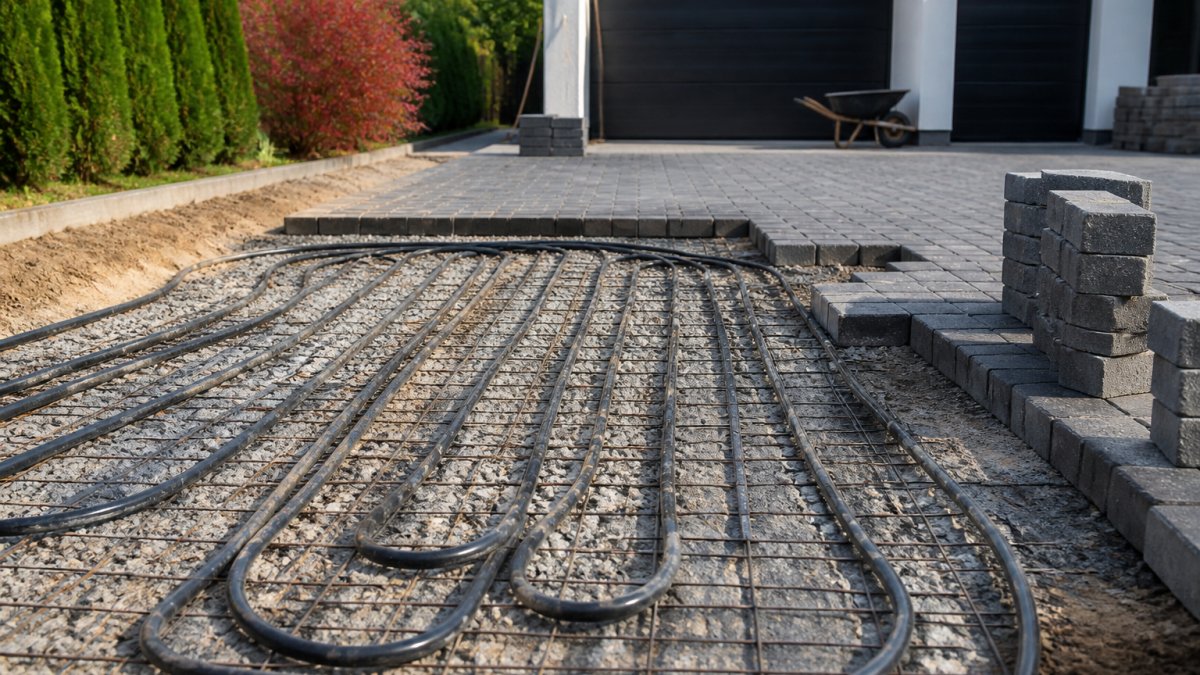
- The installation sequence runs excavate, grade, compact base, lay insulation, set heating element, test, bed pavers, then wire controls.
Table of Contents
- What Drives the Cost of Installing Heated Paver Driveways
- Heated Driveway Cost per Square Foot: Breaking Down the Numbers
- Electric vs. Hydronic Heated Driveway: Which Fits Your Project
- Heated Driveway Operating Cost: What to Expect Each Winter
- Heated Driveway Maintenance and Repair Access Under Pavers
- Site Prep, Drainage, and the Paver Installation Sequence
- Get a Quote for Your Heated Paver Driveway
- Frequently Asked Questions
What Drives the Cost of Installing Heated Paver Driveways
The cost of installing heated paver driveways is driven by four things: the size of the heated area, the system you choose, how much site prep the base needs, and who does the work. This guide from Moises Pizana Hardscapes breaks down each line item so you can understand what goes into a quote. Pricing depends on project size, site conditions, and materials, so request a quote for current pricing.
A heated paver driveway is a paver surface built over a snow-melting system, either electric heating cable or hydronic tubing, designed to clear snow and ice. The paver layer is the finish. The heating layer is the machine underneath it. Quotes often combine these elements, which can make estimates hard to compare.
The heating element changes how the base is built. In practice, the heating element changes how the base is built, how deep you excavate, and how the pavers are laid. That reshapes the whole budget.
Below, we walk through per-square-foot pricing, sample estimates by driveway size, system choice, operating cost, and the installation sequence that keeps a heated driveway working for decades.
Heated Driveway Cost per Square Foot: Breaking Down the Numbers
Heated driveway cost per square foot is the number to anchor your budget on, and for a paver driveway it splits into five buckets: demolition and excavation, base and insulation, the heating system, the pavers and bedding, and controls plus electrical or boiler work. Pricing for a heated paver driveway depends on the heated area, base preparation, system choice, and site conditions. The only number that matters is the quote a contractor generates after walking your site. Integrating sophisticated smart heating controls into the final phase of your installation ensures that energy consumption remains optimized throughout the winter months.
Itemized Cost Breakdown for a Heated Paver Driveway
Every quote should itemize these lines separately so you can compare bids apples to apples:
| Line Item | What It Covers | Typical Share of Budget | Cost Driver |
|---|---|---|---|
| Demolition and haul-off | Breaking out existing concrete or asphalt, disposal fees | 5-12% | Existing surface, dump fees, access |
| Excavation and grading | Removing soil to subgrade, sloping for drainage | 8-15% | Depth required, soil type, site slope |
| Base and insulation | Compacted gravel base, rigid foam insulation board | 10-18% | Base depth, insulation R-value, square footage |
| Heating system | Electric cable mats or hydronic tubing, manifolds | 20-30% | System type, heated area, zoning |
| Pavers and bedding | Paver units, bedding sand, polymeric joint sand | 20-30% | Paver choice, pattern, edge restraints |
| Controls | Snow sensor, thermostat, contactor, timer | 3-7% | Automation level, number of zones |
| Electrical or boiler work | Dedicated circuit, panel upgrade, boiler and pump | 5-15% | Panel capacity, fuel type, distance to panel |
| Labor | Crew time across all phases | Embedded in lines above | Site access, crew size, region |
A common mistake is comparing two quotes on the bottom line alone. One may exclude the electrical rough-in, the insulation board, or the boiler. Ask for each line separately, then compare. If a bid has no line for insulation, that is a red flag, skipping rigid insulation under the heating element lets heat escape into the ground and raises every future energy bill.
Sample Estimates by Driveway Size
| Driveway Size | Heated Area | Low Estimate | High Estimate |
|---|---|---|---|
| Single-car apron | ~200 sq ft | $6,000 | $11,000 |
| Two-car driveway | ~400 sq ft | $11,000 | $20,000 |
| Three-car or long drive | ~600 sq ft | $16,000 | $30,000 |
| Long curved drive | ~900 sq ft | $24,000 | $45,000 |
Partial coverage can change the scope of a project. Heating only the tire tracks instead of the full surface reduces the heated area, and it is worth asking a contractor to price both options.
What Moves You Up or Down the Range
- Full vs. partial coverage. Full coverage heats the entire surface; tire-track coverage heats only the main path, leaving the rest to clear more slowly.
- New installation vs. retrofit. A retrofit over existing pavers means lifting and resetting the surface, which adds labor; a new build folds the heating layer into work you were already paying for.
- Panel capacity. If your electrical panel has no room for a dedicated 240-volt circuit, a panel upgrade adds cost before the first cable goes down.
- Paver choice. Standard concrete pavers sit at the low end; clay brick or natural stone push the paver line toward the top of its range.
- Site access. A narrow lot or a drive that requires a mini-excavator instead of a full-size machine adds labor hours.
DOE guidance on home heating and electrical load is a useful starting point for understanding how a dedicated circuit fits into your home's electrical capacity.
Electric vs. Hydronic Heated Driveway: Which Fits Your Project
Electric vs. hydronic heated driveway comes down to scale and infrastructure. Electric systems use heating cable mats powered by electricity. Hydronic systems circulate heated fluid through tubing from a boiler. For most residential paver driveways, electric is the simpler fit. Hydronic earns its place on large drives or where a boiler already exists.
Electric pros and cons:
- Pros: thinner profile, easier to fit under pavers, zoned control, no boiler
- Cons: higher electricity draw during a snow event, limited by panel capacity
Hydronic pros and cons:
- Pros: efficient at large scale, can run off gas or a heat pump, long lifespan
- Cons: needs a boiler and manifold, thicker base, more complex repair access
If you are still weighing the broader paver and driveway options, our Pavers and Driveways: A 2026 Homeowner's Guide covers system types side by side.
Heated Driveway Operating Cost: What to Expect Each Winter
Heated driveway operating cost depends on four variables: the electricity rate, the size of the heated area, the system's kilowatt draw, and how often the system runs. A snow sensor activates the system only during a snow event, so you pay for melting time, not the whole winter. That single fact separates a heated driveway from a space heater running all season.
The Math, Worked Out
Your actual operating cost depends on your utility rate, your snowfall, the size of the heated area, and how well the system is controlled. Ask a contractor for the system's rated wattage and an estimate based on your local electricity rate.
What Actually Drives the Bill
- Utility rate. Rates vary widely by region and by utility, and the rate you pay directly affects operating cost.
- Insulation under the heating element. Rigid foam insulation board beneath the cable directs heat up into the pavers instead of down into the soil. Skipping it lets heat escape into the ground, raises energy consumption, and stretches melting time on every storm.
- Controls and sensors. A snow sensor with a moisture and temperature threshold starts the system only when it is needed. A manual switch left on during a cold snap can run the system for hours with nothing to melt.
- Idle vs. active mode. Some controllers run a low-power idle cycle to keep the surface above freezing; others start cold. Idle mode costs more per hour but can shorten the active melt.
- Partial coverage. Heating only the tire tracks cuts the heated square footage, and the operating cost, by 40-60% versus full coverage.
Hydronic Operating Cost
Hydronic systems circulate heated fluid from a boiler. Operating cost depends on the fuel, natural gas, propane, or a heat pump, and on boiler efficiency. Hydronic systems add a boiler, pump, and manifold, which carry their own upfront cost and maintenance. Operating cost varies with fuel and market, so compare both system types with a contractor for your project.
Cost per Storm vs. Cost per Winter
Operating cost tracks with the weather, so budget for a full winter rather than a single storm.
Heated Driveway Maintenance and Repair Access Under Pavers
Heated driveway maintenance depends on how the system is installed, and repair access is an important part of planning. Both electric cable and hydronic tubing should be reachable for repair.
Splices and connections are best kept at the edge of the field, in a protected junction box, with the layout mapped before the pavers go down.
Keep heavy equipment off the surface to avoid cracking pavers.
Site Prep, Drainage, and the Paver Installation Sequence
Site prep, drainage, and the installation sequence decide whether a heated paver driveway lasts.
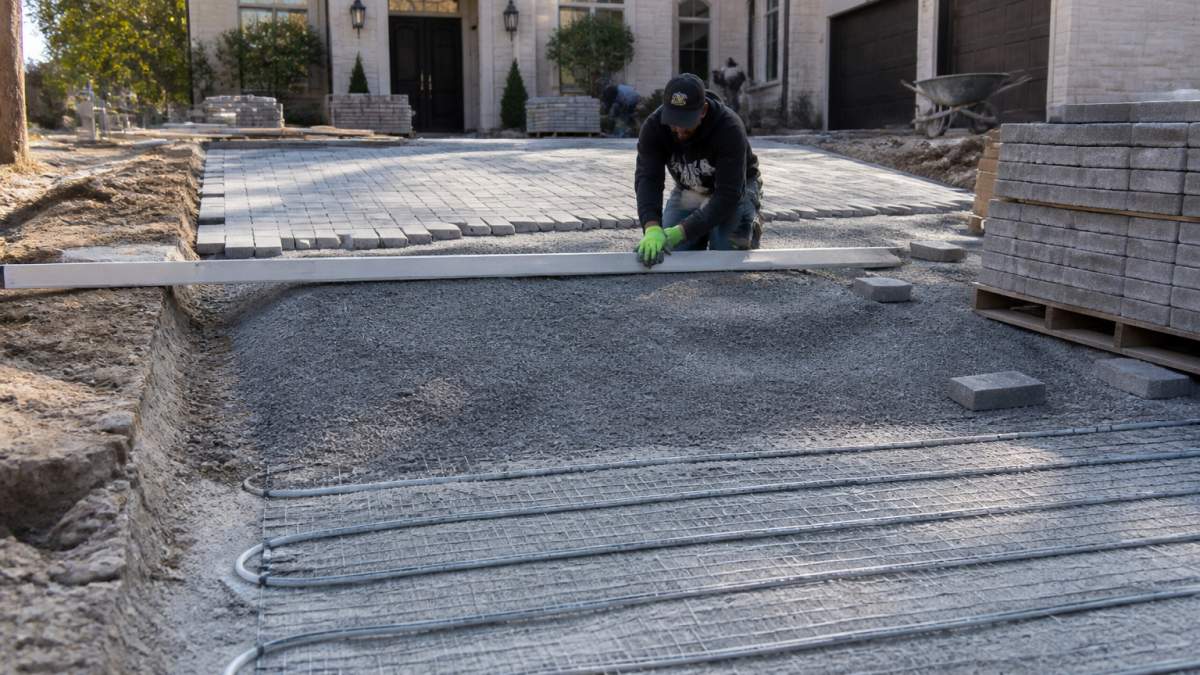
Drainage matters for the life of the surface. For wet sites, our permeable driveway solutions for heavy rain explain how drainage-friendly surfaces protect the investment.
The base itself matters just as much. Our guide to the best base for a paver walkway in DFW details the compacted layers that keep pavers stable under a heating element.
Testing the system before the pavers cover it helps catch problems early.
Get a Quote for Your Heated Paver Driveway
A heated paver driveway is a real investment, and the biggest risk is a quote that hides the electrical work, the insulation, or the controls. At Moises Pizana Hardscapes, we handle the work with our own crew and equipment, with no subcontracting, and more than 15 years of experience. We handle driveways, patios, retaining walls, and outdoor living spaces across the Dallas and Fort Worth area.
Before you request a quote, read our guide on hiring hardscape contractors so you know what to ask. Local soil conditions also affect base prep and cost, which our hardscape features for Fort Worth soil conditions explains.
Get started with Moises Pizana Hardscapes and request a quote for your project.
Frequently Asked Questions
How much does it cost to install a heated paver driveway?
There is no single number because heated paver driveways combine two cost centers: the paver surface and the snow-melting system. The paver portion depends on square footage, base preparation, and whether an existing driveway is removed. The heating portion depends on electric vs. hydronic choice, system size, controls, and local labor. Request a project estimate that itemizes excavation, base, pavers, heating elements, controls, and electrical work so you can compare bids fairly.
Can a heating system be installed under existing pavers?
Rarely without removal. Heating cables or tubing must sit in the base or sand layer directly under the pavers, so the pavers have to come up. A retrofit usually means lifting the existing surface, adding or adjusting the base, laying the heating element, and reinstalling pavers. If the current base is failing or drainage is poor, correcting that during the retrofit is cheaper than fixing it later. A contractor should assess base condition before quoting.
How much does it cost to run a heated driveway each month?
Operating cost depends on the heated area, system wattage, electricity rate, and how often the system runs. A snow sensor with automatic activation limits runtime to actual snow events, which keeps bills lower than manual operation. To estimate, multiply the system's kilowatt draw by your local electricity rate and the hours it runs per storm. Ask for the system's rated wattage per square foot and a controls package that includes a thermostat and moisture sensor.
Is a heated paver driveway worth the installation cost?
It depends on how much you value a clear driveway without shoveling, salting, or plowing, and on your climate. In areas with regular freeze-thaw cycles, a heated driveway can reduce ice buildup and surface damage from de-icing salts. The return shows up as convenience and surface longevity rather than a guaranteed resale premium. Compare the installed cost against years of snow removal and the cost of repairing salt-damaged or frost-damaged pavers before deciding.