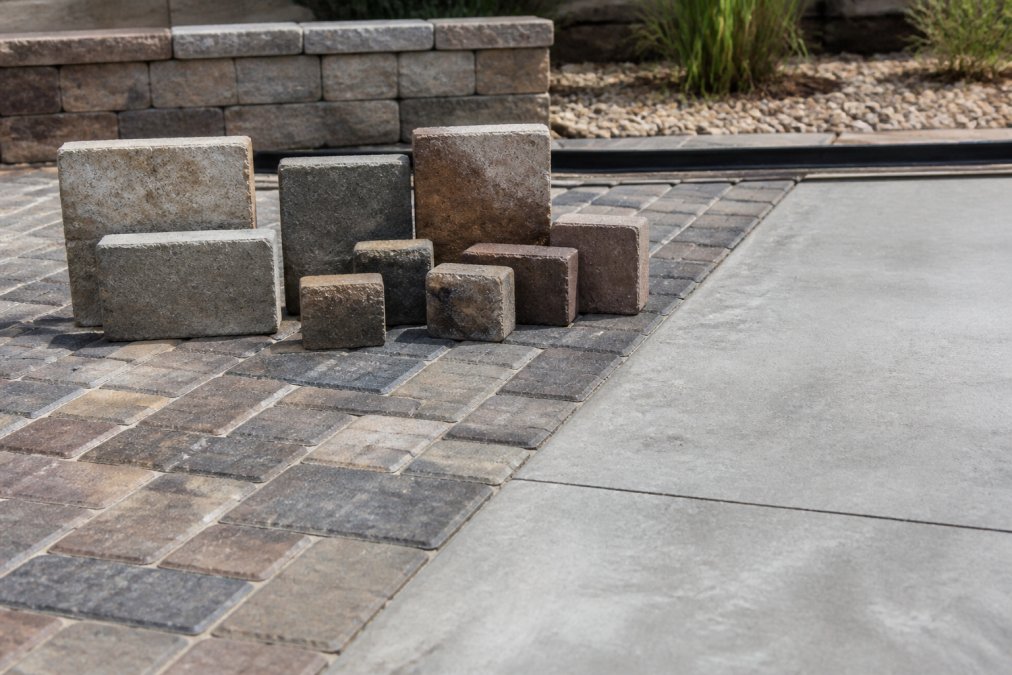
 comparison
Pavers and Driveways: A 2026 Homeowner's Guide
Table of Contents
- Pavers vs. Concrete Driveways: The Core Trade-Offs
- Paver Driveway Cost Per Square Foot: What Drives the Price?
- Material Comparison: Concrete, Brick, Natural Stone, and Porcelain
- The Hidden Factor: Sub-Base Preparation and Drainage
- Paver Driveway Maintenance Tips for Long-Term Value
- DIY vs. Professional Installation: What's Actually Involved?
- Making the Final Call for Your Home
- Frequently Asked Questions
Last Updated: September 8, 2026
Choosing between pavers and driveways is a structural investment that affects your property for decades. This guide from Moises Pizana Hardscapes breaks down what matters before you commit, offering an engineering-focused look at how these materials perform under real-world conditions.
Pavers vs. Concrete Driveways: The Core Trade-Offs
The fundamental difference between paver and concrete driveways lies in how they handle movement. A concrete slab is a single, monolithic pour that will crack when the soil beneath it shifts, whereas interlocking concrete pavers are individual units installed over a flexible base, allowing them to absorb ground movement without visible damage (concrete.org).
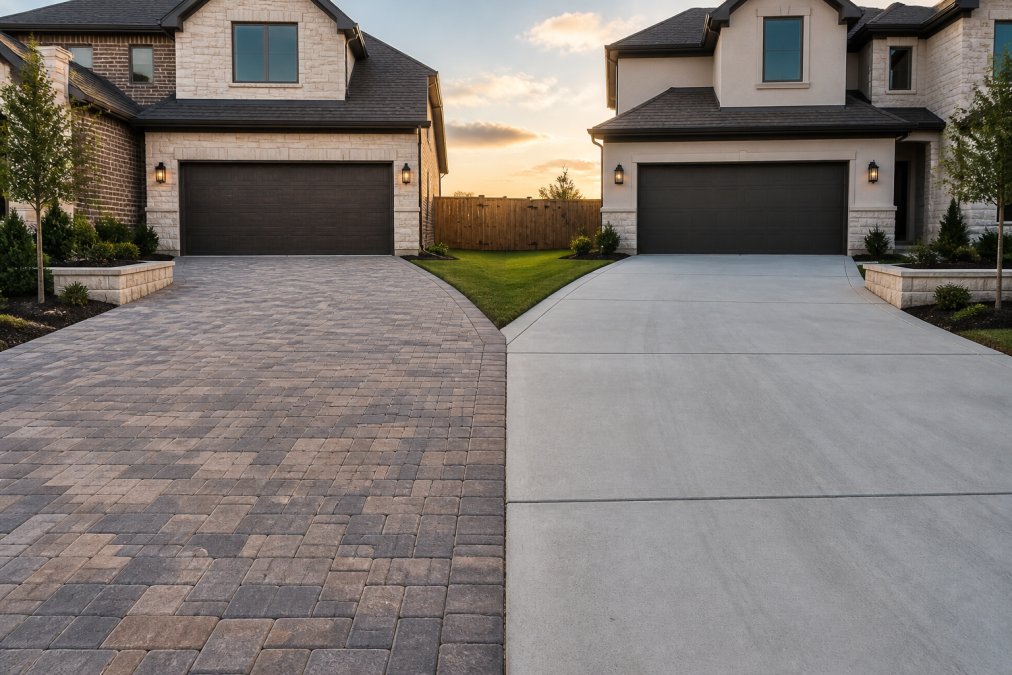
With a poured slab, a single crack is a permanent eyesore requiring full replacement or patching. With pavers, a damaged unit can be replaced individually. Concrete remains viable for its speed and lower upfront cost, provided the sub-grade is stable.
Pavers also perform better through freeze-thaw cycles. Because they are not a solid mass, they flex and shift, preventing the pressure buildup that causes concrete to spall and crack, offering a longer service life in climates with significant temperature swings.
Paver Driveway Cost Per Square Foot: What Drives the Price?
Paver driveway cost per square foot is dictated less by the pavers themselves and more by the unseen work beneath them. Excavation, aggregate sub-base, and proper compaction often account for a substantial portion of the total quote.
Several factors push the final number up or down:
- Sub-base depth: Vehicular traffic requires a deeper crushed stone base than a pedestrian walkway, typically 6 to 8 inches.
- Paver thickness: Driveways require pavers at least 60mm thick to handle the weight of vehicles without cracking (icpi.org).
- Edge restraints: A concrete or plastic border is mandatory to lock the pavers in place and prevent shifting over time.
- Site access and grading: Sloped properties or difficult access for equipment increase labor time and cost.
Because pricing depends on these variables, request a detailed quote from a professional installer who can evaluate your specific soil conditions and drainage requirements.
Material Comparison: Concrete, Brick, Natural Stone, and Porcelain
Selecting the right material for pavers and driveways requires balancing aesthetics, durability, and budget. Each category offers distinct trade-offs, and the best choice depends on your home's architectural style and your tolerance for maintenance.
| Material | Durability | Maintenance | Best For | Relative Cost |
|---|---|---|---|---|
| Concrete Pavers | High | Low | Modern homes, versatility | Moderate |
| Clay Brick | High | Medium | Classic, traditional styles | Moderate-High |
| Natural Stone | Very High | Low | Luxury, timeless aesthetics | Highest |
| Porcelain Pavers | Very High | Very Low | Contemporary, low-maintenance | High |
Concrete Pavers: The Versatile Workhorse
Concrete pavers dominate the market, offering the widest range of colors, shapes, and finishes. Products like Techo-Bloc Blu 60mm use dry-cast manufacturing for high density and resist damage from de-icing salts, making them practical for cold climates.
Their primary limitation is aesthetic: they rarely match the natural variation of quarried stone. For most homeowners, the combination of strength, pattern flexibility, and reasonable cost makes them the most balanced option.
Clay Brick and Natural Stone: Classic Aesthetics
Clay brick offers rich, warm tones that complement traditional architecture. Natural stone, including granite and limestone, provides a unique texture that increases property value. Both offer exceptional longevity but command a premium price.
Natural stone is the highest cost category, and sourcing uniform sizes can slow installation. Clay brick is more uniform but offers less design flexibility than concrete.
Porcelain and Permeable Systems: Modern Solutions
Porcelain pavers are a growing trend for modern driveways. These high-density, non-porous tiles offer scratch and stain resistance and require no sealing, though you should select a textured finish to avoid slipperiness when wet.
Permeable paver systems allow water to infiltrate the ground, reducing runoff and mitigating local flooding. They suit properties with poor drainage but require a specialized, deeper aggregate sub-base. power washing driveways.
The Hidden Factor: Sub-Base Preparation and Drainage
Sub-base preparation is the single most important factor in preventing settling, cracking, and premature failure. It involves excavating, laying geotextile fabric, and compacting crushed stone layers. Most manufacturer warranties are contingent on this being done correctly.
The Engineering of a Paver Base: A Layer-by-Layer Breakdown
A proper paver driveway is a carefully engineered system designed to distribute a vehicle's weight (a typical SUV weighs over 4,000 pounds) evenly across the soil.
- Excavation: Excavate to a total depth of 12 to 14 inches below final grade for vehicular traffic.
- Geotextile Fabric: Lay permeable fabric over compacted soil to prevent fine particles from migrating into the aggregate. Without it, the driveway will settle unevenly.
- The Aggregate Base: Place crushed stone in two lifts, compacting each with a plate compactor to a total of 6 to 8 inches. Compaction eliminates air pockets that cause settling.
- Bedding Sand: Screed a 1-inch layer of coarse, washed concrete sand as a leveling bed for the pavers.
The Critical Role of Drainage and Slope
Water pooling beneath the paver system will saturate the base, causing aggregate to shift and pavers to heave during freeze-thaw cycles. A professional installation addresses this in two ways.
- Surface Slope: The entire driveway surface must be graded to direct water away from your home's foundation. A standard minimum slope for a paver driveway is 1/4 inch per foot to ensure positive drainage. This is achieved during the base preparation, not by trying to angle the pavers themselves.
- Permeable Sub-Base: In areas with poor soil drainage or where local regulations require stormwater management, a permeable paver system is used. This involves a deeper, open-graded aggregate base (often 12 to 18 inches) that acts as a retention basin, allowing water to slowly infiltrate into the ground below. This system is not just an environmental nicety; it is a practical solution for properties where a traditional impervious driveway would cause flooding or erosion.
A Note on Edge Restraints
A paver driveway needs a rigid boundary to prevent pavers from shifting outward under vehicle traffic. A concrete curb or heavy-duty plastic edge restraint, anchored into the sub-base, locks the system in place. Without it, edge pavers will spread and separate.
Understanding these details lets you ask the right questions of a contractor and evaluate a quote based on specified base depth and materials. The visible pavers are only a small fraction of the system's cost and value.
Paver Driveway Maintenance Tips for Long-Term Value
A paver driveway is low-maintenance but not zero-maintenance. The long-term cost of ownership is where pavers shine, provided you perform simple, periodic tasks that prevent small issues from becoming expensive repairs.
The Annual Maintenance Cycle: A Simple Checklist
A well-built paver driveway requires only a few hours of maintenance per year, primarily to preserve joint sand integrity and surface cleanliness.
- Spring Cleaning: After the winter, sweep the surface to remove debris and use a power washer to clean any accumulated dirt or grime. This is also the ideal time to inspect for any minor settling or damaged pavers.
- Joint Sand Replenishment: Over time, rain and wind will wash away the fine sand between the pavers. This sand is the 'glue' that locks the units together and prevents lateral movement. If you notice the sand level is low, simply sweep new polymeric sand into the joints and activate it with a light water spray. This is a low-cost task (a bag of sand is typically under $50) that prevents the edges of the pavers from chipping.
- Weed and Insect Control: Weeds can take root in the joint sand if it's not maintained. A quick pass with a weed killer or a pull by hand is far easier than dealing with a root system that has undermined the pavers. Similarly, ants can excavate the sand, so treat any anthills promptly.
The Definitive Guide to Repairing a Single Paver
The most significant long-term cost advantage of pavers is the ability to perform a spot repair. If a paver cracks or stains, you do not need to replace the entire driveway.
- Remove the Damaged Paver: Break it with a chisel and hammer, or use a paver puller for intact but stained units.
- Prepare the Base: Inspect the bedding sand, add fresh sand if needed, and level it with a straight edge.
- Install the Replacement: Slide the new paver into the void, tapping gently with a rubber mallet if needed.
- Secure the Joints: Sweep polymeric sand over the area and water lightly to activate the binding agents.
This repair costs only the price of a single paver (typically $3 to $8), a stark contrast to concrete, where a crack often necessitates full slab replacement or a high-cost overlay.
Sealing: Protection and Aesthetics
While not mandatory, sealing protects against oil stains, de-icing salts, and efflorescence, while enriching paver color with a 'wet look' many homeowners prefer.
Manufacturers recommend applying a sealer every 3 to 5 years (belgard.com). Look for a breathable, solvent-based product designed for concrete pavers to ensure it won't trap moisture.
The initial investment is higher than concrete, but spot repairs and minimal annual upkeep mean total cost of ownership over 30 years is often comparable, if not lower, while maintaining a superior appearance.
DIY vs. Professional Installation: What's Actually Involved?
The DIY versus professional question for pavers and driveways comes down to scale and equipment. A small patio is feasible for a competent DIYer, but a driveway requires heavy equipment for excavation, an understanding of compaction and grading, and the physical capacity to place hundreds of pounds of material.
Professional crews bring specialized tools and experience to handle buried utilities or poor soil. At Moises Pizana Hardscapes, our crew has over 15 years of experience and the equipment to deliver high-quality workmanship. Attempting installation without this expertise often results in a failed sub-base, which is costly and dangerous to repair.
Making the Final Call for Your Home
Deciding between materials for your pavers and driveways comes down to your priorities. If you value long-term durability, ease of repair, and premium aesthetics, a professionally installed paver driveway is the superior investment. If upfront cost is your only consideration, a concrete slab may fit your budget, but you must accept the risk of cracking and a shorter lifespan.
Frequently Asked Questions
Is it cheaper to do pavers or concrete for a driveway?
Generally, a standard concrete driveway has a lower upfront installation cost than a paver driveway. However, the paver driveway cost per square foot can be competitive when you factor in longevity and repairs. While concrete may seem cheaper initially, it is prone to cracking and often requires full replacement, whereas pavers can be individually repaired, potentially offering better long-term value.
What are the disadvantages of a paver driveway?
The main disadvantages include a higher initial cost compared to concrete or asphalt and the need for proper sub-base preparation to prevent settling. Without a correctly installed edge restraint and compacted aggregate base, pavers can shift. Additionally, joint sand may need occasional replenishment, and while maintenance is simple, it is an ongoing task to keep the surface looking its best.
How long do paver driveways last compared to asphalt?
A professionally installed paver driveway can last 25 to 50 years or more, significantly outlasting an asphalt driveway, which typically has a lifespan of 15 to 20 years. Asphalt is also susceptible to damage from UV rays and petroleum products, requiring regular sealing. Pavers, especially concrete or natural stone, offer superior durability against freeze-thaw cycles and heavy vehicular traffic.
Do paver driveways require a lot of maintenance?
Paver driveways require less maintenance than alternatives like asphalt, but they are not maintenance-free. The key paver driveway maintenance tips include regularly sweeping to remove debris, occasionally rinsing with a hose, and pulling any weeds that sprout in the joints. You may need to top up joint sand every few years and consider sealing to protect against stains and efflorescence.
Choosing the right driveway is a significant decision that impacts your home's value and your daily life. At Moises Pizana Hardscapes, we specialize in crafting durable, beautiful driveways tailored to your vision, with the integrity and experience to stand behind our work. Contact us today to get a quote and see how we can elevate your home's entrance with a driveway built to last.