 comparison
Best Patio Materials for Resale Value
Last Updated: October 23, 2026
Quick Summary
The best patio materials for resale value balance upfront cost, long-term durability, and buyer perception. Concrete pavers win this calculation for most homeowners, cheaper than natural stone, better looking than poured concrete, while natural stone commands premium prices only in luxury markets and brick offers timeless appeal with moderate maintenance.
- Concrete pavers generally outperform poured concrete for resale because individual damaged units can be replaced rather than resurfacing entire sections.
- Natural stone adds measurable value in neighborhoods where homes regularly sell above $500K but may underperform in moderate markets where buyers do not expect or factor it into offers.
- Condition and maintenance matter more than material category at resale; a well-kept concrete patio can outperform a poorly installed paver patio.
- Divide total ownership cost by expected service life to compare materials; a higher upfront price with low repair frequency often costs less per year than a cheaper surface needing resurfacing.
- Match patio material to your neighborhood's finish level and your planned hold period; selling within two to three years means premium materials may not have time to prove durability.
Table of Contents
- How Patio Materials Affect Home Resale Value
- Paver Patio vs Concrete Patio: Which Sells Better
- Natural Stone Patio Pros and Cons for Buyer Appeal
- Patio Pavers Cost and Return on Investment
- Deck vs Patio Resale Value: What Buyers Prefer
- Total Cost of Ownership and Long-Term Value
- Frequently Asked Questions
How Patio Materials Affect Home Resale Value
When you're thinking about the best patio materials for resale value, you're really asking two questions: which materials will buyers actually want, and which ones will hold up long enough to matter? At Moises Pizana Hardscapes, we've worked with homeowners in the Dallas and Fort Worth areas upgrading their outdoor spaces to move the needle on property value. Explore patio options and request a quote to get started on your project.
A patio isn't just a place to grill. It's square footage. Buyers factor outdoor living space into what a home offers, and the material signals either "smart investment" or "needs replacing in five years", which changes how appraisers value the property and how seriously buyers bid.
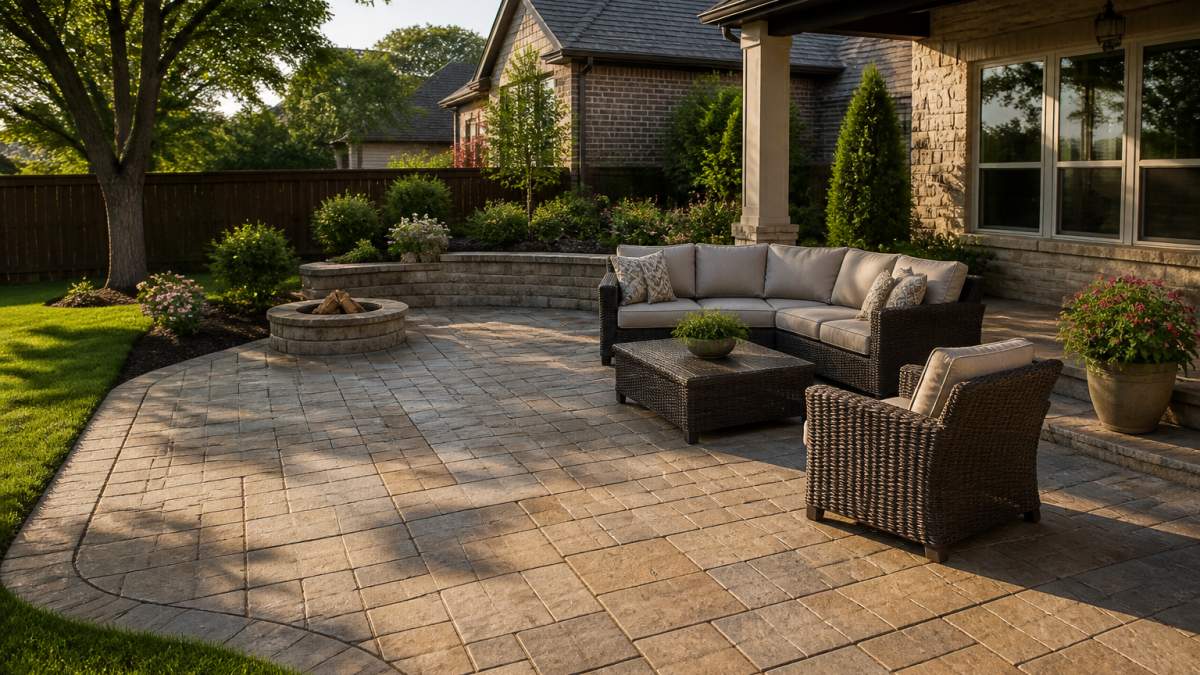
The best patio materials for resale value balance three forces: upfront cost, long-term durability, and buyer perception. Concrete pavers win this calculation for most homeowners, cheaper than natural stone, better looking than poured concrete. Natural stone commands premium prices but only pays off where luxury finishes are expected. Brick offers timeless charm, though it requires more maintenance.
Material choice also depends on your timeline. Selling within two years? The newest-looking option matters most. Holding longer? Durability and maintenance costs become the real factor. A patio that cracks or settles within three years will hurt resale more than it helped.
Paver Patio vs Concrete Patio: Which Sells Better
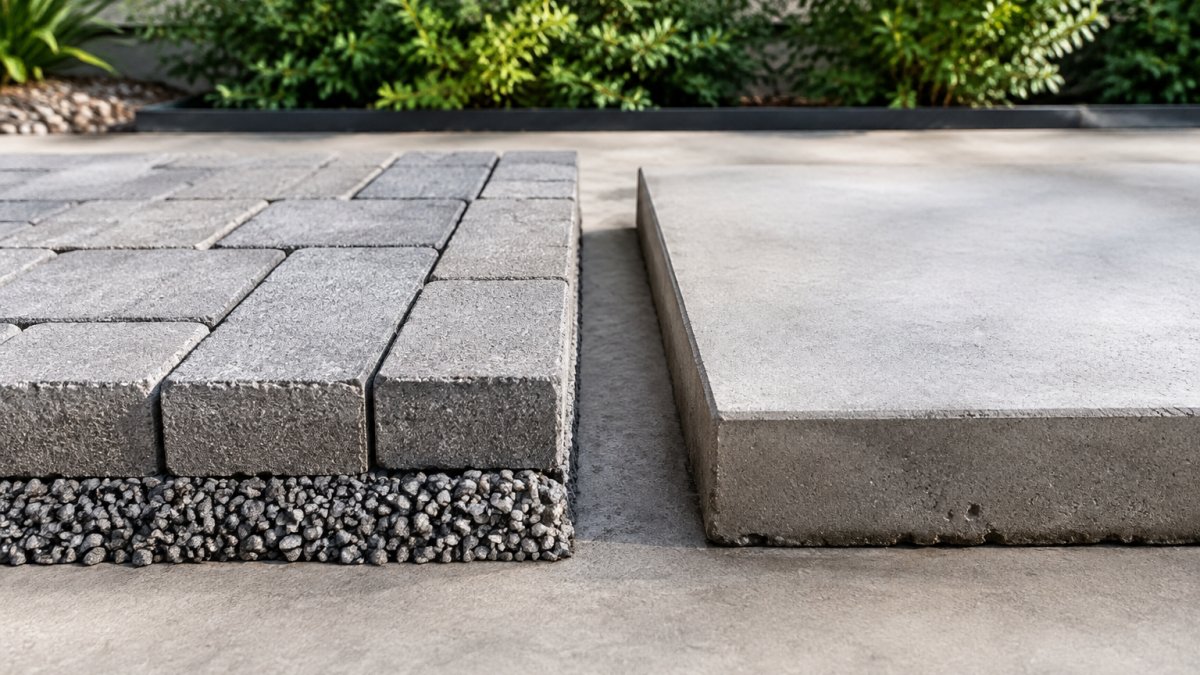
Paver patio vs concrete patio is not a simple upgrade story.
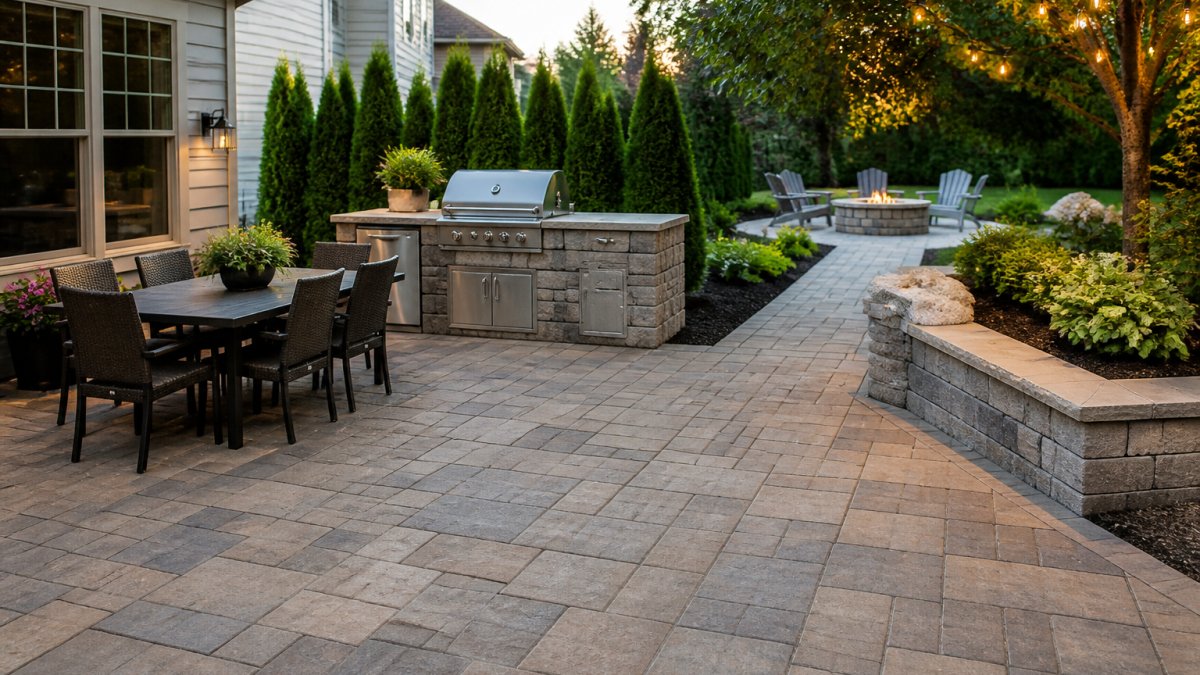
Perceived value. Poured concrete is the baseline buyers expect: functional, affordable, unremarkable. Concrete pavers read as intentional, with individual units, color variation, and pattern signaling investment. That gap is real but not universal.
Repairability. This is pavers' most concrete resale advantage. A cracked or settled paver can be lifted and replaced as a single unit.
Maintenance burden. The trade-off runs the other way. Concrete pavers require polymeric sand replenishment, weed control between units, and periodic cleaning. Poured concrete needs sealing every few years and crack management, but less fussing between tasks.
Drainage and safety. Poured concrete sheds water as a single plane and can pond if grading is off. Permeable paver systems with open-graded base and joint material reduce ponding and ice heave in freeze-thaw climates.
Bottom line for resale. Choose pavers when your market expects finished outdoor living and you can afford a proper base and installation. Choose poured concrete when budget is tight, the market is utilitarian, or the patio is secondary to the home's main selling points. Either way, invest in grading, base preparation, and drainage; those invisible decisions determine whether the surface still looks solid when you sell.
Natural Stone Patio Pros and Cons for Buyer Appeal
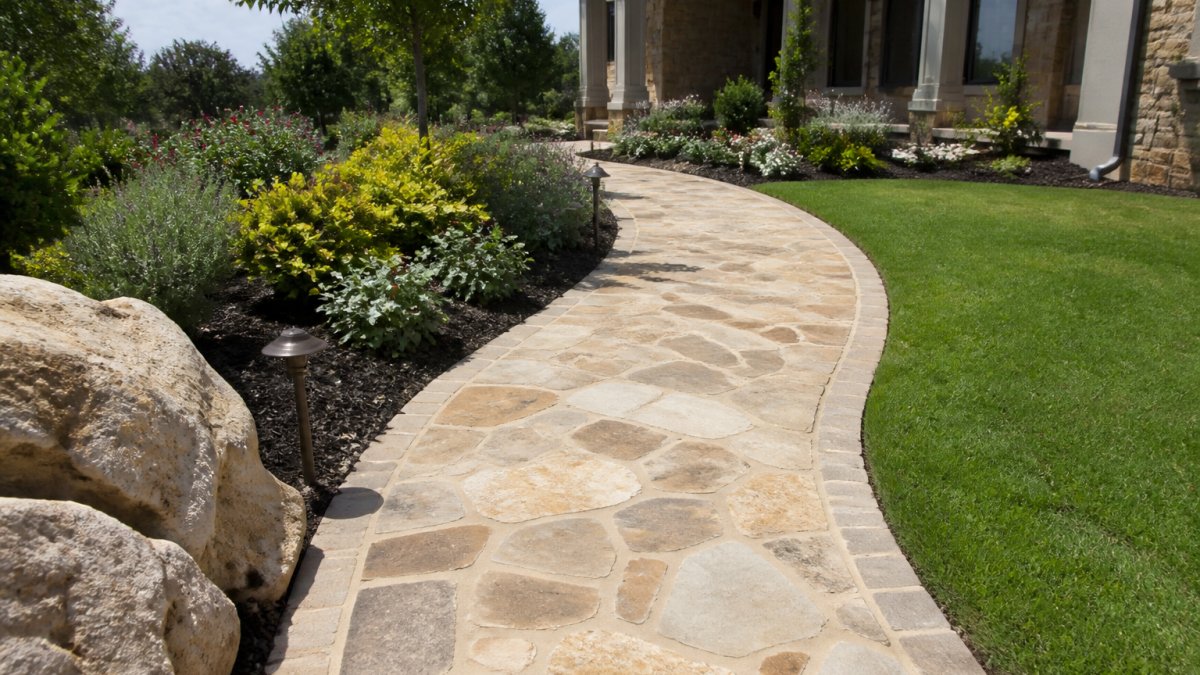
Natural stone, flagstone, granite, limestone, travertine, signals luxury. Buyers see it and immediately adjust their mental price upward. This is the material that makes an outdoor space feel intentional rather than functional.
The appeal is straightforward: natural stone is genuinely beautiful. Each piece is unique. Colors don't fade. The material ages gracefully, developing character rather than deterioration.
The downside is equally straightforward: cost. Material and professional installation for a natural stone patio run substantially higher than alternatives. You're betting your buyer market values that investment enough to recover it in the sale price.
Natural stone also demands maintenance. Flagstone can be slippery when wet. Granite and limestone require periodic sealing to prevent staining. Travertine is softer than granite and shows wear faster.
Does a New Patio Increase Home Value? explores whether the investment returns in your specific market. The answer varies. In established neighborhoods where homes regularly sell above $500K, natural stone adds measurable value.
Brick pavers occupy their own category. They deliver traditional appeal and genuine durability without natural stone's premium price tag. Brick ages beautifully, maintains color through decades, and handles high traffic well (Clay Pavers). The trade-off is susceptibility to moss and algae in shaded, damp areas. For buyers seeking classic curb appeal, brick often outperforms concrete pavers because it feels more permanent and established.
Patio Pavers Cost and Return on Investment
Patio pavers cost depends on material, size, and installation complexity. Concrete pavers start lower than natural stone but higher than basic poured concrete. The real cost variable is labor, professional installation adds significantly to material expense.
Your return on investment for patio pavers depends on what you're comparing. If you're choosing between poured concrete and pavers, you're paying more upfront but getting a material that holds value longer and appeals to more buyers. Cost of Custom Patio Installation 2026 breaks down pricing for different materials and installation scenarios in detail.
The ROI calculation should account for maintenance costs over time. A paver patio requires more upkeep than poured concrete, but individual repairs are cheaper. You replace one damaged unit rather than resurfacing the entire patio. Over 10-15 years, this flexibility often saves money compared to concrete's all-or-nothing repair approach.
Natural stone delivers the strongest ROI in high-value markets but the weakest in moderate ones. Brick pavers deliver consistent, moderate ROI across most markets because they appeal broadly and last decades.
Deck vs Patio Resale Value: What Buyers Prefer
Deck vs patio is a structural choice, not just a material one. Decks sit elevated, usually built from wood or composite. Patios sit on grade, built from hard materials like pavers or concrete.
Patios typically outperform decks for resale value because they're more durable and require less maintenance. Decks need regular sealing, staining, or composite replacement; wood rots and fasteners corrode.
That said, decks work better in certain situations. If your yard is sloped, a deck may be the only practical option.
Material choice within each category matters. A composite deck outperforms a wood deck for resale; a paver patio outperforms poured concrete. The pattern holds: buyers value durability and low maintenance over initial cost.
For most homeowners, a patio is the stronger resale investment. But if your yard's topography or landscaping makes a deck the natural choice, a well-built composite deck performs well enough.
Total Cost of Ownership and Long-Term Value
Total cost of ownership is where patio material choices separate on resale, and it is the angle most guides skip. Upfront price is only the first line item.
Here is how the major options compare on the ownership curve, using commonly reported ranges and typical service lives.
- Poured concrete. Lowest upfront cost. Expect sealing every 2-3 years and crack management as the slab ages. Service life is often 20-30 years, but appearance degrades faster than structure. Repairs are all-or-nothing: patching, resurfacing, or replacement of large sections. Over a long hold, accumulated repair and resurfacing costs narrow the gap with pavers.
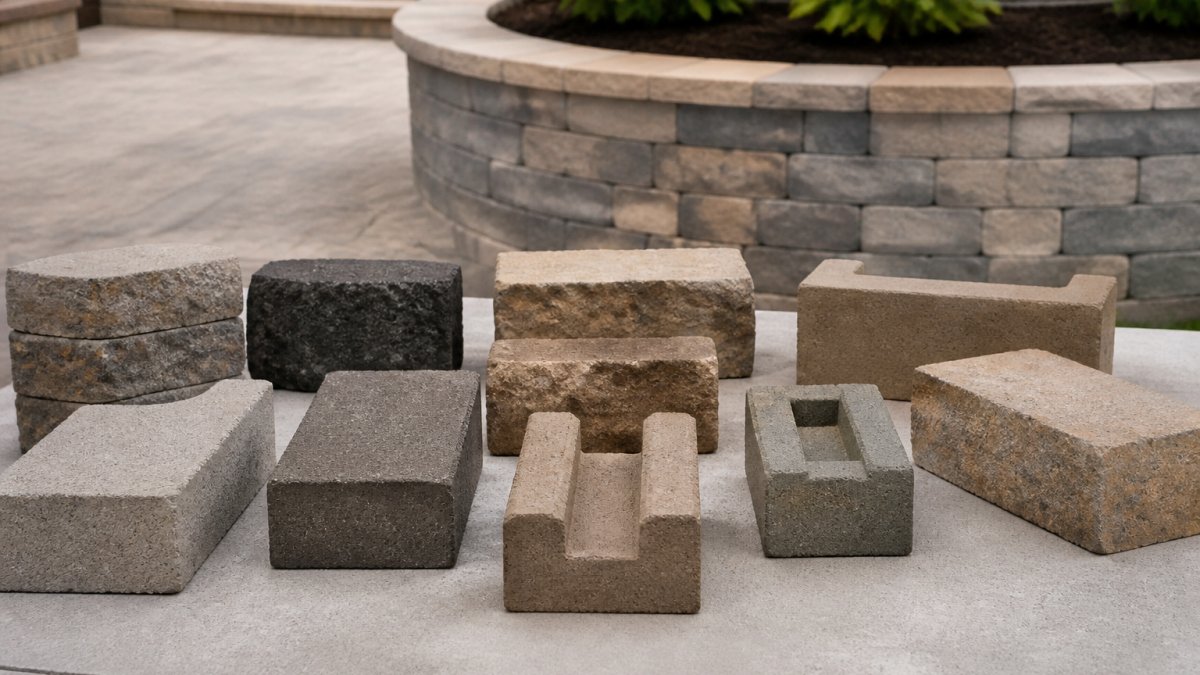
- Concrete pavers. Higher upfront than poured concrete. Maintenance includes polymeric sand replenishment every few years, weed control, and periodic cleaning. Service life is commonly 25-30 years or more with a proper base. Repairs are surgical: replace individual units. That repairability is the core ownership advantage and the reason pavers often cost less per year of service life than they appear to.
- Natural stone. Highest upfront. Requires periodic sealing depending on stone type; flagstone can be slippery when wet, and softer stones like travertine show wear faster than granite. Service life is often 30-40 years with proper installation and sealing. Repairs are unit-level but color and thickness matching can be difficult.
- Brick pavers. Mid-to-high upfront. Durable and colorfast for decades. The main ownership cost is cleaning moss and algae in shaded, damp areas. Service life is comparable to stone. Repairs are unit-level and blend well.
The ownership math that matters for resale. Divide total ownership cost by expected service life to get a rough annual cost, then compare that to your planned hold period.
Condition beats category at sale. A 15-year-old paver patio with fresh polymeric sand, clean joints, and no settlement reads as an asset.
Where premium materials fail to recoup. Natural stone and high-end pavers deliver the strongest ownership value where luxury finishes are expected and buyers recognize the material.
Luxury Patio Alternatives to Concrete: 2026 Guide explores premium materials and their long-term performance.
When calculating resale value, factor in how long you are holding the property. A patio that needs replacement in five years will hurt your sale; one that still looks solid in 10-15 years will enhance it. Material choice determines which scenario you get.
Here's how the major patio materials compare on upfront cost, maintenance, and expected service life.
| Material | Upfront Cost | Key Maintenance | Service Life |
|---|---|---|---|
| Poured concrete | Lowest | Sealing every 2-3 years, crack management | 20-30 years |
| Concrete pavers | Higher than concrete | Polymeric sand replenishment, weed control, cleaning | 25-30+ years |
| Natural stone | Highest | Periodic sealing, varies by stone type | 30-40 years |
| Brick pavers | Mid-to-high | Cleaning moss and algae in damp areas | Comparable to stone |
Frequently Asked Questions
Do paver patios increase home value?
Paver patios typically increase buyer appeal more than basic poured concrete because they offer superior aesthetics, individual unit replacement capability, and design flexibility. Buyers perceive pavers as a premium upgrade. However, the actual resale value gain depends on your local market, the patio's size and condition, and how the improvement compares to similar homes in your area. Professional installation and quality materials matter significantly.
Is a concrete patio or paver patio better for resale?
Paver patios generally outperform poured concrete in resale appeal. Concrete offers the lowest upfront cost but shows age through cracking and discoloration. Pavers maintain their appearance longer, can be repaired individually, and convey higher-end construction to buyers. For maximum resale value, concrete works best as a budget solution, while pavers and natural stone attract buyers willing to pay more for quality outdoor living spaces.
What patio material is most durable and lasts the longest?
Natural stone, particularly flagstone and granite, offers the longest lifespan, often 25-30+ years with proper maintenance. Brick pavers rank second, lasting 20-25 years. Concrete pavers typically last 15-20 years. Poured concrete can crack within 10-15 years depending on climate and ground conditions. Durability directly impacts resale value because buyers factor in replacement costs when evaluating a property.
How much does a patio paver project typically cost?
Patio paver costs depend on material selection, square footage, site preparation, and local labor rates. Pricing varies significantly based on whether you choose basic concrete pavers, premium brick, or natural stone. For accurate pricing tailored to your project size and material preferences, contact a local hardscape professional for a detailed quote.