 blog
blog
Is Professional Hardscape Design Worth It?
Table of Contents
- Why Hardscape Design Decisions Affect Property Value
- Hardscape Design Cost: What You're Actually Paying For
- Hardscape Return on Investment: What the Numbers Show
- DIY vs Professional Hardscape Installation: A Realistic Comparison
- Patio Value for Resale: Which Projects Buyers Pay More For
- Permits, Drainage, and Construction Risks That Erode Returns
- How to Decide If Professional Hardscape Design Is Worth It for You
- Frequently Asked Questions
Last Updated: October 6, 2026
Why Hardscape Design Decisions Affect Property Value
Hardscape design is the planning and building of a yard's non-living parts: patios, walkways, retaining walls, driveways, and outdoor kitchens. It makes outdoor space usable, not just visible, and buyers pay for function and finish, not just plants.
At Moises Pizana Hardscapes, we build retaining walls and outdoor living spaces across the Dallas and Fort Worth area, and we hear the same question before almost every project: will this pay us back? Professional hardscape design affects property value in three ways:
- Curb appeal. A clean walkway and driveway shape the first impression before a buyer steps inside.
- Usable square footage. A finished patio adds living space a buyer can picture using.
- Condition signals. Straight walls and proper drainage suggest a home that has been maintained.
The Appraisal Institute guidance on outdoor improvements notes that appraisers weigh outdoor features by condition and market demand, not by cost alone.
Hardscape Design Cost: What You're Actually Paying For
Hardscape design cost breaks into two parts: the design work and the physical installation. Homeowners often lump them together, then feel blindsided when a quote separates them.
Design fees cover site measurement, a landscape plan, material selection, and layout decisions, thinking through grades, drainage, and use before a single paver is set.
Installation costs cover labor, base material, stone or pavers, equipment, and disposal.
Design Fees vs. Installation Costs
Think of the design fee as insurance against rework: a plan catches problems on paper, where fixes are cheap, instead of on site. It is the smaller share of the total, and it determines whether the larger share is spent well.
How the two are priced depends on which service model you hire:
- Design-only. You pay a designer or landscape architect for plans and specifications, then bid construction separately. Most control and most competitive install pricing, but you manage the handoff.
- Design-build. One firm handles both under a single contract, the design fee is often bundled or credited against the build, and accountability stays in one place. Most homeowners choose this for structural projects.
- Free design with build. The design cost is built into the installation price, and you have less leverage to compare bids on an apples-to-apples plan.
What Drives the Cost Up or Down
Project-level cost is not random. These are the levers:
- Size and scope. Square footage of patio, length of walkway, height and length of retaining wall.
- Site access. A backyard reachable by truck and skid steer is cheaper to build than one only reachable by wheelbarrow through a side gate.
- Grade and drainage. A flat, well-draining yard is straightforward. A sloped or pooling yard adds engineering, drainage, and labor.
Why the Design Fee Is the Cheapest Part of the Project
The design fee is a small fraction of the total project cost, but it determines whether the rest is spent well. Catching a drainage, grade, or layout problem before construction saves multiples of the fee in avoided rework, and gives you a document you can bid out.
How to Read a Hardscape Quote
When you compare quotes, compare these line items, not just the bottom line:
- Design and drawings (included, separate, or credited)
- Excavation and disposal
- Base material and compaction method
A quote that is silent on drainage, base compaction, or permits is not a lower price. It is a price with the expensive parts removed.
Hardscape Return on Investment: What the Numbers Show
Most articles quote a single landscaping ROI figure and stop there. That is not useful, because hardscape ROI is a net calculation: the resale uplift a buyer will actually pay, minus design fees, materials, installation, repairs, and ongoing maintenance. Here is how to run it.
Why Hardscape ROI Is Not One Number
A paver patio, a retaining wall, and a driveway are three investments with three payback profiles. They differ in cost per square foot, street visibility, how easily a buyer verifies quality, and maintenance demands. Treating them as one 'landscaping ROI' hides the real decision.
A common pattern:
- Entry-level hardscape (walkways, small patios, edging) tends to return a higher share of cost because the spend is low and the curb-appeal lift is immediate.
- Mid-tier hardscape (full patios, seat walls, fire features) returns a moderate share and depends heavily on whether neighboring homes already have comparable outdoor living space.
- High-end hardscape (outdoor kitchens, pool decks, complex retaining walls) can return a low share of cost at resale even when it dramatically improves livability, because the buyer pool that will pay for it is smaller.
The Net-Return Framework
Instead of asking 'what percentage do I get back,' run this four-step calculation:
- Estimate resale uplift. Compare recent sales of similar homes with and without comparable hardscape nearby. A local agent can pull these comps; a national average will not reflect your street.
- Add up all-in cost. Design fee + materials + labor + permits + engineering (if required) + any site prep like regrading or drainage. This is the number most homeowners underestimate.
- Subtract ongoing cost. Sealing, re-sanding joints, replacing plantings, and repairs. Buyers discount projects that look like future work.
- Compare to the alternative. A bare yard is not a zero-cost baseline, it is a discount at sale. The real comparison is your net return versus the price hit of selling with an unfinished or worn outdoor space.
What Pushes Net Return Up or Down
Factors that reliably improve net return:
- Matching the neighborhood. Overbuilding for your street rarely pays; underbuilding against newer comps costs you at listing.
- Climate-appropriate materials. In hot, freeze-thaw, or high-rainfall markets, the right paver and base choice prevents the cracking and settling that kill buyer confidence.
- Low-maintenance finishes. Buyers pay more for hardscape that looks finished and stays finished without a weekend of work.
Factors that quietly erode net return:
- Poor drainage causing pooling, erosion, or foundation moisture.
- Visible settling, cracking, or uneven joints within the first few seasons.
- Unpermitted retaining walls or structures that surface during a buyer's inspection.
How Local Market and Property Type Change the Math
Two identical patios can produce very different net returns:
- Climate. In markets with long outdoor seasons, usable outdoor living space commands a premium. In markets with short seasons, the same patio is a nice-to-have, not a driver.
- Neighborhood expectations. If most homes on your street already have finished patios and outdoor kitchens, a bare yard is a discount. If you would be the first, the return is less certain.
- Property type and price tier. Entry-level homes reward modest, well-executed hardscape. Luxury homes reward scale and finish quality. Mid-tier homes are the most sensitive to overbuilding.
That is why the honest answer to 'is professional hardscape design worth it for property value' depends less on the design fee and more on whether the finished project fits your specific market, street, and buyer pool.
DIY vs Professional Hardscape Installation: A Realistic Comparison
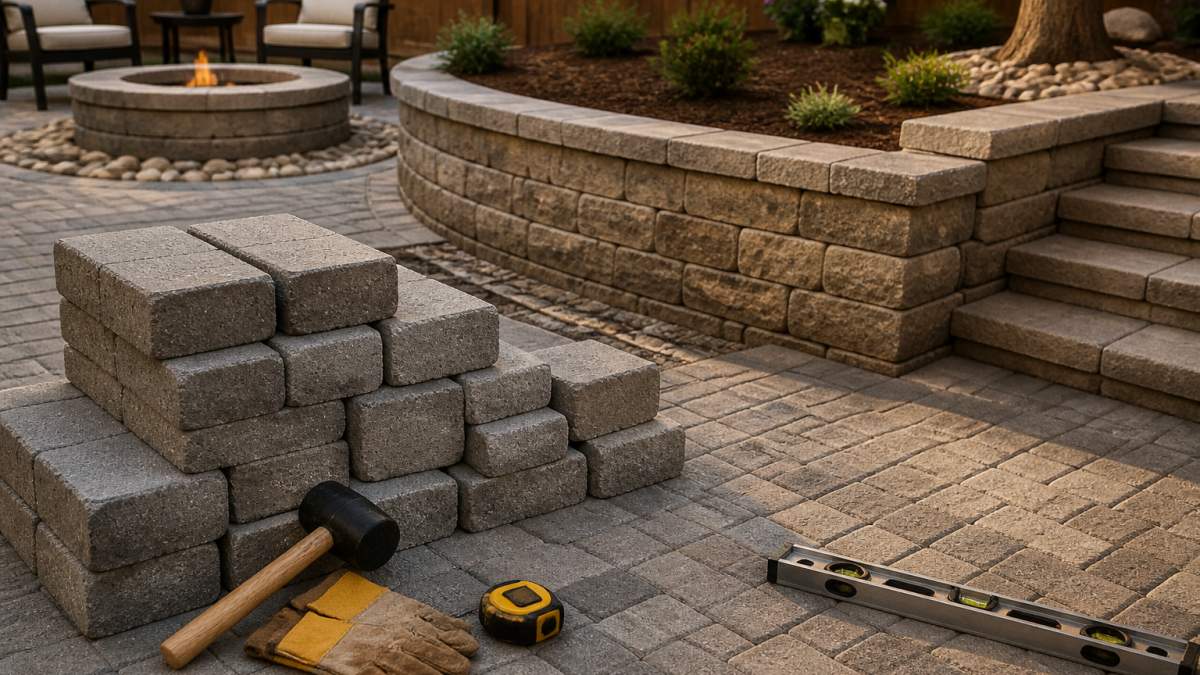
DIY vs professional hardscape installation comes down to risk, not just money. A homeowner can lay a small walkway. Once you add grade changes, retaining walls, or drainage, the margin for error shrinks fast.
| Factor | DIY | Professional |
|---|---|---|
| Upfront cost | Lower materials only | Higher, includes labor |
| Base preparation | Easy to under-build | Compacted in lifts |
| Drainage planning | Often overlooked | Designed in |
| Retaining walls | High failure risk | Engineered and permitted |
| Timeline | Weekends, months | Scheduled crew |
| Warranty | None | Workmanship coverage |
The base is where DIY projects fail. A patio is only as good as the compacted gravel and sand beneath it. Skip that, and pavers shift within a season.
Patio Value for Resale: Which Projects Buyers Pay More For
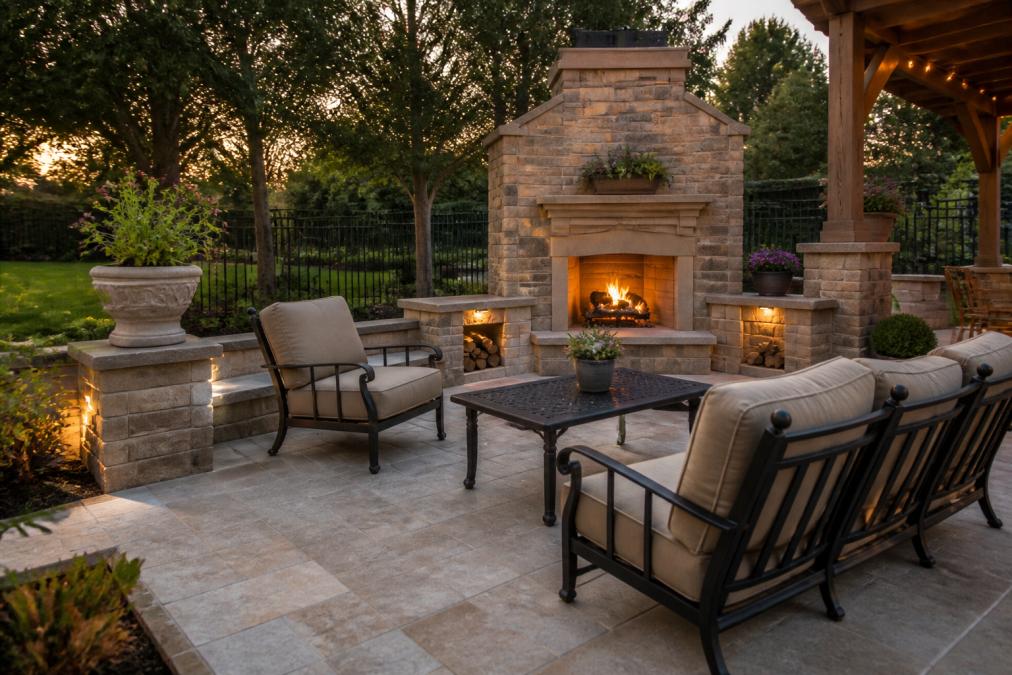
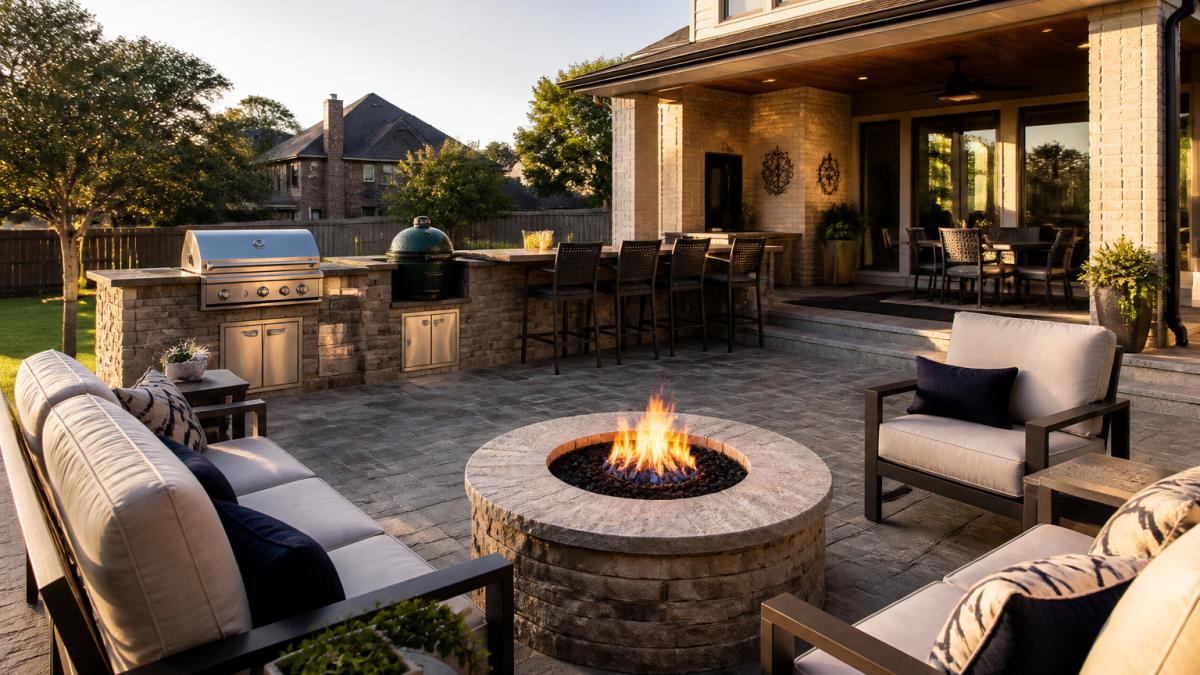
Patio value for resale depends on how easily a buyer can imagine using the space. A plain concrete slab reads as unfinished; a designed patio with clean edges, shade, and defined seating reads as a room.
Hardscape Elements That Move the Needle Most
Not every feature returns the same. Ranked by how reliably they help at resale:
- Patios and outdoor living areas. The single most requested feature in buyer surveys.
- Walkways and entry paths. Cheap to build, high impact on first impression.
- Retaining walls. Solve erosion and add usable, level yard space.
- Driveways. A cracked, stained driveway undercuts every other upgrade.
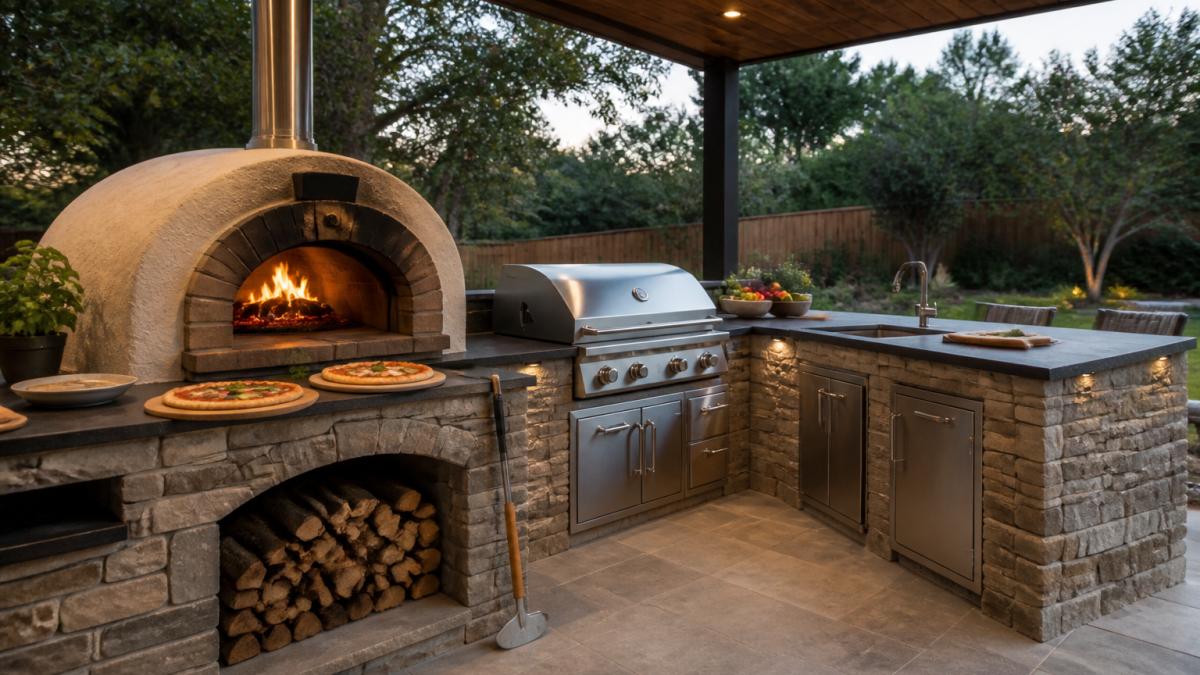
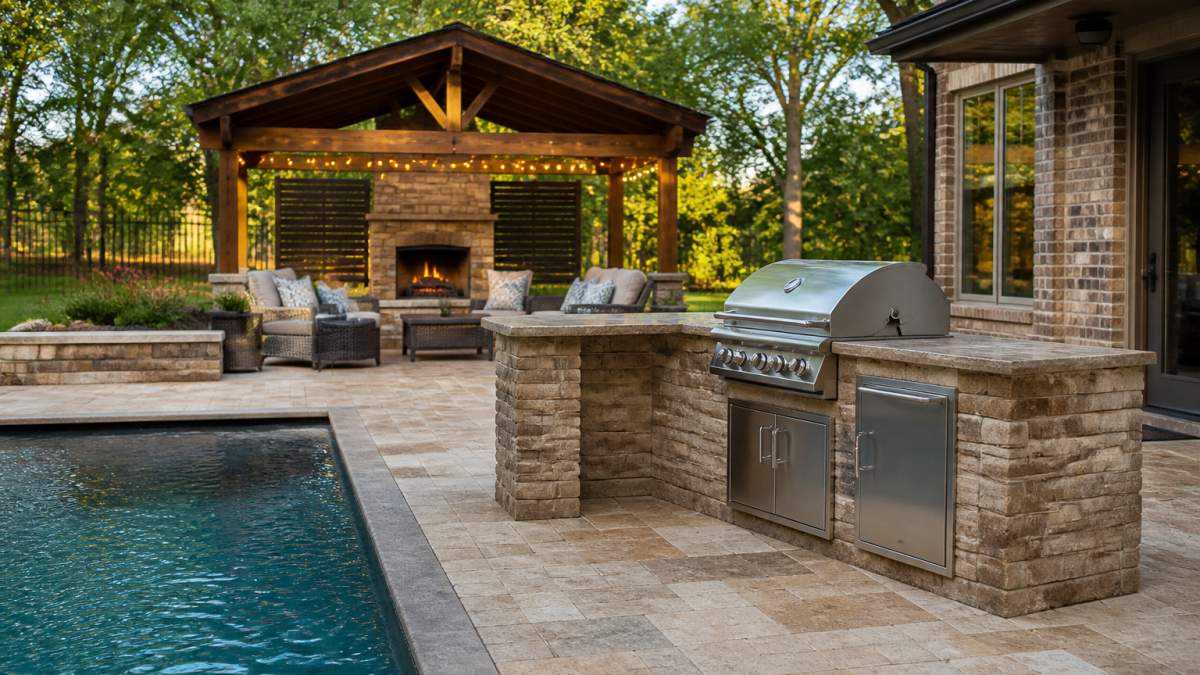
- Outdoor kitchens and fire pits. Strong appeal, but only in the right price tier.
The EPA guidance on water-efficient landscaping supports native and drought-tolerant planting, which pairs well with hardscape and lowers long-term maintenance for the next owner.
Permits, Drainage, and Construction Risks That Erode Returns
Permits, drainage, and construction risks are where returns quietly disappear.
Drainage is the other silent killer. Hardscape replaces soil that once absorbed rain. Without a plan for where water goes, you get pooling, erosion, and cracked slabs.
The FEMA guidance on drainage and flood risk explains how poor grading around a home increases water damage risk. That is a resale problem, not just an inconvenience.
How to Decide If Professional Hardscape Design Is Worth It for You
Professional hardscape design is worth it when your project involves grade changes, retaining walls, drainage, or a sale within a few years. For a simple flat walkway, DIY can work; for anything structural, the risk of rework usually outweighs the savings.
A practical way to decide:
- Does the project change how water moves across your yard?
- Does it involve a wall holding back soil or a slope?
- Will you sell within five years?
Two or more checks mean it is time to bring in a professional.
This is where Moises Pizana Hardscapes fits. We do not subcontract the work.
Frequently Asked Questions
Does professional hardscape design increase property value?
It can, but the increase depends on your market, the project type, and how well the work is done. Appraisers and buyers respond to visible, functional improvements like patios, walkways, and retaining walls. A professionally designed hardscape that solves drainage issues and creates usable outdoor space tends to hold more value than a purely decorative addition. The key is matching the project to what buyers in your area actually want.
How much does professional hardscape design cost?
Hardscape design cost varies based on project scope, materials, site conditions, and whether you need permits or engineering. Design fees are typically separate from installation costs. Because pricing depends on so many variables, the most reliable approach is to request a quote from a hardscape contractor who can assess your specific property. Avoid comparing flat rates from different companies without understanding what each quote includes.
Is a professionally designed patio better than a DIY patio for resale?
Professional installation generally holds up better over time, which matters at resale. DIY patios often show settling, uneven joints, or drainage problems that turn buyers off during inspections. A well-built patio from an experienced crew signals quality and reduces the risk of costly repairs for the next owner. That said, a simple DIY project done correctly can still add some patio value for resale, just typically less than a professional build.
Can a retaining wall add value to a property?
Yes, especially when it solves a functional problem like erosion or grade changes. A retaining wall that stabilizes a slope and creates usable flat space does more for property value than a purely cosmetic wall. Buyers and inspectors look for signs of proper drainage and structural integrity. A wall built without engineering or permits can become a liability, so professional installation matters here more than almost any other hardscape element.
A hardscape project only pays off when it is planned, permitted, and built to last. Cutting corners on design or drainage turns a value-adding upgrade into a liability you have to disclose at sale. Moises Pizana Hardscapes designs and builds retaining walls, patios, outdoor kitchens, driveways, and walkways with our own crew, so the plan and the build stay in the same hands. Get a quote and find out what your yard can actually return.