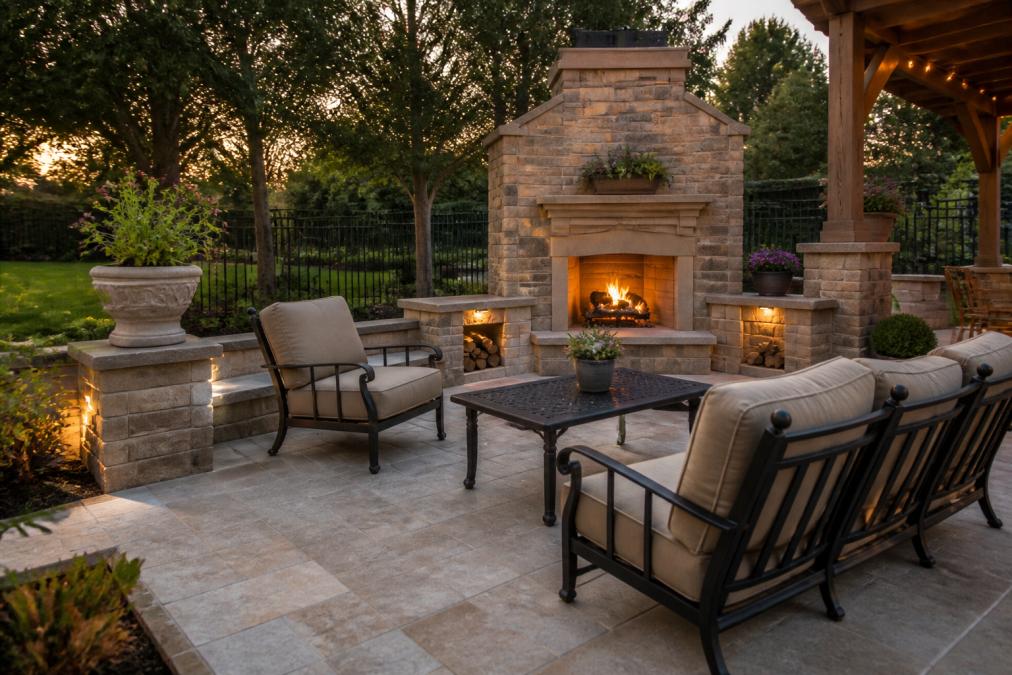
 blog
blog
Yard Art Patio & Fireplace Grapevine: 2026 Guide
Table of Contents
- Yard Art Patio & Fireplace Grapevine: What Homeowners Need to Know in 2026
- Outdoor Living Space Design That Fits Your Backyard
- Custom Outdoor Kitchens and Fire Features
- Retaining Wall Contractors: Drainage, Erosion, and Structure
- Dining Sets, Bistro Sets, and Furniture That Lasts in Texas Weather
- Maintenance and Care for Your Patio and Fireplace
- Yard Art Patio & Fireplace Grapevine: Closure Status and What It Means for You
- Frequently Asked Questions
Last Updated: September 11, 2026
Yard Art Patio & Fireplace Grapevine: What Homeowners Need to Know in 2026
Outdoor living upgrades have become one of the most reliable ways to add usable square footage to a home without a major remodel. Outdoor living upgrades have become one of the most reliable ways to add usable square footage to a home without a major remodel. DFW homeowners are increasingly investing in their backyards, and the yard art patio & fireplace grapevine conversation now sits at the center of that shift. This guide covers what actually lasts in Texas heat, how to plan a layout that works, and what to check before you hire anyone.
Why Outdoor Living Upgrades Pay Off
A well-built patio, fire feature, or outdoor kitchen extends your living space and your home's appeal at resale. Appraisers and buyers look for finished, functional outdoor areas, not bare slabs.
The catch: poorly built hardscapes do the opposite. A settling patio or a fire pit that pools water becomes a liability a buyer will negotiate down. Build it once, build it right.
Outdoor Living Space Design That Fits Your Backyard
Outdoor living space design is the process of planning how seating, cooking, shade, and fire elements fit together on your property so the space is usable year-round. Good design starts with how you actually entertain, not with a catalog photo.
Ask three questions before anything else:
- How many people gather at once, typically?
- Do you cook outside, or just sit outside?
- Where does water go when it rains?
Patio Layout and Furniture Placement
Layout decisions outlast every furniture purchase you'll make. Get the footprint wrong and no amount of nice furniture fixes it.
A common mistake is centering the patio on the house instead of on the view, the shade, or the fire feature. In practice, the best layouts anchor seating around the fire element and keep circulation paths at least 36 inches wide. Leave room behind chairs so people can push back without hitting a wall or the edge of the slab.
Custom Outdoor Kitchens and Fire Features
A built-in grill, a stone fireplace, and a seating wall turn a patio into a destination. The order of construction matters more than most homeowners expect: utilities, then masonry, then finishes. Get that sequence wrong and you pay twice.
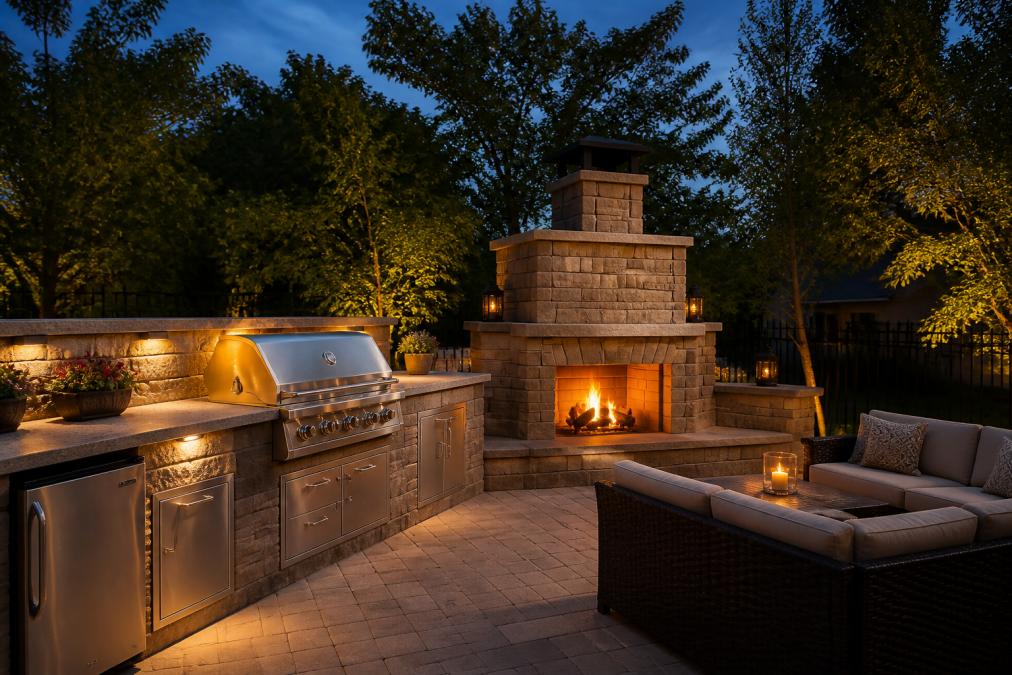
Planning the Island Before the First Stone
For custom outdoor kitchens, plan gas lines, electrical, and water before the first stone is set. Retrofitting a gas line through finished masonry is expensive and messy. Decide on your grill size first, since the island dimensions follow from it.
A workable sequence most builders follow:
- Lock the grill and appliance cutouts. A built-in grill head needs roughly 2 to 3 inches of clearance to combustible framing on the sides and back, and more if the manufacturer specifies it (nfpa.org). Read the spec sheet, not a photo.
- Run utilities in conduit. Gas, 120V power, and a water stub for a sink or fridge all go in before masonry. Leave a service loop at each appliance.
- Frame and veneer. Steel studs or concrete block, then stone or tile over a cement board substrate. Veneer over bare framing cracks.
- Countertop and finish. Granite, quartzite, and poured concrete all handle heat differently. Confirm the fabricator knows it is an outdoor, freeze-thaw application.
Counter height is typically 36 inches for a bar and 30 inches for a dining surface (hud.gov). A 36-inch bar needs roughly 12 to 15 inches of knee space behind the overhang, or nobody can actually sit there.
Choosing Fireplace Accessories and Fire Pits
Fireplace accessories include screens, spark guards, grates, log holders, and covers. For fire pits, the accessory that matters most is the cover, because standing water is what destroys them. A fitted cover sized to the bowl, not a tarp, is the difference between a fire pit that lasts a decade and one that rusts through in three seasons.
Wood-burning and gas fire features behave differently, and the choice drives everything downstream:
| Factor | Wood-Burning | Gas (Natural or LP) |
|---|---|---|
| Heat control | Manual, variable | Instant, dial-controlled |
| Clearance to structures | Greater; embers and smoke travel | Manufacturer-set, usually tighter |
| Fuel and upkeep | Cordwood, ash removal, chimney or flue | Fuel line, annual burner inspection |
| Ambience | Crackle and smell | Clean flame, no ash |
| Best fit | Detached pits, open yards | Patios close to the house, covered areas |
A common pattern in North Texas is a gas fire feature on the covered patio and a wood-burning pit out in the open yard, so you get both experiences without fighting clearance rules on the house side.
What Drives the Cost
Three variables move the number more than anything else: the length of the gas and electrical runs from the meter or panel, the square footage of stone veneer, and whether the countertop is fabricated slab or poured in place. Long utility runs and complex angles cost more than the appliances themselves in many builds. Ask for the quote broken out by those three lines so you can see where the money is going. outdoor patio decor.
Permits and Inspections
Gas appliance connections and any new electrical circuits typically require a permit and inspection. Ask the contractor who pulls the permit and who signs off on the gas pressure test. If the answer is vague, that is your signal to keep interviewing.
Retaining Wall Contractors: Drainage, Erosion, and Structure
Retaining wall contractors solve three problems at once: they hold back soil, they manage water, and they create usable flat ground where the slope won't allow it. Skipping drainage is a common failure in retaining wall construction.
Every retaining wall needs a drainage path behind it. Without gravel backfill and a way for water to escape, hydrostatic pressure builds up and pushes the wall forward. In North Texas, where clay soil swells and shrinks with moisture, that pressure is significant (peer-reviewed research).
For walls over a certain height, many jurisdictions require engineering and permits. Check with your local building department before work starts, and ask any contractor whether they pull permits.
Dining Sets, Bistro Sets, and Furniture That Lasts in Texas Weather
Material choice decides whether your furniture survives three summers or ten. The Texas sun is unforgiving, and freeze-thaw cycles in winter stress joints and finishes.
| Material | Best For | Weather Resistance | Care Level |
|---|---|---|---|
| Powder-coated aluminum | Dining sets, bistro sets | High, won't rust | Low |
| Teak and acacia | Ottomans, dining sets | High, ages well | Medium |
| Wrought iron | Bistro sets, accents | High, heavy | Medium |
| All-weather wicker | Outdoor seating | Medium to high | Low |
| Fabric cushions | Any seating | Varies by fabric | High |
Look for all-weather fabrics rated for fade and mildew resistance. Cheap cushions are the fastest thing to fail on any outdoor set.
Maintenance and Care for Your Patio and Fireplace
Maintenance is what separates a patio that looks new in year eight from one that looks tired in year three. Most of it takes an afternoon per season.
- Sweep or blow debris off the slab and out of joints
- Re-sand polymeric joints where they've eroded
- Inspect the fire feature for cracks and clear ash
- Check the retaining wall for bulging or weep-hole blockage
- Seal natural stone every one to two years
- Tighten furniture hardware before each season
Pressure-washing is fine on pavers, but keep the nozzle moving and off mortar joints. Blasting a joint wide open invites weeds and settling.
Yard Art Patio & Fireplace Grapevine: Closure Status and What It Means for You
If you've searched for yard art patio & fireplace grapevine and found confusing or conflicting information, you're not alone. Directory listings for this kind of business go stale fast, and many show outdated hours or status. That is a real problem when you are trying to plan a build that will sit in your yard for twenty years.
Why These Listings Rot So Fast
A business page that was accurate in one year can be wrong the next, and the search engine has no way to know. Common causes:
- The owner retires or the business changes hands, and nobody claims the listing.
- The phone number is reassigned to an unrelated party.
- A storefront closes but the listing stays live for years.
- Hours change seasonally and the profile is never updated.
- A review platform merges or duplicates the page, splitting the reviews across two entries.
None of that means the business is gone. It means the listing is not a reliable source.
How to Verify Status in Under Ten Minutes
- Call the number on the listing. If it rings to a different business, the listing is dead.
- Check the state licensing board. In Texas, a contractor doing regulated work should be findable through the state licensing lookup, and a lapsed or revoked license is a hard stop.
- Search the county or city permit portal. A contractor with recent pulled permits is active. A contractor with none in two years may not be.
- Ask for a physical address and a site visit. A real operation can show you completed work in person.
- Request a written quote with a scope, timeline, and warranty. Verbal estimates are not a status check.
What to Do If a Listing Shows Closed
Do not cross a business off on the strength of one stale page. Confirm directly, then decide. If it is genuinely closed, the practical question becomes who inherits the work. For hardscape and fire-feature projects, that usually means finding a contractor who will honor or replace an existing warranty, or who will inspect and repair someone else's build.
Ask any replacement contractor three questions before they touch an existing patio or fireplace:
- Will you inspect the drainage and base before quoting the repair?
- Can you match the existing stone or veneer, or will the repair be visible?
- What is your warranty on work over someone else's substrate?
Continuity for Existing Customers
If you already have a patio, fireplace, or outdoor kitchen from a business that has gone quiet, the maintenance schedule still applies. Seal natural stone every one to two years, re-sand polymeric joints as they erode, and inspect the fire feature for cracks before each season. A closed business does not close your maintenance obligations, and a deferred repair on a retaining wall or firebox gets more expensive the longer it sits.
Frequently Asked Questions
Is Yard Art Patio & Fireplace still in business?
Yard Art Patio & Fireplace has faced closure and business continuity questions in recent years, leaving many Grapevine homeowners unsure where to turn. If you are searching for yard art patio & fireplace options and the store you remember is no longer operating, local hardscape contractors can build custom patios, fireplaces, and outdoor kitchens directly on your property. This gives you a permanent, built-in solution rather than a retail purchase. Always verify a contractor's current status and credentials before hiring.
How do I choose a reliable retaining wall contractor for my patio project?
Ask three questions: Do you subcontract the work, or is it your own crew? Can you show photos of completed projects in my area? What happens if the wall settles or cracks after installation? A contractor who handles the work in-house, has more than 15 years of experience, and stands behind their workmanship is a safer bet. Get a written scope that covers drainage, base preparation, and material specifications before you sign anything.
What should I look for in a custom outdoor kitchen or fireplace installation?
Focus on weather-resistant materials, proper ventilation for fire features, and a layout that matches how you actually entertain. Custom outdoor kitchens work best when the grill, prep area, and seating are within a few steps of each other. For fireplaces, confirm the contractor accounts for prevailing wind direction and local burn regulations. Ask whether the installation includes a gas line or wood-burning setup, and get the maintenance requirements in writing.
Can a hardscape contractor fix water pooling in my yard?
Yes, in most cases. Water pooling after rain usually points to grading issues, compacted soil, or a missing drainage path. A retaining wall contractor can regrade the yard, install French drains or channel drains, and build retaining walls that redirect water away from your foundation and patio. This is not a separate service you need to hire someone else for. Ask the contractor to walk the yard after a rain to identify exactly where water collects.
Outdoor projects rarely go according to a directory listing's timeline, and that uncertainty is exactly why choosing the right builder matters. Moises Pizana Hardscapes designs and installs custom patios, retaining walls, outdoor kitchens, and fire features across the Dallas and Fort Worth area, with no subcontracted crews and more than 15 years of hands-on experience. Get a quote from Moises Pizana Hardscapes and build an outdoor space that holds its value for years.