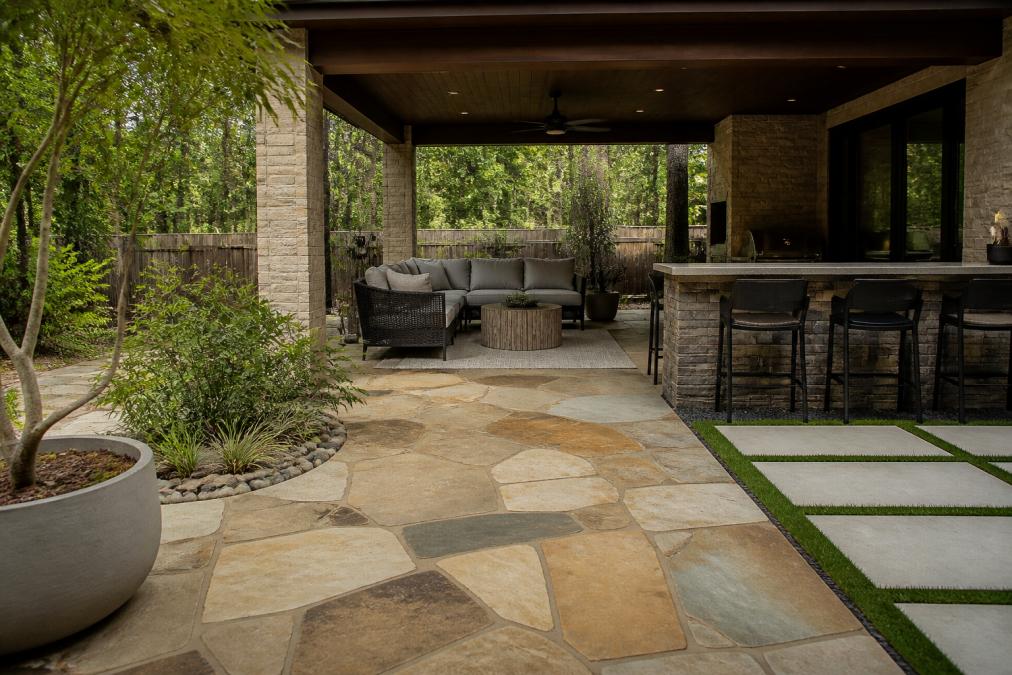
 listicle
Luxury Patio Alternatives to Concrete: 2026 Guide
Table of Contents
- Why Homeowners Choose Patio Alternatives to Concrete
- Natural Stone Patio Installation: Granite, Slate, and Flagstone
- Travertine vs Concrete Patio Cost: What You'll Actually Spend
- Porcelain Outdoor Pavers: Modern Luxury Meets Low Maintenance
- Permeable Pavers and Resin-Bound Surfaces
- Luxury Outdoor Living Space Design: Integration and Aesthetics
- Maintenance Requirements: How Premium Materials Compare
- Material Comparison Table
- Frequently Asked Questions
Last Updated: September 25, 2026
Why Homeowners Choose Patio Alternatives to Concrete
Concrete patios are affordable and easy to install, but patio alternatives to concrete like natural stone, porcelain, and pavers resist the cracking, staining, and fading that plague concrete.
Luxury homeowners are choosing materials that age gracefully, enhance curb appeal, integrate with outdoor kitchens and fire pits, and increase property value at resale.
Premium materials like natural stone, porcelain, and permeable pavers resist freeze-thaw damage, shed water efficiently, cool outdoor spaces, and improve drainage, solving problems concrete creates.
Natural Stone Patio Installation: Granite, Slate, and Flagstone
Natural stone is the gold standard for luxury patios: it weathers beautifully, never looks cheap, and each installation is unique.
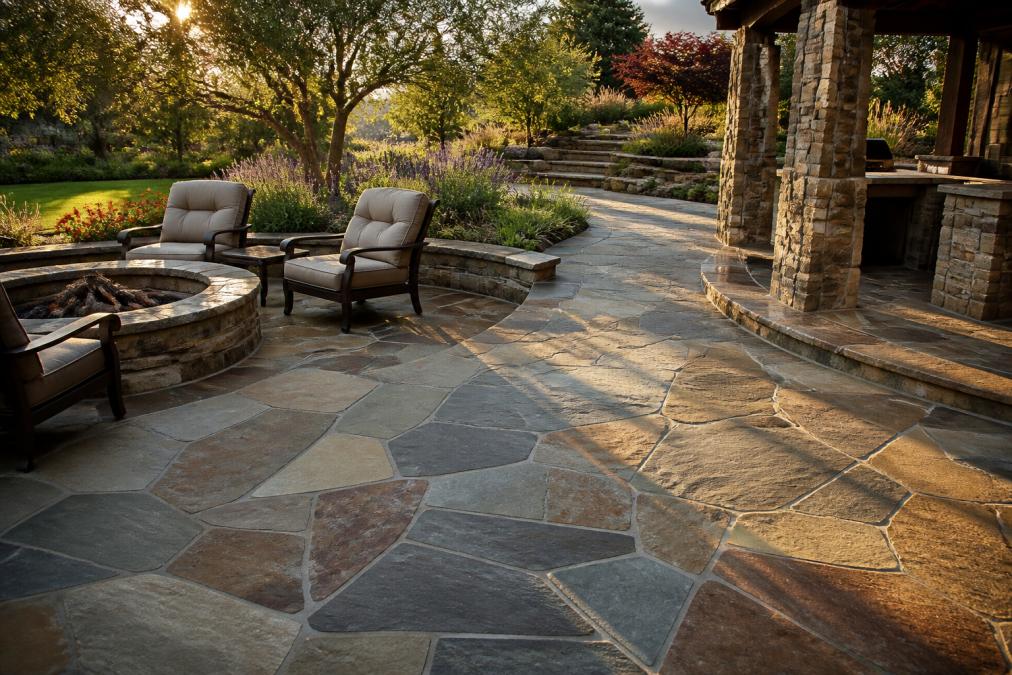
Flagstone for Rustic Appeal
Flagstone delivers organic, garden-focused aesthetics with irregular shapes that create visual interest. Water drains through sand joints rather than pooling, preventing slip hazards after rain.
Trade-offs: uneven surfaces cause furniture to sit unevenly, texture traps debris, and frequent sealing is required in freeze-thaw climates.
Travertine and Limestone for Elegance
Travertine offers refined Mediterranean aesthetics with natural pitting and warm tones that complement modern and traditional designs.
Limestone is denser and more weather-resistant than travertine, making it better for freeze-thaw climates. Both cool faster than concrete in direct sunlight.
Travertine is porous and requires regular sealing to resist staining. Limestone is more forgiving but less low-maintenance than porcelain or permeable pavers.
Travertine vs Concrete Patio Cost: What You'll Actually Spend
Concrete costs less upfront; natural stone costs significantly more.
The real question is whether you're comparing five-year or thirty-year costs, and whether you're factoring in resale value.
Upfront Cost Breakdown
Concrete patios typically cost $8-$15 per square foot installed. Natural stone (flagstone, travertine, slate) ranges from $25-$50+ per square foot depending on material grade and complexity. Porcelain pavers fall between them at $15-$35 per square foot. For a 400-square-foot patio, that's a $3,200-$6,000 difference between concrete and stone.
That gap feels significant until you model the full ownership cycle.
Lifecycle Cost and Replacement Cycles
Concrete patios typically need resurfacing or replacement every 15-20 years, depending on climate and traffic. Cracks appear within five to ten years in freeze-thaw climates. Sealing every two to three years extends life but adds ongoing expense ($0.50-$1.50 per square foot each cycle). A cracked slab is either patched (temporary, $500-$2,000) or torn out and replaced (full cost again).
Over 30 years, concrete requires two full replacements plus sealing and repairs: $9,600-$18,000 total, or $320-$600 annually.
Natural stone requires initial sealing and periodic resealing every 2-3 years, but the material doesn't degrade. Over 30 years: $10,000-$20,000 total, or $333-$667 annually, you're maintaining, not replacing.
Porcelain pavers cost more upfront but require virtually no maintenance, no sealing, no resealing, no stain treatment. Over 30 years, the cost approaches stone but with zero maintenance burden.
Property Value and Resale Impact
Real estate appraisers and luxury buyers recognize premium patio materials as upgrades that increase property value.
Premium patios add 5-10% to outdoor living space value; concrete adds minimal premium. Luxury buyers expect stone or pavers, not concrete.
A $15,000 stone patio can influence a $500,000+ property sale by $25,000-$50,000 in perceived value, especially integrated with other high-end hardscape elements.
Concrete is a liability in luxury markets; buyers see it as something to replace, reducing their offer.
The Math for Luxury Homeowners
Premium materials pay for themselves through resale value if you stay 10+ years. Over 20+ years, lifecycle costs match concrete while offering superior aesthetics and function.
Porcelain Outdoor Pavers: Modern Luxury Meets Low Maintenance
Porcelain is engineered for exterior use: non-porous, frost-resistant, and available in large-format sizes for contemporary aesthetics.
Porcelain looks like stone or wood, performs like industrial tile, and requires almost no maintenance. It resists moss, mold, and staining, and won't fade.
Porcelain excels for modern luxury and minimalist designs. Large-format tiles (24"×48" or larger) create seamless appearances.
Porcelain can crack if not installed on a proper base. Installation requires precision and experience to ensure decades of durability.
Permeable Pavers and Resin-Bound Surfaces
Permeable pavers solve water pooling and runoff by allowing drainage through the surface into soil below, keeping yards dry in heavy rain.
Resin-bound surfaces combine stone chips with clear resin for a polished, seamless finish that drains water. They're customizable and solve drainage elegantly.
Both cost more than concrete but less than premium stone. They're ideal for drainage challenges or environmental priorities.
Luxury Outdoor Living Space Design: Integration and Aesthetics
The best patio materials integrate with the entire outdoor living vision functionally and aesthetically.
Material Pairing for High-End Outdoor Kitchens
Outdoor kitchens demand patio materials that handle heat, resist staining, and complement premium countertops.
Stone patios pair well with granite or marble countertops.
Fire Pit Integration and Heat Resistance
Fire pits demand heat-resistant patio materials and careful selection around the pit surround.
Pool Edge and Slip Resistance
Pool surrounds require slip-resistant materials that resist chlorine and complement high-end pool finishes.
Climate-Specific Material Performance
Luxury patio investments must account for local climate stress.
Freeze-Thaw Cycles: Water infiltration into porous materials causes cracking and spalling. Flagstone and travertine are vulnerable unless sealed every 2-3 years. Slate is denser. Porcelain and permeable pavers are engineered for freeze-thaw and most reliable.
Color and Landscape Integration
The color palette matters functionally and aesthetically. Warm stone tones (travertine, flagstone in earth shades) complement landscaping and create cohesive outdoor spaces. Cool-toned porcelain works for modern designs with clean lines and minimal planting. Light colors reflect heat; dark colors absorb it.
Maintenance Requirements: How Premium Materials Compare
| Material | Sealing Frequency | Cleaning | Repair Difficulty | Climate Sensitivity |
|---|---|---|---|---|
| Flagstone | Every 2-3 years | Weekly sweeping | Moderate | High (freeze-thaw) |
| Travertine | Every 2-3 years | Regular (stain-prone) | Moderate | Moderate |
| Porcelain | Never | Occasional | Low | Very low |
| Permeable Pavers | Every 2-3 years | Occasional | Low | Moderate |
| Resin-Bound | Every 3-5 years | Occasional | Moderate | Low |
| Concrete | Every 2-3 years | Regular | High (cracks spread) | High (spalling) |
Natural stone requires the most attention. Sealing protects against stains and weather, but sealing wears away and needs reapplication. In the DFW climate, where freeze-thaw cycles occur, stone patios benefit from quality sealing.
Material Comparison Table
| Option | Best For | Aesthetic | Durability | Maintenance | Installation |
|---|---|---|---|---|---|
| Flagstone | Rustic, garden designs | Organic, irregular | 30+ years | High (sealing, sweeping) | Professional required |
| Travertine | Mediterranean, elegant | Warm, refined | 25+ years | High (stain-prone) | Professional required |
| Porcelain Pavers | Modern, minimalist | Clean, uniform | 30+ years | Very low | Professional required |
| Permeable Pavers | Eco-conscious, drainage | Varied options | 25+ years | Moderate | Professional required |
| Resin-Bound | Contemporary, custom | Seamless, polished | 20+ years | Moderate | Professional required |
| Concrete | Budget-conscious | Plain, uniform | 15-20 years | Moderate-high | DIY possible |
Choosing a patio alternative to concrete is an investment in your property's functionality and aesthetic appeal. The right material depends on your design preferences, climate, maintenance tolerance, and long-term plans for the property.
Frequently Asked Questions
What are the most durable luxury alternatives to concrete for patios?
Natural stone, porcelain pavers, and clay brick are the most durable alternatives. Natural stone like granite and slate can last 25+ years with minimal wear. Porcelain pavers resist fading and staining better than concrete. Clay brick pavers maintain their color permanently since the pigment is fired into the material. All three handle freeze-thaw cycles better than standard concrete and improve home aesthetics significantly.
How does natural stone patio installation compare in cost to concrete?
Natural stone typically costs more upfront than poured concrete due to material and professional installation requirements. However, the longevity and reduced maintenance often justify the investment for luxury backyards. Pricing depends on stone type, square footage, site preparation, and labor complexity. Request a detailed quote from a professional hardscape installer to understand your specific project costs and long-term value.
Do luxury patio materials require more maintenance than concrete?
Most premium alternatives require less maintenance than concrete. Porcelain pavers resist moss and mold naturally. Natural stone sealed properly needs occasional resealing but resists cracking better than concrete. Permeable pavers prevent water pooling issues that plague concrete. The trade-off: some natural materials like flagstone have uneven surfaces requiring careful furniture placement, while sealed stone needs periodic resealing to maintain appearance.
What is the difference between permeable pavers and standard patio materials?
Permeable pavers allow water to drain through joints into the sub-base, preventing pooling and supporting drainage solutions for wet yards. Standard materials like solid concrete or non-permeable pavers direct water across the surface, requiring proper grading. Permeable options reduce erosion, support landscaping health, and meet environmental standards in many areas. They're ideal for luxury backyards where both aesthetics and functionality matter.