 listicle
Dallas Hardscapes: A 2026 Guide to Custom Outdoor Living
Table of Contents
- What Dallas Hardscapes Really Involve (And What They Cost)
- Custom Patio Installation: Pavers, Flagstone, and Concrete
- Retaining Wall Construction for Sloped Yards and Drainage
- Hardscape Maintenance Tips for North Texas Soil and Weather
- Permits, Zoning, and HOA Rules for Dallas Hardscapes
- How to Choose a Hardscape Contractor in the DFW Area
- Conclusion: Planning Your Dallas Hardscapes Project in 2026
- Frequently Asked Questions
Last Updated: September 17, 2026
What Dallas Hardscapes Really Involve (And What They Cost)
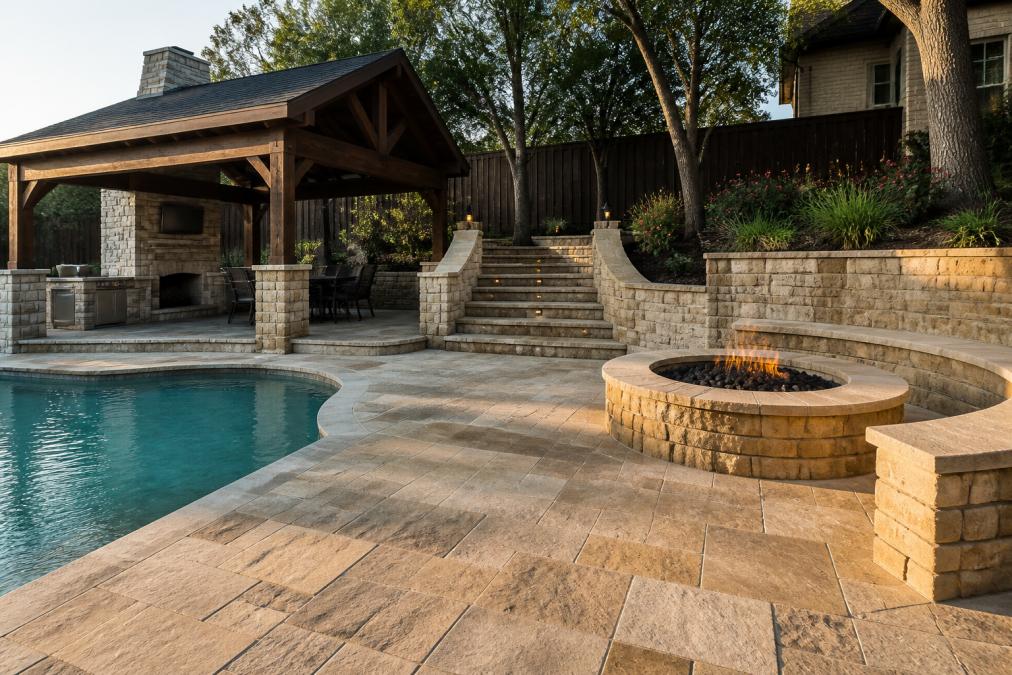
Dallas hardscapes is the design, construction, and installation of non-living outdoor features, patios, retaining walls, walkways, driveways, and outdoor kitchens, built from pavers, flagstone, concrete, and natural stone. At Moises Pizana Hardscapes, we've spent more than 15 years building these across Dallas and Fort Worth with our own crew and equipment.
Hardscaping vs. Landscaping: The Key Difference
Hardscaping refers to the built, non-living elements of a yard: patios, retaining walls, walkways, driveways, and masonry features. Landscaping covers the living elements: grass, trees, shrubs, and planting beds.
How to Read a Hardscape Quote Without Getting Burned
- Site prep and grading, excavation, hauling, compaction
- Base and drainage, crushed stone, fabric, drainage runs
- Materials, paver or stone type, thickness, edge restraints
- Labor and equipment, crew time, machinery, cleanup
Pricing depends on square footage, site access, material choice, and grading needs. Request a quote and we'll price your site.
Custom Patio Installation: Pavers, Flagstone, and Concrete
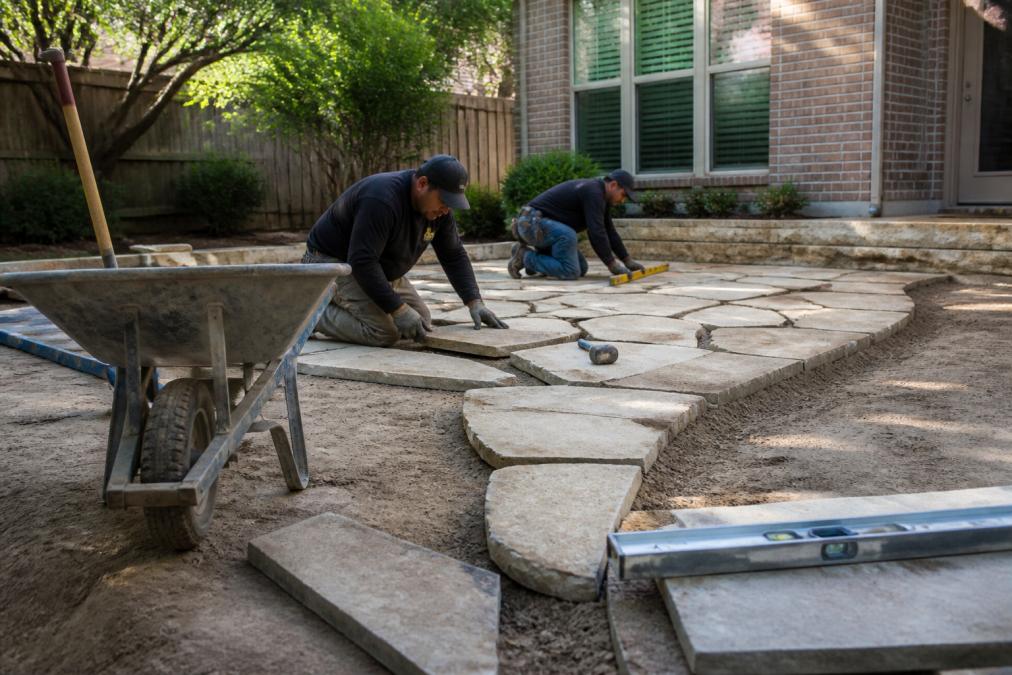
Custom patio installation comes down to three material families: pavers (modular units set in a compacted base with sand joints), flagstone (natural stone cut into irregular or sawn shapes), and concrete (poured as a single slab).
| Material | Look | Repairs | Best For |
|---|---|---|---|
| Brick pavers | Uniform, structured | Swap single units | High-traffic family patios |
| Flagstone | Natural, irregular | Replace individual stones | Custom stonework and curves |
| Poured concrete | Smooth, seamless | Patch or resurface | Simple, budget-conscious layouts |
Retaining Wall Construction for Sloped Yards and Drainage
This is also where erosion control and soil stabilization come in. A well-built wall terraces a slope, slows runoff, and protects the yard above it, for sloped DFW lots, the difference between a usable backyard and a mudslide every spring.
Hardscape Maintenance Tips for North Texas Soil and Weather
Hardscape maintenance matters more here than in most markets because the region's expansive clay soils swell when wet and shrink when dry. That seasonal movement causes most settling, cracking, and joint failure, and dictates which tasks protect your investment.
Why the Soil Drives the Maintenance Calendar
Expansive clay can change volume by a meaningful margin between a wet spring and a dry August. When the soil under a patio or wall moves, the structure above it moves too. Maintenance is really about keeping the system, base, joints, drainage, stable through that cycle.
Material-Specific Care
Pavers (concrete or brick). The joint sand is the wear item, not the paver. Sweep polymeric or washed sand back into joints whenever it drops below the chamfer, and re-sand every one to three years depending on runoff and foot traffic. Clean with a stiff brush and mild detergent; avoid pressure washing above roughly 1,500-2,000 PSI, which erodes joint sand and can etch the surface.
A Seasonal Routine That Actually Works
- Spring (after the last freeze): Walk the patio and note any pavers that rock or sit low. Re-sand joints. Flush wall drainage. Check for pooling after the first heavy rain.
- Summer: Rinse surfaces to clear grit before it grinds into joints. Inspect for new cracks or shifting. This is the best window for resealing stone and concrete.
- Fall: Clear leaves and debris from drainage paths before winter rains. Re-sand any joints that washed out over the summer.
- Winter: Avoid de-icing salts on concrete and stone, they accelerate surface damage. Use sand for traction instead.
The Failure Timeline
Ignoring small joint gaps is the most common mistake, and it has a predictable cost curve. In the first season, a washed-out joint is a one-afternoon re-sand. Left a year, pavers shift, edges chip, and the base may need re-leveling. Left several years, the failure spreads and the fix becomes a partial reset. Catching it early is cheap; catching it late is a rebuild.
Permits, Zoning, and HOA Rules for Dallas Hardscapes
Permits, zoning, and HOA rules are where homeowners get surprised most often, and most hardscape guides skip the topic. Here's a practical framework for what typically triggers a permit, what usually doesn't, and how to check before the first shovel hits the ground.
What Usually Requires a Permit
Requirements vary by city and structure, but common triggers include:
- Retaining walls above a height threshold. Many jurisdictions require a permit once a wall holds back more than a few feet of soil, and engineered drawings may be required above a higher threshold. Walls near a property line or supporting a surcharge (like a driveway above) are scrutinized more closely.
- New driveways or driveway approaches. Work in the public right-of-way, the apron where your driveway meets the street, typically requires a permit from the city, and sometimes a separate approval from the transportation or public works department.
- Structures with footings. Pergolas, covered patios, outdoor kitchens with gas or electrical connections, and any structure with a roof or significant footing often require a building permit and inspections.
- Grading and drainage changes. Significant regrading that alters how water leaves your lot can trigger drainage review, especially if it affects neighboring properties.
- Work in a floodplain or near a creek. Additional review and sometimes a floodplain development permit apply.
What Usually Doesn't
Flat patios, walkways, and low garden walls that don't retain significant soil often fall below permit thresholds. But a low wall on a steep slope, or a patio that changes drainage, can still draw review, confirm before you assume.
How to Check, Step by Step
- Identify your jurisdiction. Addresses inside a city limit follow that city's building code; unincorporated areas follow the county. The rules are not the same.
- Call the building department. Ask specifically: does a retaining wall of [your height] require a permit? Does a new driveway approach require a right-of-way permit? Does a pergola with footings require a building permit?
- Ask about inspections. If a permit is required, ask what inspections happen and when, footing, framing, final, so the schedule accounts for them.
- Check your plat and setbacks. Zoning sets minimum setbacks from property lines for structures, and some hardscape features count as structures.
- Read your HOA covenants. Many HOAs restrict materials, colors, wall heights, fence styles, and even the percentage of your lot that can be hardscaped. Architectural review committees often require approval before work starts, and retroactive approval is harder to get.
- Get it in writing. Keep the permit number and any HOA approval letter with your project records. You'll want them at resale.
Why It Matters at Resale
Unpermitted construction can surface during a buyer's inspection, complicate financing, and force a homeowner to tear out finished work or pursue after-the-fact permits. A wall that was never permitted or inspected is a liability that follows the property, not the contractor.
Skipping the permit step can force a homeowner to tear out finished work or pay fines, and it can complicate a home sale when a buyer's inspector flags unpermitted construction.
What to Ask Your Contractor
A contractor who has worked your area usually knows the local rules and can tell you what needs approval before work begins. Ask directly: Who pulls the permits? Are inspections included in the quote? Have you built in this HOA before? If any answer is vague, verify independently before signing.
How to Choose a Hardscape Contractor in the DFW Area
Choosing a hardscape contractor comes down to three things: who actually does the work, what they've built nearby, and whether they'll stand behind it. Everything else is marketing.
Start with these questions:
- Do you use your own crew, or do you subcontract?
- Can I see photos of projects in my area?
- How do you handle drainage and site grading?
- What happens if something settles or cracks after completion?
- Who pulls the permits?
| Provider Type | Strength | Watch For |
|---|---|---|
| Full-service hardscape builder | Design through installation | Confirm crew is in-house |
| Landscape design firm | Detailed planning | May not self-perform build |
| Irrigation specialist | Drainage integration | Narrower hardscape scope |
| Planning tools and apps | Budget visualization | No construction capability |
Conclusion: Planning Your Dallas Hardscapes Project in 2026
The hard part of a hardscape project isn't picking stone. It's getting the base, drainage, and scope right so the finished patio, wall, or walkway still performs years later.
Frequently Asked Questions
Is hardscaping different from landscaping?
Yes. Landscaping covers plants, grass, and soft elements. Hardscaping uses non-living materials like pavers, flagstone, concrete, and retaining walls to build patios, walkways, and driveways. Dallas hardscapes focus on the structural side: drainage, soil stabilization, and durable surfaces. A full outdoor living space usually combines both.
What should I look for when hiring a hardscape contractor?
Ask for proof of insurance, a written scope of work, and local project photos. Confirm whether the crew is in-house or subcontracted. A contractor who handles retaining wall construction and custom patio installation with their own equipment and crew can control quality and timeline better than one who outsources.
How long does a typical hardscape installation take?
A small patio or walkway can take a few days to a week. Larger projects like outdoor kitchens or multi-level retaining walls may take several weeks. Weather, material delivery, and permit approvals affect the schedule. Get a written timeline from your contractor before work starts.
Will a new hardscape add value to my home?
A well-built patio, walkway, or retaining wall improves curb appeal and usable outdoor space, which buyers notice. The exact return depends on your market, materials, and workmanship. Poor drainage or cracked surfaces can hurt value, so prioritize proper site grading and hardscape maintenance tips from your installer.