 Listicle
Which Stone Is Best for a Custom Fire Pit?
Quick Summary
Dense, low-moisture stones such as granite are generally the best choice for the fire-facing parts of a custom fire pit, because they handle fast, uneven heat without cracking. Softer, porous stones suit the outer surround or capstone instead, and decorative landscape stone should never be assumed fire-safe.
- Moisture trapped inside porous stone can crack it when the water turns to steam.
- Granite is generally regarded as a durable choice for direct fire contact.
- Only dense grades of limestone belong near the firebox; soft grades suit the surround.
- River rock and some slate can split under repeated heating in the fire zone.
- Use mortar rated for high temperatures in the firebox area, or joints can crack.
Table of Contents
- Stones That Hold Up to Direct Fire Contact
- Granite, Limestone, Sandstone, Concrete Block and Pavers Side by Side
- Heat Resistant Stone for Fire Pit Construction
- Natural Stone vs Manufactured Stone Fire Pit Options
- Choosing Stone by Fire Pit Zone and Climate
- Installed Cost, Quantities and Maintenance by Material
- Booking a Custom Fire Pit Build in DFW
- Frequently Asked Questions
Stones That Hold Up to Direct Fire Contact
Not every stone belongs inside a fire ring. The stones that touch open flame need to tolerate fast, uneven heat without cracking, flaking or spalling. Dense, low-moisture stones are generally the better choice for fire feature work.
Moisture is the hidden problem. Stone that absorbs water can crack when that water turns to steam inside the material. Dense granite and other low-porosity stones handle this far better than soft, porous rock. Trapped moisture can cause some stones, such as river rock and some slate, to split under repeated heating.
Consumer guidance on choosing stone for outdoor fire features
Watch out: never assume a decorative landscape stone is fire-safe. A stone that looks solid at the store can crack or pop once it has been heated and cooled several times.
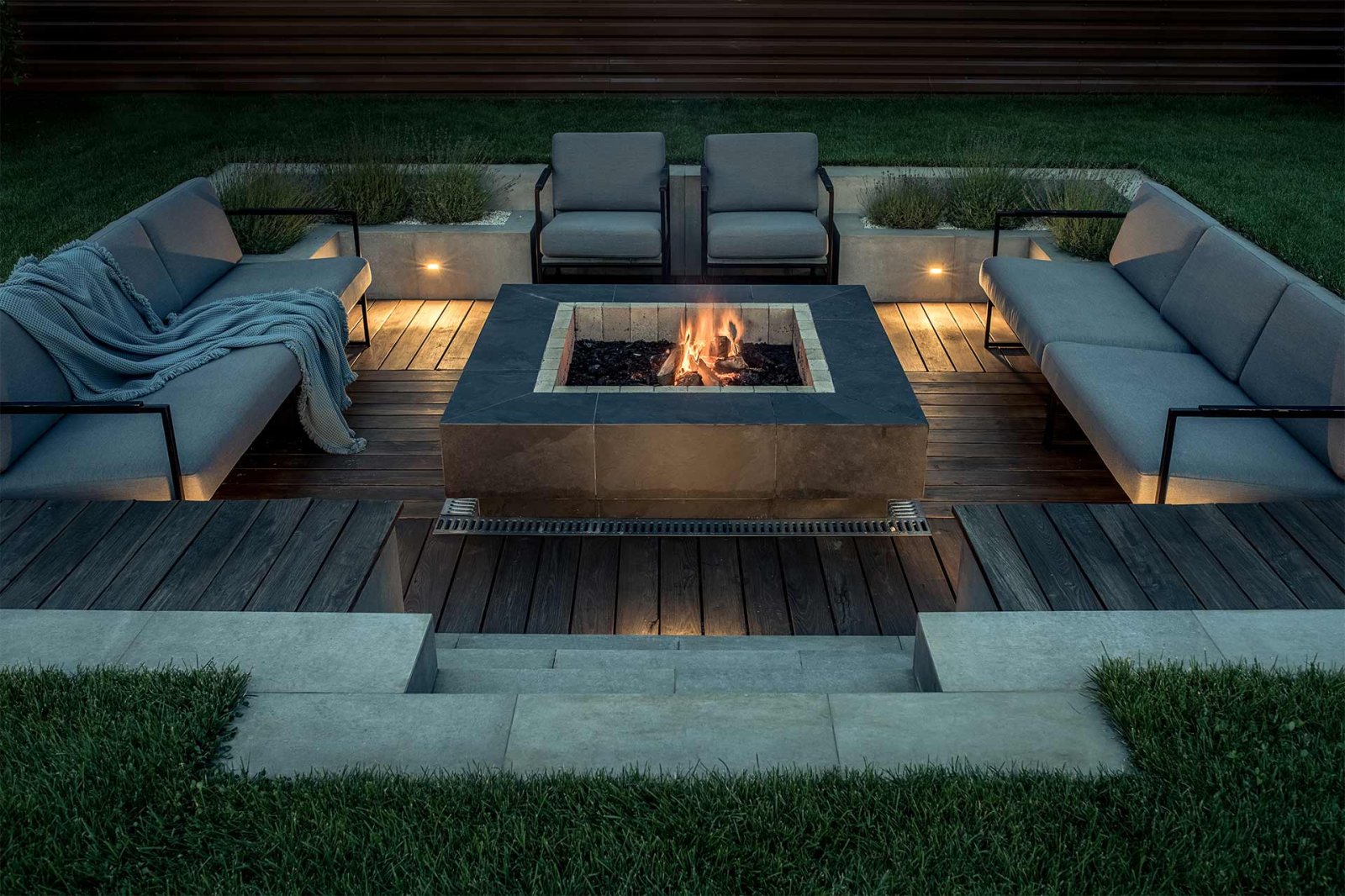
Granite, Limestone, Sandstone, Concrete Block and Pavers Side by Side
Each common option has trade-offs, and the most useful way to compare them is by where they sit in the build. A custom fire pit has at least three distinct zones: the fire-facing liner or inner ring that touches flame and radiant heat, the structural wall that carries the load, and the capstone and surrounding patio that see foot traffic, weather, and spillover heat. A material that excels in one zone can fail in another, so treat the table below as a zone-by-zone guide rather than a single ranking.
| Material | Heat Resistance | Durability | Relative Cost | Best Use | Main Risk |
|---|---|---|---|---|---|
| Granite | High | Excellent | Higher | Fire-facing liner, capstone, surround | Cost and weight; confirm pieces are unsealed and free of fractures |
| Limestone (dense grade) | Moderate to high | Good | Moderate | Capstone, carved details, outer surround | Soft or porous grades spall near flame; specify dense grade |
| Sandstone | Moderate | Fair | Moderate | Surround and patio, away from flame | High moisture absorption; can flake under repeated heating |
| Concrete block | Good | Good | Lower | Hidden structural core | Surface can pit or crack if exposed directly to flame |
| Pavers | Moderate | Good | Lower to moderate | Patio around the pit | Not intended as a fire-facing material |
Granite is generally regarded as a durable choice for direct fire contact. It is dense and handles high heat and harsh weather well. Limestone is lighter in color and easier to carve, which suits custom detail work, but only dense grades belong anywhere near the firebox; soft grades are better reserved for the outer surround or capstone. Sandstone is more porous than granite and absorbs moisture, so it needs careful selection and is best kept away from direct flame.
The safety distinction that matters most: fire-facing materials must tolerate fast, uneven heat without cracking, flaking, or spalling, while decorative surround stone only needs to handle ambient warmth, weather, and foot traffic. Many builders avoid river rock and some slate in the fire-facing zone because trapped moisture can cause them to split under repeated heating. Because the same heat-and-weather distinction applies beyond the fire-facing zone, countertop stone should be judged for its own exposure and use, a consideration also reflected in Brazos Valley Landscape, Inc.
Pricing varies by supplier, quantity, and region, so request a quote for current figures. As a planning reference, natural stone veneer is commonly reported in the range of $15 to $30 per square foot for the stone alone, while manufactured stone runs about $8 to $15 per square foot; those figures cover materials only, and labor, base, and drainage add to the total. Fire pit cost breakdown by material
Heat Resistant Stone for Fire Pit Construction
Heat resistance comes down to how a stone handles repeated temperature swings. A stone that survives one hot evening can still fail after a season of use. Dense, low-moisture materials are generally the better choice for anywhere flame or radiant heat reaches the stone.
Stone quality matters as much as stone type. Two pieces labeled the same can perform differently depending on density and porosity.
Guidance on heat-resistant stone for fire features
Watch out: mortar and joint materials also face heat. Use mortar rated for high temperatures in the firebox area, or the joints can crack even when the stone holds.
Natural Stone vs Manufactured Stone Fire Pit Options
Natural stone and manufactured stone both work, but they suit different budgets and looks. Natural stone offers unique color and texture, with each piece varying slightly. Manufactured stone is more consistent in size and shape, which can speed up installation.
Cost is the main difference. Pricing depends on quantity, delivery, and the complexity of your design, so request a quote from Moises Pizana Hardscapes for current figures.
Fire pit cost breakdown by material
For the most authentic look, natural stone is the better fit. For predictable sizing and a lower material budget, manufactured stone often makes more sense. Either way, confirm that the product is rated for the heat exposure at the firebox.
Choosing Stone by Fire Pit Zone and Climate
Different parts of a fire pit face different conditions. The firebox and inner ring see the most heat. The outer surround sees less heat but more foot traffic and weather. The surrounding patio sees the most wear and moisture.
Match the material to each zone. Use dense granite for the firebox. Use a durable stone or paver for the outer surround. Use a loose, inert material such as pea gravel, decomposed granite or lava rock for the ground area, placed over a proper drainage pad.
Climate changes the calculation. Freeze-thaw cycles are hard on porous stone, so in colder areas dense, low-absorption materials matter even more. In hot, dry climates, focus on heat tolerance and surface temperature.
Installed Cost, Quantities and Maintenance by Material
Installed cost depends on material, quantity, design complexity, and site conditions, so an accurate figure requires a site visit and a measured estimate.
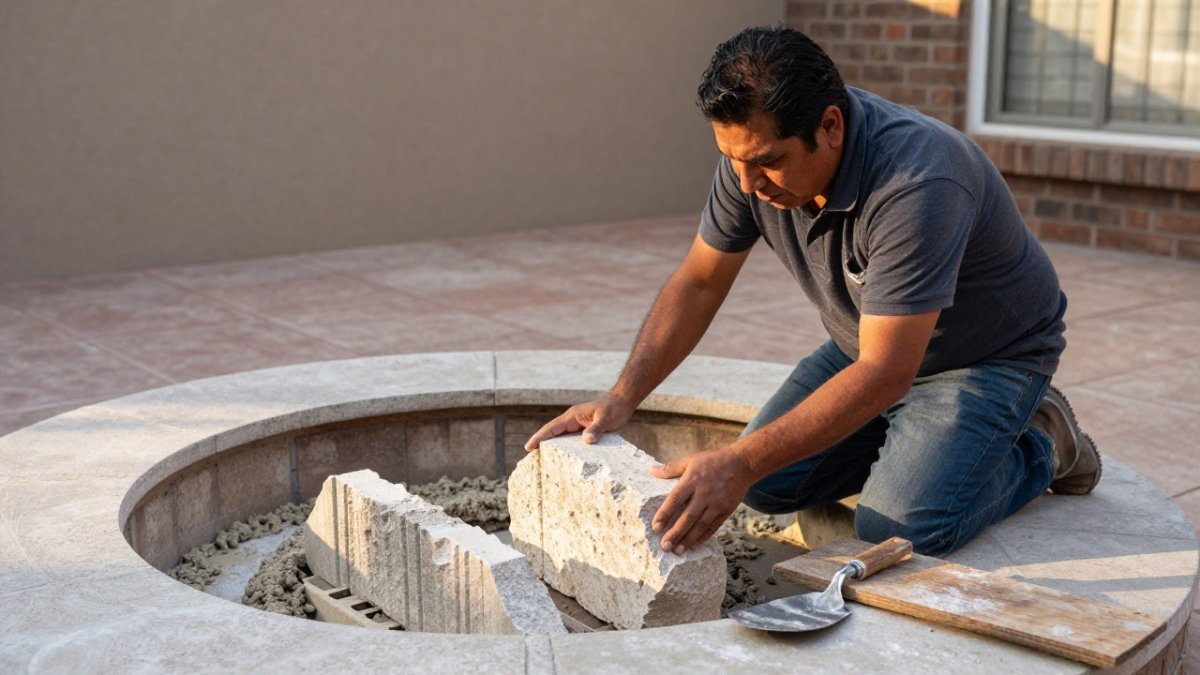
Start with quantity. For a circular pit, measure the outside diameter and the wall thickness, then calculate the circumference of each course (the distance around the ring) and divide by the average length of the stone unit to get a piece count per course. Multiply by the number of courses, then add a waste allowance. Waste allowances are commonly added for cut stone and modular block, because corners, cuts, and breakage consume material. For a square or rectangular pit, calculate the perimeter of each course the same way.
Sourcing matters as much as quantity. Loose stone is often sold by the ton or by the pallet, while modular block and pavers are sold by the piece or by the square foot. Ask whether the supplier's unit count assumes a specific joint width, because mortar joints change the number of pieces per course. Confirm lead times before scheduling labor; a custom granite order can take longer than a standard block run, and a late delivery stalls the entire build.
Maintenance and service life vary by material and zone. Granite and dense stones generally need only occasional cleaning and joint inspection. Porous stones such as sandstone may require sealing and more frequent checks, and any stone near the fire-facing zone should be inspected for cracks or loose pieces after each season, especially after freezing weather. Loose materials such as gravel need periodic raking and replenishing.
Watch out: do not seal the firebox interior with a product that is not rated for high heat, as it can smoke or break down. And do not budget only for stone; base material, drainage, mortar, and labor typically make up a large share of the installed total, so ask for a measured estimate that lists the stone count and every supporting material. Seasonal fire pit upkeep guidance
Booking a Custom Fire Pit Build in DFW
If you want a fire pit built to your design and built to last, Moises Pizana Hardscapes can help. We specialize in custom hardscape work across the Dallas-Fort Worth area, including outdoor fire features. Our crew has more than 15 years of experience, and we handle the work in-house rather than subcontracting it.
Our fire pit installation service covers design, material selection, and full construction. book a custom fire pit build and we will walk through your options. For the full range of our hardscape services, see expert hardscape services. You can also review our fire pit installation work.
For safety guidance before you build, read 7 fire pit safety tips for dry Texas summers, and plan upkeep with how often to maintain a fire pit each season.
Ready to start? Get A Quote from Moises Pizana Hardscapes and bring your outdoor fire feature to life.
Last Updated: November 17, 2026
Frequently Asked Questions
What is the best stone to use to build a fire pit?
Granite is one of the strongest choices for a custom fire pit. It is a dense igneous rock that tolerates high heat and harsh weather without cracking, which makes it a strong option for the firebox surround and cap. Limestone is a good alternative when you want a lighter color and some carved detail, but the source recommends a dense grade for fire contact. Avoid any stone that holds moisture, since trapped water can flake or crack when it heats quickly. For the area around the fire pit, inert materials such as flagstone, decomposed granite, lava rock and pea gravel are commonly used because they shed heat quickly.
What rocks should you avoid using for a fire pit?
Avoid river rock and any stone that traps moisture, because water inside the stone can expand under heat and cause it to crack or spall. Stones with visible seams, soft sedimentary layers or unknown composition are poor choices for direct fire contact. Stick to dense, low-porosity materials like granite for the firebox and use inert surface materials around the perimeter. If you are unsure about a specific stone from a yard or supplier, ask for its origin and avoid using it inside the fire ring.
How do you choose between natural stone and manufactured stone for fire pits?
Natural stone and manufactured stone differ in material cost, and pricing depends on quantity, delivery, and the complexity of your design. Natural stone offers more variation in color and texture, while manufactured stone gives a more uniform look and a lower material cost. Pricing depends on quantity, delivery and the complexity of your design, so request a quote from Moises Pizana Hardscapes for current figures. Confirm with your installer that any manufactured product is rated for the heat it will see at the firebox.
Is fire brick necessary for a custom stone fire pit?
For a wood-burning fire pit, a firebox liner made from fire brick or a similar refractory material is generally recommended, because it absorbs and handles the direct heat better than many decorative stones. Decorative stone can then form the outer surround and cap. Ask your builder how the liner is set and whether the stone facing is separated from the hottest zone. Gas fire pits have different requirements, so confirm the specifications for your fuel type before construction.