 How-to
How Often Should You Maintain a Fire Pit Each Season?
Last Updated: November 13, 2026
Quick Summary
Check your fire pit fully at least twice a year, once each in spring and fall, and inspect it after each use during burning season. Run a deeper seasonal checklist at each season change so fire pit maintenance catches small problems before they become safety issues.
- Inspect the burner ports, hose and connections, and igniter monthly during the burning season.
- Remove ash after each season, or whenever it builds up to more than an inch.
- Test gas connections with a soapy-water leak check before the first burn of spring.
- Disconnect the gas line and cap the supply if the fire pit will sit unused for winter.
- Stop and call a technician if you smell gas or if bubbles persist after retightening.
Table of Contents
- Seasonal Fire Pit Maintenance Checklist by Season
- Gas Fire Pit Maintenance: Inspecting the Line, Burner and Igniter
- Wood-Burning Fire Pit Care: Ash, Grates and Fire Bowl
- Fire Pit Cleaning Methods for Steel, Stone and Concrete
- Gas Leak and Ignition Troubleshooting
- Fire Pit Winter Storage and Spring Restart
- Booking a Professional Fire Pit Inspection in DFW
- Frequently Asked Questions
Seasonal Fire Pit Maintenance Checklist by Season
Most fire pit problems start small and go unnoticed for months. A loose gas fitting, a clogged burner port, or a layer of wet ash can turn a cozy backyard feature into a safety issue. A seasonal fire pit maintenance checklist catches these problems before they grow.
Maintenance intervals at a glance. Use these intervals as a baseline and adjust for how often you burn, local fire restrictions, and your manufacturer's instructions.
- After each use: let the unit cool completely, remove ash or debris, and confirm the cover is off while the unit dries.
- Monthly during the burning season: inspect the burner ports, check the hose and connections, and test the igniter.
- At each season change: run the full spring, fall, or winter checklist below.
- Annually: have a qualified technician review gas connections and the burner assembly if you use the fire pit regularly.
Spring checklist (start-of-season preparation).
- Remove the cover and let the fire pit air out for a day before lighting it.
- Clear out leaves, pollen, and winter debris from the bowl and around the base.
- Check the gas line, connections, and hose for cracks or brittle spots; run a soapy-water leak test before the first burn.
- Inspect burner ports for blockages and clear them with a soft brush.
- Look for rust, loose bolts, or shifting pavers around the base.
- Test the igniter and run a short burn; confirm the flame is steady and even across the burner before hosting guests.
Fall checklist (pre-winter preparation).
- Clean ash, soot, and debris from the bowl and grates; ash holds moisture and accelerates rust.
- Check fire media for damage or uneven coverage and replace degraded media per the manufacturer's specification.
- Tighten bolts and confirm the frame is stable.
- Clean the surface with mild soap and a soft cloth, then dry fully.
- Confirm the cover fits and is secured before the first storm.
Winter checklist (storage and freeze protection).
- Keep the cover on and secured against wind.
- Check for standing water inside the bowl after storms and drain it promptly.
- Look for signs of freeze damage in masonry or concrete, such as new cracks or spalling.
- Disconnect the gas line and cap the supply if the unit will sit unused for the season.
Adjust the checklist to your fire pit type. The bullets above are general; the pass/fail signs differ by fuel type.
- Gas and propane: the priority checks are the hose, regulator, connections, burner ports, and igniter. A pass means a steady blue flame across the burner and no bubbles on the soap test. A fail means a yellow flame, a smell of gas, or an igniter that will not spark after a battery change.
- Wood-burning: the priority checks are ash removal, grate condition, and fire bowl cracks. A pass means the grate sits flat and the bowl shows no new hairline cracks. A fail means a warped grate, a crack that catches a fingernail, or ash deeper than an inch.
- Steel: dry the bowl after every rain and touch up rust spots promptly. A fail is rust that has pitted the surface or a sealer that has worn through.
- Stone and concrete: rinse well and let dry completely; a fail is a crack that grows after a freeze or a sealer that no longer beads water.
Climate and restriction timing. Seasonal timing is not the same everywhere. In areas with heavy rain or humidity, shorten the interval between moisture checks and lift the cover periodically to let air move through. In areas that see hard freezes, drain standing water before the first freeze and inspect masonry for new cracks each spring. Before any burn, confirm whether local fire restrictions or burn bans are in effect; a maintenance checklist does not override a restriction.
Watch out: Do not store a gas fire pit with the valve open or the cover sealed tight over a damp fire bowl. Trapped moisture speeds up rust, and an open valve is a safety hazard.
The article's maintenance intervals and season-specific checks are summarised below.
| Interval | What to do |
|---|---|
| After each use | Let cool, remove ash or debris, cover while drying |
| Monthly in season | Inspect burner ports, hose, connections, test igniter |
| Each season change | Run the spring, fall, or winter checklist |
| Annually | Have a technician review gas connections and burner if used regularly |
Gas Fire Pit Maintenance: Inspecting the Line, Burner and Igniter
Gas fire pits need more attention than wood-burning models. The gas line, burner, and igniter all have to work together safely. Start with a visual check of the gas hose and every connection. Look for cracks, cuts, or stiffness that suggests age.
Next, check the burner. Look for blockages in the burner ports, which can cause a weak or uneven flame. Use a soft brush to clear debris. Avoid sharp tools that can damage the burner.
Finally, test the igniter. Turn on the gas and press the ignition button. The flame should light quickly and burn evenly across the burner. If it does not, stop and call a licensed technician.
Wood-Burning Fire Pit Care: Ash, Grates and Fire Bowl
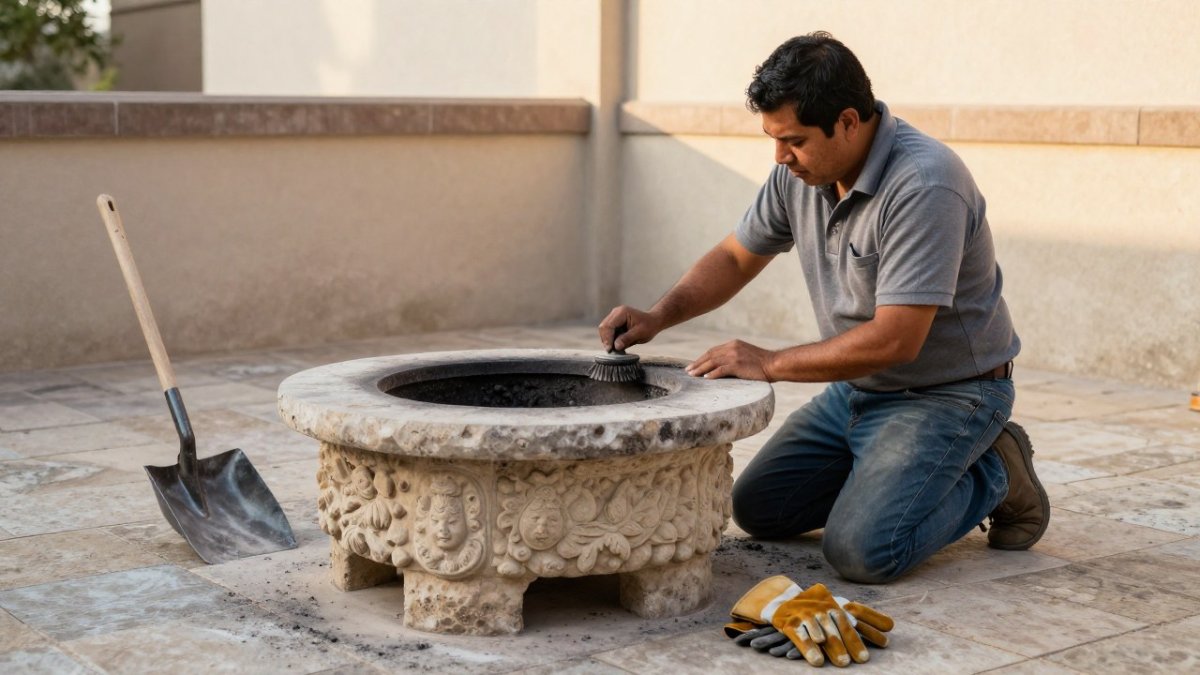
Wood-burning fire pits create more ash and soot than gas models. Ash holds moisture, and moisture leads to rust. Remove ash after each season, or whenever it builds up to more than an inch.
Check the grates for warping or cracks. Replace any grate that no longer sits flat. Inspect the fire bowl for hairline cracks, especially in stone or concrete. Small cracks grow quickly when water freezes inside them.
Fire Pit Cleaning Methods for Steel, Stone and Concrete
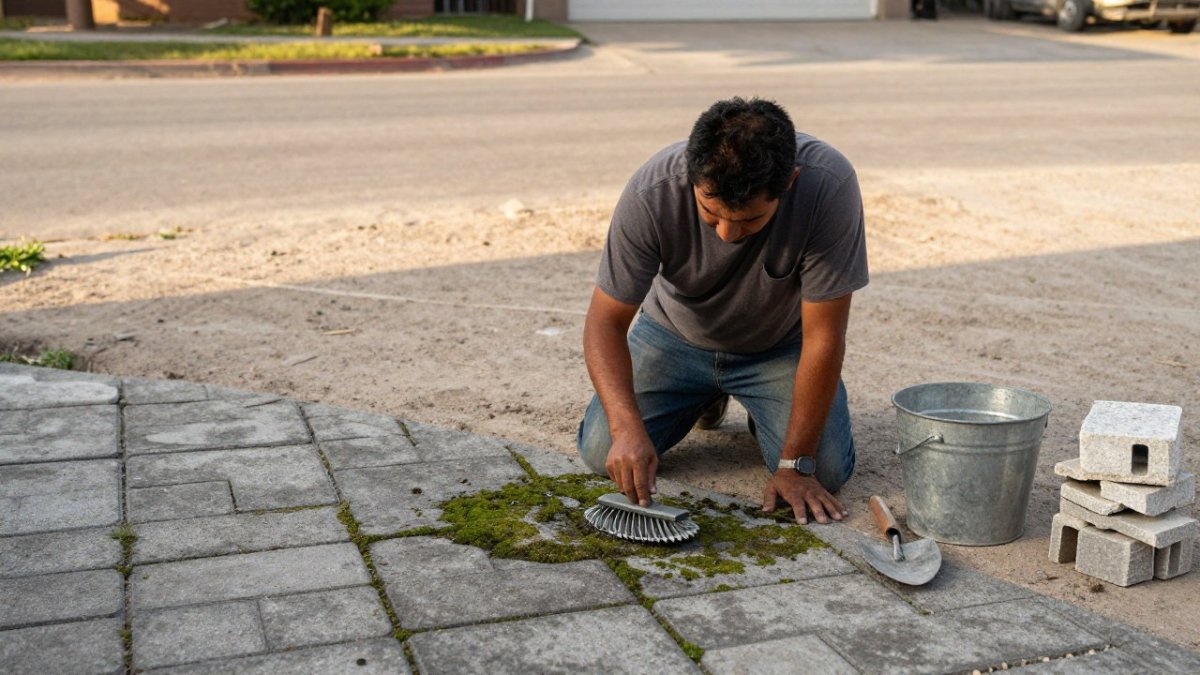
Cleaning method depends on the material. Use mild soapy water and a soft cloth for most surfaces. For a step-by-step method on cleaning and sealing a paver surround, see how to clean and seal paver patios step by step. Avoid harsh chemicals, which can strip sealers and discolor stone.
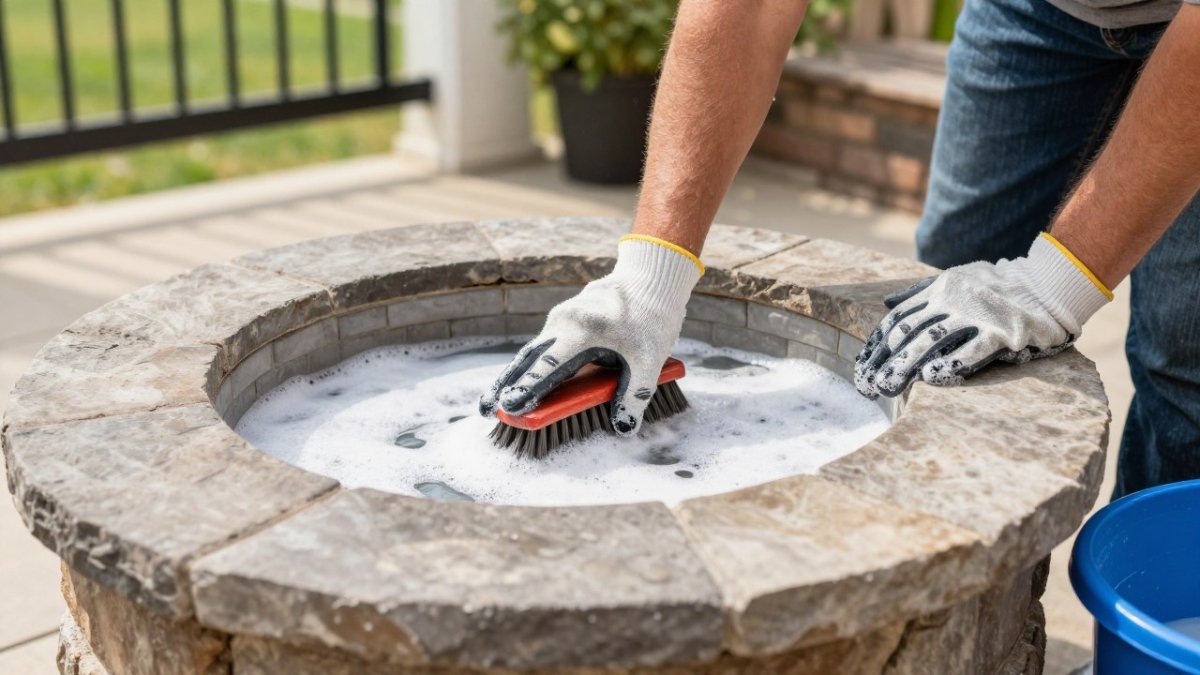
For steel, scrub with a soft brush and dry it right away. For stone and concrete, rinse well and let it dry completely before the next use. Abrasive pads can scratch the surface and trap grime, so skip them. Once the stone or concrete is dry, inspecting your pavers can help you spot surface wear before the next season.
Preventing Rust and Moisture Damage
Moisture is the main enemy of steel fire pits. Dry the bowl after every rain. A cover helps, but only if the fire pit is dry before you put it on. Lift the cover now and then to let air move through.
Gas Leak and Ignition Troubleshooting
Gas problems are the one category of fire pit maintenance where the wrong move can cause injury, so this section is written as a stop-and-escalate sequence rather than a repair guide.
Safe leak check with soapy water. A common pattern among installers is to test connections with a soap-and-water solution rather than a flame. With the supply on and the burner off, brush or spray a 50/50 mix of dish soap and water onto the hose, regulator, and every threaded connection. Watch for growing bubbles, which indicate a leak. If bubbles appear, shut off the supply, tighten the connection a quarter turn with the correct wrench, and retest.
Ignition troubleshooting in order. When the burner will not light, work through the same sequence every time so you do not skip a step:
- Confirm the supply valve is fully open, not half-open. A partially open valve is a frequent cause of a weak or sputtering flame.
- Check the igniter battery and the electrode gap. Most push-button igniters use a standard battery; replace it and retest before assuming the igniter has failed.
- Inspect the burner ports for spider webs, dirt, or corrosion. Clear blockages with a soft brush or a straightened paper clip; avoid drilling or enlarging ports.
- Confirm the air shutter and burner are seated correctly if your model has adjustable air mix.
- If the flame lights but is uneven, yellow, or lifts off the burner, shut down and treat it as a blockage or pressure issue rather than a cosmetic problem.
When to stop and call a technician. Escalate rather than troubleshoot further if you smell gas after shutting the valve, if the soap test shows persistent bubbles after one retightening, if the flame will not stay lit after a battery and port check, if you see soot on the burner or a yellow flame that persists, or if any hose shows cracks, cuts, or stiffness.
Consumer product safety guidance for outdoor gas appliances
Fire Pit Winter Storage and Spring Restart
Before storing your fire pit for winter, clean it fully and let it dry. Disconnect the gas line and cap the supply. Store the cover over the fire pit and keep it secure.
When spring arrives, reverse the process. Reconnect the gas line, check for leaks with soapy water, and run a short test burn. Confirm the flame is steady before you host guests again.
Booking a Professional Fire Pit Inspection in DFW
Some fire pit problems need a trained eye. If you notice persistent gas smells, uneven flames, or cracks in the fire bowl, a professional inspection is the safest choice. Moises Pizana Hardscapes has more than 15 years of experience with outdoor living spaces across the Dallas-Fort Worth area, and we handle the work with our own crew and equipment.
You can request a quote for fire pit installation or learn how a new fire pit can transform your backyard. When you are ready to schedule, reach out to our team for a quote and we will confirm a visit time.
Frequently Asked Questions
Can I use rubbing alcohol in my tabletop fire pit?
Rubbing alcohol is a fuel, not a cleaner, and it should never be used to clean or refill a fire pit. Tabletop and bioethanol fire pits are designed to burn only the fuel the manufacturer specifies. Residue from alcohol or other liquids can clog burner ports and leave soot. To clean the basin, let it cool fully, wipe it with a soft cloth and mild soapy water, then rinse and dry it completely before the next use. Always check the manual for approved fuel and cleaning products.
How often should you clean a fire pit?
Clean a wood-burning fire pit after every few uses or whenever ash builds up past about an inch, and do a full cleaning at the start and end of each season. Gas fire pits need less ash removal but benefit from a visual check of burner ports and the fire media every few months. Always wait until the unit is completely cool, wear gloves, and dispose of ash only after it has been fully cooled in a metal container.
How should you prepare a gas fire pit for winter?
Turn off the gas at the supply valve, let the burner cool, and clean the burner ports and fire media with a soft brush. Inspect the gas line and connections for cracks or loose fittings, and check the igniter. Cover the unit with a fitted, breathable cover and keep it on a dry, level surface. If you have any doubt about the gas line or connections, have a licensed professional inspect them before restarting in spring.
Should you clean ash out of a fire pit?
Yes. Ash holds moisture, which speeds rust and corrosion in the bowl, and it can smother airflow in wood-burning models. Remove ash once it is cold, leaving a thin layer if you prefer, and store it in a metal container. Do not vacuum hot ash or dispose of it in plastic bags or near combustible materials. Regular removal keeps the fire pit safer and easier to light.