 listicle
7 Eco-Friendly Retaining Wall Design Ideas for Your Yard
Quick Summary
An eco friendly retaining wall uses materials with lower environmental impact, follows the existing landscape, and manages water well, which helps it last longer. Dry-stacked natural stone, reclaimed timber, and gabion walls filled with local stone are strong options. Good drainage is essential for any design.
- Dry-stacked stone lets water drain through its joints instead of building pressure behind the wall.
- Drainage aggregate about 12 inches wide behind the wall, with filter fabric, reduces hydrostatic pressure.
- Use a 4-inch perforated drain pipe at the base, sloped to an outlet, to collect water.
- Weep holes spaced every 4-6 feet give residual water a path out of the wall face.
- A wall that lasts 40+ years avoids the waste of a rebuild, making durability the greenest choice.
Table of Contents
- Why Eco Friendly Retaining Walls Make Sense for Sloped Yards
- 1. Natural Stone Walls That Follow the Slope
- 2. Reclaimed Timber and Recycled Material Walls
- 3. Gabion Walls Filled with Local Stone
- 4. Tiered Garden Walls with Native Planting Beds
- 5. Drainage-Smart Wall Designs That Protect the Structure
- 6. Comparing Materials on Cost, Maintenance and Lifespan
- Planning Your Eco Friendly Wall with Moises Pizana Hardscapes
- Frequently Asked Questions
Why Eco Friendly Retaining Walls Make Sense for Sloped Yards
Last Updated: October 31, 2026
Sloped yards present a real problem. Soil washes away, water pools at the bottom of the lot, and flat outdoor space stays out of reach. An eco friendly retaining wall solves those issues while leaving a smaller environmental footprint than many traditional options. At Moises Pizana Hardscapes, we design and build retaining walls across the Dallas-Fort Worth area.
The word "eco friendly" gets used loosely. In practice, it usually means three things: materials with lower embodied impact, designs that work with the existing landscape instead of against it, and features that manage water and support plants. A wall that does all three tends to last longer, which is often the greenest choice of all because it avoids replacement.
Keep that in mind as you read through these seven ideas. Each one trades off appearance, cost, and upkeep in different ways.
1. Natural Stone Walls That Follow the Slope
Natural stone is one of the most durable materials for a retaining wall. A dry-stacked wall, built without mortar, lets water drain through its joints instead of building pressure behind the face.
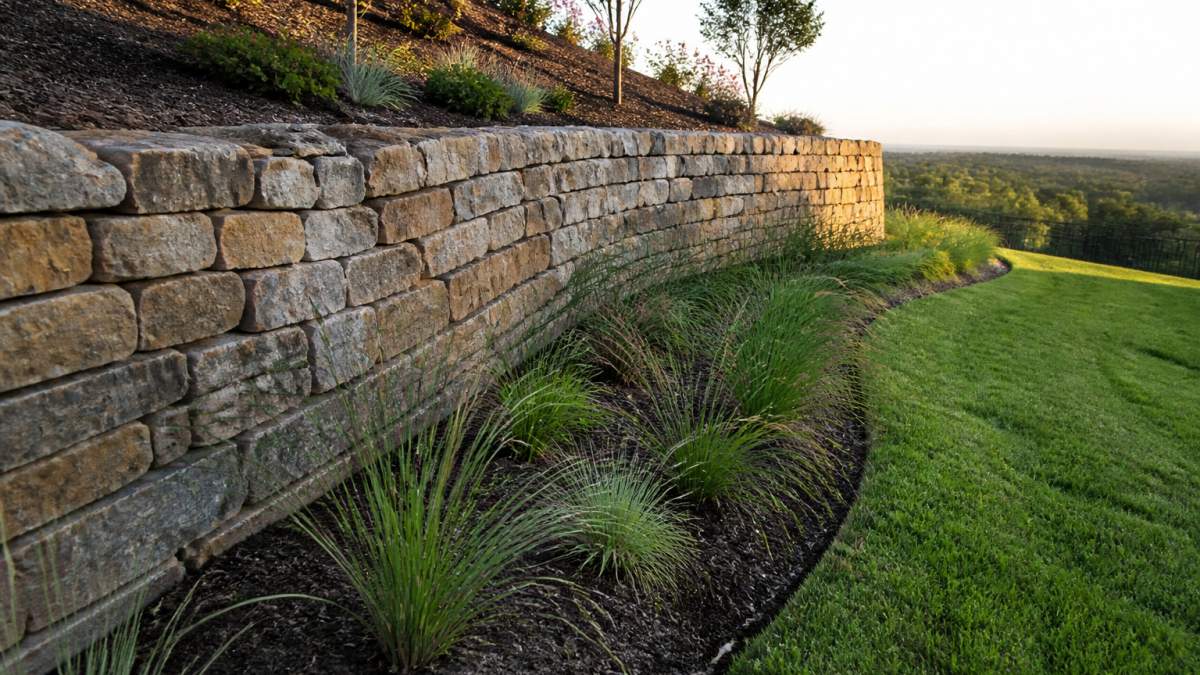
Curving the wall to follow the contour of the slope is often more effective than forcing a straight line. The curve spreads load more evenly and blends with the land. Stone also ages well, developing a natural patina that needs little upkeep.
Watch out: stone walls need proper footings and a gravel backfill. Skipping either is the most common reason stone walls shift or bulge after a few wet seasons.
2. Reclaimed Timber and Recycled Material Walls
Reclaimed timber and recycled materials keep waste out of landfills and can reduce the demand for newly harvested lumber. Treated timber wears out faster in wet soil, so reclaimed options should be rated for ground contact before they go in.
Recycled concrete and salvaged block can also form sturdy walls.
3. Gabion Walls Filled with Local Stone
Gabion walls are wire baskets filled with stone. They are flexible, permeable, and good at handling heavy water flow.
4. Tiered Garden Walls with Native Planting Beds
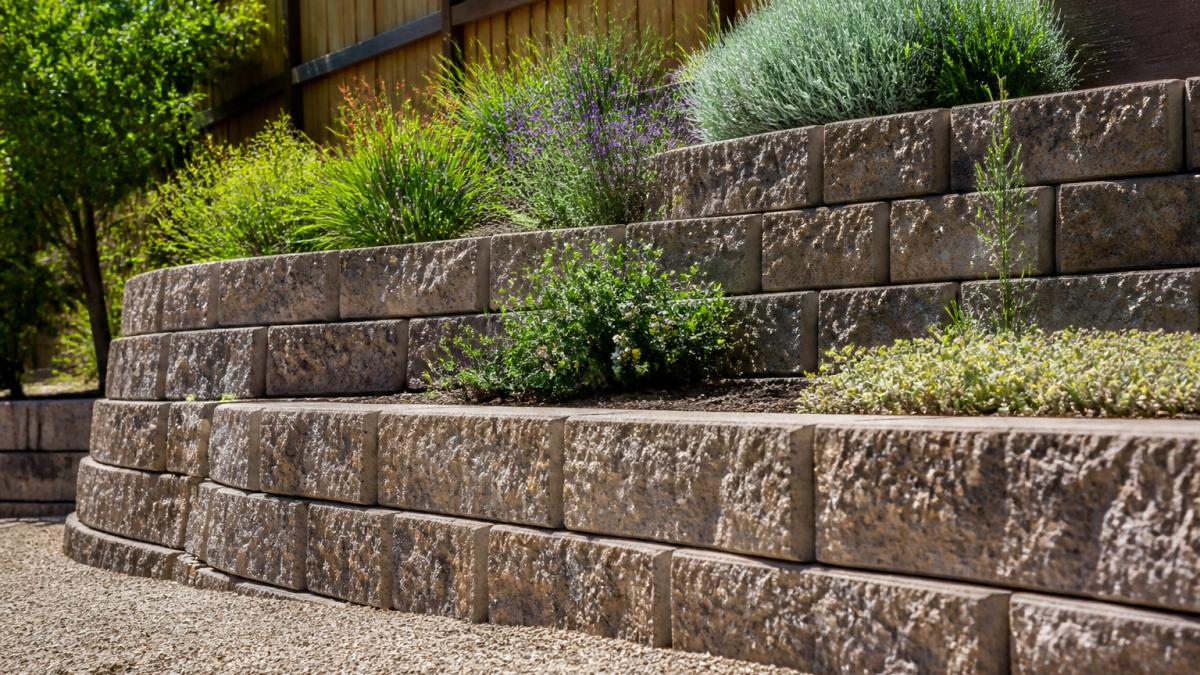
Stepping a wall into two or three tiers breaks up a steep slope into smaller, more manageable grades. Each tier can hold a planting bed, which gives the wall a living, layered appearance.
Native plants suit these beds well. They are adapted to local rainfall and soil, so they generally need less irrigation and fewer chemicals once established. Drought-tolerant species also help reduce runoff, since their roots hold soil in place. Pairing the planting with drip irrigation keeps water use low. Integrating these deep-rooted varieties into your landscape design serves as a foundational strategy for stopping garden runoff while simultaneously stabilizing the slope against erosion.
5. Drainage-Smart Wall Designs That Protect the Structure
Water is the main threat to any retaining wall. Hydrostatic pressure, the force of saturated soil pushing against the back of the wall, causes most failures, and it builds fastest after heavy rain when the soil behind the wall cannot drain. A drainage-smart design gives that water a controlled path out instead of letting it load the wall face.
A typical residential drainage detail includes several parts working together:
- Drainage aggregate behind the wall. A washed, free-draining gravel (often 3/4-inch clean stone) placed in a zone roughly 12 inches wide behind the wall face lets water move down instead of pressing sideways.
- Filter fabric. A geotextile between the gravel and the native soil keeps fines from clogging the gravel over time. Without it, the drain zone silts up and stops working.
- Perforated drain pipe. A 4-inch perforated pipe at the base of the gravel zone, sloped to daylight, collects water and carries it to an outlet. Perforations go down so the pipe collects rather than leaks into the soil.
- Weep holes and outlets. Weep holes in the wall face (commonly 2-3 inches, spaced every 4-6 feet, with gravel behind them) give any residual water a path out. The pipe outlet should discharge to a splash block, daylighted slope, or stormwater-safe location, never onto a neighbor's property or into a foundation zone.
Surface water matters as much as subsurface water. Grade the soil at the top of the wall so runoff flows away from the wall, and consider a swale or surface drain above the wall to intercept water before it reaches the backfill. On taller walls or slopes with heavy runoff, a geotechnical or civil review can size the drainage and confirm the outlet strategy.
Many homeowners ask whether drainage is a separate job. In most cases, it belongs in the wall design from the start, the aggregate, fabric, pipe, and outlet should be specified alongside the footing and wall material, not added after the fact.
6. Comparing Materials on Cost, Maintenance and Lifespan
Most roundups of retaining wall ideas stop at a look-and-feel table. For an eco friendly wall, the more useful comparison is lifecycle impact: how much embodied carbon a material carries, how much recycled content it can include, how far it travels, how long it lasts, and what happens to it at end of life. A wall that lasts 50 years with low maintenance usually beats a wall with a greener label that has to be rebuilt in 15.
Pricing depends on material, wall size, site conditions and other project factors. For current pricing or a quote for your project, contact Moises Pizana Hardscapes directly.
| Material | Typical installed cost (per sq ft of wall face) | Typical lifespan | Maintenance level | Embodied-impact notes | End-of-life options |
|---|---|---|---|---|---|
| Natural stone (dry-stacked or mortared) | $25-$50 | Several decades | Low | High mass but very durable; local quarry sources cut transport emissions | Stone can often be reset or reused |
| Reclaimed timber | $15-$30 | 10-20 years | Medium | Reuses existing lumber; confirm ground-contact rating | Reuse or compostable in some cases |
| Gabion baskets | $20-$40 | 20+ years with coated wire | Low | Stone fill can be local; galvanized or PVC-coated wire adds embodied impact | Stone can be recovered and reused |
| Concrete or landscape block | $20-$45 | Several decades | Low | Higher embodied carbon per unit; look for recycled aggregate or fly-ash mixes | Crushed and reused as base or fill |
| Recycled concrete / salvaged block | $15-$35 | Varies with source quality | Medium | Diverts demolition waste from landfill | Reusable again at end of life |
| Tiered planted walls | Varies with structure | Varies | Medium | Habitat and stormwater benefits can offset material impact | Depends on structural material |
Three practical rules of thumb:
- Local beats exotic. A locally quarried stone with modest embodied carbon usually outperforms a shipped-in "green" product over the wall's life.
- Durability is the greenest spec. A wall designed and drained to last 40+ years avoids the material and waste of a rebuild.
- Ask about recycled content and end-of-life. Recycled aggregate concrete, salvaged block, and reclaimed stone all reduce new extraction, and stone and block can often be reset or crushed and reused later.
Lifespan depends heavily on installation quality, so ask any contractor to explain their drainage and footing details before you compare quotes.
Planning Your Eco Friendly Wall with Moises Pizana Hardscapes
Start by walking the slope after a heavy rain. Note where water collects, where soil erodes, and which areas get the most sun. Those observations shape the right design more than any catalog.
Next, decide on your priorities: appearance, budget, planting space, or drainage. Then bring in a qualified contractor. Moises Pizana Hardscapes builds retaining walls and outdoor living spaces throughout the Dallas-Fort Worth area, and our crew handles the work in-house with more than 15 years of experience. If you want a wall that fits your yard, you can request a quote from Moises Pizana Hardscapes to review your site and options.
For wall ideas that pair with patios or lounging spaces, see our small backyard hardscape design ideas.
Frequently Asked Questions
What is the most eco-friendly material for a retaining wall?
Natural stone and reclaimed or recycled materials are generally the lowest-impact choices for an eco friendly retaining wall. Local stone avoids long transport distances, and dry-stacked designs can be built without mortar or concrete, which reduces the carbon footprint of the project. Timber can be sustainable if it is certified or reclaimed, but it breaks down over time and needs replacing. Concrete blocks have the highest embodied carbon, so they are usually the least green option even though they last a long time. Choose the material that is locally available, durable for your slope, and simple to maintain.
Can a retaining wall help prevent soil erosion?
Yes. A properly built retaining wall holds back soil on a slope, which stops the gradual washing away of topsoil during heavy rain. Pairing the wall with planting beds of deep-rooted native plants adds further stabilization, because roots bind the soil behind the wall. Drainage matters just as much: gravel backfill and perforated drain pipe at the base relieve water pressure so the wall does not fail. For steep or tall slopes, have the design checked by a professional, since engineering requirements and local permit thresholds may apply.
What plants work best alongside a retaining wall?
Drought-tolerant and native plants suit most retaining wall planting beds in Texas because they need less irrigation once established. Good choices include ornamental grasses, salvias, and native perennials that tolerate heat and clay soil. Plant trailing species at the top of the wall so they soften the edge, and place shallow-rooted groundcovers at the base. Drip irrigation keeps water efficient and reduces runoff. Avoid deep-rooted trees too close to a wall, since their roots can push against the structure over time.
Are natural stone retaining walls environmentally friendly?
Natural stone walls can be among the most environmentally friendly options when the stone is sourced locally and the wall is dry-stacked. Local sourcing cuts transportation emissions, and stone lasts for decades with little maintenance, which lowers replacement waste. The trade-off is that quarrying can have an environmental cost, so ask your supplier where the stone comes from and whether it is reclaimed. Stone walls also provide habitat for lizards, insects and pollinators in gaps between the rocks, adding ecological value to the yard.