 how-to
Paver Patio Near Me: Cost, Timeline & Hiring Guide
Table of Contents
- What You'll Need Before You Start
- Concrete vs Paver Patio Pros and Cons
- Paver Patio Installation Timeline: What to Expect Week by Week
- Hiring a Local Hardscape Contractor
- Permits, Drainage, and Soil Prep: What Most Contractors Skip
- How a Paver Patio Adds Long-Term Value to Your Home
- Common Mistakes to Avoid
- Frequently Asked Questions
Last Updated: September 24, 2026
What You'll Need Before You Start
The most important step in any paver patio project happens before a single stone is laid: getting your site, budget, and expectations in order. This guide covers what a paver patio costs, how long installation takes, and how to hire the right crew. Establishing a clear foundation for your project ensures that your chosen materials align with your long-term vision, a process detailed further in our cost and prep guide.
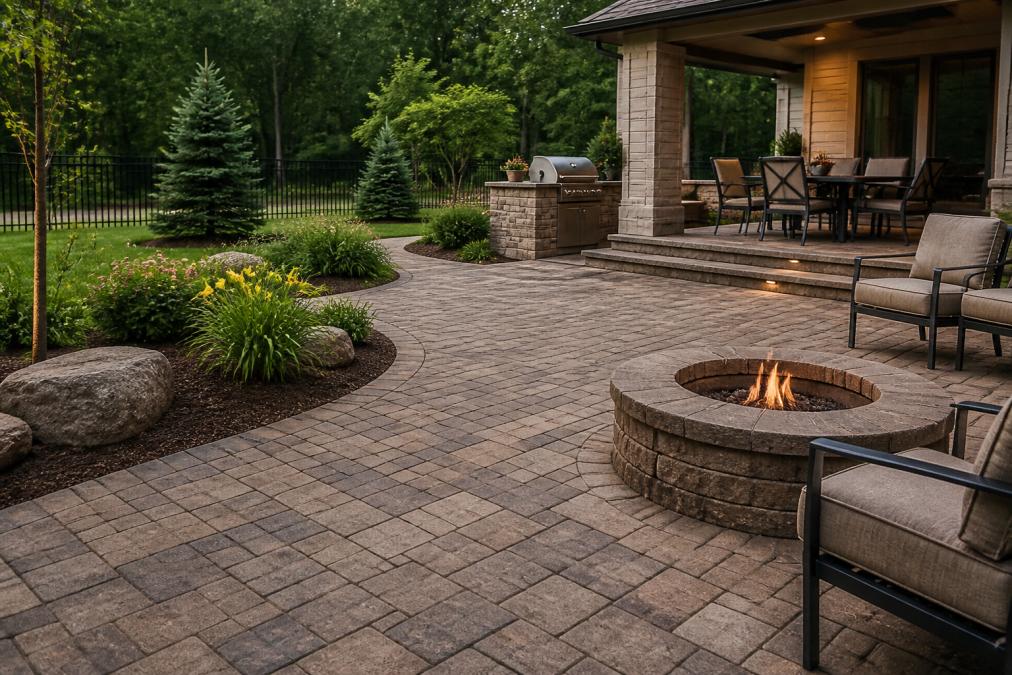
A paver patio is built from interlocking pavers set on a compacted gravel base and joint sand, designed to flex with freeze-thaw cycles rather than crack like a concrete slab.
Before you call anyone, gather these basics:
- Rough square footage of your planned patio area
- Photos of your current yard and any drainage issues
- A realistic budget range, not a single number
- Your timeline and any events you're working around
- A list of must-haves: fire pit, outdoor kitchen, seating wall
Having this ready speeds up every quote and helps contractors give accurate numbers instead of guesses.
Concrete vs Paver Patio Pros and Cons
The choice comes down to how you want the surface to age. Concrete is cheaper upfront and faster to pour, but it cracks. Pavers cost more and take longer to install, but individual units can be lifted and replaced without tearing out the whole patio.
When Concrete Makes More Sense
Concrete wins on speed and initial cost. A poured slab can be finished in days at a lower price per square foot. If you need a functional surface fast and plan to move within a few years, concrete is reasonable. The trade-off: any crack is permanent, and patching or overlaying rarely matches.
When Pavers Win
Pavers win on longevity, repairability, and looks. Interlocking pavers handle ground movement better because the joints absorb stress. If a section settles, a crew can pull those units, fix the base, and relay them. They also come in far more patterns and colors, which matters for curb appeal and resale.
| Factor | Concrete | Pavers |
|---|---|---|
| Upfront cost | Lower | Higher |
| Installation speed | Faster | Slower |
| Crack repair | Difficult | Easy, unit-by-unit |
| Design options | Limited | Wide range |
| Lifespan with care | Moderate | Long |
Paver Patio Installation Timeline: What to Expect Week by Week
A typical paver patio takes one to three weeks from excavation to final joint sand, depending on size, access, and weather. Small patios can wrap in under a week; larger projects with retaining walls, steps, or an outdoor kitchen run longer.
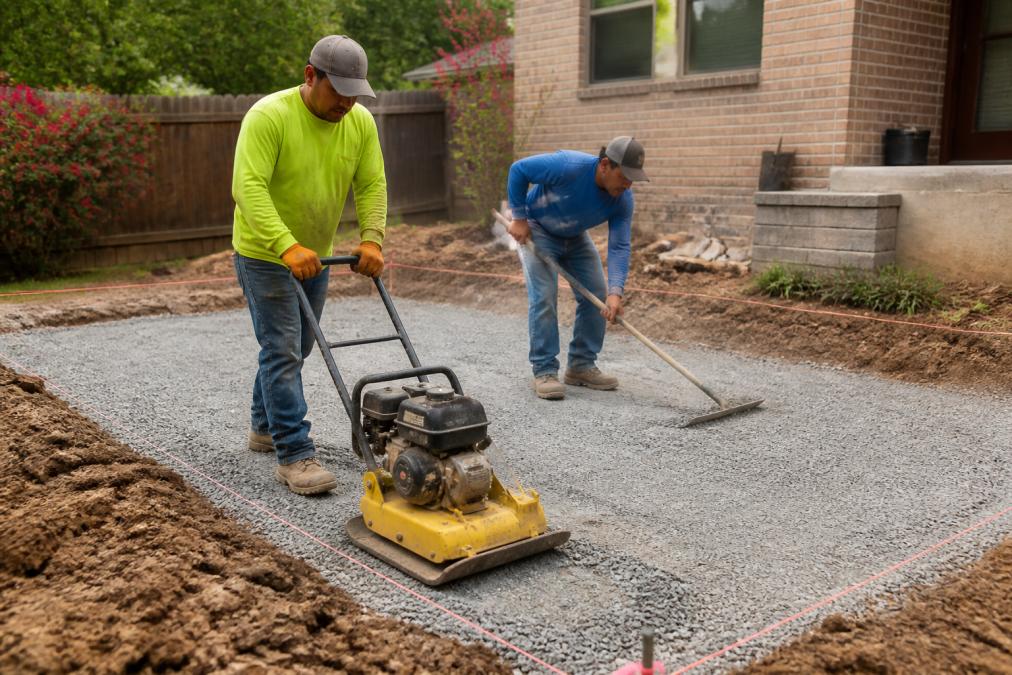
Here's the sequence most projects follow:
- Days 1-2: Site assessment, layout, and excavation to the correct depth
- Days 3-4: Base preparation, grading for drainage, and compaction in lifts
- Days 5-6: Setting the edge restraint and laying geotextile fabric where needed
- Days 7-10: Paver installation, cutting, and pattern work
- Days 11-14: Joint sand, compaction, sealing, and cleanup
Hiring a Local Hardscape Contractor
Finding a qualified hardscape contractor matters more than saving a few dollars on the lowest bid. Most homeowners don't know what separates a real hardscape crew from a landscaper who subcontracted the work out. Here's how to tell the difference before you sign anything.
How to Compare Bids Without Getting Burned
Three bids on the same patio will rarely match, and the difference is almost always in what's underground. Ask every bidder to itemize these separately:
- Excavation depth and disposal of spoils
- Base material type and compacted depth (crushed stone vs. sand)
- Geotextile fabric, yes or no
- Edge restraint type
- Joint sand type
- Sealer, included or extra
- Permit handling, included or homeowner's responsibility
Questions to Ask Before You Sign
- Who will actually be on my property doing the work, your employees or a subcontractor?
- Can I see photos of patios you've built in my area within the last year?
- How do you handle drainage and base preparation, and can you show me the spec in writing?
- What happens if the patio settles or cracks after you finish?
- Is there a written warranty, and what does it cover, workmanship, materials, or both?
- How do you handle permits if my project needs one?
- What's your payment schedule, and how much is due at signing?
Moises Pizana Hardscapes keeps its own crew and equipment rather than passing jobs to third parties, which keeps workmanship consistent, especially on the parts you can't see once the pavers are down.
Permits, Drainage, and Soil Prep: What Most Contractors Skip
This is where cheap patios fail. Permits, drainage, and soil preparation are the invisible work that determines whether your patio lasts ten years or two.
How a Paver Patio Adds Long-Term Value to Your Home
Most lead-generation sites stop at 'patios improve curb appeal.' The real question is how a paver patio shows up in an appraisal, a listing, and a buyer's walkthrough, and how permitting and build quality protect or destroy that value.
The Appraisal and Listing Mechanism
Appraisers value outdoor improvements through contributory value, the amount a feature adds beyond what comparable homes without it sell for. A paver patio doesn't get its own appraisal line the way a bedroom does; it's folded into the overall condition and appeal adjustment. So its value depends on whether it looks and functions like a finished, permanent feature or a DIY project a buyer will have to redo.
Why Permitting Protects Your Resale
This is the part most contractors skip. Patios above a certain size, attached to a structure, or including electrical (lighting, outdoor kitchen) or gas (fire pit) often require a permit under local building codes. When you sell, a buyer's inspector or lender may pull the permit history. An unpermitted patio with electrical or gas work can stall a sale, force a retroactive permit, or require the buyer to accept it as-is at a discount.
What Actually Drives the Return
Not all patio dollars come back equally. The features that tend to show best in a walkthrough are the ones a buyer can immediately picture using:
- A level, well-drained main patio surface
- A fire pit or seating wall that defines the space
- An outdoor kitchen or built-in grill area
- Low-maintenance materials that don't need resealing every year
- Clean transitions to the lawn, steps, and house
The Maintenance Math
A paver patio isn't zero-maintenance. Polymeric joint sand typically needs refreshing every few years, and a sealer every two to three years extends color and stain resistance, a real ongoing cost. But compare it to a cracked concrete slab that can't be repaired unit-by-unit and often gets torn out entirely. The paver's repairability is the financial argument: you fix the problem area, not the whole surface.
Common Mistakes to Avoid
Most paver patio problems trace back to shortcuts taken during planning or base work. Avoiding these mistakes saves expensive repairs later.
- Skipping the site assessment. Every yard drains differently. A contractor who quotes without looking is guessing.
- Cutting corners on the sub-base. Thin or poorly compacted base means settling and uneven pavers.
- Ignoring drainage. Water must move away from the house, always.
- Choosing pavers on price alone. Material durability and weather resistance vary widely.
- No written warranty. If a contractor won't put terms in writing, walk away.
- Skipping joint sand and sealing. Proper joint sand locks pavers together; sealing protects against stains and weather.
Frequently Asked Questions
How long does a professional paver patio installation take?
Most residential paver patio projects take 1 to 3 weeks from excavation to final joint sand. A small 12x12 patio might finish in 4 to 6 days, while a 20x20 with a retaining wall or fire pit can stretch to 3 weeks. Weather, site access, and drainage work affect the schedule. Ask your contractor for a written timeline with milestones before work begins.
Is it cheaper to pour concrete or install pavers?
Concrete usually costs less upfront per square foot, but pavers often win on long-term value. Concrete slabs crack, and repairs mean patching or replacing sections. Pavers can be lifted and reset individually if the base shifts. In DFW's expansive clay soils, that flexibility matters. Ask your local hardscape contractor for a side-by-side quote that includes base prep, drainage, and sealing.
What factors influence the total cost of a paver patio?
Square footage, paver material (concrete vs natural stone), base depth, drainage requirements, and site access all drive cost. Adding retaining walls, steps, or an outdoor kitchen raises the total. Labor costs vary by region and crew experience. Because pricing depends on your specific site, get a free estimate from a local contractor who walks the property and measures before quoting.
How do I find reliable local paver installation professionals?
Start with referrals from neighbors who have recent hardscape work. Verify the contractor has a physical local address, ask for photos of completed projects in your area, and confirm they carry insurance. Get at least two written estimates that break out materials, labor, and timeline. A contractor who won't put the scope in writing is a red flag. Ask about warranty coverage on workmanship.