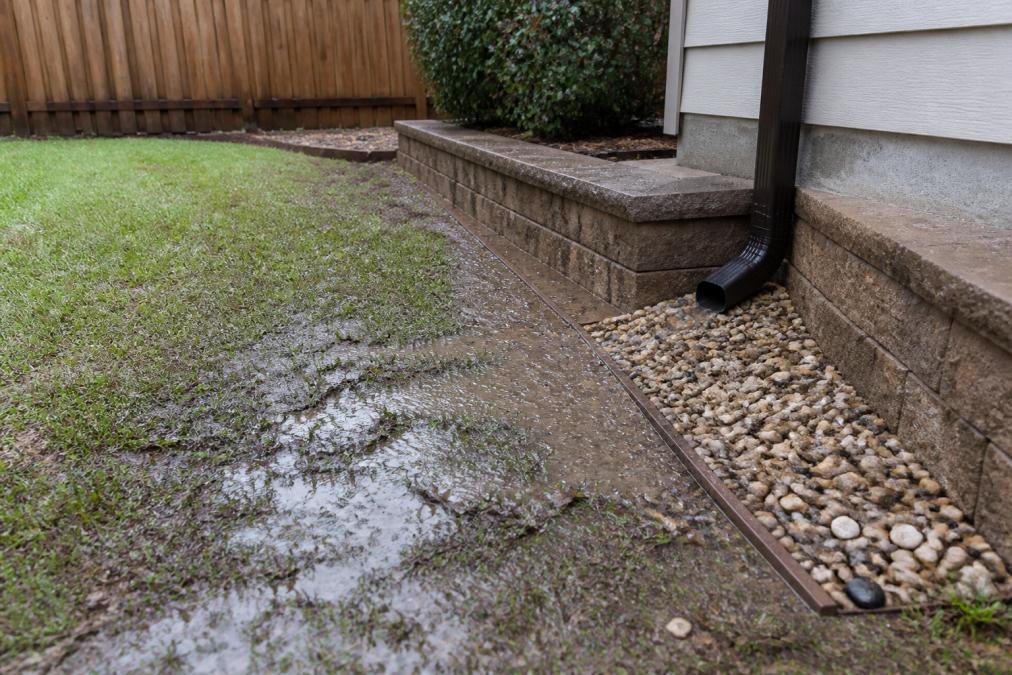
 how-to
How to Fix Backyard Drainage Problems (2026 Guide)
Table of Contents
- Signs of Poor Landscape Drainage You Shouldn't Ignore
- Step 1: Diagnose Your Backyard Drainage Problem
- Step 2: Regrade the Soil and Correct the Slope
- Step 3: Install a French Drain to Redirect Water
- Understanding French Drain Installation Cost Factors
- Step 4: Build a Swale or Dry Creek Bed
- Step 5: Build Retaining Walls for Erosion Control
- Step 6: Fix Gutter and Downspout Extensions
- When to Call a Professional for Backyard Drainage
- Frequently Asked Questions
Last Updated: September 9, 2026
Standing water after a storm is a slow-moving threat to your foundation, turf, and property value. Fixing backyard drainage problems starts with understanding that water follows gravity, and your job is to give it a clear path away from your home. In this guide, we break down effective methods for diagnosing and correcting poor yard drainage.
Backyard drainage is the system of grading, soil conditions, and installed features that control where rainwater goes. Most failures trace back to improper slope, compacted or clay-heavy soil, or disconnected gutter systems. Each cause has a proven fix, and many homeowners can handle simpler corrections over a weekend.
Signs of Poor Landscape Drainage You Shouldn't Ignore
The biggest mistake is treating the symptom instead of the cause. Watch for standing water that lingers more than 24 hours after rain, which signals soil saturation. Other red flags include water stains on your foundation, erosion gullies in garden beds, and grass that stays spongy underfoot.
Basement seepage or cracks in your driveway or patio are more serious signs that runoff is reaching your home's structure. Water pooling against a foundation creates hydrostatic pressure that can push moisture through concrete (fema.gov). Address these issues before they escalate into structural repairs.
Step 1: Diagnose Your Backyard Drainage Problem
Before you dig, understand where the water originates and where it is trying to go. Watch your yard during a heavy rain and note where puddles form first, which direction water flows, and where it exits your property.
For a percolation test, dig a hole 12 inches deep and fill it with water. If it drains within a few hours, your soil has reasonable drainage. If it sits for a day or more, you have clay soil or severe compaction requiring amendment or subsurface drainage.
Step 2: Regrade the Soil and Correct the Slope
If your yard is flat or slopes toward your house, regrading is often the most direct fix for backyard drainage problems. The goal is a slope that carries surface water away from the foundation toward an approved outlet. A proper grade drops at least 6 inches over the first 10 feet from your home (hud.gov).
Remove existing turf and topsoil, add fill dirt to build up low spots, and compact it in layers to prevent settling. Finish with quality topsoil and reseed or resod.
Step 3: Install a French Drain to Redirect Water
A French drain is the gold standard for subsurface drainage when you have a specific low area or water moving along a foundation wall. It consists of a perforated pipe in a gravel-filled trench, wrapped in filter fabric to prevent clogging. Water seeps into the gravel, enters the pipe, and is carried to a daylight outlet, dry well, or storm drain.
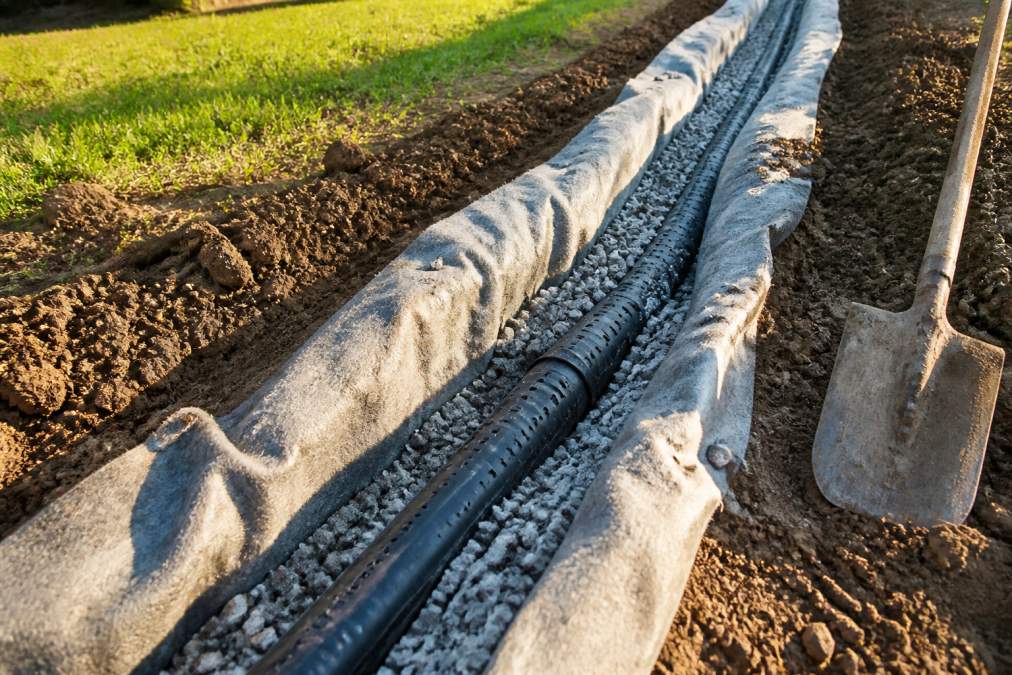
To install one, dig a trench sloping at least 1 percent (1 inch of drop per 8 feet) toward your outlet. Line it with filter fabric, add gravel, lay the pipe with perforations facing down, cover with more gravel, fold the fabric over, and finish with soil or decorative stone.
The Legal Side of Routing Water
Where you discharge water is a legal matter. Most municipalities require drainage water be kept on your property or routed to a designated stormwater system. Discharging onto a neighbor's lot is a civil violation in most jurisdictions. Many cities also prohibit increasing the volume or velocity of runoff leaving your property.
Check with your local building department before starting. Some areas require a permit for drainage work that alters natural water flow, especially excavation deeper than 18 inches or connections to a municipal storm drain. Skipping it can result in fines or an order to remove the work.
If you belong to an HOA, review your CC&Rs as well. Many have rules about visible drainage features, requiring them to be buried or aesthetically integrated. An outlet discharging into the street or common area may violate those rules.
Choosing the Right Outlet
Your French drain needs a destination. The three most common options are:
- Daylight outlet: The pipe ends at a point where the ground slopes away, allowing water to surface and flow naturally. This works best if your property has a downhill area that can absorb the flow.
- Dry well: A subsurface pit filled with gravel that allows water to percolate slowly into the surrounding soil. This is ideal for properties with no natural outlet but requires soil that drains reasonably well.
- Rain garden: A planted depression designed to capture and absorb runoff. This is an attractive option that also provides ecological benefits, filtering pollutants before they re-enter the groundwater.
Sizing and Depth Considerations
For most residential applications, a 4-inch perforated pipe is sufficient. The trench should be at least 12 inches wide and deep enough to sit below the frost line in colder climates, typically 18 to 24 inches in northern states. In warmer regions, 12 to 18 inches is usually adequate.
A common mistake is making the trench too shallow. If the drain sits above the saturated soil layer, it will not capture the water causing your problem. The bottom should be at or slightly below the level where water accumulates. When in doubt, err on the side of deeper.
Filter Fabric: The Detail That Matters
Do not skip the filter fabric. It keeps silt and fine soil particles out of the gravel bed, which would otherwise clog the system within a few years. Use a non-woven geotextile fabric designed for drainage, wrapping it to fully enclose the gravel with a 6-inch overlap at the top. This extends the drain's life from a few years to decades.
When a French Drain Is Not the Answer
A French drain handles subsurface water, not surface runoff. If your problem is water flowing across the yard from a neighbor's property or an overwhelmed gutter system, a French drain will not solve it. In those cases, you need a swale or downspout extension to intercept the water before it becomes a subsurface issue.
Understanding French Drain Installation Cost Factors
The french drain installation cost varies significantly based on project scope. Key factors include trench length and depth, pipe type, local labor rates, and whether you rent equipment or hire a crew. A simple, short drain you install yourself will cost far less than a comprehensive system tied into multiple downspouts.
Linear footage is the primary price driver, followed by excavation difficulty. Rocky soil or buried utility lines can complicate the dig and increase labor time. For a precise estimate, request a site evaluation from a professional.
Step 4: Build a Swale or Dry Creek Bed
A swale is a shallow, vegetated channel that captures and redirects surface runoff. Unlike a French drain, it works above ground and is excellent for moving large volumes of water over longer distances. Dry creek beds take this further by lining the channel with riprap and decorative stone, creating an attractive erosion control feature.
To build a swale, dig a gentle depression sloping away from your home toward a drainage outlet. The channel should be wide and shallow, with side slopes of about 3:1. Plant the bottom with water-tolerant grass or native perennials to slow water and encourage infiltration. Adding gravel or river rock to a dry creek bed version helps prevent erosion.
Step 5: Build Retaining Walls for Erosion Control
Retaining walls for erosion control are essential when your drainage problem involves a slope. A steep grade allows water to gain speed, carrying topsoil and undermining your landscape. A properly engineered wall holds soil in place, creates a level planting area, and allows for drainage behind the wall to relieve hydrostatic pressure.
The key to a successful retaining wall is the drainage system behind it. Without proper drainage, water builds up and can push the wall over. A professional installation includes gravel backfill and perforated pipe to channel water away. This is not a DIY project for most homeowners, as a poorly built wall can fail catastrophically.
Step 6: Fix Gutter and Downspout Extensions
Many backyard drainage problems start at the roofline. Clogged gutters or downspouts that dump water at the foundation are a primary cause of pooling and soil saturation. The fix is straightforward: keep gutters clean and direct downspouts at least 5 to 10 feet away from your foundation.
A downspout extension is a simple, low-cost solution that attaches to the bottom of your downspout and carries water away. For a more permanent option, bury a drainage pipe connecting the downspout to a pop-up emitter or dry well. This captures water at the source and gives it a subsurface path to a safe discharge point.
Measuring Your Current Setup
During a rainstorm, watch where water lands. If it pools within 3 feet of the house, you have a problem. The International Residential Code (IRC) recommends downspouts discharge at least 5 feet from the foundation, though 10 feet is better for homes with basements (iccsafe.org). If your soil is clay-heavy, extend that distance further.
Choosing Between Flexible and Rigid Extensions
Flexible vinyl extensions are the cheapest option, typically $5 to $15 at home improvement stores. They attach in minutes and can be repositioned, but they are prone to cracking in cold weather and can become a tripping hazard if not secured.
Rigid PVC or metal extensions are more durable and lie flat against the ground. They cost more, usually $15 to $40 per section, but last longer and look better. For a permanent solution, bury a solid PVC pipe connecting to a pop-up drain emitter that discharges water 10 to 20 feet away. This system costs $50 to $150 in materials and requires a few hours of digging.
The Maintenance Schedule Most Homeowners Skip
A gutter and downspout system requires regular attention. Here is a practical maintenance schedule:
Twice a year (spring and fall): Clean gutters and flush them with a garden hose. Check for leaks at the seams and reattach any loose hangers. Inspect downspout extensions for cracks or disconnections.
After major storms: Walk the perimeter of your home and look for erosion gullies or standing water near the foundation. If you see either, the system is not carrying water far enough.
Annually: Test the system by running water through each downspout with a hose. Confirm the water exits at the intended discharge point and does not pool along the way. For buried systems, check that the pop-up emitter opens and closes freely and that the outlet is not clogged with debris.
Downspout extensions that discharge onto a paved surface or sidewalk can create an ice hazard in winter. In freezing climates, consider a buried system that drains below the frost line, or disconnect the extension before the first hard freeze.
The Connection to Your Overall Drainage Plan
Gutter fixes are rarely the complete solution. They address water coming off your roof, but not water that falls directly on your yard or runs off from neighboring properties. The most effective approach treats gutters as the first line of defense, then adds grading, swales, or French drains to handle what the gutters cannot.
When to Call a Professional for Backyard Drainage
Knowing when to call a professional can save you from expensive mistakes. If your issue involves significant regrading, foundation concerns, or retaining walls, a hardscape contractor's expertise is worth the investment. Complex projects require specialized equipment and an understanding of local codes and soil conditions most homeowners do not have.
At Moises Pizana Hardscapes, our in-house crew brings over 15 years of experience to erosion control, retaining wall construction, and functional outdoor living spaces. We do not subcontract the work, ensuring consistent quality and accountability. If you are in the Dallas-Fort Worth area and need solutions for managing water runoff, we can design and build a system that protects your home.
A soggy, unproductive backyard is a solvable problem with the right diagnosis and tools. Start with simple fixes like gutter extensions and soil amendment, and scale up to French drains and grading as needed. For complex challenges or significant erosion, professional help ensures the job is done right the first time. Get a quote from Moises Pizana Hardscapes.
Frequently Asked Questions
How much does it cost to fix backyard drainage?
The cost to fix backyard drainage varies widely based on the method and the size of your yard. Simple fixes like extending a downspout might cost under $200 in materials. A full French drain installation cost can range from $1,500 to $5,000 or more depending on the length of the trench, the depth, and labor rates in your area. For an accurate estimate, contact Moises Pizana Hardscapes for a quote tailored to your property.
What will soak up standing water in the yard?
Standing water often means your soil is compacted or has a high clay content, preventing absorption. Core aeration is the first step to relieve compaction. Adding organic compost or soil amendments helps improve the soil structure over time. For persistent puddles, you need to redirect the surface runoff rather than trying to make the ground absorb it. A French drain or a dry well can move the water to a better location.
Can poor drainage damage my home's foundation?
Yes, poor drainage is a leading cause of foundation problems. When water pools against your foundation, it creates hydrostatic pressure that can cause cracks, bowing walls, and settlement. The soil expands when wet and shrinks when dry, which puts stress on the concrete. Fixing backyard drainage issues that direct water away from the house is a critical step in protecting your foundation and preventing costly structural repairs.
What is the difference between a French drain and a surface drain?
A French drain is a subsurface drainage system. It consists of a perforated pipe in a gravel-filled trench that collects groundwater and moves it away. A surface drain, or catch basin, is installed at ground level to collect standing water or surface runoff from a specific area, like a low spot in a patio, and carries it away through a solid pipe. Use a surface drain for puddles and a French drain for soggy soil.