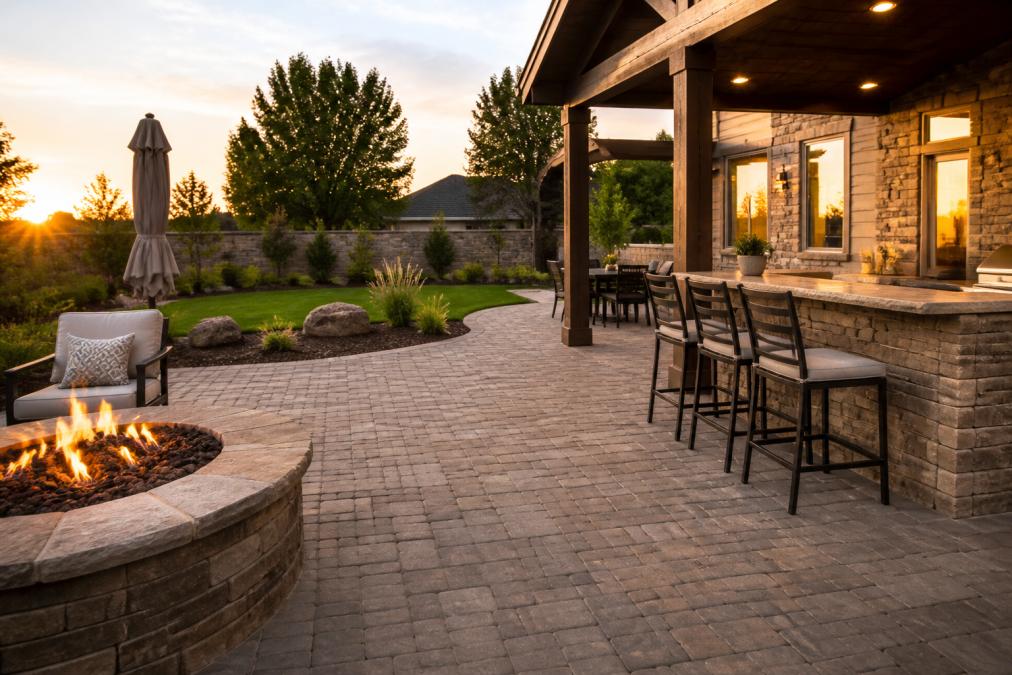
 ultimate-guide
Does a New Patio Increase Home Value?
Table of Contents
- Does a Patio Really Increase Home Value?
- Return on Investment: What Homeowners Actually Recover
- Patio vs. Deck: Which Adds More Resale Value?
- Key Factors That Influence Patio Value Addition
- Average Cost of Paver Patio Installation and Value Recovery
- How to Plan a Functional Patio Design That Maximizes Value
- The Lifestyle Factor: Why Outdoor Living Space Matters to Buyers
- Frequently Asked Questions
Last Updated: August 26, 2026
Does a Patio Really Increase Home Value?
Yes, a patio does increase home value for most properties, but the real story is more nuanced than that single word suggests. A patio extends your home's functional square footage, improves curb appeal, and signals to potential buyers that this is a home where life actually happens. However, not all patios add the same value, a poorly designed or cheaply built patio can actually detract from appeal, while a well-planned patio with quality materials becomes one of the most compelling selling points in your listing.
At Moises Pizana Hardscapes, we've worked with homeowners in the DFW area who wanted to understand the real return on their hardscape investment. The data shows that patio value depends entirely on execution, material quality, design thoughtfulness, maintenance standards, and how well the patio fits your home's aesthetic.
This guide breaks down what actually moves the needle on patio value, what homeowners typically recover on their investment, and how to plan a patio that maximizes both your enjoyment and your home's resale potential.
Return on Investment: What Homeowners Actually Recover
Homeowners generally recover between 50-80% of their patio installation costs when they sell (realtor.org). This range reflects the reality that outdoor living space appeals to buyers, but it's not a dollar-for-dollar value recovery like some kitchen renovations might deliver.
Several factors drive this recovery rate. First, construction quality matters enormously, a patio built with premium pavers, proper drainage, and expert installation holds value better than one assembled with budget materials. Second, design influences whether buyers see the patio as an asset or an afterthought. A patio that flows naturally from the home, creates defined functional zones, and complements the landscape appeals to far more buyers than one that feels disconnected or poorly proportioned.
Third, maintenance history affects perceived value. A patio showing signs of settling, cracking, or poor drainage immediately signals to buyers that they'll inherit problems. A well-maintained patio with no visible damage suggests the homeowner invested in quality work and proper care.
The lifestyle factor also plays into ROI. Buyers increasingly prioritize outdoor entertaining space. If your patio enables that vision with room for dining, conversation areas, and perhaps access to an outdoor kitchen or fire pit, buyers perceive significantly higher value.
Patio vs. Deck: Which Adds More Resale Value?
Generally, patios add more resale value than decks in most markets. Patios, typically built from pavers, concrete, or stone, offer several advantages from a resale perspective. They require less ongoing maintenance than wood decks, which need regular staining, sealing, and board replacement. Patios also feel more permanent and substantial, and they integrate with the landscape more naturally.
Decks appeal to buyers who want an elevated view and specific aesthetic, but wood decks depreciate faster because buyers know they'll face maintenance costs within 5-10 years. Composite decks address this but come at higher upfront cost.
The real difference comes down to climate and buyer expectations. In areas with harsh winters or significant rainfall, patios outperform decks because water damage and freeze-thaw cycles damage wood structures. For maximum resale value, many homeowners choose a hybrid approach: a patio as the primary outdoor living space with perhaps a smaller deck element for visual interest.
Key Factors That Influence Patio Value Addition
Several specific factors determine whether your patio will meaningfully increase home value.
Material Quality and Durability
The materials you choose directly influence both lifespan and buyer perception. Quality pavers, whether clay, concrete, or natural stone, represent the gold standard. They last 20-30 years with proper installation and maintenance, resist cracking, and handle freeze-thaw cycles well (peer-reviewed research). Buyers recognize paver patios as a serious investment.
Concrete patios cost less upfront but show their age faster, developing cracks and stains within 10-15 years (fhwa.dot.gov). Natural stone commands premium pricing and appeals to buyers seeking luxury outdoor space, though it requires more maintenance.
Material durability directly affects maintenance costs over time. A patio that deteriorates quickly will require expensive repairs, which future homeowners will factor into their offer. Investing in quality materials upfront protects your value recovery.
Design and Aesthetic Appeal
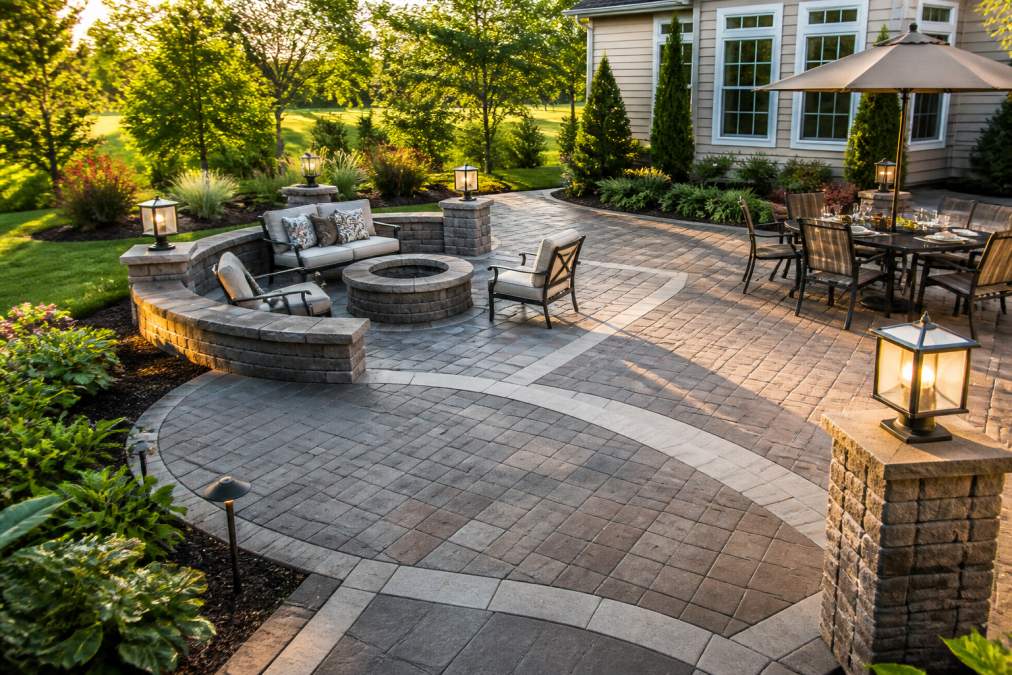
A patio's design determines whether it feels like an intentional outdoor living space or an awkward addition. Thoughtful design considers scale, proportion, flow, and integration with your home's architecture and landscape.
Scale matters significantly. A tiny patio looks out of proportion to a large home, while an oversized patio on a small lot can overwhelm the property. A patio roughly 12-16 feet from the home and extending 12-20 feet into the yard creates a functional entertaining space that most buyers recognize as valuable.
Flow and connection to the home also influence perceived value. A patio that opens directly from a main living area feels integrated and functional. Aesthetic appeal includes how the patio complements your home's style and landscape, a design that echoes your home's architectural lines and uses complementary colors feels cohesive and valuable. fireplace value impact.
Maintenance Requirements and Long-Term Costs
The maintenance burden of a patio significantly influences its long-term value. Pavers require periodic resealing, weed removal, and occasional power washing. Concrete requires similar care but shows dirt and stains more readily. Natural stone can require specialized sealers and cleaning methods.
Drainage is critical to patio longevity. A patio with poor drainage will develop pooling, algae growth, and accelerated deterioration. Buyers recognize drainage problems immediately and factor expensive repairs into their offer. A patio with proper grading and drainage systems maintains value much better.
The surrounding landscape also affects maintenance perception. A patio integrated into a thoughtfully maintained landscape signals that the entire property receives proper care.
Average Cost of Paver Patio Installation and Value Recovery
Understanding the relationship between installation cost and value recovery helps you make an informed investment decision. Paver patio installation costs vary based on size, material quality, site conditions, and regional labor rates. Get a detailed quote from a qualified hardscape contractor that breaks down material costs, labor, site preparation, and any drainage or grading work required.
Value recovery typically ranges from 50-80% of your total patio investment. The remaining 20-50% represents the value of the improved lifestyle you enjoyed while living in the home, which is actually the primary benefit of adding a patio.
Several factors influence where your project falls within that recovery range: premium materials support higher recovery than budget concrete; well-designed patios that flow from your home recover more value than basic rectangular slabs; professional installation with proper drainage protects value recovery; well-maintained patios recover more value than those showing deterioration; and strong seller's markets where outdoor space is highly valued support higher recovery rates.
The key insight: your patio is primarily an investment in your own quality of life. The value recovery at resale is a bonus, not the main reason to build one.
How to Plan a Functional Patio Design That Maximizes Value
Creating a patio that maximizes both immediate enjoyment and future resale value requires thoughtful planning before construction begins.
Start by defining how you'll actually use the space, dining, entertaining, lounging, or outdoor cooking. The intended use drives every design decision. Next, assess your home's main living areas and how the patio connects to them. The ideal patio opens directly from your kitchen or primary living room, creating seamless flow.
Consider your property's slope and drainage. A patio built on poorly draining or sloping ground will develop problems that reduce value. Professional site assessment ensures proper grading and drainage solutions are built in from the start.
Think about scale relative to your home and lot size. This creates balance and ensures the space feels intentional.
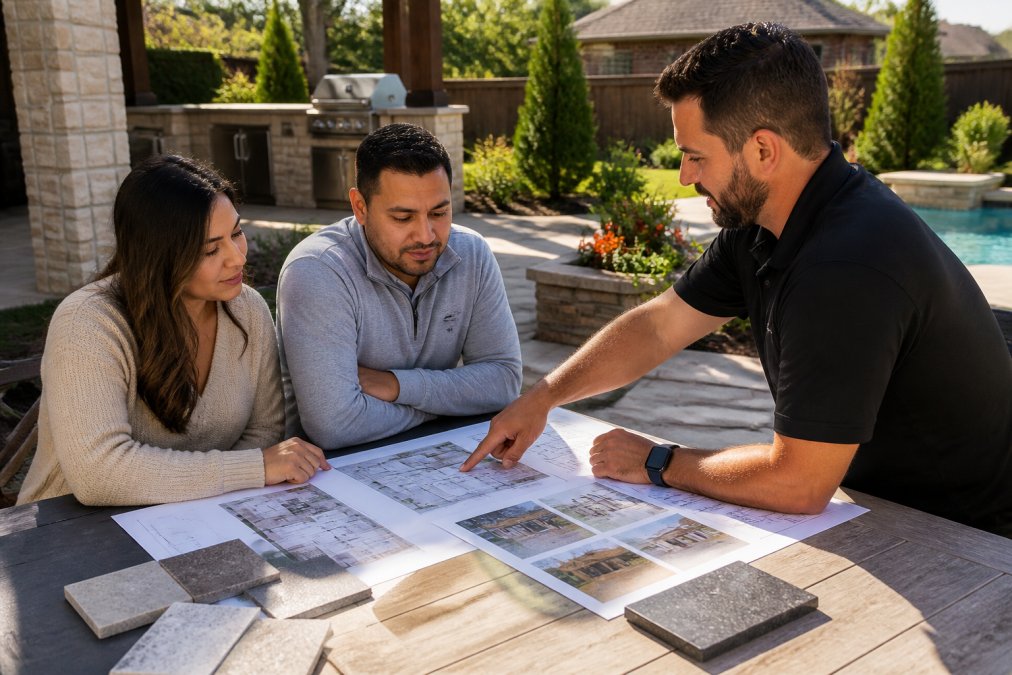
Material selection should balance aesthetic appeal, durability, and maintenance requirements. Quality pavers in classic colors integrate well with most home styles. Avoid trendy colors or patterns that might feel dated in 5-10 years.
Plan for defined zones if your patio is large enough, a dining area near the home, a conversation area further out, and perhaps a transition to landscaping. Finally, consider how your patio integrates with the broader landscape. A patio surrounded by attractive landscaping and complementary hardscape elements signals comprehensive property investment.
The Lifestyle Factor: Why Outdoor Living Space Matters to Buyers
The value of a patio extends far beyond what an appraiser will formally add to your home's assessed value. Outdoor living space has become a primary decision factor for many buyers, particularly families and those seeking lifestyle upgrade.
Buyers increasingly view outdoor entertaining capability as essential to their quality of life. A home with a well-designed patio signals that this property supports the lifestyle they want. This emotional connection often translates into higher offers and faster sales.
Patio value also reflects broader market trends toward home-centered entertainment and wellness. Post-pandemic, buyers prioritize homes that support quality time outdoors. A property with a functional, attractive patio addresses this priority directly.
This is why design and functionality matter so much for value recovery. A patio that enables the lifestyle buyers seek will drive offers and support higher prices.
The question of whether a patio increases home value has a straightforward answer: yes, when it's well-designed, properly constructed, and well-maintained.
If you're considering a patio project in the DFW area, work with a contractor who understands both construction quality and design principles. Moises Pizana Hardscapes brings 15+ years of experience designing and building patios that enhance property value while delivering the outdoor living functionality homeowners actually use. From material selection through final installation, quality workmanship ensures your patio will maintain its appeal and value for decades. Get A Quote to discuss how a custom patio design can enhance your home's value and your lifestyle.
Frequently Asked Questions
Q: How much does a new patio increase home value on average?
A: A well-designed patio typically adds value to a home, though this varies by market and material quality. Paver patios often deliver stronger returns than concrete due to durability and aesthetic appeal. The actual increase depends on your property's location, neighborhood comps, and the patio's size and design. Professional installation and quality materials maximize this return on investment.
Q: What adds more value, a deck or patio?
A: Patios generally add more resale value than decks in most markets. Patios offer lower maintenance costs, longer structural integrity, and broader buyer appeal. Decks require regular maintenance and structural repairs, which can concern appraisers and buyers. A patio's permanent hardscape nature also contributes to higher property appraisal values compared to elevated wood structures.
Q: Does a paver patio add more value than concrete?
A: Paver patios typically add more value than concrete due to superior aesthetic appeal and perceived quality. Pavers offer design flexibility, easier repair of individual units, and better long-term durability. While concrete costs less upfront, paver patios command higher resale premiums and improve curb appeal more significantly, making them a stronger investment for homebuyers evaluating outdoor amenities.
Q: What factors most influence whether a patio adds value to my home?
A: Material durability, design quality, maintenance requirements, and neighborhood expectations drive patio value addition. Patios that complement your home's architecture and landscape design appeal to more buyers. Proper drainage and structural integrity prevent costly repairs that reduce property valuation. The patio's size relative to your lot and its functionality for outdoor living also influence how appraisers assess its contribution to overall home value.