 ultimate-guide
Texas Backyard Living: Design Your Outdoor Oasis
Table of Contents
- What Texas Backyard Living Means for Your Home
- Essential Elements of a Functional Outdoor Living Space
- Retaining Wall Construction Benefits for Drainage and Stability
- Outdoor Kitchen Installation Cost Breakdown and Planning
- Hiring Professional Hardscape Contractors: What to Expect
- Climate-Specific Material Selection for Texas Weather
- Permitting, HOA Regulations, and Long-Term Maintenance
- Budgeting and ROI: Will Your Backyard Investment Pay Off?
- Frequently Asked Questions
Last Updated: October 3, 2026
What Texas Backyard Living Means for Your Home
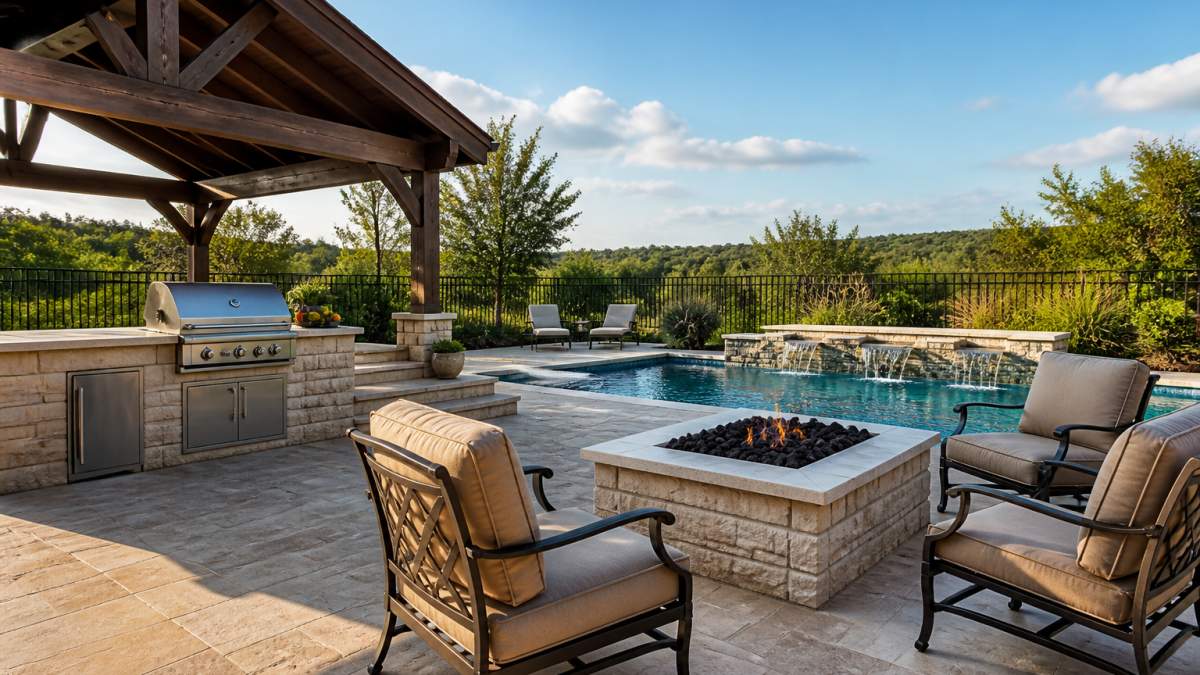
Texas backyard living transforms your outdoor space into a functional extension of your home where family gatherings and entertaining happen naturally. At Moises Pizana Hardscapes, we help Dallas-Fort Worth homeowners reimagine their backyards. The difference between a neglected yard and a thoughtfully designed outdoor living space comes down to intentional design paired with quality construction.
Texas backyard living solves real problems: water pooling after rain, cracking patios, lack of shade, and spaces that don't function for how families actually use them. A well-designed texas backyard living environment addresses all of these.
Texas weather, intense sun, heavy rain, and shifting clay soils, demands climate-specific material selections from the start to ensure your investment withstands the seasons.
Essential Elements of a Functional Outdoor Living Space
A functional outdoor living space combines hardscaping for structure and drainage, shade solutions for comfort, and defined zones for different activities.
Custom Patios and Hardscaping
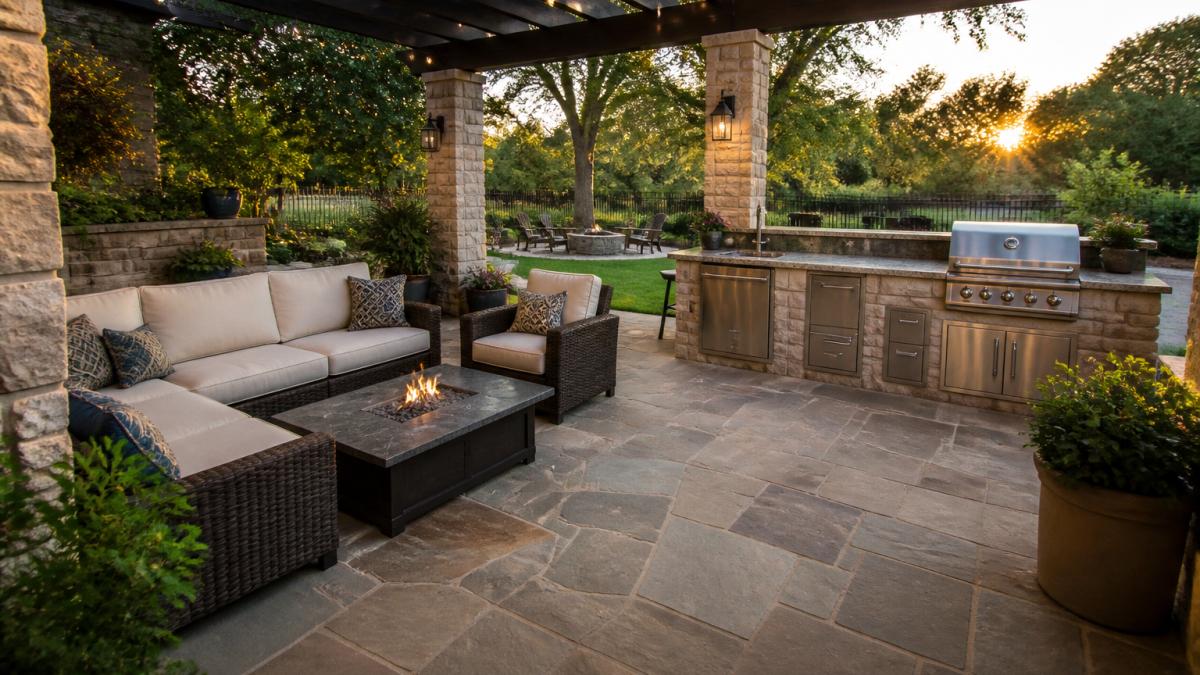
A quality patio is the anchor of texas backyard living, where people gather and entertaining happens. It must handle heavy foot traffic, resist cracking, and manage water drainage properly.
Stone and pavers with properly installed bases last decades, while cheap concrete slabs settle unevenly within years. The real cost is in repairs from poor drainage planning or inadequate base preparation.
Proper grading for texas backyard living moves water away from structures while maintaining a level surface. Flat or inward-sloping patios cause pooling, erosion, and foundation damage.
Pergolas and Shade Structures
A pergola provides partial shade while maintaining airflow, reducing direct sun intensity by 50-70 percent, crucial for Texas summers.
Shade structures must be engineered for Texas wind loads, especially in Arlington and Grapevine. Poor construction becomes a liability.
Retaining Walls and Erosion Control
Retaining walls manage slope and erosion while defining spaces. On properties with grade changes, they prevent soil migration and protect foundations.
Drainage problems often stem from inadequate retaining wall installation. Properly built walls include drainage systems that prevent hydrostatic pressure and water seepage.
Retaining Wall Construction Benefits for Drainage and Stability
Retaining walls are engineering solutions to Texas soil problems. Well-built walls hold soil in place while managing water movement as clay soils shift with moisture changes.
A retaining wall with proper gravel backing and perforated drain pipe directs water away from foundations. Without this, water accumulates and pressure builds until failure occurs.
Base preparation is critical, excavating below frost line, proper compaction, and adequate reinforcement prevent most retaining wall failures.
Outdoor Kitchen Installation Cost Breakdown and Planning
An outdoor kitchen is the centerpiece of modern texas backyard living and requires careful planning. Understanding realistic budget ranges helps you plan intelligently.
Budget Tiers and What They Include
Outdoor kitchens in the region typically fall into several categories, offering various features and functionalities.
These ranges assume professional DFW installation. Never compromise utility line work or structural engineering.
The Hidden Cost Driver: Utility Lines
Utility extension costs often blow budgets. A kitchen 30 feet from your home can incur significant costs in utility infrastructure alone.
Material Selection and Long-Term Costs
Stainless steel appliances resist Texas humidity better than painted alternatives. Stone countertops require annual sealing. Stainless steel cabinets outlast wood.
ROI and Resale Value
Mid-range outdoor kitchens can recover a significant portion at resale in DFW. Premium kitchens may recover less. Personal enjoyment ROI differs: frequent use over 10+ years justifies the investment.
Planning Questions: How far is the kitchen from utility lines (determines 30-40% of cost)? Will you use a sink and refrigerator or just a grill? Do you need specialty appliances? How long will you stay? What's your entertaining frequency?
Hiring Professional Hardscape Contractors: What to Expect
Choosing the right contractor for your texas backyard living project determines satisfaction. Here's the vetting framework that separates qualified contractors from those who cost you money in repairs.
Red Flags That Indicate Poor Quality
Watch for these red flags: no discussion of soil/drainage, vague estimates, willingness to skip permits, no on-site equipment, no local references, or pressure to decide quickly. These indicate poor quality or corner-cutting.
What to Verify During Reference Checks
Ask references: Has the patio cracked within 3-5 years? Is water pooling? Have retaining walls failed? What maintenance was done? Would you hire them again? Visit properties in person to check for cracks, settling, and water damage.
Evaluating Experience and Local Knowledge
A contractor with extensive experience in DFW understands clay soil behavior, local materials, permitting, and drainage design.
Contract Details That Protect You
Before signing, ensure the contract includes:
- Detailed scope of work. Not "build retaining wall" but "construct 24-inch segmental block retaining wall, 45 linear feet, with 12-inch gravel backfill and perforated drain pipe, sloped away from foundation."
- Material specifications. Specify the exact products: "Belgard Versa-Lok blocks" or "Permeable paver system with polymeric sand," not just "quality pavers."
- Grading and drainage plan. The contract should reference a site plan showing slope direction, drain locations, and how water moves away from structures.
- Timeline and payment schedule. Avoid paying 100% upfront. A typical schedule: 30% at signing, 40% at mid-project, 30% at completion and inspection.
- Warranty terms. What does the contractor guarantee, and for how long? Structural work (walls, foundations) should carry a warranty. Finish work (staining, sealing) typically has a shorter warranty.
- Cleanup and site restoration. The contract should specify that the contractor removes debris, restores landscaping, and leaves the site clean.
- Permit responsibility. Clarify whether the contractor obtains permits and pays permit fees, or whether you handle it. (The contractor should handle it.)
Questions to Ask Before Hiring
- "What's your process for assessing soil and drainage before design?" Good contractors do soil tests or at least observe how water moves during or after rain.
- "How do you handle changes or unexpected conditions discovered during construction?" Soil conditions sometimes differ from expectations. A contractor who has a process for addressing this (change orders, communication) is better than one who just proceeds.
- "What maintenance do you recommend after installation, and how often?" A contractor who provides a maintenance schedule (seal patios annually, inspect walls seasonally) is thinking long-term.
- "Are you licensed and insured?" Verify they carry liability insurance and workers' compensation. Ask for proof.
- "Can you provide references from projects completed 5+ years ago?" This shows how work holds up over time, not just immediately after completion.
The Cost of Hiring Wrong
A contractor who saves you money upfront but builds a patio that cracks in two years can cost you significantly in removal and replacement. A retaining wall that fails can cost a substantial amount to rebuild properly. These aren't rare scenarios, they're common outcomes of hiring based on price alone.
Quality contractors in the region typically cost more than the cheapest option. That premium buys you experience, accountability, proper materials, and work that lasts. It's not an expense; it's insurance against far more expensive failures.
Climate-Specific Material Selection for Texas Weather
Texas weather demands specific material choices. What works in California or the Northeast often fails here because of our unique combination of intense sun, occasional ice, heavy clay soils, and rapid moisture swings.
Stone and pavers outperform poured concrete for patios in texas backyard living applications. Concrete cracks as it expands and contracts with temperature changes. Pavers move slightly with the ground, accommodating soil shift without cracking. Over 10-15 years, this difference becomes obvious. Selecting durable materials provides a stable foundation for the evolving trends found in modern backyard retreat ideas.
For retaining walls, segmental blocks designed for our climate perform better than stacked stone or poured concrete. These engineered blocks accommodate slight movement while maintaining structural integrity. The backfill and drainage system matters equally, you can have the best blocks in the world, but poor drainage behind them causes failure.
Wood elements require careful selection and maintenance. Treated lumber resists rot but requires regular staining to handle UV exposure. Composite materials offer lower maintenance but cost more initially. Cedar and redwood look beautiful but deteriorate faster in our climate without constant maintenance.
Permitting, HOA Regulations, and Long-Term Maintenance
Before breaking ground on any texas backyard living project, understand your local permitting requirements. Many homeowners skip this step and face costly removal orders or fines. Retaining walls over certain heights typically require permits. Outdoor kitchens with gas lines definitely require permits and inspections.
HOA regulations vary dramatically across the DFW area. Some communities restrict fence height, material types, or require architectural approval before construction. Grapevine and Arlington have different requirements than unincorporated areas. We always recommend checking with your HOA before finalizing designs.
Maintenance determines whether your investment appreciates or deteriorates. A patio sealed annually lasts decades longer than one left unprotected. A retaining wall with functioning drainage stays stable; one where drainage clogs eventually fails. An outdoor kitchen with covered appliances during off-season resists corrosion better than one left exposed.
Plan for seasonal maintenance: spring cleanup, summer inspections after storms, fall preparation, and winter protection as needed. A small investment in maintenance prevents large investments in repair.
Budgeting and ROI: Will Your Backyard Investment Pay Off?
The question every homeowner asks: will this add value to my home? The answer is yes, but with important caveats about scope and quality.
A well-executed texas backyard living project typically adds value to your home's resale value, depending on the market and the quality of work. A significant outdoor kitchen and patio project on a home can add value. However, a very large project on the same home may begin to exceed what the market will support.
The ROI calculation changes when you factor in personal enjoyment. If you're planning to stay in your home for 10+ years, the value equation shifts. You're not just buying resale value, you're buying years of entertaining, family gatherings, and outdoor living. That has real value even if the dollar appreciation is modest.
Quality matters enormously for ROI. A poorly built patio that cracks within three years destroys value. A retaining wall that fails costs thousands to repair. A contractor who cuts corners saves money upfront but costs you money later. This is why choosing experienced professionals with a track record matters.
Document your project thoroughly. Keep receipts, photos, and maintenance records. When you sell, this documentation helps justify the asking price and demonstrates that the work was done professionally and maintained properly.
Transforming your outdoor space into a functional texas backyard living environment requires planning, quality materials, and experienced construction. At Moises Pizana Hardscapes, we handle every aspect of hardscape design and installation, from custom patios and retaining walls to outdoor kitchens and shade structures.
Frequently Asked Questions
What's the typical timeline for a Texas backyard living project?
Project timelines vary based on scope and complexity. A custom patio may take 2-4 weeks, while a full backyard renovation with outdoor kitchen and retaining walls can span 6-12 weeks. Weather delays during summer heat or heavy rain seasons can extend schedules. Your contractor should provide a detailed timeline upfront and communicate any changes promptly. Smaller projects like repairs or single-feature installations typically move faster than comprehensive outdoor living space designs.
How much does retaining wall construction cost, and what factors affect pricing?
Retaining wall costs depend on height, length, material choice (stone, concrete, timber), site conditions, and soil type. Drainage requirements and local permitting also influence the final price. For an accurate quote, professional contractors assess your specific property, soil stability, and design goals. Contact local hardscape specialists for estimates tailored to your project scope and materials.
Will outdoor kitchen installation add value to my home when I sell?
Outdoor kitchens and entertainment spaces typically add curb appeal and functional value, especially in markets where outdoor living is desirable. However, ROI varies by neighborhood, quality of installation, and current market conditions. High-quality hardscaping and custom outdoor features often recover a significant portion of investment at resale. Consult local real estate professionals in your area to understand how specific improvements affect property values in your market.
What should I look for when hiring professional hardscape contractors?
Look for contractors with proven experience, proper licensing, insurance, and local references. Review portfolios of completed projects in your area to assess quality and design style. Ask about warranty coverage, project timelines, and how they handle unexpected site conditions. Professional contractors communicate clearly, provide detailed estimates, and stand behind their workmanship. Verify they have the equipment and crew to complete work without subcontracting, ensuring consistent quality and accountability throughout your project.