 how-to
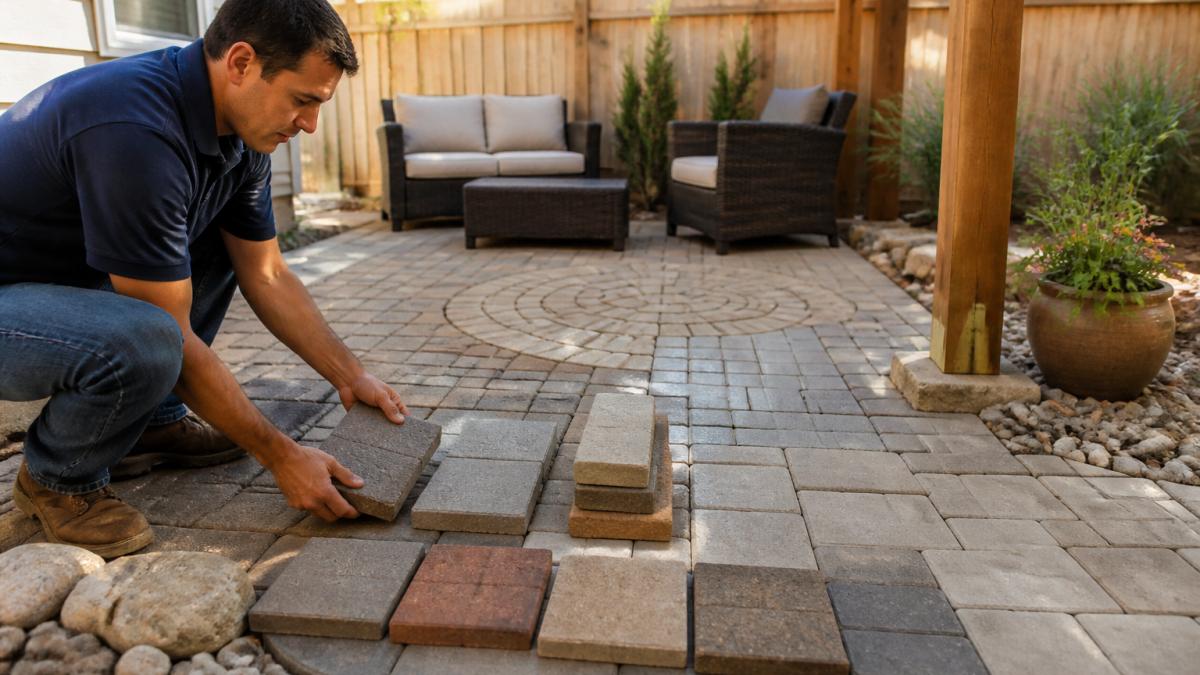
How to Choose Pavers for Small Backyard Patios
Table of Contents
- Assess Your Space and Traffic Needs
- Concrete vs Natural Stone Pavers: Which Material Works Best
- Best Paver Patterns for Small Patios
- Color Selection and Architectural Aesthetic
- Cost of Paver Patio Installation: What Affects Your Budget
- Drainage, Maintenance, and Long-Term Performance
- How to Choose Pavers: Your Decision Framework
- Frequently Asked Questions
Last Updated: October 1, 2026
Assess Your Space and Traffic Needs
Before you pick a single paver, measure your backyard and understand how you'll use it. A small patio serves different purposes than a sprawling entertaining space. Some families need a quiet corner for morning coffee. Others want room for dining and games. The difference changes which paver type makes sense.
Traffic patterns matter more in tight spaces. A high-traffic zone near your back door needs durable, slip-resistant pavers. A low-traffic seating area can use softer, more decorative materials. Heavy foot traffic also affects compaction needs and sub-base preparation depth.
Think about water drainage too. Small patios can develop pooling problems faster than large ones because water has nowhere to spread. Permeable pavers solve this naturally, but they require specific installation methods. Understanding your site's drainage before choosing pavers saves thousands in corrections later.
Concrete vs Natural Stone Pavers: Which Material Works Best
Picking the right material is the foundation of your project. Each option has distinct trade-offs in cost, durability, and maintenance. Here's how to evaluate them for your small backyard patio.
Concrete Pavers for Small Patios
Concrete pavers are the practical choice for most homeowners. They're affordable, come in consistent sizes, and install predictably. For small patios, this consistency matters because you need tight, uniform joints to maximize visual space.
Concrete pavers work well with large-format designs. A 12x24-inch paver covers more ground with fewer joints, making a small patio feel larger. The uniform appearance also creates the clean architectural aesthetic that works best in tight spaces.
The downside: concrete can crack under freeze-thaw cycles or heavy settling. It also stains easily. But in the DFW climate, freeze-thaw isn't a major concern, and stains are manageable with regular sealing. For most small patios in this region, concrete delivers solid performance at reasonable cost.
Pros:
- Lower upfront cost
- Uniform sizing for tight layouts
- Wide color options
- Easy to replace individual pavers
Cons:
- Can crack if base settles unevenly
- Stains without regular sealing
- Less distinctive than natural stone
Natural Stone Pavers: Durability and Aesthetics
Natural stone, granite, slate, limestone, offers unmatched durability and visual appeal. Each stone is unique, creating an authentic hardscape that adds curb appeal instantly. For homeowners preparing their properties for sale, natural stone signals quality.
Stone pavers work beautifully in small spaces because their texture and variation draw the eye. A small patio with natural stone feels intentional and curated, not cramped. The material also resists staining better than concrete.
The trade-off is cost and installation complexity. Natural stone weighs more, requires thicker sub-base preparation, and demands skilled installation. Irregular shapes also mean more cutting and waste. For a small patio, this translates to higher per-square-foot pricing.
Pros:
- Exceptional durability (50+ years)
- Unique aesthetic appeal
- Superior stain resistance
- Increases perceived property value
Cons:
- Higher material and labor costs
- Irregular shapes complicate layout
- Requires professional installation
- Some stones are slippery when wet
Clay Brick: Traditional Appeal and Load-Bearing Capacity
Clay brick pavers offer a middle ground. They're more durable than concrete, more affordable than natural stone, and deliver a timeless look that complements most home exteriors. For small patios, clay brick's warm, traditional aesthetic works especially well.
Brick's load-bearing capacity is excellent. If you're thinking about a fire pit, outdoor kitchen, or other heavy features later, brick handles the weight. The modular 4x8-inch size also works naturally with geometric layouts in confined spaces.
The catch: clay brick requires proper edge restraints and compaction. Loose installation leads to settling and uneven surfaces. In small patios, this is more noticeable because the eye catches every irregularity.
Pros:
- Strong load-bearing capacity
- Warm, traditional appearance
- Moderate cost
- Works with geometric patterns
Cons:
- Requires precise installation
- Can absorb water without sealing
- More prone to moss growth in shaded areas
- Needs edge restraints to prevent shifting
Best Paver Patterns for Small Patios
The pattern you choose shapes how your patio feels. In small spaces, certain patterns create visual expansion. Others make the area feel cramped. Understanding these patterns is key to how to choose pavers for small backyard patios that actually work.
Running Bond Pattern for Visual Expansion
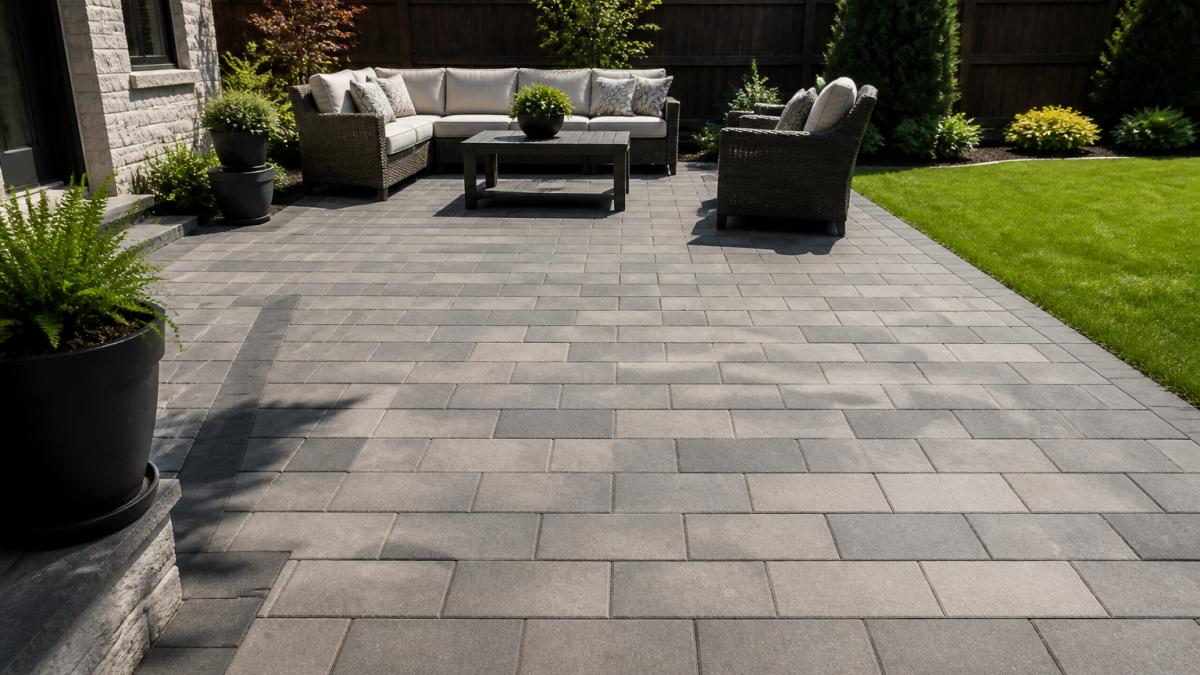
The running bond pattern, offset rows like a brick wall, is the best choice for visual expansion in small spaces. Each row shifts half a paver width, creating horizontal lines that draw the eye across the patio. This stretches the perceived width, making a tight space feel larger.
Running bond also minimizes waste. The offset pattern uses full pavers efficiently, reducing cuts and cost. For small patios where every square foot counts, this efficiency matters.
The pattern works with any paver size, but it's most effective with rectangular pavers. A 6x12-inch or 8x16-inch paver in running bond creates strong directional flow without overwhelming the space.
When to use it:
- Small patios under 200 square feet
- Areas where you want visual expansion
- Any material type (concrete, stone, or brick)
Large-Format Pavers to Maximize Space
Large-format pavers, 12x24 inches or bigger, reduce the number of joints on your patio surface. Fewer joints mean fewer visual interruptions, making the space feel more open. A small patio with 20 large pavers feels less cluttered than one with 80 small ones.
Large-format pavers also simplify installation. Fewer pavers mean faster work and lower labor costs. The sub-base preparation is the same, so you save money where it matters most.
The trade-off: large pavers are harder to fit irregular spaces. If your patio has corners or angles, you'll need more cuts. This increases waste and cost. For rectangular patios, large-format pavers are ideal.
When to use it:
- Rectangular patios with clean edges
- Spaces where you want minimal visual clutter
- Concrete or stone (not as common in clay brick)
Geometric Layouts and Trim Coordination
Geometric patterns, herringbone, chevron, basketweave, add visual interest but work best in larger spaces. In small patios, they can feel busy. If you want geometry, use it as an accent border, not the entire surface.
Trim coordination matters in small spaces. Your patio edges should align with your home's architectural lines. If your home has clean, modern trim, geometric patterns clash. If your home has traditional detailing, a subtle geometric accent works.
The key is restraint. A small patio with too much pattern feels chaotic. A simple pattern with one accent area feels intentional.
When to use geometric patterns:
- As a border accent, not the main field
- In spaces over 250 square feet
- When your home's trim supports the style
Color Selection and Architectural Aesthetic
Color ties your patio to your home's exterior. In small spaces, this connection is even more important because the patio is visually prominent from inside.
Neutral tones, grays, taupes, warm browns, work with almost any home style. They also make a small space feel larger because they don't compete for attention. Neutral pavers recede visually, letting landscaping and furniture define the space.
Bold colors, reds, blacks, deep blues, can work, but they demand careful coordination. A small patio in bold color can feel enclosed. Reserve bold colors for accents: a border stripe, a geometric insert, or a small feature area.
Consider your roof and trim color too.
Cost of Paver Patio Installation: What Affects Your Budget
Several factors drive the total cost of your patio. Understanding them helps you make smart choices about where to invest and where to save.
Drainage, Maintenance, and Long-Term Performance
A patio that doesn't drain fails fast. Water pooling leads to cracking, settling, and moss growth. In small patios, drainage problems are more visible and harder to fix later.
Permeable Pavers for Small Backyards
Permeable pavers let water drain through the joints directly into the sub-base. This solves pooling problems naturally and reduces runoff. For small backyards where water has nowhere to spread, permeable pavers are worth the extra cost.
Best for:
- Areas with poor natural drainage
- Environmentally conscious homeowners
- Small patios where water has limited runoff area
Sub-Base Preparation and Compaction
The sub-base is where patio success or failure is decided. A properly compacted base prevents settling, cracking, and uneven surfaces. In small patios, any settling is immediately obvious.
Joint Sand and Weather Resistance
Joint sand is the material between pavers. Traditional polymeric sand hardens when wet, locking pavers in place. It resists weeds and prevents sand washout. For small patios with tight joints, polymeric sand is standard.
How to Choose Pavers: Your Decision Framework
Start with your material. Concrete is practical and affordable. Natural stone offers durability and beauty. Clay brick balances both. Your budget and maintenance tolerance guide this choice.
Frequently Asked Questions
What type of pavers are best for a small patio?
Large-format concrete or natural stone pavers work best for small patios because they create visual expansion and reduce the number of joints. Concrete pavers offer affordability and durability, while natural stone provides architectural aesthetic appeal. Choose pedestrian-rated pavers for foot traffic and ensure the material matches your home's exterior trim and roof coordination for cohesive curb appeal.
Can large-format pavers actually make a small backyard look bigger?
Yes. Large-format pavers reduce visual fragmentation by minimizing joints and grout lines, which tricks the eye into perceiving more continuous space. A running bond pattern with larger pavers amplifies this effect. Pair this with neutral tones and proper edge restraints to define your outdoor living space without overwhelming the footprint.
What's the cost difference between concrete and natural stone pavers?
Concrete pavers are generally more cost-effective upfront, while natural stone pavers command higher installation costs due to material expense and labor. The cost of paver patio installation depends on your chosen material, sub-base preparation depth, permeable joints versus standard joint sand, and site-specific compaction requirements. Contact Moises Pizana Hardscapes for a detailed quote tailored to your project.
How do I prevent water pooling in my small backyard after rain?
Proper sub-base preparation and compaction are essential. Permeable pavers with permeable joints allow water drainage through the patio rather than pooling on the surface. Ensure adequate slope during installation and use appropriate base aggregate. For persistent drainage issues, professional hardscape design can integrate drainage solutions into your patio layout.