 how-to
Preventing Soil Erosion in DFW Landscapes: 7 Proven Methods
Table of Contents
- Understanding Soil Erosion in DFW Landscapes
- Method 1: Install Native Vegetation and Ground Cover
- Method 2: Apply Mulch and Compost for Soil Stability
- Method 3: How to Fix Water Pooling in Your Backyard
- Method 4: Retaining Wall Installation for Erosion Control
- Method 5: Implement Landscape Drainage Solutions
- Method 6: Use Riprap and Rock Installation Techniques
- DIY vs. Professional Intervention: When to Call an Expert
- Frequently Asked Questions
Last Updated: August 25, 2026
Understanding Soil Erosion in DFW Landscapes
Soil erosion in DFW landscapes represents one of the most common yet preventable threats to residential properties. The region's unique combination of clay-heavy soils, variable rainfall patterns, and sloped terrain creates ideal conditions for topsoil loss and foundation damage. When water moves across your yard during heavy rain, it carries away nutrient-rich topsoil and pools around your foundation, creating structural problems that cost thousands to repair.
The DFW region has two distinct soil types that respond differently to erosion. Blackland Prairie soils, found in much of Dallas, contain high clay content and compact easily, reducing water absorption and accelerating runoff. Cross Timbers soils, more common in western areas, contain more sand and drain faster but offer less soil retention naturally. Understanding which soil type dominates your property helps you choose the most effective erosion prevention approach.
Water is the primary erosion driver. During a typical DFW thunderstorm, rainfall intensity can exceed one inch per hour (noaa.gov). When that water hits bare soil or compacted ground, it doesn't absorb, it runs, creating channels, carrying sediment downslope, and concentrating near foundations. The solution involves slowing water movement, increasing absorption, and directing flow away from vulnerable areas.
Method 1: Install Native Vegetation and Ground Cover
Native plants form the foundation of effective erosion control. Their root systems penetrate deep into soil, creating a network that binds particles together and dramatically increases soil retention. Unlike shallow-rooted ornamental species, native vegetation evolved specifically to handle DFW's climate and soil conditions.
The best native species for erosion control include little bluestem, which develops extensive root systems reaching three feet deep; Texas sedge, a low-growing ground cover that stabilizes slopes; and native muhly grasses, which spread horizontally while anchoring soil vertically. These plants also attract pollinators, require minimal irrigation once established, and reduce maintenance compared to traditional turf.
On slopes, plant in horizontal rows rather than vertical lines to slow water movement and create terracing effects that reduce runoff velocity. Space plants closer together than typical recommendations; erosion control prioritizes coverage speed over mature plant size. Dense coverage within one growing season outperforms sparse planting that takes years to fill in.
Establish native vegetation on slopes steeper than 15 degrees, around downspout discharge areas, and anywhere you observe water concentration during rain.
Method 2: Apply Mulch and Compost for Soil Stability
Mulch serves dual purposes in erosion prevention: it absorbs impact from falling rain, reducing soil particle displacement, and it improves soil structure as it decomposes, increasing water absorption capacity. A three-to-four-inch layer of organic mulch can reduce erosion by 70 percent compared to bare soil (peer-reviewed research).
Compost application goes deeper. Unlike mulch, which sits on the surface, compost incorporates into existing soil through tilling or natural decomposition, increasing organic matter content and strengthening soil structure. Clay-heavy Blackland Prairie soils particularly benefit from compost addition, as it reduces compaction and increases porosity.
The combination approach, mulch on top, compost worked into the top six inches, creates a layered defense system. Apply compost in spring before planting season, then add fresh mulch after compost has settled.
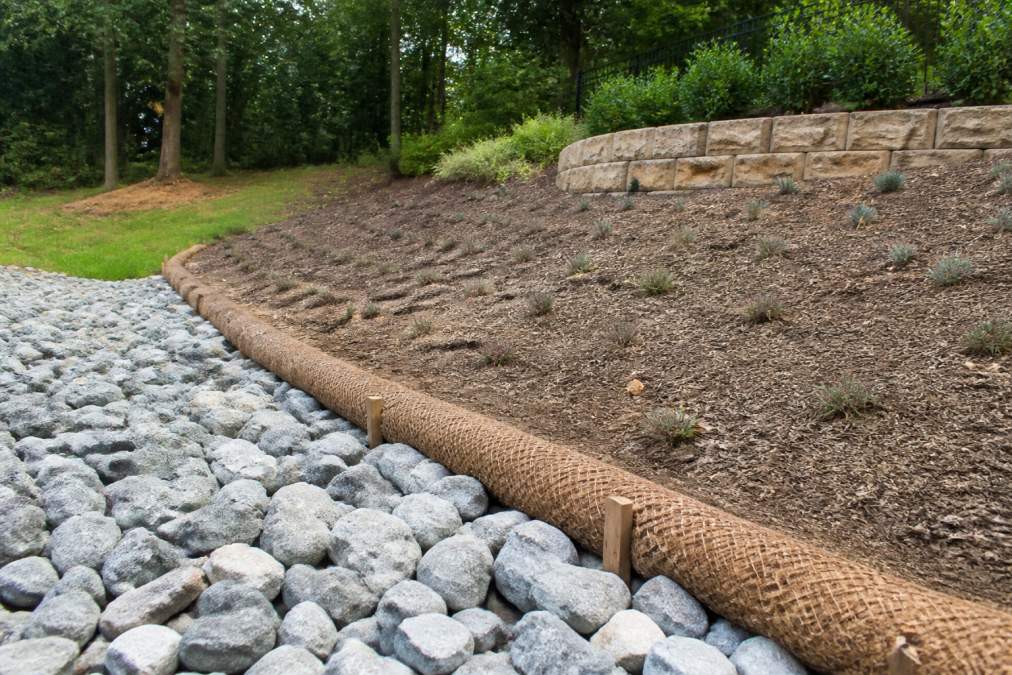
Use shredded hardwood bark or arborist chips instead of wood chip mulch, which can accelerate erosion on steep slopes. For slopes exceeding 20 degrees, consider erosion control blankets (biodegradable fabric) pinned over mulch to prevent movement during heavy rain.
Method 3: How to Fix Water Pooling in Your Backyard
Water pooling indicates that drainage is failing to move water away from problem areas. Standing water accelerates erosion, creates ideal conditions for mosquito breeding, and promotes foundation moisture issues. Fixing pooling requires understanding why water accumulates.
Most pooling occurs in low points created by settling, compaction, or original grading not designed for current water volumes. The solution involves either redirecting water before it reaches the pooling area or improving drainage capacity at the pooling location itself.
Regrading represents the most direct fix. A minimum slope of 2 percent (two feet of elevation change per 100 feet of horizontal distance) provides adequate drainage for most residential applications. This isn't dramatic, it's barely perceptible to the eye but sufficient to move water.
For smaller pooling areas, French drains offer targeted solutions. A French drain consists of a shallow trench (12-18 inches deep) filled with perforated pipe surrounded by gravel. Water enters the perforations, travels through the pipe, and discharges to a lower elevation or collection area.
Drainage swales, shallow vegetated channels, handle distributed water movement across larger areas. Unlike hard-piped systems, swales slow water velocity while allowing infiltration into surrounding soil.
Before implementing any drainage fix, identify where water is coming from. Is it roof runoff from downspouts? Surface water flowing from upslope? Subsurface groundwater? Each source requires different solutions.
Method 4: Retaining Wall Installation for Erosion Control
Retaining walls do more than create visual interest, they fundamentally change how water and soil interact on sloped properties. By holding soil in place and creating level terraces, retaining walls reduce the erosion forces that gravity and water exert on slopes.
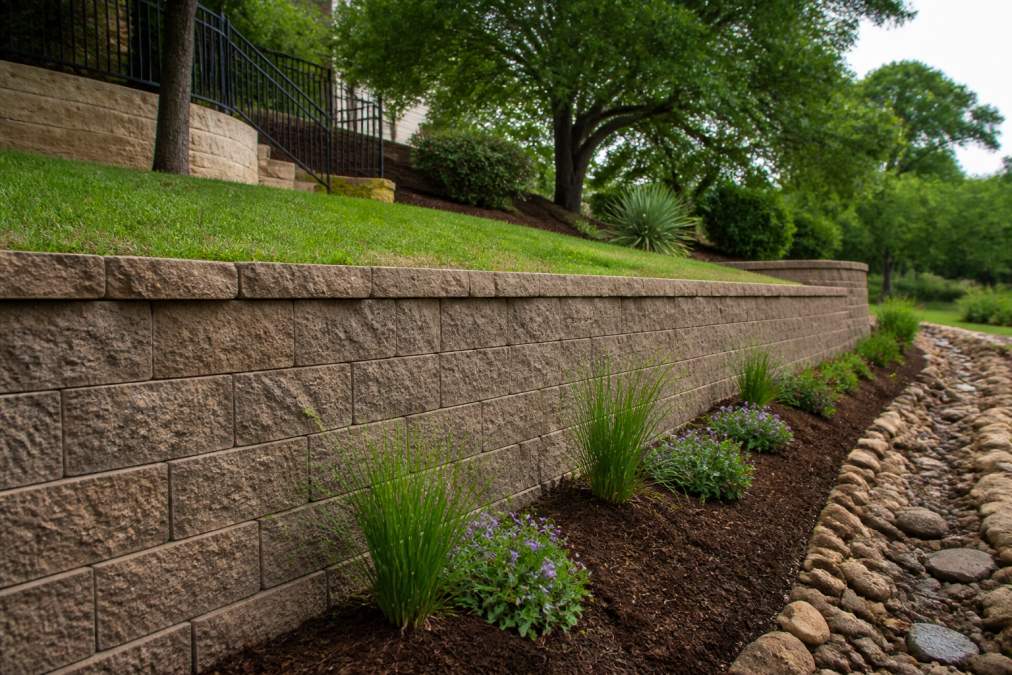
Wall height determines complexity and cost. Walls under three feet typically require basic drainage and can often be installed without engineering review. Walls exceeding three feet need structural design to ensure they can withstand soil pressure. DFW's clay soils exert significant pressure, making proper design essential for taller walls.
Material selection affects both performance and aesthetics. Segmental retaining wall blocks offer flexibility in design and integrate well with landscape plantings. Natural stone provides traditional appeal but requires skilled installation. Timber walls work for informal designs but have shorter lifespans in DFW's variable moisture conditions. Concrete is durable and cost-effective but offers fewer design options.
Drainage behind the wall is critical. Without it, water pressure builds, forcing soil against the wall and eventually causing failure. A perforated drain pipe behind the wall, surrounded by gravel, directs water downslope rather than allowing accumulation.
Native plants at the wall base and on the terraced area above complete the erosion control system, combining hardscape stability with vegetative root reinforcement.
Method 5: Implement Landscape Drainage Solutions
Comprehensive drainage management addresses water movement across your entire property. While individual solutions handle specific problem areas, integrated drainage systems prevent problems from developing.
Begin with roof runoff management. Extend downspouts at least four to six feet from the foundation, directing discharge to landscaped areas where water can disperse and infiltrate gradually (fema.gov). For properties with significant roof area, consider rain gardens, shallow planted basins that capture and filter runoff while allowing infiltration.
Surface water management involves understanding how water flows across your property during rain. Walk your yard during a moderate storm and observe where water concentrates. These flow paths indicate where drainage improvements will have the greatest impact.
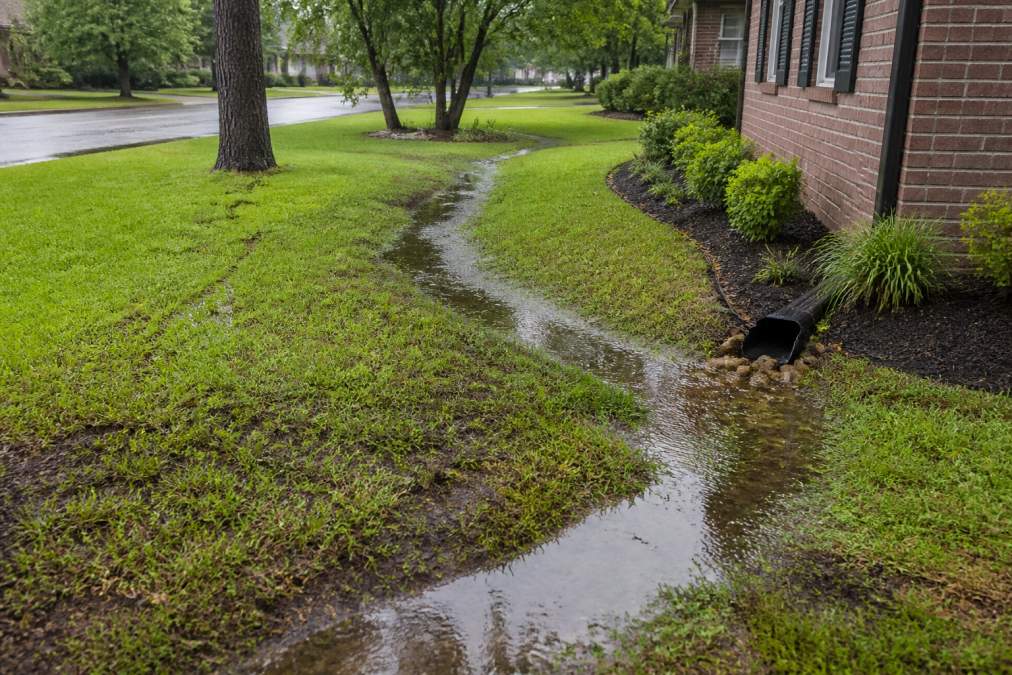
Permeable surfaces reduce runoff volume before it becomes a drainage problem. Permeable pavers, gravel, or pervious concrete allow water to infiltrate rather than concentrating as runoff.
Subsurface drainage becomes necessary when groundwater or seasonal water tables create persistent moisture problems. Perimeter drain systems around foundations, installed at footing level, intercept water before it reaches foundation walls.
Drainage management in DFW requires accounting for clay soil behavior. During wet periods, clay soils become saturated and drain slowly. During dry periods, they shrink and crack. Professional assessment helps identify whether your drainage challenges stem from surface water, subsurface water, or soil structure issues.
Method 6: Use Riprap and Rock Installation Techniques
Riprap, large irregularly shaped rocks, dissipates water energy and prevents erosion in high-impact areas. Where water concentrates and moves with force, riprap absorbs that energy, slowing velocity and reducing erosion damage. This approach works particularly well at downspout discharge areas, swale outlets, and slope bases.
Riprap sizing matters significantly. Properly sized riprap, typically three to six inches for residential applications, remains stable even during heavy rainfall events. The irregular shapes interlock, creating a stable matrix that resists displacement.
Installation requires a foundation layer of smaller stone or gravel beneath the riprap. A geotextile fabric between soil and base rock prevents fine soil particles from migrating upward through the rock layer, which would eventually create voids and failure points.
Riprap works best in combination with other erosion control methods rather than as a standalone solution. The integrated approach addresses erosion at multiple points in the water flow path.
DIY vs. Professional Intervention: When to Call an Expert
Some erosion control work is straightforward enough for motivated homeowners. Mulch application, native plant installation, and minor grading adjustments fall into this category. These projects require physical effort and attention to detail but don't demand specialized equipment or professional licensing.
Other work requires professional expertise. Retaining walls exceeding three feet need structural design to ensure they won't fail under soil pressure. Drainage system installation requires understanding water movement, soil behavior, and proper slope calculation. Grading work that affects foundation drainage warrants professional assessment to avoid creating new problems.
The threshold for professional help typically involves two factors: complexity and risk. Simple projects with low financial risk work well for DIY approaches. Complex projects with significant financial consequences warrant professional involvement.
Cost considerations matter, but they shouldn't drive decisions about structural safety. A retaining wall that fails costs far more to repair than professional installation would have cost initially. Similarly, drainage mistakes that damage a foundation create expenses that dwarf the cost of professional design and installation.
Moises Pizana Hardscapes handles erosion control projects of all sizes. Whether you need a consultation to assess your property's specific challenges, design assistance for complex drainage, or complete installation of retaining walls and drainage systems, professional assessment ensures solutions match your property's actual conditions and long-term needs.
Preventing soil erosion protects your property's foundation, preserves your landscape investment, and maintains your home's structural integrity. The methods outlined above work individually but achieve maximum effectiveness when integrated into a comprehensive approach tailored to your property's specific conditions. Your DFW landscape's unique soil type, slope configuration, and water movement patterns determine which combination of native vegetation, mulch, drainage solutions, and hardscape elements will work best. Moises Pizana Hardscapes brings 15 years of experience in designing and installing erosion control systems that blend functionality with aesthetic appeal. Get a quote today to assess your property's erosion challenges and discover solutions that protect your investment for decades to come.
Frequently Asked Questions
What are the main causes of soil erosion in DFW yards?
Heavy rainfall, steep slopes, and clay-heavy soils common in the Blackland Prairie region accelerate erosion. Lack of vegetation, poor drainage, and compacted soil from construction also contribute. The DFW climate's intense summer storms can wash away topsoil quickly if your landscape lacks proper retention methods like ground cover, mulch, or hardscape features.
How do I know if I need professional help to fix water pooling and erosion in my backyard?
If water pools for more than 24 hours after rain, your foundation shows signs of moisture damage, or erosion has created visible gullies, professional intervention is recommended. Small areas with minor erosion can be addressed with DIY mulching and native plants. However, complex drainage issues, slope instability, or foundation protection typically require professional assessment to ensure proper grading and drainage solutions.
Which native plants work best for preventing soil erosion in this region?
Native Texas plants with strong root systems include little bluestem, Texas sedge, and prairie dropseed. For ground cover, try native species like fragrant sumac or Texas privet. These plants thrive in DFW's climate, require less maintenance than non-native species, and their extensive root systems bind soil effectively. Check with local extension services for species suited to Blackland Prairie or Cross Timbers soil types in your specific area.
Can retaining walls and hardscape solutions actually prevent soil erosion and add property value?
Yes. Properly installed retaining walls stabilize slopes, prevent runoff, and protect foundations. When combined with drainage management and native landscaping, hardscape solutions significantly reduce erosion while improving curb appeal and outdoor functionality. These improvements typically enhance property value in the DFW market, especially when they address water management, a key concern for buyers in the region.