 ultimate-guide
Outdoor Kitchen Installation Cost Breakdown
Table of Contents
- What Affects Outdoor Kitchen Installation Cost
- Cost Breakdown by Component
- Outdoor Kitchen Appliance Costs and Selection
- Custom vs Modular Outdoor Kitchen Pricing
- Outdoor Kitchen Permit Requirements and Fees
- Labor, Installation Timeline, and Hidden Costs
- Phased Installation Strategies and ROI
- Conclusion
- Frequently Asked Questions
Last Updated: September 2, 2026
What Affects Outdoor Kitchen Installation Cost
The total cost of an outdoor kitchen installation depends on far more than just picking a grill and countertop. Most homeowners underestimate expenses because they focus on appliances when the real cost drivers are site prep, structural work, and design complexity.
At Moises Pizana Hardscapes, your final bill depends on the size of your space, materials chosen, whether you're building from scratch or upgrading an existing patio, and utility work required. A 10-by-12-foot kitchen with basic appliances and a simple concrete slab costs significantly less than a 20-by-20-foot custom stone installation with gas lines, electrical wiring, and plumbing hookups.
The second major cost driver is whether you're starting with a blank slate or working within existing hardscaping. Poor drainage, unstable soil, or existing structures add thousands in demolition and excavation before installation begins. Building codes also matter, some jurisdictions require extensive permits and inspections that others don't, translating directly to project costs.
The real difference between an affordable outdoor kitchen and an expensive one isn't usually the appliances. It's the foundation work, countertop and cabinetry material quality, and whether you're hiring professionals who own their equipment or contractors who rent everything by the day.
Cost Breakdown by Component
Your outdoor kitchen installation cost breaks into distinct categories. Understanding each helps you make smarter decisions about where to invest and where to economize.
Built-in grills and cooking appliances typically represent 20-30% of your total project cost. A basic built-in grill costs less than a premium stainless steel model, and adding side burners, rotisseries, or pizza ovens pushes the number higher. Installation requires proper gas line connections, electrical work for ignition systems and lighting, and structural support to handle the weight.
Countertop materials and cabinetry make up another 25-35% of your budget. Concrete countertops cost less than natural stone, which costs less than engineered quartz. Outdoor cabinetry built from marine-grade materials or composite decking resists weather better than standard wood but carries a higher price tag. Custom masonry work adds labor costs that prefab options don't.
Site preparation and structural work often surprises homeowners. If your yard needs grading to improve drainage, excavation to level the ground, or a new concrete slab poured as your foundation, those costs add up fast. A properly prepared site prevents settling, cracking, and water pooling issues down the road.
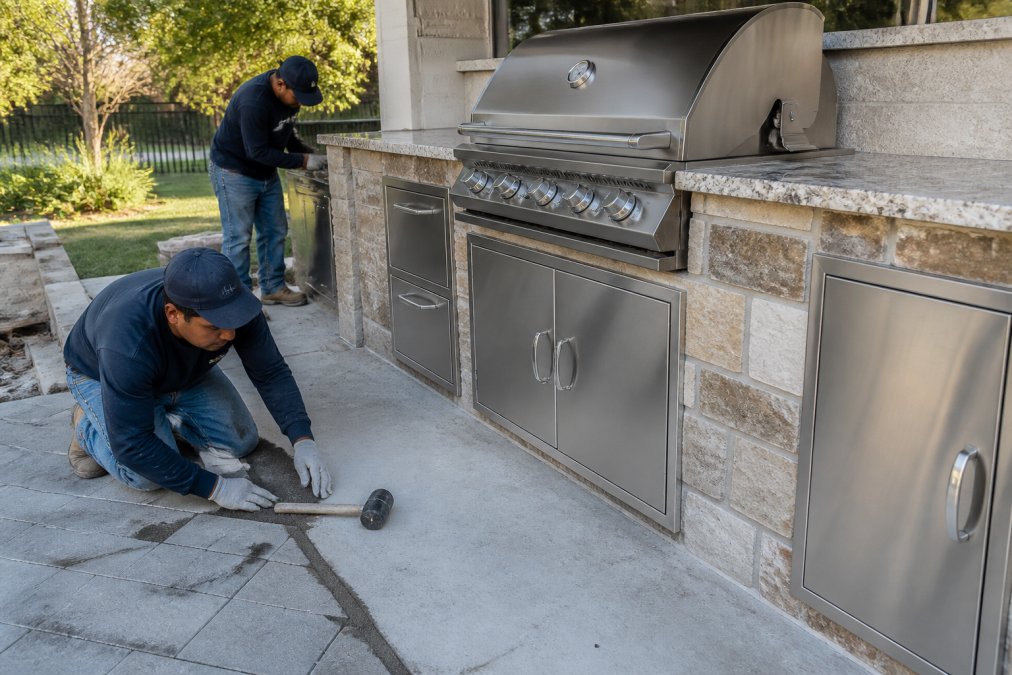
Utility connections include gas lines for your grill, electrical wiring for lights and appliances, and plumbing for sinks or water features. Running utilities from your home to a distant kitchen location costs more than connecting them nearby. Some jurisdictions require licensed professionals for specific work, which adds labor costs and ensures code compliance.
Permits and inspection fees vary by location but typically run 3-8% of your total project cost. Your local building department charges for permits, and inspectors verify that your installation meets code. These aren't optional costs; skipping permits creates liability issues and can prevent you from selling your home later.
Outdoor Kitchen Appliance Costs and Selection
Choosing your appliances is where many homeowners make their first budget decision, and it's often the wrong place to cut corners because what you pick determines what infrastructure you need.
A basic built-in grill costs less than a premium model with multiple burners and integrated features. But here's what matters: a cheaper grill requires the same gas line installation, electrical work, and structural support as an expensive one. You're paying for the infrastructure regardless, so the appliance itself becomes a smaller percentage of your total cost than most people think.
Adding complementary cooking equipment, a side burner, rotisserie, or pizza oven, increases both material and installation costs. Each additional appliance needs its own connections, space, and structural support. A pizza oven, for example, requires a dedicated foundation, proper ventilation, and often custom masonry work.
Stainless steel appliances resist rust better than painted surfaces but cost more upfront. If you're building a kitchen that will last 15-20 years, durability matters. Cheaper equipment might need replacement sooner, which means additional labor costs and disruption.
The smarter approach is designing your layout, understanding your utility locations, and then selecting appliances that fit your design and budget. This prevents expensive modifications later.
Custom vs Modular Outdoor Kitchen Pricing
The choice between a fully custom outdoor kitchen and a modular prefab system fundamentally changes your budget and timeline.
Custom-built kitchens offer complete design flexibility. You can place your grill exactly where you want it, build countertops in any shape, and choose any materials. This flexibility comes at a cost: custom work requires more labor, more design time, and more coordination between trades. A custom masonry countertop requires skilled masons, proper curing time, and careful finishing.
Modular prefab systems come as assembled units positioned on a prepared base. They're faster to install because much of the work happens off-site. You get consistent quality and a shorter installation timeline. The trade-off is limited customization, you choose from available configurations and colors, but can't redesign the layout to fit your exact space.
Custom work typically costs 30-50% more than modular systems because of labor intensity and design complexity. But custom installations often provide better longevity because they're built specifically for your site conditions. The decision comes down to your timeline and how much customization you need.
Outdoor Kitchen Permit Requirements and Fees
Permits aren't optional, and understanding what your jurisdiction requires prevents delays and unexpected costs.
Most areas require building permits for outdoor kitchen installations because they involve structural work, utility connections, and safety considerations. Your local building department reviews your plans to ensure they meet code, proper foundation depth, adequate ventilation for gas appliances, electrical safety standards, and plumbing compliance (nfpa.org). The permit process typically takes 2-4 weeks (iccsafe.org).
Permit fees usually run based on the estimated project cost or square footage of your installation (iccsafe.org). Gas line work often requires a separate permit and inspection. Electrical work requires its own review. Plumbing connections need separate approval. Each permit carries its own fee and inspection requirement.
Building codes vary by location. Some jurisdictions have strict requirements for setbacks or regulate ventilation for gas grills. Understanding your local codes before you design prevents costly redesigns later. landscape lighting costs.
Skipping permits creates serious problems. When you sell your home, unpermitted work can kill the sale or force you to bring the installation into compliance retroactively. Insurance might not cover damage to unpermitted structures.
Labor, Installation Timeline, and Hidden Costs
Labor is where most homeowners get surprised because they underestimate how many different trades are involved and how long the work actually takes.
A typical outdoor kitchen installation requires coordination between multiple specialists: site prep operators, concrete contractors, licensed plumbers for gas lines, licensed electricians, and skilled masons for custom stonework. Each trade has its own schedule, and coordinating them efficiently separates a smooth project from a frustrating one.
Timeline expectations vary based on complexity. A straightforward installation on an existing, level patio might take 2-3 weeks. A project requiring significant site prep, utility work, and custom masonry can stretch to 8-12 weeks. Weather delays the schedule, and extreme conditions affect some materials.
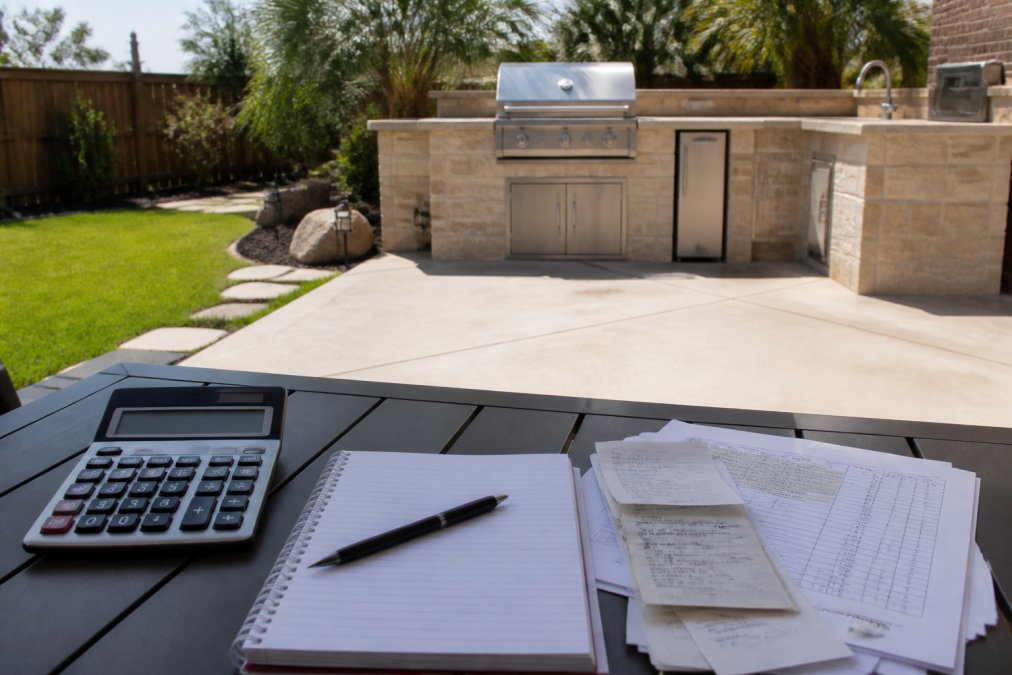
Hidden costs emerge because most homeowners don't anticipate everything their site requires. Soil that looks stable might need reinforcement. Utility lines might be deeper than expected. Drainage problems might demand additional grading. Existing structures or tree roots might block your planned layout. These surprises don't appear until work begins.
Site access is another hidden cost. If your yard is difficult to reach with equipment, contractors charge more because they need to work slower or use smaller equipment. Protecting mature trees during construction adds labor time.
At Moises Pizana Hardscapes, we don't subcontract work, we handle site prep, hardscaping, and installation with our own crew and equipment. This reduces coordination delays and gives us direct control over quality.
Phased Installation Strategies and ROI
Not every homeowner can afford a complete outdoor kitchen installation all at once. Phased approaches let you spread costs across time while building your space incrementally.
Phase 1 focuses on the foundation and basic structure. You pour your concrete slab, establish utility locations, and prepare the site. Once your foundation is solid, you can add features later without major disruption.
Phase 2 involves installing your primary cooking appliance and basic countertops. This creates a functional kitchen you can actually use while you plan the next phase.
Phase 3 adds complementary features: side burners, additional storage, seating areas, or landscaping.
This phased approach works if you plan carefully. Your initial foundation and utility work need to accommodate your eventual full design, or you'll end up redoing work. A concrete slab that's too small for your final layout becomes a problem.
A well-executed custom kitchen can add to your home's resale value, though this depends on your market. In the DFW market, outdoor living spaces have become increasingly important to buyers. But the real ROI for most homeowners isn't financial, it's functional. You're creating a space where your family gathers and where you spend more time outside.
Conclusion
Your outdoor kitchen installation cost depends on dozens of variables, but the core drivers are always site conditions, material choices, utility requirements, and labor complexity. Starting with a clear understanding of what your yard actually needs prevents expensive surprises and keeps your project on budget.
Moises Pizana Hardscapes specializes in designing and building custom outdoor kitchens that match both your vision and your budget. With over 15 years of experience in hardscaping and outdoor living spaces, we handle every phase of your project, site preparation, utility work, custom masonry, and installation, with our own crew and equipment. This direct approach eliminates coordination delays and ensures consistent quality from foundation to finished kitchen.
Ready to start planning your outdoor kitchen? Get A Quote from our team and let us walk you through your actual costs, timeline, and options. We'll show you exactly what your project requires and help you make smart decisions about where to invest and where to simplify.
Frequently Asked Questions
Q: What is the typical cost of installing an outdoor kitchen?
A: Outdoor kitchen installation costs vary significantly based on size, materials, appliances, and site conditions. Pricing depends on whether you choose prefab modules or custom masonry construction, the quality of countertop materials, built-in grill specifications, and labor rates in your area. Site preparation, utility hookups for gas lines and electrical wiring, and permit fees also impact the total. Contact Moises Pizana Hardscapes for a detailed quote based on your specific project requirements.
Q: How much should I budget for outdoor kitchen appliance costs?
A: Appliance costs represent a major portion of your outdoor kitchen budget. The price range depends on whether you select basic built-in grills or premium multi-function appliances with advanced features. Additional appliances like refrigerators, side burners, and warming drawers add to the expense. Material quality, brand selection, and installation complexity all influence final costs. Request a detailed appliance breakdown from your contractor to understand where your budget allocation goes.
Q: Does an outdoor kitchen increase property value?
A: A well-designed outdoor kitchen can enhance your home's resale value by creating an attractive outdoor living space that appeals to buyers. The return on investment depends on quality of construction, material durability, and how well the design integrates with your landscape. Professional hardscaping using quality materials like stone veneer and proper structural integrity tends to perform better than budget installations. Discuss ROI expectations with your contractor, as local market conditions affect resale value impact.
Q: What are the hidden costs of outdoor kitchen installation?
A: Beyond appliances and cabinetry, hidden costs include site excavation and concrete slab preparation, utility hookups for gas lines and electrical wiring, permit and inspection fees, weatherproofing treatments, drainage solutions for water pooling, and potential subcontractor fees for specialized work. Demolition of existing structures, soil testing, and unforeseen site conditions can increase expenses. Building codes compliance may require additional structural reinforcement. A comprehensive project management plan from your contractor helps identify and budget for these often-overlooked expenses upfront.