 comparison
Is Natural Stone Worth It for Walkways? A Dallas Guide
Table of Contents
- What Makes Natural Stone Walkways Stand Out
- Natural Stone vs Concrete Pavers: Which Performs Better
- Flagstone Walkway Pros and Cons for Dallas Homes
- Natural Stone Walkway Cost: What You'll Actually Spend
- Natural Stone Walkway Maintenance and Long-Term Care
- How Natural Stone Performs in Texas Heat and Weather
- Is Natural Stone Worth the Investment for Your Home
- Frequently Asked Questions
Last Updated: October 14, 2026
What Makes Natural Stone Walkways Stand Out
Natural stone walkways deliver a timeless aesthetic that concrete and manufactured pavers struggle to match.
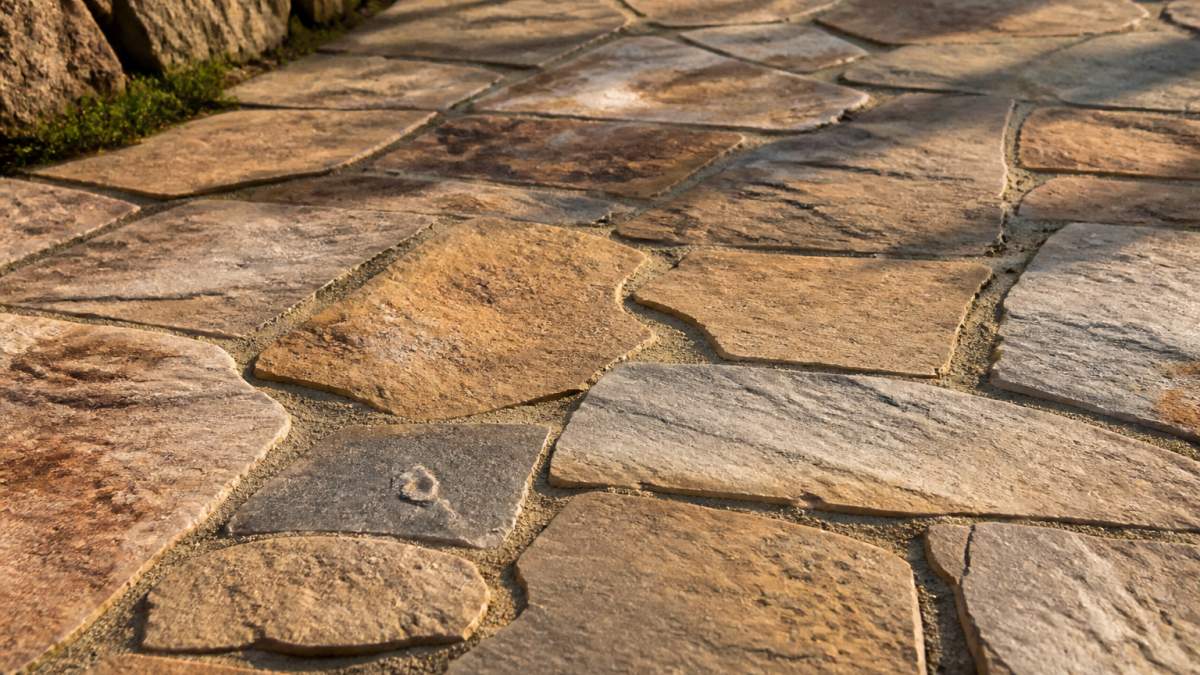
Flagstone, limestone, travertine, and sandstone create distinct textures and colors that evolve with time rather than fade uniformly, so no two walkways are identical.
Natural Stone vs Concrete Pavers: Which Performs Better
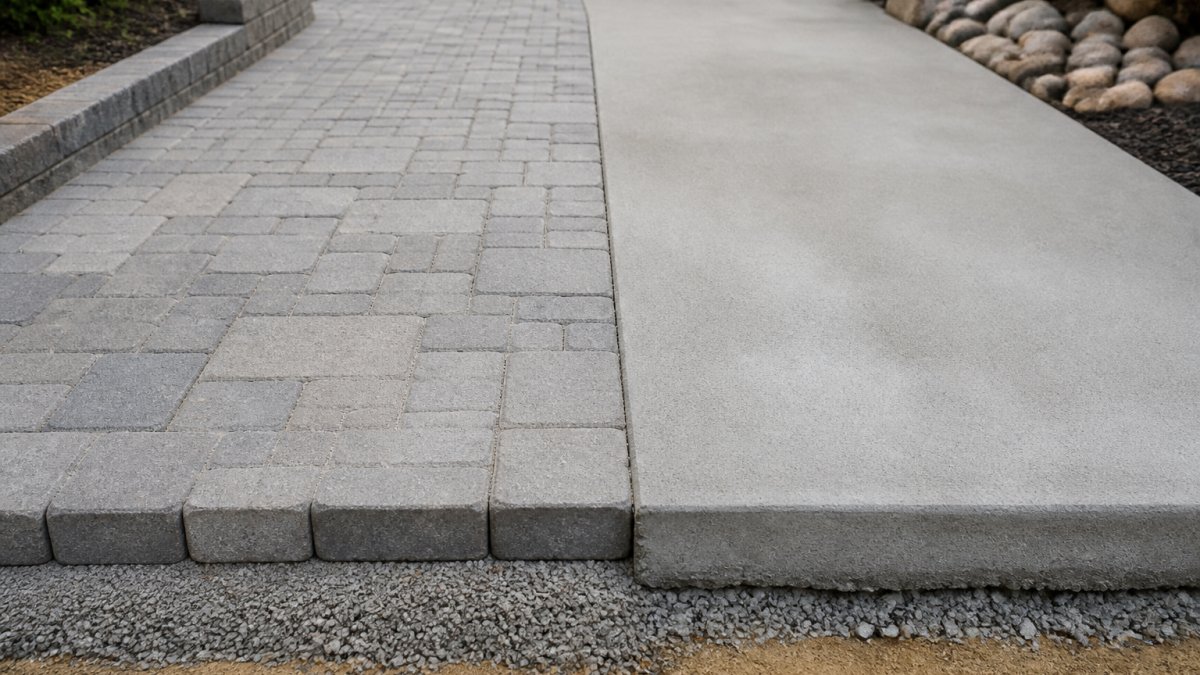
Concrete slabs cost less upfront and need minimal site preparation, but the performance gap widens over time in the Texas climate.
In Dallas, concrete endures freeze-thaw cycles and thermal expansion, causing cracks, uneven settling, and surface deterioration, most concrete walkways show visible wear within 7-10 years.
Drainage favors natural stone when properly installed: concrete slabs pool water after heavy rain, while natural stone drains through joints into the base material, reducing standing water and freeze-thaw damage, critical in North Texas.
Slip resistance also differs: concrete becomes dangerously slick when wet, while natural stone, particularly flagstone and travertine, provides superior traction near entryways or shaded areas where moisture lingers.
| Feature | Natural Stone | Concrete Slabs | Manufactured Pavers |
|---|---|---|---|
| Durability (years) | 20-30+ | 7-10 | 10-15 |
| Slip Resistance | Excellent | Poor | Moderate |
| Drainage | Good | Poor | Good |
| Freeze-Thaw Resistance | Strong | Weak | Moderate |
| Appearance | Unique, evolves over time | Uniform, fades | Consistent |
| Maintenance | Moderate | Low | Low |
The trade-off is maintenance. Natural stone requires periodic sealing and joint maintenance that concrete doesn't demand. However, this maintenance prevents larger problems rather than creating them.
Flagstone Walkway Pros and Cons for Dallas Homes
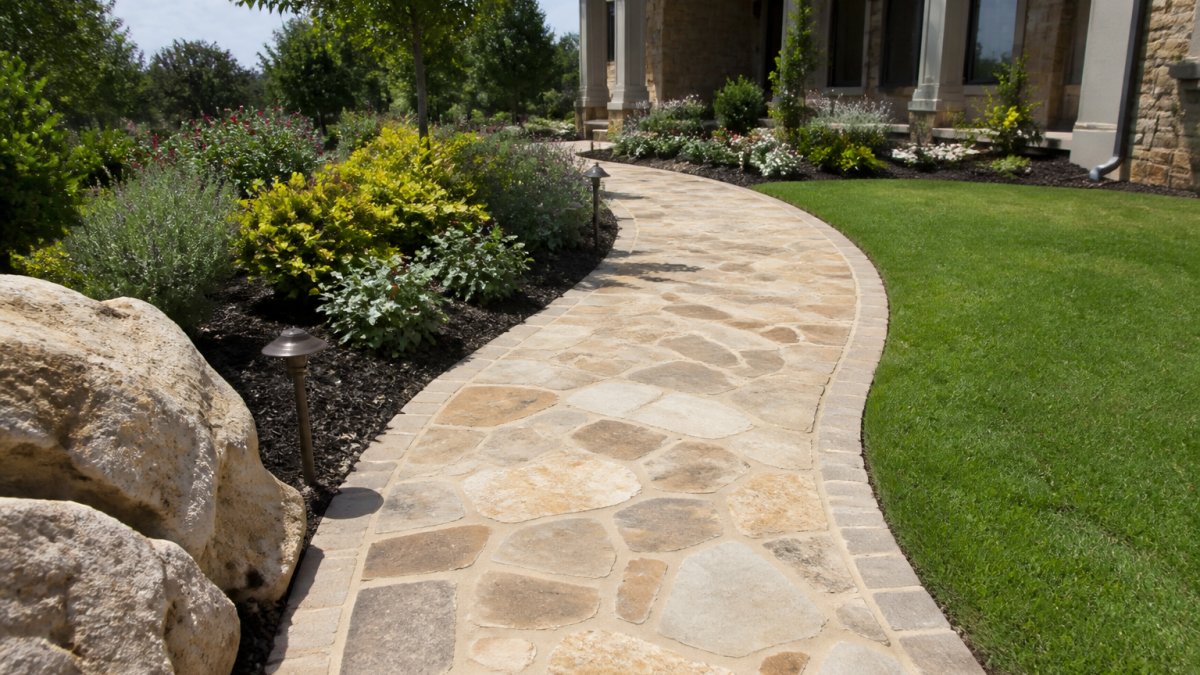
Flagstone is the most popular natural stone choice for Dallas-area walkways, with irregular shapes, warm earth tones, and durability proven over decades of regional use.
Flagstone limitations: Irregular thickness requires careful base preparation to prevent rocking or settling, and thicker pieces cost more. Irregular shapes create more joints, more maintenance points for weeds and joint degradation.
Properly installed flagstone walkways remain stable and attractive through multiple Texas weather cycles.
If you want a walkway that improves with age and handles our climate reliably, flagstone delivers. If you prefer minimal upkeep and lowest cost, concrete remains the practical choice.
Natural Stone Walkway Cost: What You'll Actually Spend
Cost is why most homeowners hesitate on natural stone. Here's how the money breaks down on a Dallas-area walkway.
The four cost buckets
Every natural stone walkway quote contains four line items. Understanding them lets you compare bids apples-to-apples instead of chasing a single per-square-foot number.
- Material. Flagstone, limestone, travertine, and sandstone price differently, and thickness drives cost more than color. A 1.5-inch flagstone is a veneer over a structural base; 2-inch or thicker stone tolerates wider joints and handles soil movement better. Expect material at roughly 25-40% of the total.
- Base preparation. This invisible line item separates a 25-year walkway from a 5-year one: excavation, geotextile fabric, 4-6 inches of compacted crushed base, and proper slope for drainage. On North Texas clay, base prep is often 20-30% of the total, and the first thing cut-rate bids trim.
- Labor and installation. Skilled stone setting, cutting, jointing, and edging, typically the largest bucket at 35-50%.
- Finishing and contingency. Polymeric sand or mortar joints, sealing, edging restraints, and a 5-10% contingency for surprises like tree roots, buried utilities, or unstable subgrade.
How the total compares to concrete and pavers
In the Dallas market, natural stone typically lands at roughly 1.5x to 2.5x the installed cost of a broom-finished concrete walkway of the same dimensions, and modestly above manufactured pavers. The multiplier depends on stone type, thickness, pattern complexity, and site access.
| Cost factor | Natural stone | Concrete slab | Manufactured pavers |
|---|---|---|---|
| Relative installed cost | Highest | Lowest | Middle |
| Base prep share of total | High (20-30%) | Low | Moderate |
| Repair granularity | Single stone | Whole slab or section | Single paver |
| Typical service life | 25+ years | 7-10 years visible wear | 15-25 years |
| Reseal / re-sand cycle | Every 2-3 years | Not typical | Every 2-4 years |
The lifecycle math that actually answers 'is it worth it'
Upfront price is only half the story. If concrete shows visible cracking and settling in 7-10 years and needs replacement, while a properly installed natural stone walkway is still serviceable at 25 years, stone's cost per year of service can end up comparable or lower despite the higher sticker price. The catch is properly: a stone walkway over an inadequate base will settle, rock, and need re-laying long before its material lifespan is exhausted.
What drives your specific number up or down
- Walkway width and length. A 3-foot path costs less per linear foot than a 5-foot path, but base prep and edging scale with area.
- Pattern. Irregular random flagstone uses more cutting and joints; a regular ashlar pattern is faster to set.
- Site access. If equipment can't reach the work area, everything is hand-carried and labor climbs.
- Existing conditions. Removing an old walkway, working around trees, or correcting drainage adds cost.
- Stone source. Regionally quarried stone is usually cheaper than stone shipped long distances.
NRMCA guidance on concrete slab performance and jointing
Natural Stone Walkway Maintenance and Long-Term Care
Maintenance is where natural stone earns or loses its reputation in this region. The work itself is simple; it matters because North Texas soil, rain, and occasional freezes attack walkways in specific ways.
Why maintenance matters more here than in most markets
Dallas sits on expansive clay soils that swell when wet and shrink when dry, the single biggest threat to any walkway. A rigid concrete slab fights the movement and cracks; a natural stone walkway absorbs it through its joints, but only if those joints and the base beneath them are maintained. Add heavy spring thunderstorms and occasional winter freezes, and three forces work on the same walkway.
The realistic maintenance calendar
- Seasonal (spring and fall): Walk the path. Look for rocking stones, widened joints, settled sections, and standing water after rain. Catching settling early is a small repair; ignoring it becomes a re-lay.
- Annually: Clean the surface. A garden hose and stiff brush handle most debris; a pressure washer works on granite and most flagstone, but softer stones like travertine need lower pressure to avoid etching.
- Every 2-3 years: Reapply a penetrating sealer appropriate to the stone type. Sealing slows water absorption, reducing freeze-thaw stress and staining.
- Every 2-4 years: Top off polymeric sand or joint material. This barrier keeps weed seeds out and stabilizes joints; once it thins, weeds establish and joints erode faster.
- As needed: Spot-treat stains. Rust, leaf tannins, and organic staining respond to stone-specific cleaners; never use generic acid washes on limestone or travertine.
Repair granularity: the quiet advantage
The biggest long-term cost advantage of natural stone is that it fails one stone at a time. A cracked or spalled stone can be lifted and replaced individually, and a settled section can be re-bedded. A failed concrete slab often means cutting out and replacing an entire section, and matching aged concrete color is nearly impossible. This modularity keeps stone maintenance steady over decades, while concrete maintenance arrives in expensive lumps.
Common problems and what they actually mean
- Rocking stones: almost always a base problem. Re-bedding over properly compacted base fixes it.
- Widening joints and weed growth: joint material has worn away. Re-sand before weeds take hold.
- Standing water after rain: the walkway slope or surrounding drainage has changed. Fix this first, because trapped water accelerates everything else.
- Efflorescence (white powdery residue): mineral salts migrating to the surface, common on newer stone and in wet conditions. Usually fades with cleaning and time.
- Spalling or flaking: often freeze-thaw damage on a stone that absorbed too much water, a sign the sealer cycle was skipped.
What it costs in time and money
Most homeowners spend a few hours a year on cleaning and inspection, plus a half-day every few years for sealing and re-sanding. Sealing and joint topping are common add-on services from hardscape contractors, and individual stone replacement is a small, targeted repair. The key is not letting small issues compound: a rocking stone ignored for two seasons becomes a settled section, and a settled section becomes a re-lay.
How Natural Stone Performs in Texas Heat and Weather
Dallas summers push outdoor materials to their limits, with temperatures regularly exceeding 95°F and intense UV radiation. Natural stone handles this environment better than most alternatives.
Thermal expansion affects all materials, but natural stone manages it: individual stones expand and contract slightly without cracking because they're not monolithic.
Winter freeze-thaw cycles present a different challenge. Water entering concrete freezes, expands, and causes spalling and cracking.
Moisture management during spring and fall rains determines long-term performance: concrete surfaces pond water, creating slip hazards and accelerating deterioration, while natural stone drains water through joints into the base.
North Texas soil movement also affects walkway stability.
Is Natural Stone Worth the Investment for Your Home
Property value increases when natural stone walkways enhance curb appeal and demonstrate quality workmanship, Dallas buyers recognize natural stone as a premium feature.
Natural stone is not worth it if you want minimal maintenance and lowest possible cost, concrete slabs deliver better value there.
Consider your situation: How long will you stay? How important is curb appeal? Do you enjoy outdoor maintenance? How does your property drain? What's your budget flexibility?
At Moises Pizana Hardscapes, we help homeowners work through these questions with site-specific guidance.
Natural stone walkways represent a genuine investment in your property's long-term value and aesthetic appeal.
Frequently Asked Questions
What type of stone is best for walkways in the Dallas area?
Flagstone is the most popular choice for walkways in this region due to its natural durability, slip resistance, and warm color palette that complements local landscapes. Limestone and travertine also perform well. The best choice depends on your aesthetic preference and site conditions, flagstone handles temperature swings and occasional moisture well, while travertine offers a lighter appearance. A professional assessment of your soil drainage and sunlight exposure will help determine which natural stone performs best on your property.
How much does a natural stone walkway cost compared to concrete?
Natural stone walkways cost more upfront than poured concrete. Concrete is the least expensive option initially. However, natural stone's durability and minimal maintenance can offer long-term value. For exact pricing on your project, contact a local hardscape specialist for a detailed quote based on your walkway dimensions, stone type, and site preparation needs.
What maintenance does a natural stone walkway require?
Natural stone walkways need periodic sealing (every 2-3 years), occasional cleaning to prevent algae buildup, and weed control in joints. Unlike concrete, stone doesn't crack from freeze-thaw cycles as readily when properly installed. Resealing protects against water infiltration and staining. Most homeowners find maintenance manageable, typically annual cleaning and sealing every few years. Avoid harsh chemicals; use a soft brush and mild cleaner instead.
Can natural stone walkways become slippery when wet?
Some natural stone surfaces can be slippery when wet, particularly polished or smooth finishes. Flagstone, when properly selected and installed, offers better slip resistance due to its textured surface. Sealing can slightly reduce grip. If slip resistance is a concern, choose stone with a naturally rougher texture, ensure proper drainage to prevent standing water, and consider adding a non-slip sealant. Professional installation ensures the surface slopes slightly for water runoff, reducing slip hazards.