 how-to
How to Fix Backyard Drainage Issues: Step-by-Step
Table of Contents
- Signs of Poor Yard Drainage
- Assess Your Yard's Drainage Problem
- Step 1: Regrade Your Yard to Improve Slope
- Step 2: Install a French Drain for Subsurface Drainage
- Step 3: Extend Downspouts and Redirect Water
- Step 4: Build a Dry Creek Bed or Rain Garden
- Retaining Wall Drainage Solutions for Slope Protection
- Common Mistakes to Avoid
- Frequently Asked Questions
Last Updated: September 3, 2026
Signs of Poor Yard Drainage
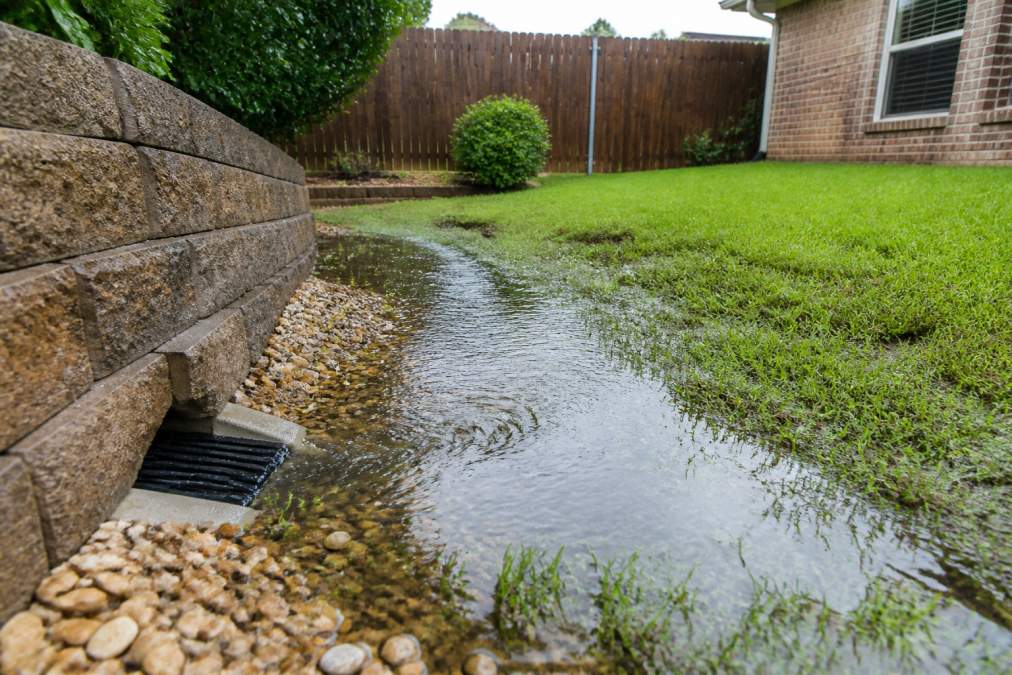
Water pooling in your yard after rain isn't just an aesthetic problem, it's a sign that your landscape can't handle the volume of water flowing across it. Standing water creates a breeding ground for mosquitoes, weakens soil structure, and can damage your foundation if it's collecting near your home (the CDC).
The most obvious indicator is visible pooling that lasts more than a few hours after rain. But poor drainage shows up in subtler ways too. If certain areas of your lawn stay soggy for days, if you notice erosion patterns where water consistently runs the same path, or if your grass is dying in spots while thriving elsewhere, these are all red flags that your yard's drainage system needs attention.
Soil saturation is another critical sign. When soil stays wet for extended periods, plant roots can't access oxygen, leading to root rot and plant death (peer-reviewed research). You might also notice cracks appearing in your foundation or basement moisture problems, these often stem from water not being directed away from your home properly.
Recognizing these signs early and taking action is key.
Assess Your Yard's Drainage Problem
Before you invest in any drainage solution, you need to understand exactly what you're dealing with. Not all drainage issues are the same, and the fix depends on whether you're facing surface runoff, subsurface water saturation, or both.
Check soil saturation and water table depth
Start by digging a small hole about 12 inches deep in the area where water pools. Fill it with water and observe how quickly it drains. If the water disappears within a few hours, your soil has reasonable percolation. If it sits there for a day or more, you have a serious drainage problem.
The water table depth matters too. If you dig down and hit wet soil well before 12 inches, your yard's water table is high. This is common in certain areas and requires different solutions than surface runoff issues. High water tables often mean you need subsurface drainage systems rather than just regrading.
Pay attention to the type of soil you're working with. Clay soil drains poorly and compacts easily, trapping water. Sandy soil drains quickly but may not retain enough moisture for healthy plants. Most yards benefit from a mix, but understanding your soil composition helps you choose the right fix.
Identify surface runoff patterns
Watch your yard during the next heavy rain. Where does water flow? Does it rush toward your foundation? Does it create channels across your lawn? Does it pool in low spots?
Surface runoff follows the path of least resistance. If your yard slopes toward your home instead of away from it, water will naturally move in that direction. If you have compacted areas where water can't penetrate, it will flow around them. Identifying these patterns tells you whether you need to regrade your yard or install systems to redirect water.
Look at your downspouts too. Many homeowners don't realize that gutters dump enormous amounts of water right at the foundation. If your downspouts empty just a few feet from your home, that concentrated water flow is likely contributing to your drainage problems.
Step 1: Regrade Your Yard to Improve Slope
Regrading is often the first and most cost-effective solution for drainage issues. The goal is simple: create a slope that directs water away from your home and toward the street or a designated drainage area.
The ideal slope is a 2% grade, which means for every 100 feet of horizontal distance, the ground should drop 2 feet in elevation. This is steep enough to move water effectively but gentle enough that it doesn't look unnatural or create erosion problems.
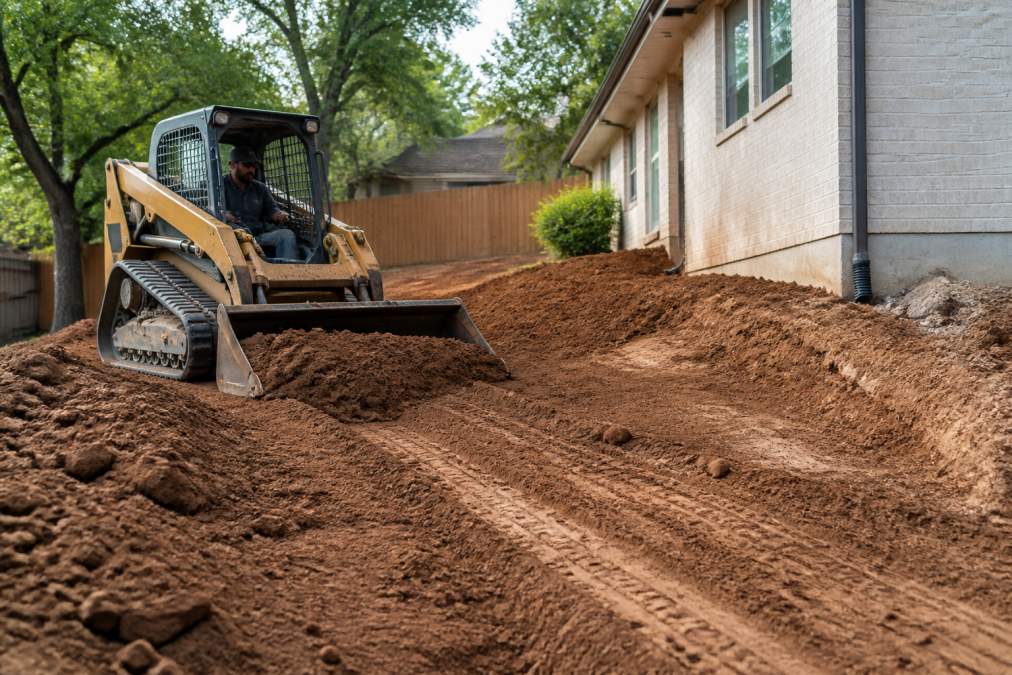
Start by assessing your current grade. If your yard slopes toward your home, regrading is essential. You'll need to remove soil from higher areas and fill in lower spots, reshaping the landscape to create proper drainage basin patterns. This isn't a DIY job if you're dealing with significant elevation changes, you'll need heavy equipment and someone who understands landscape grading.
The regrading process involves more than just pushing dirt around. You need to compact the soil properly to prevent settling later, and you need to ensure the new slope integrates well with your existing landscape design. If you're planning any hardscape features, patios, walkways, or retaining walls, regrading should happen before installation so everything ties together properly.
Step 2: Install a French Drain for Subsurface Drainage
When surface regrading isn't enough, or when you have a high water table issue, a French drain becomes necessary. A French drain is a subsurface drainage system that collects water below the soil surface and directs it away from problem areas.
The system works by using a perforated pipe surrounded by filter fabric and gravel aggregate. Water percolates through the soil, enters the perforated pipe, and flows downhill toward a discharge point. Unlike what many people think, French drains don't require standing water to function, they work by managing subsurface water movement through the soil.
What you'll need for French drain installation
A proper French drain installation requires:
- A trench dug to appropriate depth (typically 18-24 inches, depending on your water table)
- Landscape fabric to prevent soil from clogging the gravel
- Perforated drain pipe (4-inch diameter is standard)
- Gravel aggregate to surround the pipe
- A discharge point (daylight drain, dry well, or connection to existing drainage)
The trench layout matters. French drains work best when installed at the lowest point of the area you're trying to drain, or along the uphill side of a problem area. The pipe should slope gently downhill, even a slight 1% slope helps water move through the system.
French drain installation cost considerations
Installation complexity varies based on your property size, soil conditions, and how far the drain needs to run. A simple French drain might be a weekend project for someone with equipment access. More extensive systems require professional installation. emergency drainage solutions.
Consider whether you're draining a small problem area or your entire yard. A 50-foot drain system is very different from a 150-foot system that runs along your property line. The discharge point also affects the project, if you can daylight the drain (let water exit naturally downhill), costs are lower. If you need to pump water or install a dry well, costs increase.
Step 3: Extend Downspouts and Redirect Water
This is the simplest drainage fix, yet many homeowners overlook it entirely. Your gutters are collecting water from your roof and dumping it right next to your foundation. That concentrated flow is a major contributor to moisture problems and foundation damage.
Downspout extensions should carry water at least 4-6 feet away from your home's foundation (fema.gov). Ideally, direct the water toward a drainage basin, swale, or French drain system. If you're just extending downspouts without a larger drainage system, make sure the water flows toward the street or away from low spots in your yard.
You have several options for downspout extensions. Rigid extensions are permanent and look cleaner. Flexible extensions work well if you need to adjust where water flows. Some homeowners use decorative downspout diverters that look like landscape features while directing water away from the foundation.
Step 4: Build a Dry Creek Bed or Rain Garden
For aesthetic drainage solutions that also handle water management, consider a dry creek bed or rain garden. These features serve double duty: they manage runoff while adding visual interest to your landscape.
A dry creek bed mimics a natural streambed using gravel, rocks, and water-loving plants. During heavy rain, water flows through the creek bed, slowing down and percolating into the soil. Between rains, it looks like a natural landscape feature. This approach is particularly effective for managing surface runoff without creating obvious drainage infrastructure.
A rain garden is a shallow basin planted with native plants that tolerate both wet and dry conditions. Water collects in the garden during rain events, soaks into the soil, and recharges groundwater. Rain gardens are excellent for managing runoff from downspouts and roof areas while supporting local ecosystems.
Both approaches work best when integrated into your overall landscape design. They're not just functional, they enhance your property's appearance and can increase curb appeal significantly.
Retaining Wall Drainage Solutions for Slope Protection
If your yard has significant elevation changes, you likely have or are considering a retaining wall. Retaining walls need proper drainage or they'll fail. Water pressure builds up behind the wall, causing it to crack, lean, or collapse.
Every retaining wall needs drainage behind it. This typically involves perforated pipe at the base of the wall, surrounded by gravel, that directs water away from the wall structure. Without this drainage system, hydrostatic pressure builds up, and the wall won't last.
The height and materials of your retaining wall determine the drainage requirements. A 2-foot wall might get away with minimal drainage. A 4-foot wall absolutely requires a comprehensive system. Stone or concrete block walls need different drainage approaches than timber walls.
Proper retaining wall drainage also protects the soil behind the wall from becoming oversaturated. When soil stays too wet, it becomes unstable and loses its ability to support the wall structure. The drainage system keeps soil moisture in balance, wet enough for stability, but not so wet that pressure builds up.
At Moises Pizana Hardscapes, we design retaining walls with proper drainage as a fundamental requirement, not an afterthought. A wall that fails in three years because of poor drainage isn't a bargain, it's a liability.
Common Mistakes to Avoid
The biggest mistake homeowners make is assuming surface regrading alone will solve all drainage problems. Regrading helps, but if you have a high water table or compacted soil that won't percolate, regrading won't fix the underlying issue. You need to assess the actual problem before choosing solutions.
Another common error is installing a French drain without proper slope. A French drain that's installed level won't work effectively. Water needs to flow downhill through the system. If you're not confident about slope calculations, hire a professional to ensure the system works.
Many people also underestimate how much water their downspouts produce. A standard gutter system can deliver thousands of gallons of water per hour during heavy rain. Extending downspouts just 2 feet isn't enough, that water still pools near your foundation. Aim for 4-6 feet minimum, or better yet, connect downspouts to a French drain or rain garden system.
Don't forget about soil compaction either. Compacted soil won't percolate water effectively, no matter how well your drainage system is designed. If your yard has been heavily trafficked or equipment has been run over it, aeration might be necessary before other drainage improvements will work properly.
Backyard drainage issues don't resolve themselves, they get worse. Water that pools today becomes a foundation problem tomorrow. The good news is that fixing backyard drainage issues is absolutely within reach, whether you need simple downspout extensions or a comprehensive drainage system.
If you're dealing with persistent moisture, foundation concerns, or areas where water consistently pools, professional assessment is worth the investment. At Moises Pizana Hardscapes, we evaluate drainage challenges as part of any hardscape project, ensuring that patios, walkways, and retaining walls are built on properly draining soil. Our team has over 15 years of experience managing water flow on residential properties. Get a quote to discuss your specific drainage situation and explore solutions tailored to your property's needs.
Frequently Asked Questions
Q: What are the signs of poor yard drainage?
A: Standing water that lingers after rain, soggy patches in your lawn, soil compaction, eroded areas, and foundation moisture are all red flags. If you notice water pooling near your home's foundation or in low spots of the yard, your drainage system needs attention. Poor drainage can lead to hydrostatic pressure against foundations and long-term property damage.
Q: How much does French drain installation cost?
A: French drain installation cost varies based on yard size, soil type, trench depth, and the complexity of your landscape. Factors include perforated pipe length, filter fabric, gravel aggregate, and labor. For an accurate quote specific to your property, contact Moises Pizana Hardscapes for a free assessment and detailed pricing based on your exact drainage needs.
Q: Can a retaining wall help with backyard drainage?
A: Yes. Retaining wall drainage solutions prevent water buildup behind the wall structure. Proper installation includes perforated pipe, landscape fabric, and gravel aggregate to manage subsurface water and reduce hydrostatic pressure. This protects both the wall and your property from erosion and water damage. Professional installation ensures your retaining wall handles moisture management effectively.
Q: Do I need a permit to install a French drain or regrade my yard?
A: Permit requirements vary by local jurisdiction. Many municipalities require permits for significant grading changes, drainage system installation, or work near property lines. Contact your local building department before starting any major drainage project. Professional contractors like Moises Pizana Hardscapes can guide you through permitting requirements and ensure your work meets local codes.