 comparison
Average Outdoor Kitchen Cost: Dallas Price Guide
Table of Contents
- What Is the Average Outdoor Kitchen Cost in Dallas?
- Outdoor Kitchen Installation Cost Breakdown
- Outdoor Kitchen Appliances Cost and Feature Impact
- Outdoor Kitchen Project Timeline: What to Expect
- Getting an Accurate Outdoor Kitchen Contractor Estimate
- Factors That Drive Outdoor Kitchen Costs
- Return on Investment and Long-Term Value
- Frequently Asked Questions
Last Updated: October 10, 2026
What Is the Average Outdoor Kitchen Cost in Dallas?
At Moises Pizana Hardscapes, we've helped families understand what their outdoor kitchen investment will actually cost.
The outdoor kitchen cost depends on three primary factors: scope, materials, and labor. A basic grill island differs significantly from a fully equipped kitchen with multiple appliances and professional finishes. Understanding these tiers helps you set a realistic budget.
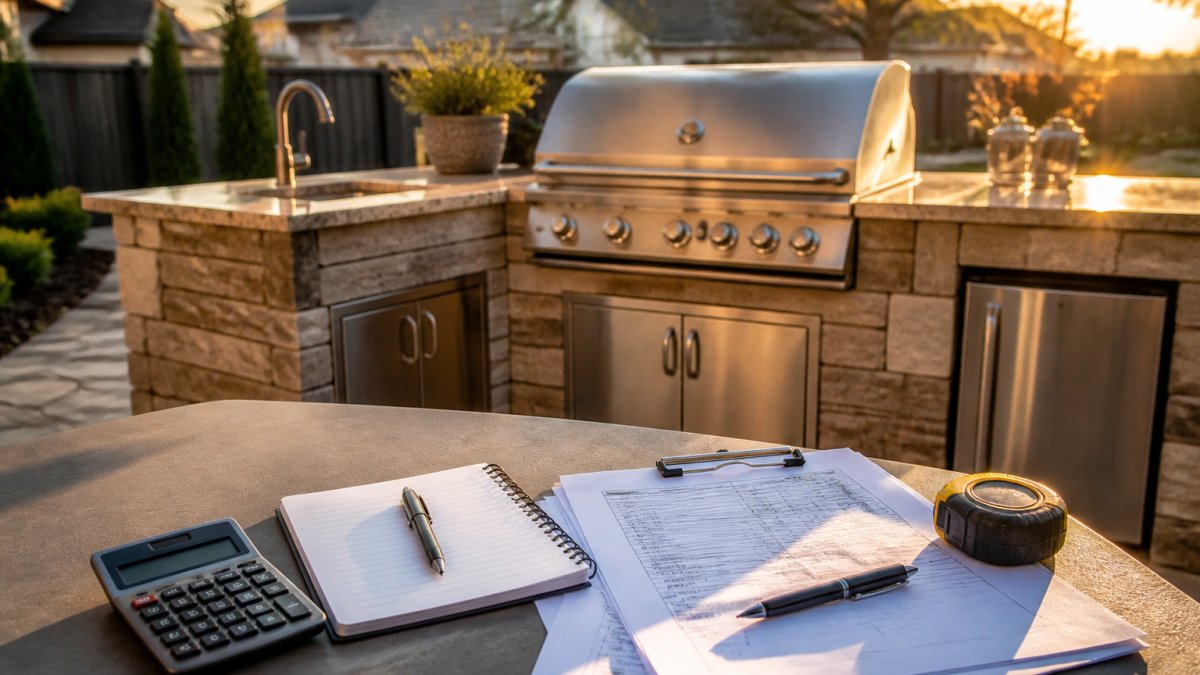
Entry-Level Builds
Entry-level outdoor kitchens focus on essentials: a quality grill, basic countertop space, and simple cabinetry. Many homeowners start here to test whether outdoor cooking fits their lifestyle.
An entry-level build includes a built-in grill, modest countertop space, and basic storage with budget-friendly materials like concrete countertops and basic cabinetry. Installation is straightforward due to simple layout and minimal site prep.
This tier works well for families who cook outdoors occasionally. The trade-off is durability, budget materials require more maintenance and won't age as gracefully as higher-end options.
Mid-Range Projects
Mid-range outdoor kitchens are where most homeowners land. You're upgrading materials, adding more appliances, and investing in a layout that's both functional and attractive.
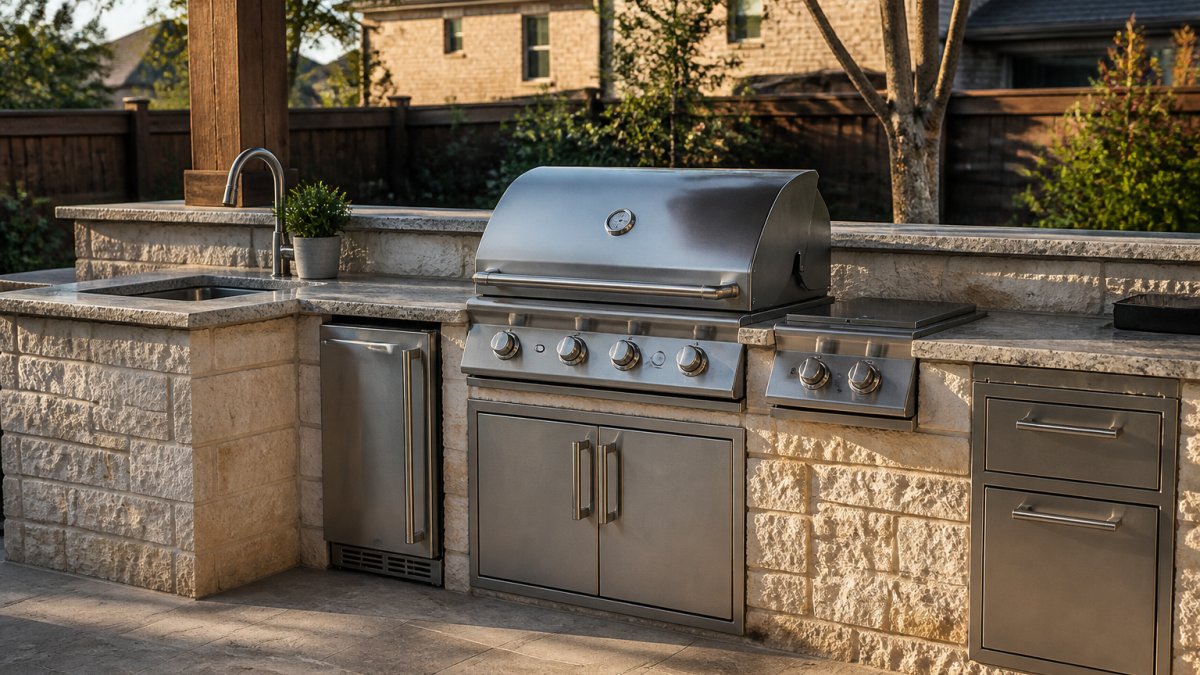
A mid-range build includes a quality built-in grill, side burner, stone or composite countertops, and better cabinetry finishes. You might add a mini fridge, storage drawers, and weather-resistant seating. Materials are chosen to last through Texas weather.
This tier delivers the best value for most families, materials that hold up well and a design you'll enjoy using, while adding genuine value to your property.
Premium and Custom Designs
Premium outdoor kitchen projects feature top-tier materials, professional-grade appliances, and designs reflecting your personal vision.
Premium kitchens feature luxury countertops like granite or engineered quartz, high-end stainless steel appliances, custom cabinetry, and professional lighting. You might include a full-size refrigerator, pizza oven, sound system, or pergola. Construction quality is meticulous.
These builds are investments in function and lifestyle, designed to last decades. If you plan to stay long-term and use your outdoor space frequently, a premium build can be worth the investment.
Outdoor Kitchen Installation Cost Breakdown
Understanding where your money goes helps you make informed decisions about where to invest and save. Installation costs include materials, site preparation, and utility work.
Materials and Construction
Materials typically represent 40-60% of your total outdoor kitchen cost, including the grill, countertops, cabinetry, and finishes. Grills vary in cost depending on the model and grade.
Countertops are a major expense: concrete or basic tile is less costly than granite. Custom masonry adds significant cost but creates premium appearance and durability.
Premium materials like composite countertops and stainless steel appliances require less upkeep than budget alternatives and better withstand Dallas's heat and freeze cycles.
Labor and Installation
Labor typically accounts for 30-50% of project cost, including demolition, site prep, structure building, appliance installation, and finishing. Design complexity directly affects labor costs, a simple grill island requires less skilled labor than a custom masonry kitchen.
Most contractors charge a flat project fee for outdoor kitchens. Labor costs in Dallas are reasonable compared to coastal markets, but skilled hardscape contractors command premium rates for good reason.
Installation quality affects longevity. Proper drainage, adequate appliance support, and correct utility connections prevent expensive problems. Moises Pizana Hardscapes has 15+ years of experience, preventing costly mistakes.
Utilities and Site Prep
Site preparation and utility work often surprise homeowners because they're not visible in the final product, yet they're essential. If you're adding gas lines for your grill, electrical for lighting or appliances, or drainage for water runoff, those installations add to the cost depending on distance from existing utilities.
Site prep includes grading for proper drainage, removing existing hardscape if needed, and preparing a solid foundation. Dallas soil varies, and some sites need more extensive prep than others. Poor drainage is a common problem in outdoor kitchens, so getting this right prevents water pooling and damage.
Permitting is required for most outdoor kitchen projects in Dallas. Permits ensure that gas and electrical work meets code and that drainage is adequate. Permit costs are worth it for the protection and resale value they provide.
Outdoor Kitchen Appliances Cost and Feature Impact
The appliances you choose are the most visible part of your outdoor kitchen, and they have the biggest impact on how much you spend. A basic grill is different from a fully equipped outdoor kitchen with multiple cooking surfaces and refrigeration.
A quality built-in grill is the foundation. Side burners, a mini fridge, or a pizza oven can be added. Each appliance adds functionality and cost, but also increases your ability to entertain and cook outdoors.
The outdoor kitchen appliances you select should match how you actually cook and entertain. If you rarely cook at home, a single grill might be enough. If you host frequently and enjoy cooking, investing in multiple cooking surfaces and cold storage makes sense.
Outdoor Kitchen Project Timeline: What to Expect
Most outdoor kitchen projects in Dallas take 4-8 weeks from start to finish, though this varies with complexity and site conditions. A simple grill island might take 3-4 weeks. A custom masonry kitchen with multiple appliances and integrated seating can take 10-12 weeks.
The timeline includes design and permitting (1-2 weeks), site prep and foundation work (1-2 weeks), building the structure (2-4 weeks), installing appliances and utilities (1-2 weeks), and finishing work (1 week). Weather can add time, heavy rain delays foundation work, and extreme heat can slow masonry curing.
Planning ahead matters. If you want your outdoor kitchen ready for summer entertaining, start the process in early spring. If you're planning a fall project, spring is still the best time to get on a contractor's schedule.
Getting an Accurate Outdoor Kitchen Contractor Estimate
A vague estimate is worthless. When you're comparing contractor quotes, you need detailed breakdowns that explain exactly what you're paying for. This is where many homeowners get confused or disappointed.
What a Complete Estimate Should Include
A complete outdoor kitchen estimate lists every material, labor cost, and fee separately. It specifies the grill model and cost, the countertop material and square footage, the cabinetry details, and the labor for each phase. It includes site prep costs, utility work, permitting, and a timeline.
The estimate should also specify what's included and what's not. Does it include demolition of existing hardscape? Does it cover grading and drainage work? Is permitting included in the labor cost? Are appliances included or separate?
Ask for references and photos of recent work. A contractor willing to show you completed outdoor kitchens in the Dallas area gives you confidence that they can deliver what they're promising. We've built outdoor kitchens throughout the DFW area, and we're happy to show you examples of our work.
Red Flags in Contractor Quotes
A quote that's significantly lower than others might mean the contractor is cutting corners on materials or planning to charge extra later. Vague estimates without itemization are a red flag, you don't know what you're actually paying for.
Watch for quotes that don't include permitting or site prep. These costs are real, and avoiding them upfront often means paying more later. A contractor who won't discuss drainage or site conditions might not be thinking through potential problems.
The cheapest quote isn't always the best value. Outdoor kitchens are built to last, and you want a contractor with experience, proper insurance, and a reputation for quality work. Moises Pizana Hardscapes doesn't subcontract work, we have our own equipment and crew with over 15 years of experience.
Factors That Drive Outdoor Kitchen Costs
Several variables affect your final cost beyond just the appliances and materials. Understanding these factors helps you control your budget and make smart trade-offs.
Project Size and Layout
A small grill island costs less than a full outdoor kitchen with multiple cooking zones and seating. The footprint matters because larger projects require more materials and more labor. A 10-by-12-foot kitchen costs significantly less than a 15-by-20-foot design.
The layout also affects cost. A linear kitchen (everything in a line) is simpler to build than an L-shaped or U-shaped design. Complex layouts require more cabinetry, more countertop material, and more careful planning. If you're working with a tight space, a simpler layout can reduce cost while still delivering functionality.
Design Complexity and Materials
A straightforward design with standard materials costs less than a custom design with premium finishes. Natural stone and custom masonry add visual appeal but also add cost. Integrated seating, built-in lighting, and overhead structures like pergolas increase the project scope and cost.
The materials you choose affect maintenance and longevity. Stainless steel resists rust better than painted metal. Composite countertops resist staining better than concrete. Premium materials cost more upfront but often cost less over time because they require less maintenance and replacement.
Site Conditions and Permitting
Your existing landscape affects cost. If you're building on level ground with good drainage, costs are lower. If you need extensive grading, drainage work, or erosion control, costs increase. Some Dallas properties have challenging soil or drainage conditions that require additional site work.
Permitting requirements vary by city. Some municipalities in the DFW area require inspections for gas and electrical work, which adds cost but ensures safety. If you're adding utilities, expect permit costs and inspection fees. These are legitimate costs that protect your investment.
Return on Investment and Long-Term Value
Homeowners often ask whether an outdoor kitchen adds value when they sell. The answer is nuanced: a well-built outdoor kitchen adds appeal and can justify a higher asking price, but it doesn't always return 100% of the investment.
A mid-range outdoor kitchen typically adds more perceived value than a basic one, and buyers in the Dallas area appreciate functional outdoor space. Premium outdoor kitchens appeal to a smaller buyer pool, so the ROI on ultra-luxury features is lower.
The real return comes from how much you use it. If you're entertaining regularly and cooking outdoors frequently, the value is in your quality of life, not just resale value.
Getting an accurate outdoor kitchen estimate starts with understanding what you're building and what it should cost. At Moises Pizana Hardscapes, we build custom outdoor kitchens that deliver both functionality and lasting beauty. We handle everything from design through installation, no subcontractors, just our experienced team ensuring quality work. Get a quote and let's discuss what your outdoor kitchen could look like.
Frequently Asked Questions
How much should I budget for an outdoor kitchen in Dallas?
Budget ranges vary by scope. Your actual cost depends on project size, materials, appliance selection, and site conditions. Contact a contractor for a personalized estimate based on your specific design and location.
What factors most affect outdoor kitchen installation cost?
The biggest cost drivers are project footprint and layout complexity, material selection for countertops and cabinetry, the grade and type of outdoor appliances, labor and site preparation, and utility installation (gas, electrical, water lines). Permitting and site conditions in your specific area can also add to the total. Each of these factors compounds the final price, so clarifying your priorities early helps control costs.
Are outdoor kitchens worth the investment?
Outdoor kitchens increase property appeal and expand living space, which can enhance resale value, though the return varies by market and build quality. They also offer immediate lifestyle benefits: entertaining becomes easier, family time outdoors increases, and your home becomes a destination for gatherings. If you plan to stay in your home long-term and enjoy outdoor entertaining, the investment typically pays dividends in daily use. For resale, focus on durable materials and timeless design rather than luxury extras.
How long does it take to build an outdoor kitchen?
Simple grill islands or basic setups typically take 2-4 weeks, while mid-range custom outdoor kitchens usually require 4-8 weeks. Premium builds with complex designs, extensive masonry, or multiple utility connections can take 8-12 weeks or longer. Timeline depends on design complexity, material availability, permitting delays, and weather. Your contractor should provide a detailed schedule during the estimate phase and account for any site-specific challenges.
What should I ask for in an outdoor kitchen contractor estimate?
A complete estimate should itemize materials, labor, appliances, utility work, and site preparation separately. It should specify the timeline, warranty terms, payment schedule, and what happens if costs change. Ask the contractor to clarify what's included (design, permits, cleanup) and what's not. Request references from recent projects in your area and verify they carry liability insurance. A detailed, transparent estimate protects both you and the contractor.