 how-to
7 Steps to Integrate Vertical Gardens With Hardscaping
Last Updated: November 4, 2026
Quick Summary
To integrate vertical gardens with hardscaping, assess the wall's light, wind, and structural load first, then waterproof and drain the hardscape before planting. Successful vertical garden hardscaping also means choosing a system that fits your wall, planning drip irrigation before mounting, and anchoring into solid structure rather than cladding.
- Track sun across the wall for a full day and note wind exposure before buying planters.
- Keep the mounting frame at least 1/2 inch off the wall so air moves behind it.
- Use breathable silane or siloxane water repellent on clay brick instead of film-forming sealer.
- Plan the drip irrigation route before mounting planters, since retrofitting behind them is harder.
- Keep soil and planters at least 2 inches off wood siding, fences, and timber walls.
Table of Contents
- Step 1: Assess Your Hardscape Site Before You Plant
- Step 2: Protect Hardscape Materials With Waterproofing and Drainage
- Step 3: Choose Vertical Gardening Systems That Fit Your Wall
- Step 4: Plan Vertical Garden Irrigation Systems Before Mounting
- Step 5: Vertical Garden Building: Mounting, Support, and Safe Installation
- Step 6: Vertical Garden Ideas for Small Spaces and Tight Patios
- Step 7: Select Plants and Plan Maintenance for Hardscape-Adjacent Gardens
- Plan Your Vertical Garden Hardscaping Project With a Quote
- Frequently Asked Questions
Step 1: Assess Your Hardscape Site Before You Plant
A successful vertical garden hardscaping project starts with reading the site before a single bracket goes up. Skipping this step is a common reason living walls fail within a season. So before you buy a single planter, spend an afternoon answering two questions about light, wind, and the wall itself.
Check Sunlight, Shade, and Wind Exposure
Track sun across the wall for a full day. South- and west-facing surfaces bake in afternoon heat, so they suit sun-loving plants and dry out fast. North and east walls stay cooler and hold moisture longer, which favors ferns and trailing greenery. Wind matters just as much: an exposed wall near an open lawn or corner strips moisture from leaves and can tear at lightweight frames. Note both before you commit.
Confirm the Wall Surface and Structural Load
Not every wall can carry a garden. Brick, block, and poured concrete hold anchors well; wood siding and thin veneer need different hardware. A living wall adds real weight once soil and water are in play, so confirm the wall is sound and the mounting points hit solid structure, not just surface cladding. If you're weighing a full redesign against a simpler fix, it helps to know whether professional hardscape design is worth it for your yard before you build.
Step 2: Protect Hardscape Materials With Waterproofing and Drainage
Water is the quiet enemy of a vertical garden built against hardscape. Constant moisture against pavers, retaining walls, and mortar joints leads to staining, efflorescence, and eventual cracking.
Treat the wall and the ground below it as one system. Seal masonry with a breathable water repellent so moisture escapes rather than getting trapped. Slope the base so runoff moves away from the wall and patio.
Match the Moisture Strategy to the Hardscape Material
Different hardscape surfaces fail in different ways, so the protection plan has to change with the material:
- Clay brick and mortar joints. Brick is porous and wicks water laterally, so a failed joint near a planter can show efflorescence several feet away. Use a breathable silane or siloxane water repellent rather than a film-forming sealer, which traps vapor and can spall the brick face in freeze-thaw climates. Repoint any cracked joints before mounting.
- Concrete block and poured concrete. These are the most forgiving hosts for a living wall, but they still need a drainage plane. Keep the mounting frame at least 1/2 inch off the wall so air moves behind it, and route a drip edge below the lowest planter so water never sheets down the face.
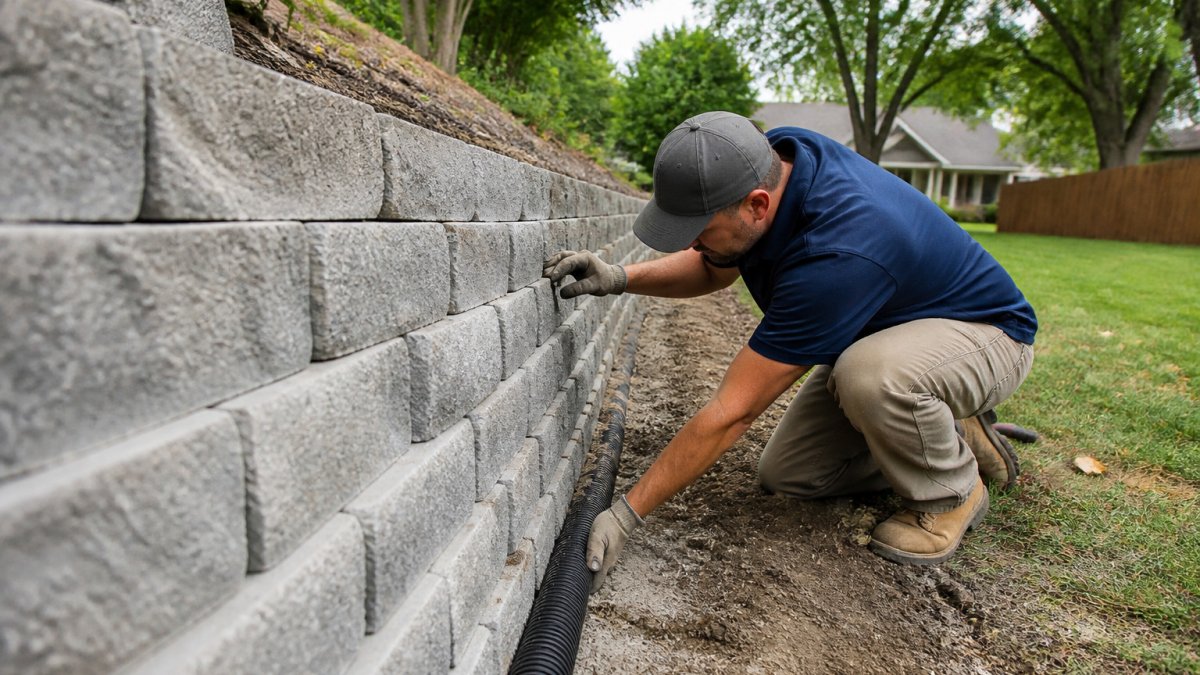
- Natural stone and pavers. Stone varies widely in porosity, sandstone and limestone absorb far more than granite or bluestone. Seal porous stone with a breathable penetrating sealer, and set the base of the vertical garden on a gravel-filled trench or a linear drain so runoff never crosses the patio surface.
- Wood siding, fences, and timber retaining walls. Wood is the most vulnerable host. Use stainless or hot-dip galvanized hardware, keep soil and planters at least 2 inches off the wood, and add a metal or plastic flashing strip between the planter and the wood to break capillary contact. Pressure-treated lumber resists rot but still stains from tannins and fertilizer runoff.
- Foundations and below-grade walls. Never let irrigation runoff or planter overflow pool against a foundation. Grade the soil so water falls away from the foundation.
Build a Drainage Path, Not Just a Drip Tray
A drip tray catches overflow, but it doesn't move water anywhere. Plan a continuous path: planter overflow → tray or gravel channel → sloped grade or linear drain → away from the wall.
If your site needs better water management at ground level, our guide on installing permeable walkways for drainage shows how to move water away from walls and patios.
The protection plan changes with the hardscape material, so match the moisture strategy to the surface you're planting against.
| Hardscape material | Key risk | Protection approach |
|---|---|---|
| Clay brick and mortar joints | Porous brick wicks water; efflorescence | Breathable silane or siloxane repellent; repoint cracked joints |
| Concrete block and poured concrete | Needs a drainage plane | Keep frame at least 1/2 inch off wall; route drip edge |
| Natural stone and pavers | Porosity varies widely | Breathable penetrating sealer; gravel trench or linear drain |
| Wood siding, fences, timber walls | Most vulnerable host | Stainless or galvanized hardware; keep soil 2 inches off |
| Foundations and below-grade walls | Runoff pooling against foundation | Grade soil so water falls away |
Step 3: Choose Vertical Gardening Systems That Fit Your Wall
The right vertical gardening system depends on the wall, the budget, and how much upkeep you want. There's no single best option, and anyone who tells you otherwise is selling one product.
- Modular panel systems clip together and suit large flat walls, but they need solid anchoring and careful irrigation.
- Wall-mounted planters and planter boxes are the simplest retrofit and work well on patios and smaller walls.
- Trellises and plant frames cost the least and rely on climbing plants rather than soil pockets.
- Hanging baskets add instant greenery but dry out fastest and need the most watering.
Match the system to the wall surface you confirmed in Step 1. A heavy modular panel on a thin veneer wall is a mistake waiting to happen.
Step 4: Plan Vertical Garden Irrigation Systems Before Mounting
Hand-watering a vertical garden gets old fast, and inconsistent watering kills plants. That's why vertical garden irrigation systems belong in the plan before you mount anything, not bolted on afterward.
Drip irrigation is the standard choice: a thin line runs up the wall and feeds each planter through small emitters, so every pocket gets water without soaking the hardscape. Add a timer and a filter, and run the line along the top of the structure so gravity does the rest.
Step 5: Vertical Garden Building: Mounting, Support, and Safe Installation
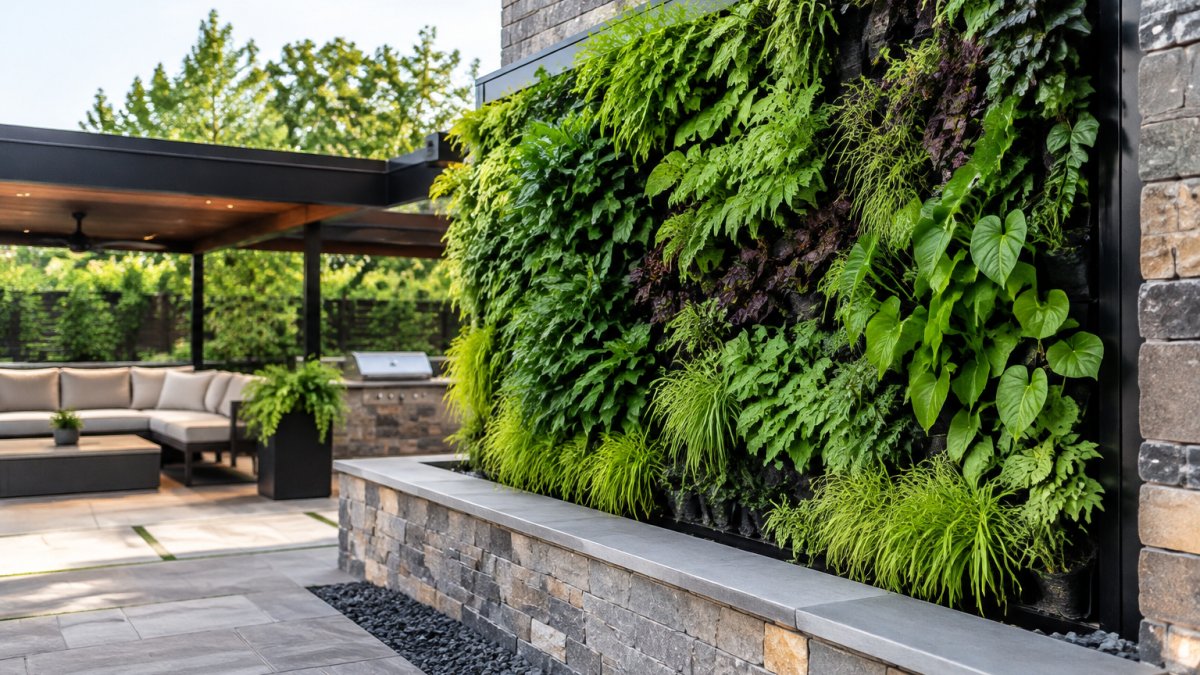
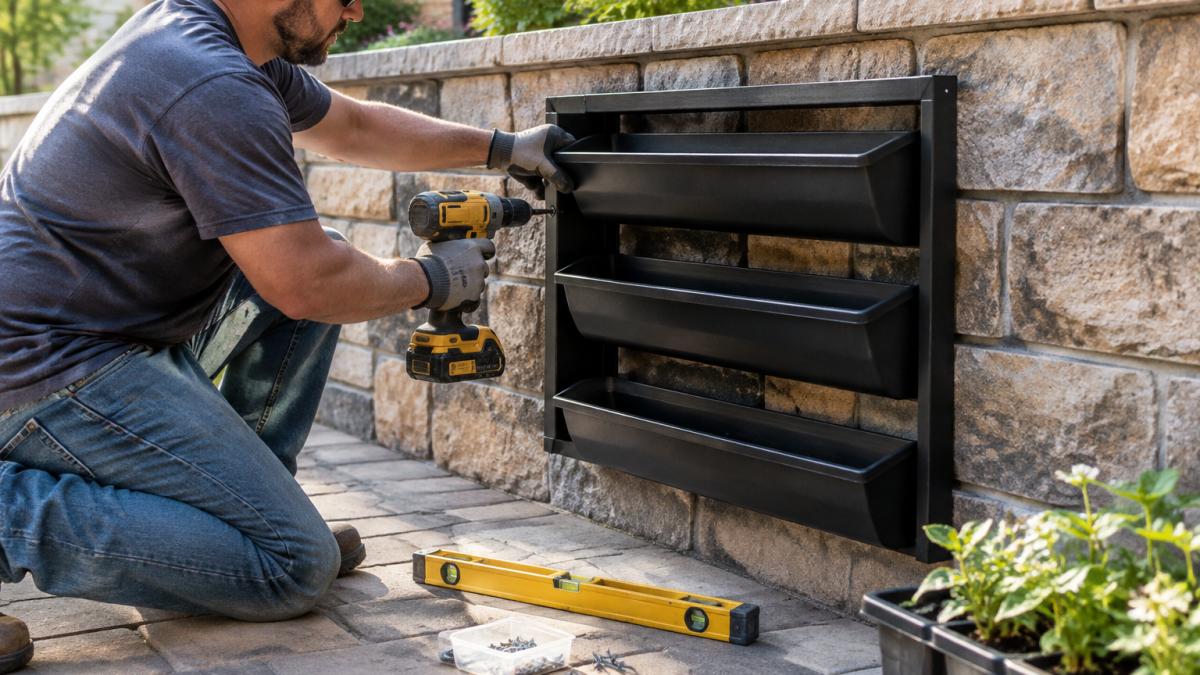
Vertical garden building succeeds or fails at the mounting stage. With the frame secure, align the wall’s materials and planting with the surrounding hardscape to build a cohesive outdoor space.
Estimate the Saturated Load Before You Drill
Dry soil is light; saturated soil is not. Saturated soil and plants add real weight to a wall, and that load is live rather than static because wind and plant growth push it around.
Add up three numbers before mounting: the dry weight of the frame and planters, the saturated soil weight, and the mature plant weight plus water in the irrigation lines. If the total exceeds what the wall was designed for, the garden needs a freestanding support frame tied to the ground rather than the wall.
Match Anchors to the Wall Material
- Solid brick, concrete block, and poured concrete. Use corrosion-resistant sleeve anchors or wedge anchors sized for the load, and space them so each anchor carries a share of the panel. Hit the structural wythe, not the veneer.
- Thin veneer, stone facing, and tile. These cannot carry a living wall on their own. Anchor through the veneer into the structural backup with standoff spacers, or build a freestanding frame that bypasses the veneer entirely.
- Wood stud walls and siding. Locate studs with a stud finder and anchor into them with structural screws or lag bolts. Never anchor into siding alone, it will pull loose once the planters are wet.
- Fences and freestanding walls. A fence post is not a structural wall. For anything heavier than lightweight hanging baskets, build a dedicated frame with posts set in concrete.
Keep Air Moving Behind the Frame
Mount the frame at least 1/2 inch off the wall with standoff spacers or a furring grid. This air gap lets moisture escape, reduces condensation on the wall, and makes it possible to inspect the wall behind the garden without dismantling it. A furring grid also spreads the load across more anchors, which matters on older masonry.
Know When to Call a Structural Professional
Watch out: anchoring into cladding instead of the structural wall is the most common failure we see, and it can pull loose once the planters are wet and full.
Step 6: Vertical Garden Ideas for Small Spaces and Tight Patios
Tight patios reward vertical thinking. When floor space is limited, the wall becomes your garden, and the goal is to draw the eye up without crowding the area you actually use. A few approaches work well on compact hardscape:
- Mount a single tall planter frame on the sunniest wall and let trailing plants spill downward.
- Use a narrow trellis against a fence to screen an unsightly corner and add privacy.
- Hang baskets at staggered heights so plants read as one green column.
- Keep pathways and steps clear, since circulation matters more, not less, in small spaces.
For patios this size, the surface underneath matters too. Our guide on choosing pavers for small backyard patios pairs well with a vertical layout, and if budget is tight, these affordable backyard hardscape ideas stretch a small space further.
Step 7: Select Plants and Plan Maintenance for Hardscape-Adjacent Gardens
Plant choice should follow the conditions you mapped in Step 1, not the other way around. Match plants to the light and wind the wall actually gets, and group thirstier plants near the irrigation line.
- Climbing plants and vines cover trellises fast and suit sunny walls.
- Trailing plants soften the edges of planters and frames.
- Ornamental plants add color where you want visual interest without heavy growth.
Plan maintenance from day one. Check emitters monthly, prune to keep plants off the hardscape, and clear leaf litter from drains so water keeps moving.
Plan Your Vertical Garden Hardscaping Project With a Quote
Integrating a vertical garden with hardscape takes more than hanging a few pots. It takes a solid wall assessment, real drainage planning, and mounting done right the first time.
At Moises Pizana Hardscapes, we build the hardscape foundation your vertical garden depends on, from retaining walls and patios to walkways and drainage. When you're ready to plan, request a quote for your project.
Frequently Asked Questions
How do you attach a vertical garden to a retaining wall without damaging it?
Confirm the wall can carry the added load before drilling, since a retaining wall already holds soil pressure. An engineer or experienced installer should review the anchors.
What is the best irrigation system for a vertical garden?
Drip irrigation is a common approach for a vertical garden. Installing the system before the frames go up is easier than retrofitting lines behind mounted planters.
How do you keep a vertical garden from damaging a wall or patio?
Moisture management helps protect hardscape materials. Direct overflow away from paving, and trim vines away from mortar joints and wood trim. Moisture management, not the plants themselves, is what protects hardscape materials.
Can you add a vertical garden to an existing patio or retaining wall?
Yes, in most cases. Free-standing planter frames and trellises work on any patio without drilling, while wall-mounted systems can be added to retaining walls and privacy walls that have sound structural backing. The main checks are load capacity, sun exposure, and where water will drain. Small patios often suit a corner trellis or a narrow planter column. A qualified hardscape professional can advise on anchor points and drainage for the addition.
A vertical garden is only as good as the structure holding it up. Get the hardscape right and the greenery follows. Get started with Moises Pizana Hardscapes and build an outdoor space that looks better and lasts longer, backed by our expert design, precise installation, and full-service approach to patios, retaining walls, and outdoor living.