 how-to
Maintaining Retaining Walls: A Step-by-Step Guide to Prevent Collapse
Last Updated: November 2, 2026
Quick Summary
Retaining wall maintenance means checking your wall at least twice a year for cracks, bulging, leaning, and drainage problems, and clearing weep holes so water does not build up behind it. Catching small warning signs early keeps repairs simpler and cheaper than waiting for a collapse.
- Walk the full length of the wall at least twice a year and after heavy rain or freeze-thaw events.
- Stair-step cracks in block or brick walls can signal settlement and should be checked closely.
- Clear weep holes and confirm the drain pipe still empties at a safe outlet.
- Redirect downspouts several feet away from the wall so roof water does not soak the soil behind it.
- Call a professional if the wall leans more than a few inches or is taller than about four feet.
Table of Contents
- Why Retaining Walls Fail and What Causes Collapse
- Signs a Retaining Wall Is Failing
- Retaining Wall Drainage Problems and How to Manage Water Pressure
- Step-by-Step Retaining Wall Maintenance Checklist
- How to Fix a Leaning Retaining Wall
- Responding After Heavy Rain, Flooding, or Freeze-Thaw Events
- When to Stop DIY and Call a Professional Engineer or Hardscape Contractor
- Book a Retaining Wall Inspection With Moises Pizana Hardscapes
- Frequently Asked Questions
Retaining walls rarely fail overnight, and sound retaining wall maintenance starts with spotting the small warning signs homeowners often miss for months, like a hairline crack, a slight bulge, or soggy soil at the base. Regular upkeep catches these problems early, when repairs are simpler and cheaper. This guide walks you through what to check, how to maintain different wall types, and when to call in a professional.
Why Retaining Walls Fail and What Causes Collapse
A retaining wall holds back soil on a slope or a change in grade. Its job is to resist the sideways push of that soil. You can see local retaining wall installation and repair work in Grapevine to judge fit before deciding on a professional repair.
Most failures come from a few common causes:
- Water buildup behind the wall. Water adds weight to the soil and pushes outward on the wall.
- Poor drainage. Without a drain pipe or gravel backfill, water has nowhere to go.
- Weak or shallow footings. A wall built on loose soil can sink or tilt over time.
Water is the biggest culprit. Heavy rain and poor grading often work together to build pressure that the wall was never designed to hold.
Signs a Retaining Wall Is Failing
Catching problems early gives you more repair options. Look for these warning signs during routine checks:
- Cracks wider than a quarter inch, especially stair-step cracks in block or brick walls
- Bulging or bowing in the middle of the wall
- A leaning or tilting wall face, even a small amount
If you see bulging or leaning, act quickly. A wall that is moving can fail without much warning.
Retaining Wall Drainage Problems and How to Manage Water Pressure
Drainage is the most important part of wall maintenance. A wall that handles water well can last decades longer than one that does not.
Here is what to check:
- Weep holes. These small openings near the base let water drain out. Make sure they are clear of dirt and debris.
- Drain pipe. If your wall has a perforated drain pipe behind it, confirm that it still slopes away from the wall and empties at a safe outlet.
- Gravel backfill. Check that the gravel behind the wall is still in place and not washed out or buried in soil.
Simple drainage fixes you can do yourself:
- Clear weep holes with a thin wire or stiff brush
- Fill low spots and regrade soil so water moves away from the wall
- Redirect downspouts several feet away from the wall
If water keeps pooling behind the wall after these fixes, the drainage system may need professional work.
Step-by-Step Retaining Wall Maintenance Checklist
A checklist only works if it is specific enough to follow without guessing. Use the routine below as a baseline, then layer on the material-specific tasks in the next section. Plan to walk the entire wall at least twice a year, and after any event that puts unusual stress on it, heavy rain, a deep freeze, or a thaw.
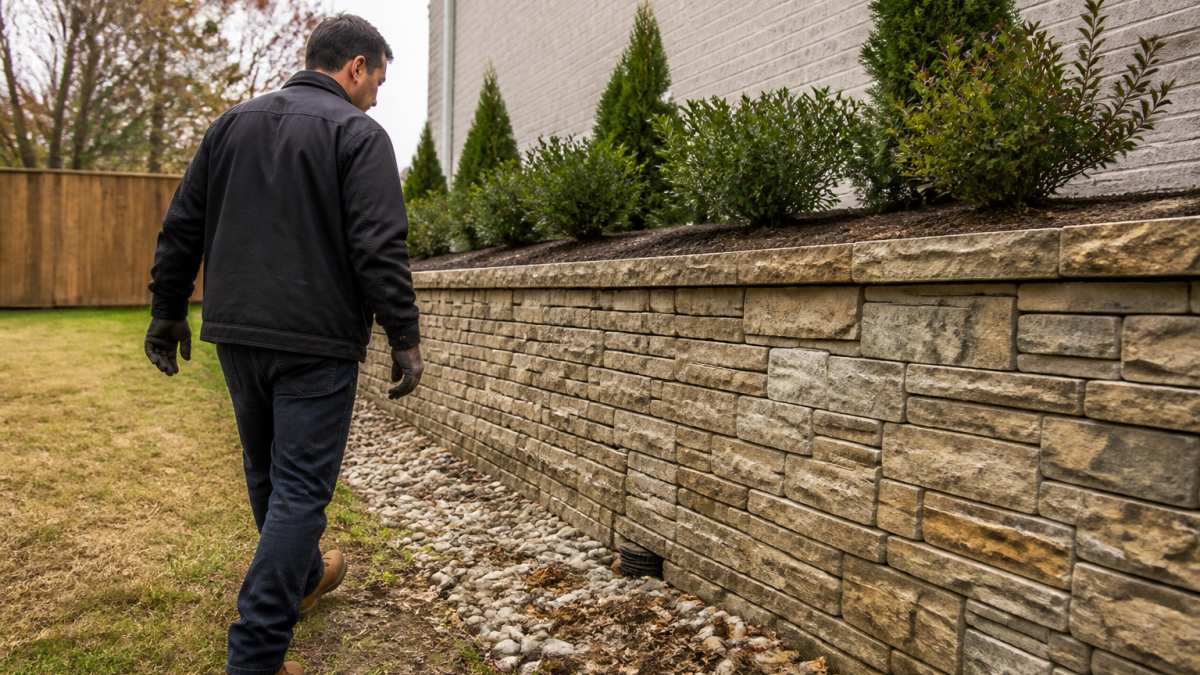
- Walk the full length of the wall. Look at the top, face, and base. Sight along the top edge from one end to the other; any change in the line is a movement signal.
- Check for cracks, bulges, and lean. Measure crack width with a ruler or a crack gauge. Note the location and orientation, stair-step cracks in block or brick point to settlement, while vertical cracks often follow a joint.
- Inspect the drainage system. Clear weep holes and confirm water is flowing away. If you can see the outlet of the drain pipe, check that it is not buried or blocked.
- Look at the soil behind the wall. Note any sinking, erosion, or gaps between the wall and the soil or patio behind it.
- Examine the base and footing. Look for soil washing out or settling at the bottom. A void under the footing is a serious finding.
- Remove vegetation. Pull weeds and small plants from joints and cracks. Roots widen joints and hold moisture against the wall.
- Repair minor damage. Patch small cracks and reset loose blocks only if they are easy to reach and the wall is not moving.
- Take photos and notes. Photograph the same spots each time, the ends, the middle, any existing crack, and note the date, what you saw, and what you did. A simple folder on your phone is enough.
What to Document Each Visit
A written record turns a walk-around into real maintenance. For each inspection, capture:
- Date and weather since the last check (heavy rain, freeze, drought).
- Crack measurements, width and length, so you can tell whether a crack is stable or growing.
- Lean measurements using a string line or a level against the wall face.
If a crack widens by more than about an eighth of an inch between visits, or a lean increases measurably over a few weeks, treat it as active movement and escalate.
Seasonal Inspection Schedule
Timing checks around the weather helps you catch problems before they grow.
- Early spring: Inspect after freeze-thaw cycles. Frozen soil expands, so check for new cracks or shifted blocks.
- Late spring: Check drainage after the first heavy rains. Clear any debris that built up over winter.
- Summer: Look for soil shrinkage and gaps during dry spells. Water new plantings near the wall lightly.
Watch out: do not stand on saturated or frozen backfill above a wall to inspect it, the added load and unstable soil are a collapse risk. Inspect from the toe or from stable ground instead.
The table below summarises the core checks and their timing from the maintenance routine.
| Step | What to do | Time or frequency |
|---|---|---|
| Walk the full wall | Look at top, face, and base; sight along the top edge | At least twice a year |
| Check cracks and lean | Measure crack width; note stair-step or vertical cracks | Every inspection |
| Inspect drainage | Clear weep holes; confirm water flows away | Every inspection |
| Look at soil behind wall | Note sinking, erosion, or gaps | Every inspection |
| Examine base and footing | Look for washed-out soil or voids | Every inspection |
| Remove vegetation | Pull weeds and small plants from joints and cracks | Ongoing |
| Repair minor damage | Patch small cracks; reset loose blocks if easy and not moving | As needed |
| Document visits | Take dated photos from fixed points and record notes | Each visit |
How to Fix a Leaning Retaining Wall
A slight lean needs attention, but it does not always mean the wall must be rebuilt. Start by measuring how far the wall has moved and whether the movement is still happening.
Steps to take:
- Mark the wall. Drive stakes at the top and bottom of the leaning section and run a string line between them. Measure the gap over several weeks to see if the lean is growing.
- Relieve water pressure. Fix drainage problems first. Add a drain pipe or regrade the soil so water stops building up behind the wall.
- Remove loose soil from the top. Carefully lighten the load on the wall, but avoid digging near the base in a way that could undermine it.
- Reinforce the wall. Depending on the wall type, options may include adding geogrid reinforcement, installing tiebacks or anchors, or building a second wall in front of the first.
- Reset the blocks. For small lean in block walls, a contractor may remove the top courses and rebuild them level, with proper backfill behind.
Do not try to push a leaning wall back into place with force. That can cause sudden collapse.
Responding After Heavy Rain, Flooding, or Freeze-Thaw Events
Storms and freezing weather put extra stress on walls. After a major event, take these steps:
- Check for new cracks and bulges as soon as it is safe to walk the area.
- Look for washed-out soil at the base and behind the wall.
- Clear drainage outlets that may be blocked by mud or debris.
After freeze-thaw cycles, check the mortar joints and block faces closely. Water that freezes inside cracks expands and makes them larger over time.
When to Stop DIY and Call a Professional Engineer or Hardscape Contractor
Some maintenance is simple enough for a homeowner. Other problems need expert eyes, and the difference matters because an unsafe repair on a moving wall can accelerate failure. Use the thresholds below to decide.
Stop DIY and Call a Professional If Any of These Apply
- The wall is leaning more than a few inches, or the lean is measurably growing over weeks.
- Large sections are bulging or have cracked through the face.
- Water keeps pooling behind the wall even after you have cleared weep holes, regraded, and redirected downspouts.
Contractor Versus Engineer
A hardscape contractor with retaining wall experience can typically handle drainage upgrades, resetting blocks, and rebuilds of residential walls. A licensed structural engineer is the right call when the wall is tall, when it retains soil near a structure or slope, when movement is active, or when a permit requires engineered plans. Many local building departments require permits for walls above a certain height, and the rule varies, so confirm with your local building office before starting major work.
What to Expect on Cost
Pricing depends on wall size, material, access, and whether the fix is cosmetic or structural. As a general pattern, minor repairs such as repointing or resetting a few blocks cost far less than drainage reconstruction, and drainage work costs less than reinforcement or rebuild. Reinforcement with anchors or geogrid, and full rebuilds, are the most expensive options because they involve excavation and engineering.
What to Have Ready Before the Call
- Your inspection notes and dated photos.
- The wall's approximate height, length, and material.
- Any history of movement, water problems, or previous repairs.
Watch out: do not attempt to push a leaning wall back into place or dig out the base to "inspect" a footing on a wall that is already moving, either can trigger sudden collapse. Barricade the area and call a professional instead.
Book a Retaining Wall Inspection With Moises Pizana Hardscapes
If your wall shows any of the warning signs above, a professional inspection can give you a clear answer. You can request a quote from Moises Pizana Hardscapes to discuss your wall before a small problem becomes a costly one.
For a broader look at how water and soil affect walls, you can also read our guide on concrete versus timber retaining walls for drainage.
Frequently Asked Questions
How do you stabilize a retaining wall?
Start by identifying the cause of movement, which is usually water pressure, soil washout, or a failing base. Relieve water pressure by clearing or adding drain pipes and weep holes so water can exit the wall. Restore gravel backfill behind the wall and fix any settlement at the footing. For walls that are bowing or leaning beyond a few inches, stabilization typically requires reinforcement such as geogrid or tiebacks, which should be designed and installed by a qualified contractor or engineer.
How often should a retaining wall be inspected?
Inspect your retaining wall at least twice a year, typically in early spring after thaw and freeze cycles end and again in late fall before winter rains. Also check it after any heavy rainfall, flooding, or unusual ground movement. Look for new cracks, bulges, leaning, staining that signals water flow, and soil washing out at the base. Keeping a dated log of observations makes it easier to spot gradual change before it becomes a collapse risk.
What is the one-third rule for retaining walls?
The one-third rule is a common guideline stating that a retaining wall should be buried in the ground to a depth of about one-third of its exposed height, which helps it resist overturning and sliding. A wall exposed to four feet of height, for example, should have roughly 16 inches embedded in the footing and soil. Because soil type, slope, and loads affect the required depth, treat this as a starting reference and confirm the design with a professional.
Can poor drainage cause a retaining wall to collapse?
Yes. Water trapped behind a wall builds hydrostatic pressure that the wall was not designed to hold, and it can push the wall outward, crack mortar joints, and wash out the soil supporting the footing. Blocked or missing drain pipes and clogged weep holes are the most common causes. Clearing weep holes, extending downspouts away from the wall, and regrading the surface to slope away from the structure are practical first steps.