 how-to
Are Patio Furniture Materials Built for Texas Heat?
Last Updated: November 3, 2026
Quick Summary
Choose patio furniture built from powder-coated aluminum, dense teak, poly lumber, or UV-stabilized resin, and pick light colors and solution-dyed acrylic fabrics. Dark metal and cheap finishes heat up and fade fast under Texas sun, so shade and frame quality matter most.
- Dark metal and bare aluminum can get far hotter than air temperature in afternoon sun.
- Solution-dyed acrylic fabric holds its color through the fiber, so it resists fading better.
- Light colors reflect more sunlight and stay cooler to the touch than dark fabrics.
- Add a pergola, awning, or large umbrella to significantly reduce UV exposure.
- Use breathable covers, since plastic tarps trap heat and moisture and cause mildew.
Table of Contents
- Why Texas Heat Is Harder on Patio Furniture Than Most Climates
- Best Outdoor Furniture Materials for Hot Climates
- UV-Resistant Fabrics, Cushion Density, and Color Choices
- How to Protect Patio Furniture From Sun Damage
- Maintenance Tips for Outdoor Furniture in Extreme Heat
- Storage, Disposal, and Making Your Patio Furniture Last Longer
- Choosing Durable Patio Furniture for Your Dallas-Fort Worth Yard
- Frequently Asked Questions
Why Texas Heat Is Harder on Patio Furniture Than Most Climates
Texas summers punish outdoor furniture in ways most buyers never plan for. Texas summers take a heavy toll on outdoor furniture: faded cushions, warped slats, and metal frames blistering under a relentless sun. The patio furniture you buy for a Dallas-Fort Worth yard has to survive more than heat alone.
Heat is only part of the problem. Texas also brings intense UV exposure, sudden hail, and humidity swings that cause materials to expand and contract. Dry spells followed by heavy rain add another layer of stress.
Here is what Texas homeowners typically face:
- Long stretches of direct afternoon sun on patio surfaces
- Surface temperatures on metal and dark fabric that can climb well above air temperature
- UV rays that break down dyes and plastics over time
- Heavy storms and hail that test frame joints and finishes
- Humidity that promotes mildew on fabric and rust on untreated metal
Watch out: A chair that looks fine in a showroom can fade or warp within a single season if its finish and fabric are not rated for strong sun.
Best Outdoor Furniture Materials for Hot Climates
Not all outdoor materials handle Texas conditions equally. Choosing the right base material matters more than any single feature, and the decision should start with two questions: how hot does the surface get in direct sun, and how does the material behave in humid versus dry heat? Readers weighing durable materials can also review which patio materials hold up best and add resale value. Texas spans very different climates, and the Gulf Coast and West Texas stress furniture in different ways.
Thermal Conductivity: What Is Safe to Touch at Noon
Surface temperature is the pain point most buyers discover too late. Metal frames and dark surfaces absorb solar radiation and can climb well above air temperature, while wood and resin stay closer to ambient. The practical result is that a powder-coated aluminum chair in full afternoon sun can be uncomfortable to sit on bare-legged, and a dark wrought-iron table can be too hot to rest a hand on.
- Powder-coated aluminum: lightweight and rust-resistant. Bare metal heats fast, but a light-colored powder coat reflects more sun and stays cooler than a dark finish.
- Wrought iron: heavy, sturdy, and traditional, but it holds heat longer than aluminum and needs a sound powder-coat finish to resist rust in humid months. Shaded placement is recommended.
- Teak and other dense hardwoods: naturally durable and slower to heat than metal, which makes them more comfortable in direct sun. Teak weathers to silver-gray if left untreated and needs oiling only if you want to keep the golden tone.
- Poly lumber: recycled plastic that resists moisture, rot, and sun-bleaching well. It stays cooler than metal but can still feel warm in direct sun, and lighter colors perform better than dark ones.
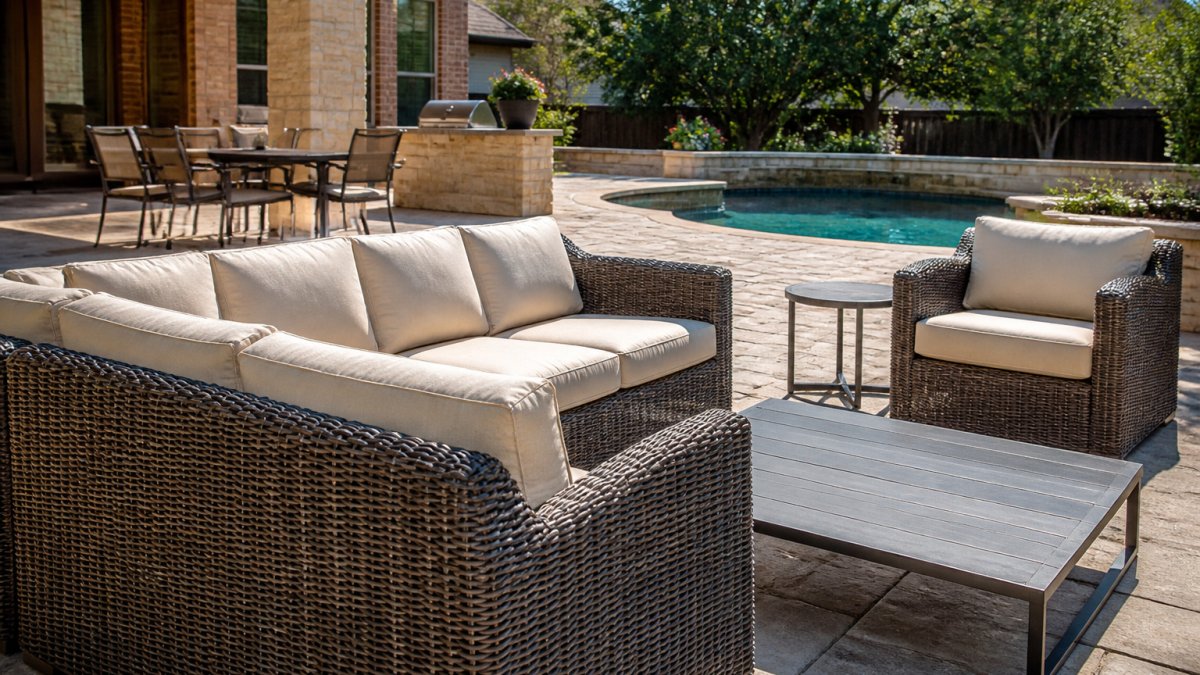
- Synthetic wicker: UV-stabilized resin woven over an aluminum frame. Comfortable and low-maintenance, but quality depends on the resin and the UV stabilizers used, and lower-grade versions can become brittle over time.
Humid vs. Dry Heat: Match the Material to Your Micro-Climate
Humid coastal air can promote mildew on fabric and rust on untreated metal, so rust-resistant frames and quick-drying cushions matter most there. Dry heat and intense sun can break down dyes and plastics, so UV stabilization and color-fast fabrics carry more weight. A material that performs well in one region can underperform in another.
- Humid heat priorities: powder-coated aluminum or poly lumber frames, solution-dyed acrylic cushions, breathable covers, and regular mildew checks.
- Dry heat priorities: UV-stabilized resin, light-colored finishes, and fabrics rated for strong sun exposure.
Watch out: A chair that looks fine in a showroom can fade or warp within a single season if its finish and fabric are not rated for strong sun, and a dark metal frame that feels fine in the morning can become uncomfortable by mid-afternoon.
The article compares common outdoor furniture materials and how each handles Texas heat and sun.
| Material | Best for | Key difference |
|---|---|---|
| Powder-coated aluminum | Lightweight, rust-resistant use | Bare metal heats fast; light powder coat stays cooler |
| Wrought iron | Heavy, traditional, sturdy pieces | Holds heat longer; needs sound finish and shade |
| Teak and dense hardwoods | Comfortable direct-sun seating | Slower to heat than metal; weathers to silver-gray if untreated |
| Poly lumber | Moisture and sun resistance | Resists rot and bleaching; lighter colors perform better |
| Synthetic wicker | Low-maintenance comfort | Quality depends on UV stabilizers; cheap versions turn brittle |
UV-Resistant Fabrics, Cushion Density, and Color Choices
Cushions often fail before the frame does. Solution-dyed acrylic fabric carries its color through the fiber rather than resting on the surface, which generally makes it more color-fast than printed or surface-dyed options.
Cushion density matters too. Denser foam generally holds its shape longer and resists flattening under daily use. Quick-drying foam can also help reduce mildew after a storm.
Color affects heat absorption. Light colors reflect more sunlight and stay cooler to the touch, while dark fabrics and metals can get uncomfortably hot by mid-afternoon.
How to Protect Patio Furniture From Sun Damage
Protection starts with placement. Even the best-rated furniture will age faster in full, unshaded sun all day.
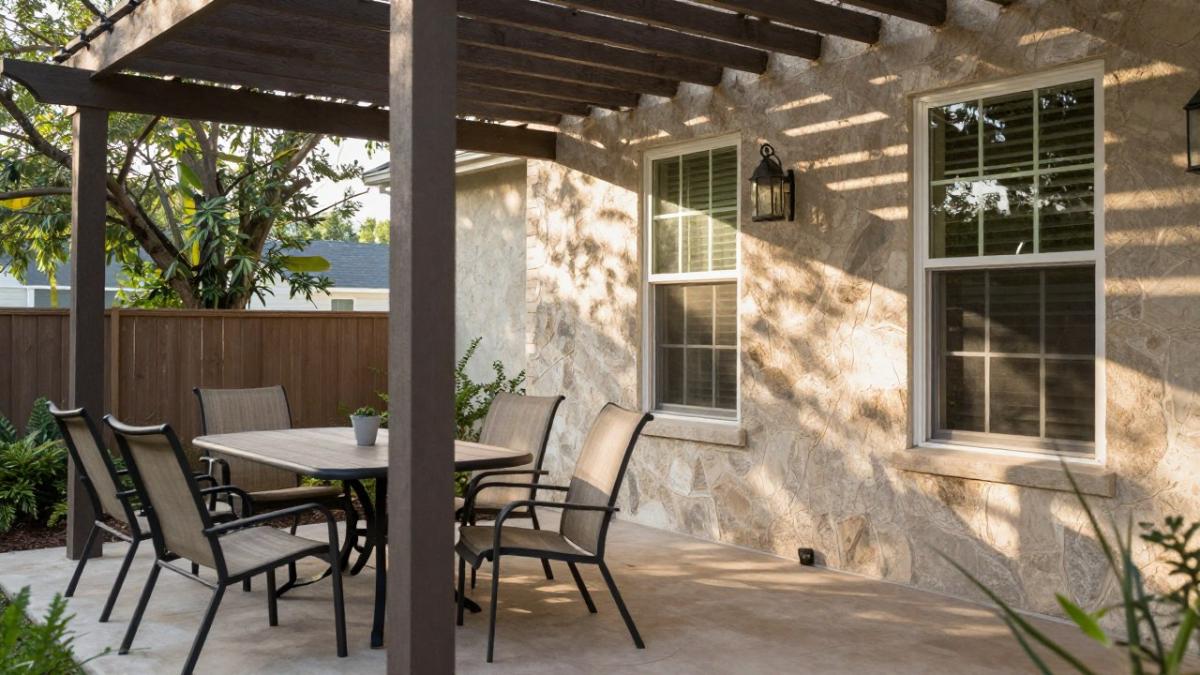
- Add shade first. A pergola, retractable awning, or large umbrella can significantly reduce UV exposure.
- Use covers wisely. Fitted covers protect against sun and rain, but they should be breathable so moisture does not get trapped.
- Rotate cushions occasionally so one side does not fade faster than the other.
- Clean regularly. Dirt and pollen can hold moisture against surfaces, which speeds up wear.
- Check finishes each season. Look for chips in powder coat or dull spots on teak and resin.
A common mistake is covering furniture in plastic tarps. Trapped heat and moisture can cause mildew and warping, so choose breathable covers instead.
Maintenance Tips for Outdoor Furniture in Extreme Heat
Good maintenance can add years to outdoor furniture, but the schedule that works in humid Gulf Coast heat is not the same one that works in arid West Texas sun. Most of the work takes little time, but timing it to the season and the climate makes a visible difference.
- Wipe down surfaces every few weeks to remove grime and pollen, which can hold moisture against finishes in humid areas.
- Tighten bolts and screws at the start and end of each season. Heat expansion and contraction loosen joints over time, and a wobbly frame is the first sign of fatigue.
- Touch up small chips in powder coat before rust can start. This matters most in humid months, when bare metal exposed by a chip can rust within weeks.
- Oil teak twice a year if you want to keep its warm tone. Left untreated, teak weathers to silver-gray, which is a look many homeowners prefer and requires no maintenance.
- Store cushions indoors during long rainy spells or storms. Quick-drying foam helps, but trapped moisture is the main cause of mildew.
- Check fabric and resin for fading or brittleness each spring. UV damage accumulates, and a fabric that looked fine in fall can crack the following summer.
Watch out: Pressure washing at high settings can strip finishes and tear fabric. Use a gentle setting and a mild soap instead, and avoid directing spray at seams or powder-coat edges.
Storage, Disposal, and Making Your Patio Furniture Last Longer
Storage matters most during severe weather. Bring cushions and lightweight pieces indoors before a forecast storm with high winds or hail. A dry garage or shed keeps them out of the worst conditions.
When furniture reaches the end of its life, check your local solid waste or recycling rules before tossing it. Many metal and poly-lumber pieces can be recycled, while cushion foam is often not. Donating usable pieces is another option that keeps them out of the waste stream longer.
Buying durable pieces in the first place can help reduce long-term replacement costs. Pricing depends on material, size, and finish, so check current options directly with Moises Pizana Hardscapes for a quote.
Choosing Durable Patio Furniture for Your Dallas-Fort Worth Yard
Picking the right furniture is only part of the picture. The layout and surface beneath it matter as well. A well-designed patio with proper drainage and shade can help protect your furniture.
If you are planning a new space, you can browse completed patio projects to see how finishes and layouts look in real installations. You can also review patio services and options to match materials to your yard.
When you compare options, ask about UV ratings, finish warranties, and frame materials. Moises Pizana Hardscapes builds patios and outdoor living spaces, and we can help you discuss materials for your site.
Ready to plan a patio that holds up through the next Texas summer? Get A Quote from Moises Pizana Hardscapes and start with a layout built for your yard.
Frequently Asked Questions
What is the best outdoor patio furniture for Texas heat?
For Texas heat, powder-coated aluminum and solution-dyed acrylic or synthetic resin pieces are commonly chosen. Aluminum resists rust, while UV-rated resin can resist fading and cracking. Teak is durable but needs regular oiling to avoid graying. Choose materials rated for UV exposure, use light-colored finishes to reduce heat absorption, and pick cushions with quick-dry, UV-resistant outdoor fabric.
Does metal outdoor furniture get too hot in the sun?
Metal, especially dark-colored aluminum or wrought iron, can get very hot in direct Texas sun and burn bare skin. Lighter powder-coat colors absorb less heat. Placing pieces under a shade structure, pergola, or umbrella reduces surface temperatures considerably. Cushions and woven fabric help insulate the seat from hot metal frames.
Is teak or synthetic resin better for hot, sunny backyards?
Teak is naturally oil-rich and durable, but in full Texas sun it fades to silver-gray unless treated regularly. Synthetic resin, including poly lumber and synthetic wicker, resists fading, moisture, and rot with little upkeep. For a low-maintenance patio in a hot, sunny yard, UV-stabilized synthetic resin is often considered, while teak suits owners who enjoy regular care.