 How-to
How to Grade a Backyard for Proper Water Runoff
Table of Contents
- Assessing Your Yard's Current Slope and Drainage Problems
- Planning a Proper Slope for Drainage Away From House
- Tools and Measurements: How to Grade a Yard by Hand
- Choosing the Right Soil for Grading Around the House
- Step-by-Step: Reshaping the Backyard for Water Runoff
- How to Regrade a Yard Around the Foundation Safely
- Planning for Heavy Rain, Safe Discharge, and Restoring Your Landscape
- Booking Your Backyard Grading Project with Moises Pizana Hardscapes
- Frequently Asked Questions
Assessing Your Yard's Current Slope and Drainage Problems
Last Updated: November 11, 2026
Standing water after rain is one of the most common reasons homeowners look into how to grade a backyard for proper water runoff. Water pooling near the house, soil washing out on slopes, and foundation damage are common problems homeowners face after heavy rain.
Grading means shaping the ground so water flows away from structures under the force of gravity. Good surface drainage moves rain away from the foundation instead of letting it sit.
Before you move any dirt, walk the yard during or right after a heavy rain. Watch where water collects, where it runs fast, and where it soaks in slowly. If you have spotted erosion or pooling on a slope, you can read how to prevent erosion on a sloped DFW backyard.
- Note any puddles that stay more than 24 hours
- Look for soil washed out along fence lines or slopes
- Check the ground right against the house for dips
- Photograph problem areas for comparison later
Finding High and Low Points in the Yard
Start by locating the high and low points. Water always runs downhill, so the low spots show you where runoff wants to go.
A simple way to map this:
- Mark the highest point near the house with a stake
- Mark the lowest spot where water collects
- Note any humps that split water in different directions
Pay extra attention to the ground within about 10 feet of the foundation. This zone matters most for protecting the structure.
Planning a Proper Slope for Drainage Away From House
The goal is a slope that carries water away from the house. Most of the work happens in the first several feet out from the foundation.
How do you plan the slope? Plan for the ground to fall away from the house in a steady, even line. A dip or flat spot near the foundation can hold water and push it toward the wall.
Recommended Slope Percentages and Grade Measurements
Slope is usually expressed as a percentage: the drop in height divided by the horizontal distance. Common targets near the foundation are discussed in industry guidance, and the right figure depends on your site. Verify the exact figure for your site before you dig, since soil type and local conditions change the answer.
Here is a quick reference for common targets:
| Distance from House | Target Fall | Approximate Slope |
|---|---|---|
| First 10 feet | 6 inches | 5% |
| Each 10 feet beyond | 2 inches | 2% |
These are general planning values, not a substitute for a site-specific plan.
Tools and Measurements: How to Grade a Yard by Hand
You do not need specialized equipment to check grade. Basic tools and simple math will get you close.
Gather these items:
- Two wooden stakes
- String or mason's line
- A line level or bubble level
- A tape measure
- A rake, shovel, and tamper
Using Stakes, String, and a Level to Measure Grade
Use this method to read the slope:
- Drive one stake at the house-side point.
- Drive a second stake farther out, such as 10 feet away.
- Tie string to the house-side stake at a set height.
- Pull the string taut to the far stake and level it.
- Measure the gap between the string and the ground at the far stake.
That gap tells you the fall. If the string sits 6 inches above the ground at the far stake, the grade drops about 6 inches over 10 feet.
Calculating Fall Over a Given Distance
Use this simple formula to find the fall you need:
Fall = Distance × Slope percentage
For example, to get a 2 percent slope over 20 feet:
- Convert 20 feet to inches: 240 inches
- Multiply by 0.02: 4.8 inches of fall
Work these numbers before you remove or add soil so you know your target elevation at each point.
Choosing the Right Soil for Grading Around the House
Soil type decides whether your finished grade holds or fails. The same slope percentage behaves very differently on clay, sand, and loam, so match your fill and compaction method to what is already in the yard.
How Clay, Sandy, and Loamy Soils Behave Under a New Grade
Clay drains slowly and expands when wet, then shrinks and cracks when dry. That movement can shift a grade over a season, especially in the first several feet from the foundation.
Sandy soil infiltrates fast but holds little structure. Fill placed on sand can migrate or wash out at the edges, and a sand-heavy grade may not shed water the way a clay grade does.
Loam sits in the middle: it drains reasonably, compacts into a stable layer, and supports turf. Loam is often considered a workable base for a backyard grade, but it still settles if placed too thick.
A practical test before you buy fill: squeeze a handful of moist soil. Clay holds a tight ball that does not crumble; sand falls apart immediately; loam forms a ball that breaks with light pressure.
Compaction and Settling Checks That Keep the Grade
Loose fill always settles, and settling creates new low spots that undo your work. Add soil in lifts of about 3 to 4 inches, water each lift lightly, and compact it before adding the next.
Check compaction as you go. Press a screwdriver or a stiff probe into the compacted lift. If it sinks easily, the layer is still loose and needs more work. A firm lift resists light pressure and does not crumble at the edges.
Watch out: piling loose topsoil or organic material against the foundation holds moisture and settles unevenly, which can pull water back toward the wall.
After the grade is finished, expect some settling over the first wet season. Mark your target elevations with stakes so you can re-check them after heavy rain and top up any spots that drop.
Step-by-Step: Reshaping the Backyard for Water Runoff
Once you have your numbers, reshape the yard in stages.
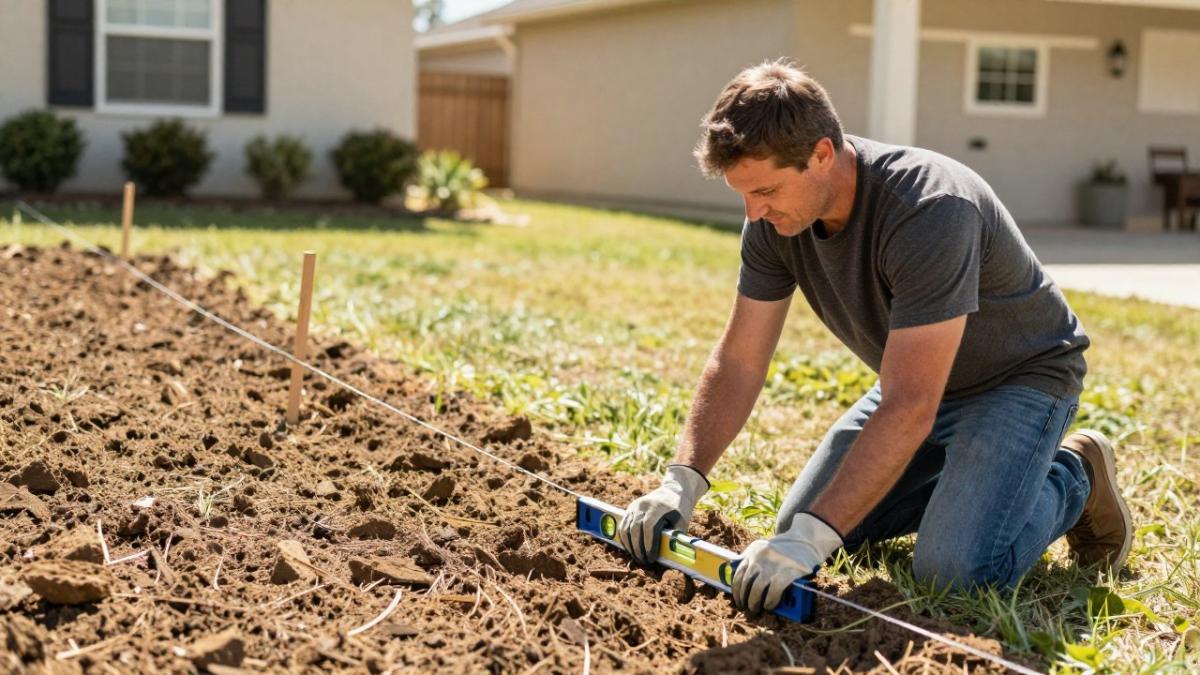
- Mark your target grade with stakes and string.
- Strip any grass or debris from the work area.
- Remove high spots and move soil to fill low areas.
- Add fill in thin layers, watering and compacting each layer.
- Rake the surface smooth and check the grade with your string line.
- Re-check after rain to confirm water flows away from the house.
Adding or Removing Soil and Spreading Fill
When you add soil, work in lifts of about 3 to 4 inches. Compact each lift before you add the next. This helps prevent settling that could undo your grade.
Spread the fill evenly and feather the edges into the existing ground. Sharp transitions create new spots where water pools.
How to Regrade a Yard Around the Foundation Safely
The area against the house needs the most care. Regrading here can affect the foundation if you rush it.
Keep these points in mind:
- Do not cover weep holes, vents, or utility connections
- Keep soil and mulch at least several inches below siding or brick ties where possible
- Avoid heavy equipment close to the foundation walls
Work carefully near the house. If the job involves significant excavation or retaining walls, consider a professional assessment.
Retaining walls can change how water moves across the yard. Plan drainage behind any wall before you backfill, or you may trap water against the structure. Learn why retaining wall drainage in clay soil is critical.
Planning for Heavy Rain, Safe Discharge, and Restoring Your Landscape
Grading moves water, but you still need to decide where that water goes and prove the new grade works. Plan for heavy storms, not just light rain, and build in a way to verify the result.
Sizing the Job for Heavy Rain and Runoff Volume
A simple slope percentage does not account for how much water arrives at once. Roof area, rainfall intensity, and soil infiltration all change the picture. A roof that sheds onto a graded backyard can deliver far more water than the lawn alone, especially during a short, intense storm. To finish safe discharge, see how to extend downspouts away from the foundation.
Estimate the load before you finish the grade. Measure the roof footprint that drains toward the yard and add it to the lawn area that feeds the same path. On clay, most of that water runs off rather than soaking in; on sand, more infiltrates.
Safe Discharge Options and Erosion Control
Decide where runoff leaves the graded area and protect that outlet. Common options include:
- A vegetated swale that carries water to a lower part of the yard
- A dry creek bed lined with rock that slows flow and prevents scour
- A buried drain tied to a pop-up emitter or a lawful discharge point
- A splash block or downspout extension that moves roof water well away from the foundation
Check local codes and easements before you change grade near property lines, since a drainage change that affects a neighbor can create real problems. Directing runoff onto a neighbor's land is a common source of disputes, so confirm where water is allowed to go before you dig. If existing retaining walls are affected, a maintenance guide to prevent collapse covers the upkeep steps.
Watch out: bare soil at the outlet erodes fast, so line the discharge path with rock, mulch, or established vegetation before the first heavy rain.
Restoring Turf and Beds Without Blocking the Drainage Path
After grading, restore the landscape so it protects the new grade instead of undoing it:
- Seed or sod bare areas quickly to prevent erosion
- Add mulch or ground cover on slopes, but keep mulch clear of the foundation and out of the drainage path
- Plant shallow-rooted groundcover where soil stays exposed
- Keep beds and edging from creating a dam across the slope
Verifying the Grade After Grading
Test the new grade with a hose or a soaking rain, then walk the yard with a checklist:
- Look for low spots where water ponds for more than a few hours
- Check that water flows away from the house, not back toward it
- Confirm the discharge path carries water to its intended outlet without eroding
- Re-check the ground within about 10 feet of the foundation, where protection matters most
Fix small problems early. A shallow dip that holds water after one storm will only get worse as the soil settles.
Booking Your Backyard Grading Project with Moises Pizana Hardscapes
Grading a yard takes careful measuring, the right soil, and solid execution. If you would rather have a professional handle the work, Moises Pizana Hardscapes can assess your yard and build a drainage plan that fits your property. Our crew has more than 15 years of experience, and we do the work ourselves rather than subcontracting it.
Pricing depends on the size of the job, the amount of soil, and site conditions. Visit our website to request a quote for your project.
Frequently Asked Questions
What slope should a yard have to drain water away from a house?
A common target is a positive grade of about 2% to 3%, which drops roughly 2 to 3 inches over the first 10 feet away from the foundation. Many guides suggest at least 6 inches of fall across the first 10 feet, though local conditions and soil type can change what works best. Measure with a string line and a level before moving soil, and check the result after heavy rain to confirm water flows away from the structure rather than pooling near it.
How do you regrade a yard around a foundation?
Start by clearing mulch and debris from the foundation perimeter, then add fill soil in thin layers and compact each layer before adding the next. Keep soil at least several inches below the siding or brick line to avoid moisture contact with the structure. Work outward until the slope falls away from the house at a consistent grade. Check the finished surface after rain to make sure water moves away from the foundation and does not collect in low spots.
What tools do you need to grade a yard for drainage?
The basic kit includes wooden or metal stakes, a mason's line or string, a four-foot level, a tape measure, a rake, a shovel, and a tamper for compacting soil. A straight board or screed helps smooth the surface between stakes. For larger projects, rented equipment such as a compact skid steer can move fill soil faster, but hand tools are sufficient for small yards. Confirm your property lines and any underground utilities before digging, and call 811 to request a utility locate.