 how-to
How to Extend Downspouts Away from Foundation: DIY Guide
Last Updated: October 29, 2026
Quick Summary
To extend downspouts, attach an extension pipe or buried drain line to each downspout so water discharges at least four to six feet from the foundation. Keep the pipe sloping downhill, finish with an elbow or splash block, and test that water drains freely without pooling near the house.
- Discharge water at least four feet from the foundation, with six feet as a common target.
- Clay soil or sloped lots may need eight to ten feet of extension.
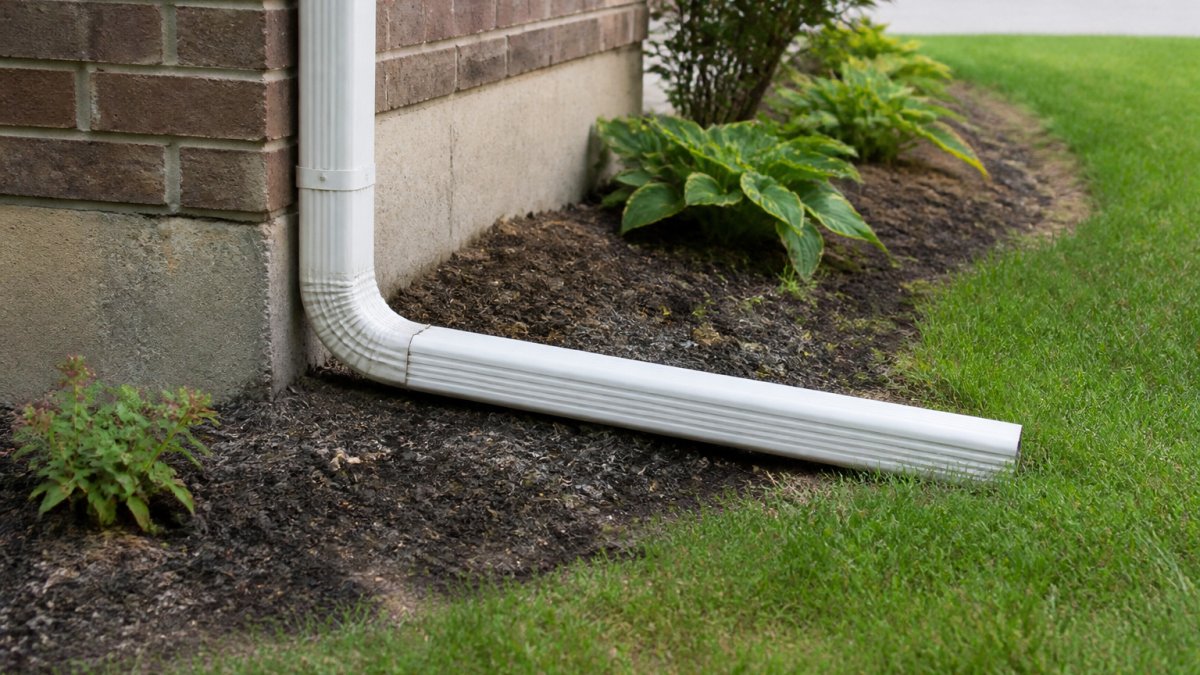
- Above-ground extensions are cheapest and easiest to service but can be a trip hazard.
- Call 811 to locate utilities before digging a buried extension trench.
- Test the extension during or after rain to confirm water flows away from the house.
Table of Contents
- How Far Should Downspouts Extend from the House?
- Choosing the Right Downspout Extension Type
- Tools, Materials, and Measuring Your Extension Route
- How to Install a Downspout Extension Step by Step
- Downspout Extension Ideas for Different Yards
- Checking That Your Extension Is Draining and Booking Professional Help
- Frequently Asked Questions
Water that pools against your home's foundation can cause real damage. The most common drainage problem starts with a downspout that dumps water right next to the house. Learning how to extend downspouts moves that water away from the foundation, where it soaks into the ground instead of seeping into your basement or crawl space. This guide walks you through how to extend downspouts away from foundation, step by step.
Rain that lands on your roof runs into the gutters and out through the downspouts. Without an extension, the water exits at the base of the wall and collects in the soil. Over time, that moisture can lead to settling, cracks, and damp basements.
A short extension is usually enough to change how water behaves on your lot. If your yard slopes or drains poorly, you can also see how to install permeable walkways for drainage to move water further from the house.
Watch out: Do not assume the ground slopes away from the house. Check the grade with a level before you decide where the water should go.
How Far Should Downspouts Extend from the House?
A downspout should discharge water at least four to six feet from the foundation. Some guidance suggests longer runs on yards with poor drainage or clay soil. The goal is to get water far enough away that it does not flow back toward the house.
Measure from the wall to the end of the extension. Aim for the water to land on ground that slopes away from the home. If the lot is flat, a longer extension or a splash block at the end helps spread the flow.
- Minimum: about four feet from the foundation
- Common target: six feet
- Clay soil or sloped lots: eight to ten feet
Choosing the Right Downspout Extension Type
Most extension guides list the three main types and stop there. The harder question is which one fits your yard. Use the decision framework below to match the extension to your layout, soil, climate, and how much maintenance you are willing to do.
The three types at a glance
Above-ground extensions are corrugated or rigid pipe that snaps onto the downspout and runs along the surface. They are the cheapest and fastest option, easy to remove for mowing or repairs, and easy to inspect. The trade-offs: they can be a trip hazard, they look untidy on a finished landscape, and corrugated pipe can clog with leaves and grit over time.
Buried extensions run underground through a trench and discharge at a drain point or emitter. They keep the yard clear and look clean, and they move water farther than a surface run. The trade-offs: they require digging, correct slope, and utility locating, and a buried line that sags or clogs is expensive to fix. Properly managing the discharge point is essential to ensure that your drainage system does not inadvertently fix standing water elsewhere in the landscape.
Pop-up emitters sit at the end of a buried line and open only when water pushes through. They are a good choice for lawns you mow often because they stay low when not in use. The trade-offs: the pop-up head can freeze, be damaged by a mower, or be blocked by debris, and it needs a clear discharge area that slopes away.
Decision guide: match the extension to your site
- Flat, open lawn with good sun: A longer above-ground run with a splash block is usually enough, and it is the easiest to service.
- Finished landscape you want to keep neat: A buried line with a pop-up emitter or a graded outlet keeps the surface clear.
- Narrow side yard or a path in the way: A buried line that runs under the walkway avoids a surface trip hazard.
- Sloped backyard: A short extension that uses the natural grade can carry water away without a long run.
- Clay soil or poor infiltration: A longer buried run to a better-drained area, or a discharge to a dry well or graded swale, beats a short surface dump.
- Cold winters with freeze risk: A surface extension you can disconnect and store, or a buried line with a properly drained outlet, avoids split pipe and ice dams at the emitter.
- High-maintenance tolerance: Above-ground is easiest to clean; buried lines need occasional flushing and outlet inspection.
Cost and effort trade-offs
Price the whole route, not just the pipe: fittings, adapters, emitter heads, and any rental for a trencher add up quickly. Pricing depends on the length of the route, the materials chosen, and whether you do the work yourself. For current pricing or a quote, visit the Moises Pizana Hardscapes website.
A note on local rules and neighbor impacts
Before you commit to a discharge point, check where the water will go. Local rules can restrict where runoff may be directed. Call your local building or public works department to confirm requirements, and keep the outlet on your own lot with a clear path to a legal drainage way. Directing flow at a property line is a common source of neighbor disputes and can create a code problem.
How this differs by climate and soil
In freeze-prone areas, plan for seasonal disconnection or a buried line that drains fully so water does not sit in the pipe and split it. In clay soil, water moves slowly, so a longer run or a discharge to a better-drained area matters more than the pipe type. In sandy soil, a shorter run may infiltrate fast enough. Match the type to the ground, not just to the look.
The three main extension types suit different yards, so the table below compares them by best use and key trade-off.
| Type | Best for | Key difference |
|---|---|---|
| Above-ground extension | Flat, open lawns | Cheapest and easiest to service |
| Buried extension | Finished landscapes | Keeps the yard clear and neat |
| Pop-up emitter | Lawns you mow often | Stays low when not in use |
Tools, Materials, and Measuring Your Extension Route
Gather your supplies before you start. Most projects need:
- Downspout extension pipe or buried drain pipe
- Elbow fittings (typically 45-degree or two 45s to make a bend)
- Adapter or reducer to match your downspout size
- Tin snips for cutting the pipe
- Tape measure, string, and stakes
- Level and shovel for buried runs
- Screws or pop rivets to secure joints
Measure the route before you cut anything. Mark the path from the downspout to the discharge point. Keep the pipe running downhill or on level ground, and avoid low spots where water could collect.
How to Install a Downspout Extension Step by Step
Follow these steps for an above-ground extension. Work on a dry day.
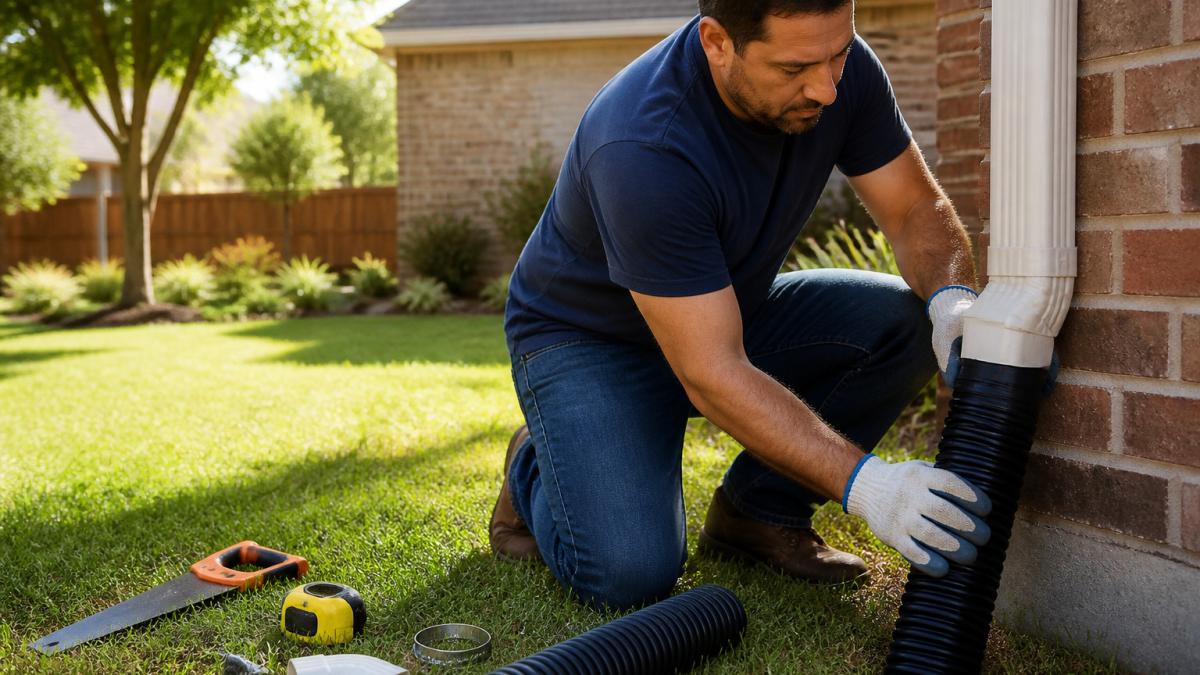
- Remove the existing downspout elbow at the bottom of the gutter pipe.
- Attach the adapter to the downspout so the extension fits snugly.
- Connect the first elbow and angle it so the pipe drops toward the ground.
- Add straight pipe sections along your measured route, using a friction fit or screws at each joint.
- Finish with an elbow or splash block at the discharge end so water moves away from the house.
- Run a hose or wait for rain and check that water flows freely without leaking at the joints.
Expected result: Water exits the extension and runs at least four to six feet from the foundation without pooling.
Installing a Buried Downspout Extension Safely
A buried extension takes more planning. Call 811 before you dig so utility lines can be marked (811 Before You Dig). Dig a trench sloped so the far end sits lower than the downspout. Lay the pipe, connect the fittings, and cover it with soil. Confirm the outlet is clear and water drains before you backfill.
Watch out: Never dig without locating utilities first. Striking a gas or electric line is dangerous and costly.
Downspout Extension Ideas for Different Yards
Your yard shape changes the best approach. Here is how to match the extension to the site.
- Flat, open lawns: A longer above-ground run with a splash block at the end.
- Narrow side yards: A buried line that runs under the walkway.
- Sloped backyards: A short extension that uses the natural grade to carry water away.
- Yards with clay soil: A buried or longer extension to reach well-drained ground.
Checking That Your Extension Is Draining and Booking Professional Help
After installation, test the system during or after a rain. Look for water that flows toward the house, puddles near the discharge point, or leaks at the joints. Adjust the grade or add a splash block if water returns to the foundation.
If water still pools after your extension is in place, the problem may be larger than a downspout. Professional help makes sense when you see erosion, foundation cracks, or repeated pooling.
Moises Pizana Hardscapes builds retaining walls and outdoor living spaces in the Dallas-Fort Worth area. Contact us for a quote on a project that fits your yard and budget.
Frequently Asked Questions
How far should downspouts be away from the foundation?
Most guidance calls for discharging water at least 4 to 6 feet from the foundation, and many homeowners in clay-heavy Texas soil choose 8 to 10 feet for extra margin. The right distance depends on your lot slope and soil. Water should flow away from the house, not pool near the base of the wall. If the ground around the discharge point stays soggy after rain, extend the line further or add a splash block at the end.
Do downspout extenders really work?
Yes, when they are sized correctly and connected securely. A standard extension moves roof runoff away from the foundation so it does not saturate the soil beside the house. They work best when the ground slopes away from the house at the discharge end. Extenders that are loose, sagging, or pointed back toward the foundation will not solve the problem, so check the joints and outlet after each heavy rain.
How do you install a buried downspout extension?
A buried extension uses solid drain pipe run in a trench that slopes away from the house, . Dig below the frost line where applicable, connect the downspout to the pipe with a fitting, and place an outlet at the far end where water can drain onto open ground. Keep the outlet clear of debris and rodents. Because trenching involves utility lines, call 811 before you dig.
How can you tell if a downspout extension is draining properly?
Run water from a hose into the gutter during or after installation and watch where it exits. It should discharge at least several feet from the foundation without pooling. Check the joints for leaks, look for standing water at the outlet, and confirm the ground slopes away. Inspect again after the first few storms, since settling soil can change the flow path.