 how-to
How to Choose Outdoor Kitchen Appliances in DFW
Table of Contents
- Step 1: Assess Your Cooking Style and Appliance Needs
- Step 2: Select the Right Grill Type for Your Cooking Style
- Step 3: Evaluate Grill Size, Cooking Capacity, and Performance
- Step 4: Plan Outdoor Kitchen Layout and Appliance Placement
- Step 5: Understand Gas and Electrical Requirements
- Step 6: Choose Materials That Withstand Regional Climate
- Step 7: Calculate Installation Cost and Budget Planning
- Frequently Asked Questions
Last Updated: October 20, 2026
Step 1: Assess Your Cooking Style and Appliance Needs
Choosing the right outdoor kitchen appliances starts with understanding how you actually cook. Not everyone entertains the same way, and not every backyard has the same demands.
At Moises Pizana Hardscapes, we understand that the most successful outdoor kitchens match the homeowner's real cooking habits, not Pinterest dreams. If you grill once a month, a $5,000 professional-grade system will gather dust.
Determine Your Primary Cooking Method
Your primary cooking method drives every other decision. Are you a weekend griller who wants speed and convenience? A charcoal purist who values flavor above all else?
Gas grills prioritize control and consistency. Charcoal grills deliver superior flavor but require more attention. Pellet grills offer automation and smoke flavor.
Think about your entertaining style:
- Casual weeknight dinners for family
- Large gatherings with 20+ people
- Slow-smoked meats and low-and-slow cooking
- Quick weeknight meals during the week
- A mix of everything
Your answer shapes whether you need a simple two-burner setup or a full cooking station.
Plan for Secondary Appliances Beyond the Grill
Most outdoor kitchens need more than just a grill. Secondary appliances expand what you can prepare and make entertaining easier.
Common additions include:
- Side burners for sauces, sides, or wok cooking
- Pizza ovens for wood-fired pizzas and entertaining
- Outdoor refrigerators to keep food and drinks cold
- Sink stations for food prep and cleanup
- Mini fridges or beverage coolers for guest access
Don't feel pressured to fill every corner with appliances. A well-designed outdoor kitchen with three essential pieces beats a cluttered space with ten underused ones. Prioritizing based on your entertaining frequency and the meals you actually cook is recommended. Investing in high-quality core components often proves more sustainable than purchasing a multitude of lesser items, especially when you apply thoughtful strategies for saving on kitchen appliances to manage your overall project budget.
Step 2: Select the Right Grill Type for Your Cooking Style
The grill is the centerpiece of any outdoor kitchen. Your choice between gas, charcoal, pellet, and hybrid systems determines your cooking experience, maintenance demands, and long-term satisfaction.
Gas Grills for Convenience and Control
Gas grills dominate the DFW market because they deliver reliability and speed. Turn a knob, wait two minutes, and you're cooking.
Gas grills work with natural gas lines (if available) or propane tanks. Natural gas connections require professional installation and utility work.
Gas grills suit homeowners who:
- Cook multiple times per week
- Value speed and convenience over smoke flavor
- Host frequent gatherings
- Want predictable, consistent results
- Prefer low-maintenance operation
The trade-off is flavor. Gas delivers less smoky character than charcoal or pellets. For many families, this is irrelevant.
Charcoal Grills for Flavor and Tradition
Charcoal produces superior flavor that gas cannot match. The smoke, the crust, the depth, charcoal delivers what many consider authentic grilling. Charcoal grills also cost less upfront than comparable gas systems.
The trade-offs are real: charcoal requires more attention, takes longer to heat, and demands cleanup discipline. Temperature control is manual and less precise.
Charcoal works well for:
- Entertaining on weekends
- Low-and-slow smoking
- Purists who prioritize flavor
- Smaller gatherings
- Homeowners who enjoy the cooking process itself
Pellet and Hybrid Options
Pellet grills automate much of the charcoal experience. They maintain consistent temperature, produce smoke flavor, and require less active management than charcoal.
Hybrid grills combine gas and charcoal in one unit, offering flexibility. You choose your fuel based on what you're cooking. Hybrids cost more and require space for both fuel types.
Pellet and hybrid systems suit homeowners who want:
- Smoke flavor with less hands-on work
- Temperature consistency
- Flexibility across cooking styles
- The ability to set and forget
Step 3: Evaluate Grill Size, Cooking Capacity, and Performance
Grill size matters more than most homeowners realize. Too small, and you're cooking in batches while guests wait. Too large, and you waste fuel and struggle to maintain temperature zones.
Match Grill Size to Your Entertaining Needs
Cooking capacity is measured in square inches of grill grates. A small grill (under 300 square inches) works for families of four. A medium grill (300-500 square inches) handles regular entertaining.
Consider your typical guest count:
- Family dinners (4-6 people): 300-400 square inches
- Regular entertaining (8-12 people): 400-600 square inches
- Frequent large gatherings (15+ people): 600+ square inches
Grill size also affects temperature zones. Larger grills let you maintain different heat levels simultaneously, high heat for searing, medium heat for cooking through, low heat for warming.
Heat Output and Temperature Control
Heat output determines how fast your grill reaches temperature and how evenly it cooks.
For DFW summers, wind resistance matters. Our region experiences afternoon breezes that can cool an underpowered grill.
Temperature control separates good grills from great ones. Multiple burners with independent controls let you create temperature zones. One burner on high, another on medium, and you're cooking efficiently.
Step 4: Plan Outdoor Kitchen Layout and Appliance Placement
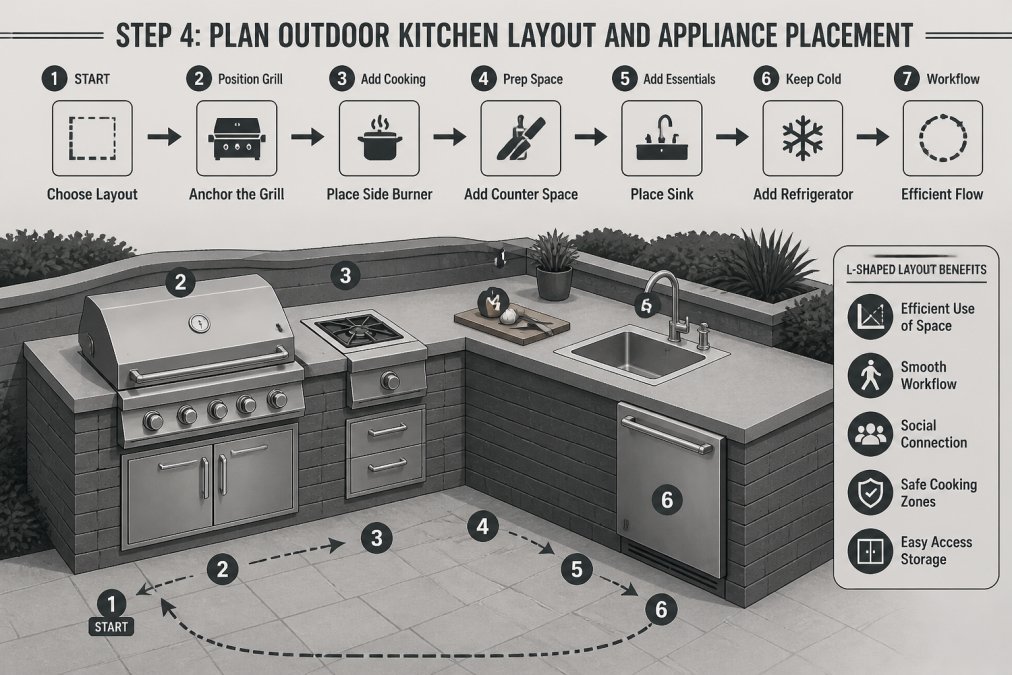
Layout determines whether your outdoor kitchen functions smoothly or creates frustration. Poor placement forces you to walk across the patio for every tool, walk back for ingredients, walk again for plates. Good layout flows like an indoor kitchen.
Built-in Versus Freestanding Appliances
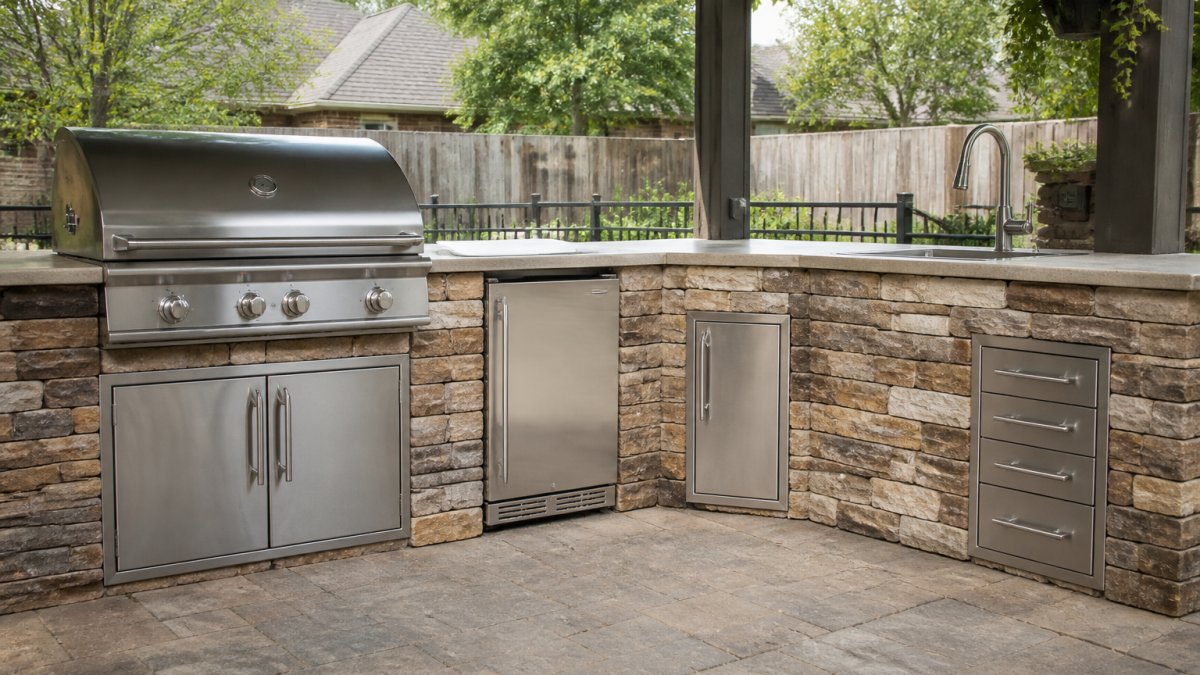
Built-in appliances integrate into permanent counter structures. They look polished, maximize counter space, and create a cohesive design. Built-in installation requires precise planning and professional construction. Changes are expensive.
Freestanding appliances sit on the patio independently. They're flexible, you can rearrange as needs change. They're also less refined aesthetically and consume counter space less efficiently.
Built-in systems suit homeowners who:
- Plan to stay in their home long-term
- Want a finished, designed appearance
- Have a clear vision of their outdoor kitchen
- Are willing to invest in professional installation
Freestanding works for homeowners who:
- Want flexibility and adaptability
- May move or redesign later
- Prefer lower upfront costs
- Like simplicity and portability
Counter Space and Workflow Design
Counter space is always underestimated. Plan for prep space on one side of the grill, serving space on the other.
Workflow follows the natural path: prep → cook → serve. Arrange your appliances to support this flow.
Consider traffic patterns. Your outdoor kitchen shouldn't block the path from house to patio or create bottlenecks during entertaining.
Step 5: Understand Gas and Electrical Requirements
Infrastructure requirements often surprise homeowners. A grill isn't just a grill, it needs fuel supply, electrical power for certain appliances, and proper safety clearances.
Natural Gas Versus Propane Lines
Natural gas connections require a licensed professional to run a line from your home's gas meter to the outdoor kitchen.
Propane uses portable tanks stored nearby. Refills are simple and inexpensive. Propane offers flexibility if natural gas isn't available or if you want to avoid permanent installation.
DFW homes often have natural gas available. Check with your utility company before designing your outdoor kitchen.
Electrical Connections and Safety Codes
Outdoor appliances need dedicated electrical circuits. Pellet grills, outdoor refrigerators, and lighting all require power. Outdoor outlets must be GFCI-protected (Ground Fault Circuit Interrupter) to prevent electrical hazards.
Running electrical lines to your outdoor kitchen requires a licensed electrician. Work must meet local building codes. Permits are typically required. Plan for this cost and timeline during your design phase.
Step 6: Choose Materials That Withstand Regional Climate
DFW summers are brutal. Heat, humidity, and intense sun accelerate rust and material degradation. Your outdoor kitchen appliances must be built to survive our climate, not just look good initially.
Stainless Steel Grades and Rust Resistance
Stainless steel is the standard for outdoor kitchen appliances, but not all stainless steel is equal. Grade matters significantly.
304 stainless steel is common and affordable. It resists rust reasonably well but can show surface corrosion over time in coastal or humid environments.
316 stainless steel includes molybdenum, making it more corrosion-resistant than 304.
For outdoor kitchen appliances in DFW, 304 stainless steel is acceptable.
Humidity, Heat, and Summer Weather Durability
DFW summers combine heat and humidity, a challenging combination for outdoor materials.
Paint and powder coatings fade under intense sun. Cushions and fabrics deteriorate quickly. Hardware corrodes.
Choose appliances designed for outdoor use. Avoid bringing indoor-rated equipment outside.
Maintenance extends lifespan. Regular cleaning, protective covers during off-season, and prompt repair of damage keep your outdoor kitchen looking and performing well for years.
Step 7: Calculate Installation Cost and Budget Planning
Budget planning requires understanding all costs, not just the appliance price tag. Installation, utilities, permits, and structural work add up quickly.
Appliance Costs Versus Installation and Utility Work
Appliance costs are straightforward, the grill, refrigerator, and side burners have published prices. Installation costs vary widely based on your specific situation.
Professional installation includes:
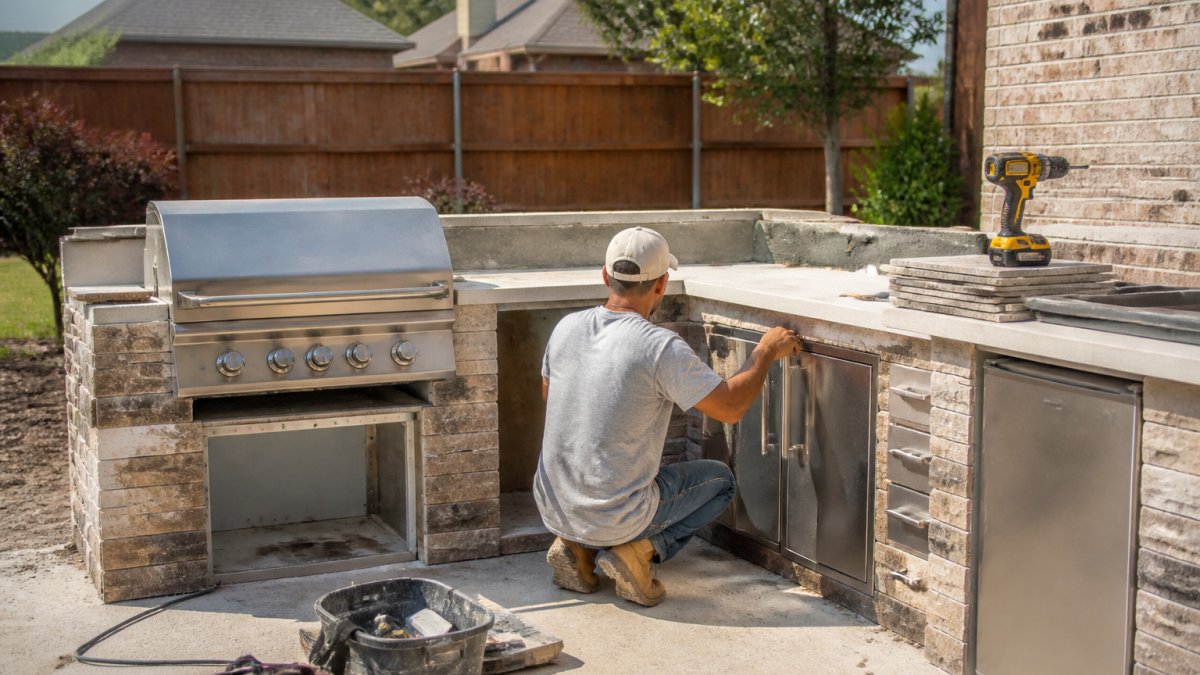
- Structural work (concrete pads, countertops, framing)
- Gas line installation and permits
- Electrical work and permits
- Plumbing for sinks or water features
- Finishing work (tile, stone, sealing)
These costs often exceed appliance costs. A $3,000 grill might require $5,000-$10,000 in installation and infrastructure work. Budget accordingly before committing to specific appliances.
Detailed quotes that break down all costs, including appliances, labor, materials, permits, and timelines, are essential.
Warranties and Long-Term Maintenance Costs
Warranties vary by brand and appliance type. Some cover parts and labor for years.
Factor maintenance into your budget. Stainless steel requires occasional cleaning to prevent staining.
Consider the total cost of ownership, not just the initial price.
Planning your outdoor kitchen appliances requires balancing cooking style, climate realities, and budget constraints.
Frequently Asked Questions
What are the main types of grills I should consider for an outdoor kitchen?
The three primary grill types are gas (offers convenience and consistent heat), charcoal (delivers smoky flavor and traditional cooking), and pellet grills (combine versatility with automated temperature control). Hybrid models combine two fuel types for flexibility. Your choice depends on how often you entertain, what foods you cook most, and whether you prioritize convenience or flavor complexity. Gas is fastest for weeknight meals, while charcoal suits weekend gatherings where flavor matters most.
Do outdoor kitchen appliances need special gas and electrical connections?
Yes. Gas appliances require either a natural gas line from your home or a propane tank setup, both needing proper pressure regulation and safety valves. Electrical appliances like refrigerators, side burners, and lighting need weatherproof outlets installed by a licensed electrician to meet local building codes. All connections must be inspected and approved before use. Working with a professional installer ensures your outdoor kitchen meets safety standards and local utility requirements.
How much space should I leave around an outdoor grill?
Leave at least 3 feet of clearance on all sides of the grill for safe operation and heat dissipation. If your grill is built-in, the counter should extend at least 24 inches on each side for prep space and serving. Overhead clearance of 10 feet minimum is needed if you have a pergola or covered structure to prevent heat buildup and fire hazard. Proper spacing also improves workflow and makes entertaining more comfortable.
What materials hold up best in the regional climate for outdoor kitchen appliances?
Stainless steel is the standard for outdoor kitchens, but grade matters. 304 stainless steel works for most climates, while 316 stainless steel offers superior rust resistance in humid environments and near saltwater. The summer heat and humidity in the region accelerate corrosion, so invest in higher-grade materials if your kitchen stays in direct sun or near landscaping irrigation. Powder-coated steel and aluminum also work if properly sealed, but stainless steel requires less maintenance long-term.