 How-to
Benefits of Installing Geogrid in Clay Soil
Last Updated: November 10, 2026
Quick Summary
The benefits of installing geogrid in clay soil are higher bearing capacity, less settlement and fewer ruts under repeated use. Geogrid is a polymer grid laid in layers within the fill, locking aggregate together and carrying tensile force that wet clay cannot hold alone. It works best when paired with proper drainage and compaction.
- Clay soil moves: it swells when wet and shrinks when dry, and loses strength under weight.
- Geogrid is laid in layers, with compacted fill placed over each layer before the next goes on.
- Clean, free-draining aggregate works better than native clay as backfill behind a wall.
- Geogrid reinforces the fill and base but does not stop shrink-swell movement in the underlying clay.
- A site assessment covering water flow, clay depth and expected loads should come before choosing geogrid.
Table of Contents
- Why Clay Soil Needs Reinforcement
- How Geogrid Reinforces Clay Soil
- Key Benefits of Geogrid in Clay: Bearing Capacity, Settlement and Rutting
- Geogrid Placement Behind Retaining Walls in Clay
- Geogrid Backfill for Clay Soil: Material and Drainage Choices
- Retaining Wall Drainage in Clay Soil and Geogrid Installation Steps
- Limitations, Failure Risks, and Assessing Your Site Before Installing Geogrid
- Scheduling Your Clay Soil Reinforcement Project With Moises Pizana Hardscapes
- Frequently Asked Questions
Why Clay Soil Needs Reinforcement
Benefits of installing geogrid in clay soil start with one problem: clay moves. Retaining walls, driveways and patios in the Dallas-Fort Worth area are often built on clay, which is the soil this type of hardscape frequently sits on. When water sits in it, clay swells, and when it dries, it shrinks.
Clay soil has low strength when wet and tends to lose it fast under weight. That is why a patio or driveway set directly on native clay can crack, sink or heave over time. Reinforcement spreads the load and keeps the base from breaking apart.
How Geogrid Reinforces Clay Soil
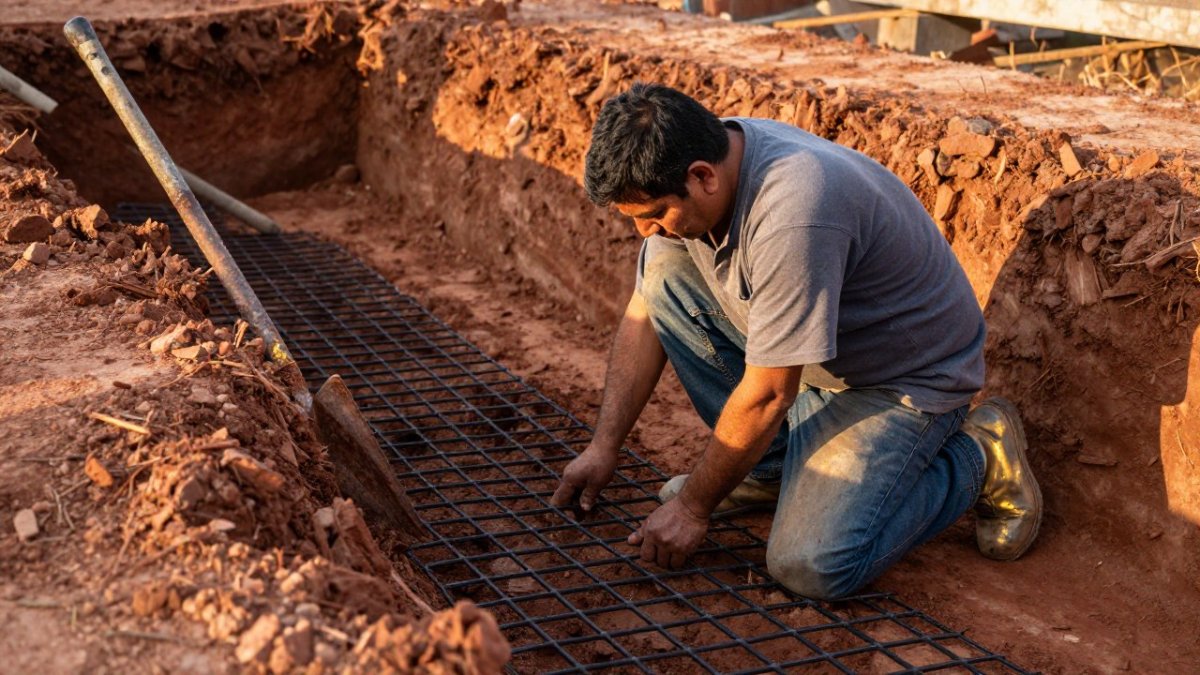
Geogrid is a polymer grid laid inside the fill. Aggregate locks into its openings, and the grid carries tensile force that the soil alone cannot hold. The result is a reinforced layer that acts as one stable mass instead of loose material. By helping the aggregate hold together, geogrid stabilizes the layer, while sound drainage remains essential in clay soil, a concern Perfect Green Landscapes also addresses.
Think of it like rebar in concrete. The soil handles compression, and the geogrid handles the pulling forces. Together they resist the sideways spreading that causes clay base failure.
Key Benefits of Geogrid in Clay: Bearing Capacity, Settlement and Rutting
The main gains from geogrid in clay come down to three things:
- Higher bearing capacity: The base can carry heavier loads without punching into the clay.
- Less settlement: Surfaces sink less over time because the load spreads across a wider area.
- Fewer ruts: Vehicles and equipment leave a flatter surface, with less deformation under repeated use.
Results depend on soil conditions and design, so a site-specific assessment is the best way to confirm the right specification for your lot.
Geogrid Placement Behind Retaining Walls in Clay
Placement matters as much as the product. Geogrid goes in layers, each rolled out flat and pinned so it stays taut, with fill compacted over it before the next layer goes on. The grid must extend well back into the soil behind the wall so the reinforced zone holds the wall in place.
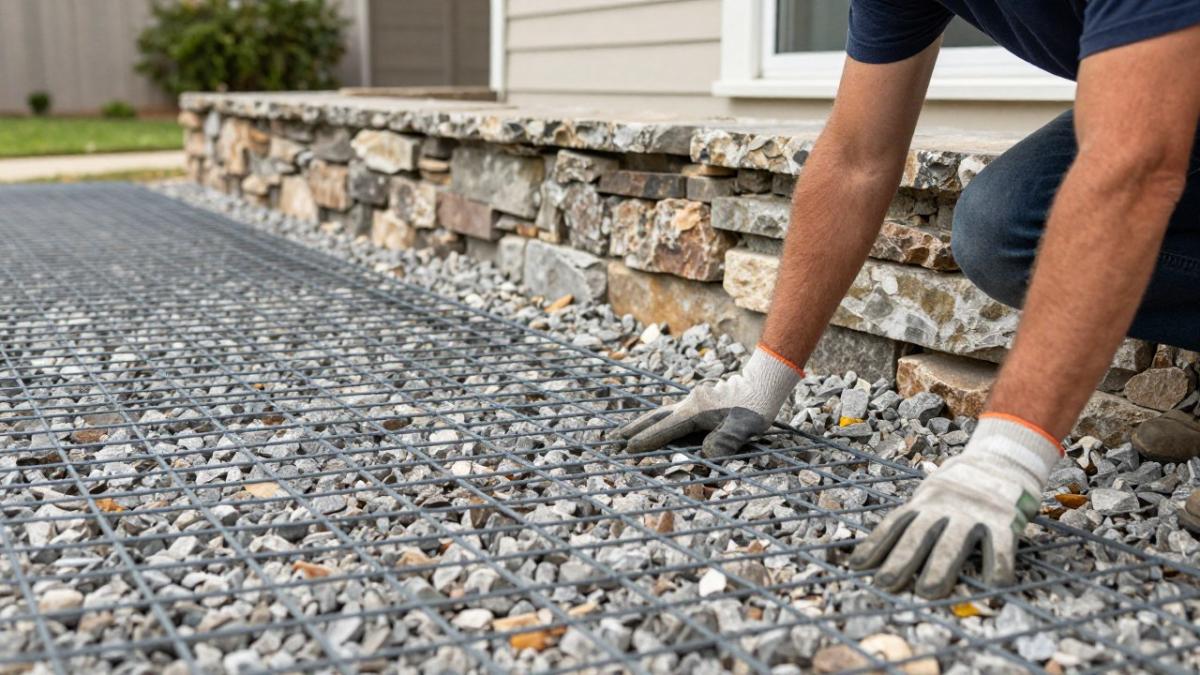
Watch out: laying geogrid with wrinkles or gaps lets the soil move around it, which defeats the purpose.
Geogrid Backfill for Clay Soil: Material and Drainage Choices
The fill you choose is as important as the grid. Clean, free-draining aggregate works best because it does not hold water the way native clay does. Clay soil itself is a poor backfill choice behind a wall.
Drainage paths keep water from building pressure behind the reinforced zone. A well-graded aggregate with a clear route for water to exit gives the system its best chance to last.
Retaining Wall Drainage in Clay Soil and Geogrid Installation Steps
Clay's low permeability means water moves through it slowly, so water that reaches a wall or base tends to collect at the back of the reinforced zone. Our guide on why retaining wall drainage in clay soil is critical explains the reasons in more depth. Drainage is therefore part of the reinforcement design, not an afterthought. Before any geogrid goes down, decide where water will leave the system. A common pattern is a perforated drain pipe at the base of the wall or along the low edge of a slab, wrapped in filter fabric and bedded in clean gravel, with a clear outlet to daylight or a storm connection.
The installation sequence below reflects the order most crews follow on clay sites:
- Excavate and check grade. Dig to the design depth, remove soft or organic material, and confirm the base slopes toward the drain outlet.
- Proof-roll the native clay. Compact the exposed subgrade and note any soft spots. Soft spots usually need over-excavation and replacement with compacted granular fill before reinforcement begins.
- Place the granular base and drain. Set the drain pipe and surround it with gravel, then cover the gravel with a separation layer if fines from the clay could migrate into it.
- Roll out the first geogrid layer. Lay the grid with the strongest direction (the roll direction for most products) running perpendicular to the wall face. Keep it flat with no wrinkles, and pin it at intervals so it stays taut while fill is placed.
- Overlap and anchor the grid. Where two sheets meet, overlap them by the length the manufacturer specifies, and extend the grid back into the reinforced zone by the design embedment length. Junctions and overlaps are weak points if they are left loose.
- Place and compact aggregate in lifts. Spread free-draining aggregate in thin lifts, compact each lift before adding the next, and keep the grid taut throughout. Heavy compaction equipment should stay off unfilled grid.
- Repeat up to design height. Continue alternating grid and compacted fill, checking the drain outlet stays clear as the wall rises.
| Step | Purpose | Key Check |
|---|---|---|
| Base prep | Solid, level foundation | Compacted, level, sloped to outlet |
| Drain and gravel | Relieve water pressure | Outlet clear and daylighted |
| Geogrid layer | Load reinforcement | Flat, taut, correct orientation |
| Overlap and anchor | Continuous reinforcement | Overlap and embedment met |
| Aggregate fill | Free-draining reinforced mass | Compacted in thin lifts |
Limitations, Failure Risks, and Assessing Your Site Before Installing Geogrid
Geogrid reinforces the granular fill and the base it sits in (Chapter 7 (continued) - NHI-05-037 - Geotech - Bridges & Structures). It does not change the clay underneath, and it does not stop clay from shrinking and swelling with moisture. That distinction explains most of the failures seen on clay sites.
The main failure modes are:
- Shrink-swell movement in the subgrade. Clay that wets and dries repeatedly can heave or settle beneath a reinforced base. Geogrid spreads load but cannot prevent the underlying volume change, so moisture control around the perimeter still matters.
- Poor drainage. If water cannot exit the reinforced zone, pressure builds behind walls and the base stays saturated. Reinforcement in saturated clay performs far below its design.
- Wrong product or insufficient strength. A grid with too little tensile strength or stiffness for the design load will deform, and weak junctions can separate under repeated loading.
- Skipped compaction or poor placement. Loose fill, wrinkles, and short embedment lengths allow soil to move around the grid, which defeats its purpose.
- Unsuitable subgrade. Very soft or organic clay may need over-excavation and replacement before reinforcement is worthwhile.
Before committing to geogrid, a site assessment should answer these questions:
- How does water move across the lot? Note slopes, low spots, downspouts, and where water pools after rain.
- How deep is the clay, and how soft is it? Probe or test the subgrade to see whether it can support construction equipment and whether it needs replacement.
- What loads will the finished surface carry? Foot traffic, passenger vehicles, delivery trucks, and heavy equipment call for very different grid strengths and base depths.
- What is the project type? A retaining wall, driveway, and patio each have different embedment, drainage, and tolerance requirements.
- Would another method fit better? Depending on the answers, soil replacement, a geotextile separator alone, or a thicker aggregate base may be more appropriate, and sometimes the right answer is a combination.
The answers to these questions, rather than the benefits of geogrid in general, decide whether reinforcement is the right choice for a given clay site. For a broader walkthrough, see our guide to fixing backyard drainage problems. A qualified engineer or experienced contractor can turn those answers into a specification.
Scheduling Your Clay Soil Reinforcement Project With Moises Pizana Hardscapes
If your yard has clay soil, a cracked patio or a wall that is starting to lean, the next step is a site review. You can view our retaining wall installation services in Grapevine and Dallas to see the work we do locally. Moises Pizana Hardscapes performs the work with our own equipment and crew and does not subcontract the work. Learn more about durable retaining wall installation services before you book. Pricing depends on the size and scope of your project, so contact us for a quote tailored to your lot.
Frequently Asked Questions
Do geogrids actually work in clay soil?
Yes, when they are designed and placed correctly. Geogrid is a polymer grid that interlocks with aggregate and spreads loads over a wider area, which reduces rutting and settlement in soft or expansive clay. Results depend on the geogrid strength, the aggregate thickness above it, and how well the clay drains. Geogrid cannot fix standing water or a poorly compacted base on its own, so drainage and compaction still need to be addressed. A site assessment before installation tells you whether reinforcement alone will be enough for your project.
Where should geogrid be placed in a clay-soil retaining wall?
Geogrid is typically placed in horizontal layers within the backfill behind the wall, extending into the reinforced zone at set vertical intervals. The layers are laid perpendicular to the wall face and anchored by the weight of the backfill above them. The exact spacing and embedment length depend on wall height, soil strength and the design load, so the layout should follow an engineered plan. Placing the layers at the wrong elevation or with too little embedment is a common cause of wall movement.
What type of backfill should be used with geogrid in clay soil?
Granular backfill such as well-graded crushed stone or gravel is generally preferred over native clay for the reinforced zone. Granular material interlocks with the geogrid, drains better and compacts more predictably than clay. Native clay can be used in some situations, but it typically needs to be tested and may require additional drainage. Compact each lift in thin layers so the geogrid and backfill work together as intended.
How is geogrid installed behind a retaining wall?
Installation generally follows these steps: prepare and compact the subgrade, set the wall blocks or panels to the first course, lay the geogrid at the specified elevation and extend it into the backfill, pin it in place, then place and compact the backfill in thin lifts before adding the next course. Keep the geogrid flat and free of wrinkles, and avoid driving heavy equipment directly on it. Follow the manufacturer and engineer's spacing and embedment specifications throughout.