 how-to
How Do You Choose the Right Landscape Contractor for Erosion Repair?
Last Updated: October 25, 2026
Quick Summary
A landscape contractor erosion repair specialist must understand drainage, soil mechanics, and erosion control methods specific to your property's conditions. Choosing the right contractor requires vetting their experience with erosion projects, asking about their assessment process, and verifying they don't rely on one-size-fits-all solutions.
- Ask contractors how many erosion repair projects they've completed and request their process for assessing properties before recommending solutions.
- Qualified contractors work with multiple erosion control methods including retaining walls, drainage systems, and soil stabilization tailored to your yard.
- Request references and portfolio photos of completed erosion repair projects in your area from contractors confident in their work.
- Thorough estimates should detail site assessment findings, specific methods with dimensions, materials lists, labor timeline, drainage plans, and warranty terms.
- Red flags include vague assessments, one-size-fits-all recommendations, no drainage plan, unwillingness to provide references, and pressure to decide quickly.
Table of Contents
- Why Erosion Repair Requires a Qualified Landscape Contractor
- Essential Questions to Ask Before Hiring a Landscape Contractor
- Understanding Erosion Control Methods for Residential Yards
- Building Your Landscape Contractor Estimate Checklist
- What to Expect: Erosion Repair Cost and Budget Planning
- Red Flags: Signs of an Unprepared or Inexperienced Contractor
- Getting Your Erosion Repair Project Started
- Frequently Asked Questions
Why Erosion Repair Requires a Qualified Landscape Contractor
Erosion doesn't announce itself. One season of heavy rain exposes the problem: soil washing away, foundation settling, patios cracking. At that point, you need more than a handyman with a shovel. You need someone who understands drainage, soil mechanics, and the specific methods that actually stop erosion long-term. Hiring a landscape contractor erosion repair specialist is fundamentally different from hiring one for aesthetic upgrades. The stakes are higher. A poor installation won't just look bad, it can fail, leading to repeat damage and wasted money.
The difference between a contractor who can handle erosion repair and one who cannot comes down to experience and methodology. Many contractors excel at patios and walkways but lack the expertise to diagnose erosion problems and implement solutions that address root causes. We don't subcontract the work, which means our crew understands every phase of the job, from initial site assessment to long-term performance.
Erosion repair requires technical knowledge. Your contractor needs to evaluate water flow patterns, soil composition, and structural load. They need to know which erosion control methods work for your specific yard conditions. A retaining wall installed incorrectly becomes a liability. Drainage solutions that don't account for your property's slope will fail during the next heavy rain. This is why vetting your contractor matters more for erosion repair than for most other landscape projects.
Essential Questions to Ask Before Hiring a Landscape Contractor
Before you commit to any landscape contractor erosion repair professional, you need answers to specific questions. These aren't polite conversation starters, they're diagnostic questions that reveal whether the contractor understands the work.
Ask about their experience with erosion specifically. How many erosion repair projects have they completed? Can they describe their process for assessing a property before recommending solutions? A qualified contractor won't just show up and suggest a retaining wall.
Ask what erosion control methods they typically recommend. Do they work with retaining walls, drainage systems, soil stabilization, or all three? Different properties need different approaches.
Ask for references and portfolio work in your area. Request photos of completed erosion repair projects. Better yet, ask for contact information from homeowners whose properties had similar erosion challenges.
Ask about their crew and equipment. Will the same crew that starts your project finish it? Do they own their equipment or rent it? Contractors who own equipment and maintain a stable crew typically deliver more consistent results.
Ask about timeline and weather contingencies. How long will the project take? What happens if rain delays the work? Erosion repair often involves foundation work that can't proceed in certain weather conditions.
Ask about warranty and follow-up. What guarantee does the contractor offer on their work? Will they return to assess the installation after the first heavy rain?
Understanding Erosion Control Methods for Residential Yards
Erosion repair isn't one-size-fits-all. Different yards need different solutions depending on slope, soil type, water flow patterns, and the severity of existing damage. Understanding the main erosion control methods helps you evaluate whether your contractor is recommending the right approach for your property.
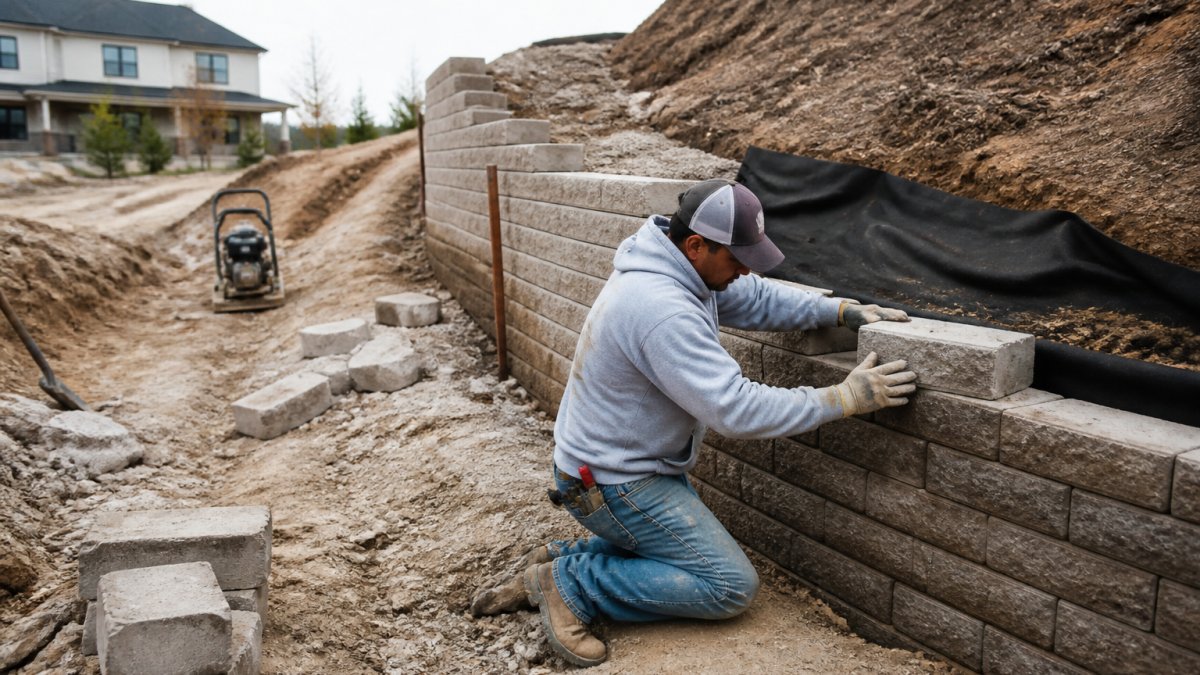
Retaining walls are among the most common erosion control solutions for residential yards. They hold soil in place on slopes and prevent water from washing soil away during heavy rain. A properly constructed retaining wall also manages water flow, directing it away from vulnerable areas.
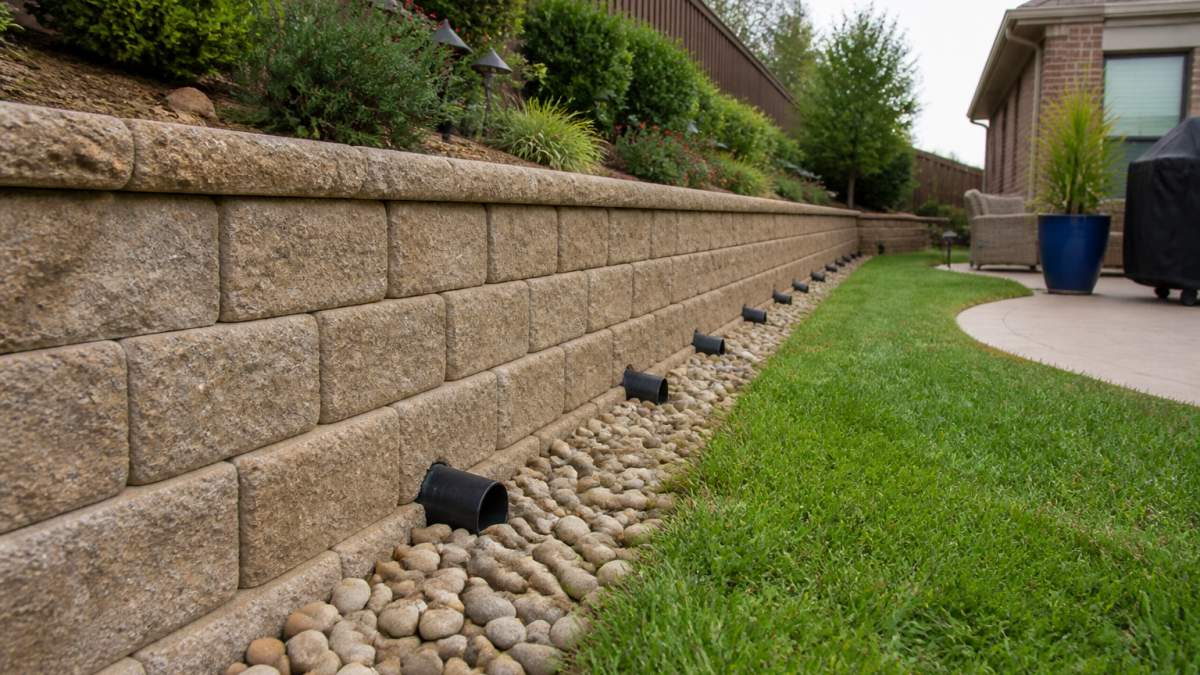
Drainage systems address the root cause of many erosion problems: water pooling and running downhill uncontrolled. French drains, swales, and grading adjustments redirect water away from vulnerable areas.
Soil stabilization uses various techniques to bind soil and prevent erosion. Erosion control blankets, hydroseeding, and vegetation establishment all work to hold topsoil in place. These methods are often used alongside structural solutions like retaining walls.
Combination approaches are often the most effective. A slope might need a retaining wall at the base, drainage management at the top, and vegetation to stabilize the remaining soil.
Building Your Landscape Contractor Estimate Checklist
A thorough estimate for erosion repair should include specific details, not just a total price. Use this checklist to evaluate whether your contractor's estimate shows they understand the scope of work.
| Estimate Component | What to Look For | Why It Matters |
|---|---|---|
| Site assessment | Detailed description of erosion damage and cause | Shows contractor evaluated the problem, not just the symptoms |
| Solution breakdown | Specific methods (retaining wall, drainage, etc.) with dimensions | Clarifies what work will be done and how |
| Materials list | Specific materials, quantities, and grades | Prevents surprises and ensures quality standards |
| Labor and timeline | Days required, crew size, start and end dates | Helps you plan and verify realistic scheduling |
| Drainage plan | How water will be managed during and after | Critical for erosion repair success |
| Warranty terms | What's covered and for how long | Protects your investment |
| Contingency notes | Weather delays, potential site complications | Shows realistic planning |
An estimate that's vague ("Erosion repair and retaining wall: $X") tells you the contractor hasn't done detailed planning. A thorough estimate that breaks down materials, labor, and specific methods tells you they've thought through the work. When comparing estimates from different contractors, detailed breakdowns make it easier to understand what you're actually paying for.
What to Expect: Erosion Repair Cost and Budget Planning
Erosion repair costs vary widely based on the scope of work, your property size, and the methods required. Rather than guessing at a budget, focus on understanding what drives costs so you can make informed decisions.
The primary cost drivers are the erosion control methods you need. A simple grading adjustment costs far less than a retaining wall installation. A drainage system adds cost but prevents future erosion damage. Most erosion repair projects involve multiple methods working together, which is why estimates vary so much from property to property.
Labor typically represents a significant portion of erosion repair costs. A cheaper contractor might take longer, use less durable materials, or skip important steps like proper drainage installation. How to Calculate Retaining Wall Cost Per Linear Foot helps you understand pricing for one of the primary erosion control methods.
Site conditions affect cost. If your yard is difficult to access, equipment costs rise. If soil conditions are poor, additional stabilization might be needed. If existing structures are close to the erosion area, work becomes more complex. A contractor who factors these complications into their estimate is being realistic about the work.
Get multiple estimates, but don't choose based on price alone. The cheapest estimate might skip critical steps or use lower-quality materials. The most expensive might include unnecessary work. Compare estimates based on the methods proposed, materials specified, and warranty offered.
Red Flags: Signs of an Unprepared or Inexperienced Contractor
Some contractors present themselves as capable of erosion repair when they lack the specific expertise. Learning to spot red flags early saves you time and money.
Vague assessment. If a contractor walks your yard for 10 minutes and immediately recommends a solution without asking detailed questions, they're not diagnosing the problem, they're selling a standard solution. Erosion repair requires understanding why erosion is happening on your property specifically.
One-size-fits-all recommendations. A contractor who recommends the same solution for every property hasn't adapted their approach to different conditions. Different slopes, soil types, and water patterns need different solutions.
No drainage plan. Erosion repair that ignores water management will fail. If a contractor's estimate doesn't detail how water will be managed, they're missing a critical component.
Unwillingness to provide references. A contractor confident in their work has satisfied customers willing to vouch for them. If they deflect when asked for references or portfolio work, question why.
Subcontracting everything. Some contractors take jobs and outsource all the work to subcontractors. This creates accountability gaps. If something goes wrong, it's unclear who's responsible. We handle our own work with our own crew.
No warranty or unclear terms. Erosion repair success is measured over time. A contractor who won't guarantee their work for at least a year is signaling they don't have confidence in their installation. Clear warranty terms protect you.
Pressure to decide quickly. Legitimate contractors understand you're making an important decision. If someone pushes you to commit immediately, that's pressure you don't need. Take time to compare options and ask questions.
Getting Your Erosion Repair Project Started
Once you've selected a landscape contractor for erosion repair, the next step is moving from estimate to execution. Clear communication at this stage prevents misunderstandings later.
Confirm the scope of work in writing. The contract should detail exactly what will be done, what materials will be used, when work will start and end, and what happens if conditions change. Don't rely on verbal agreements.
Discuss site access and logistics. Where will equipment be staged? How will the contractor protect existing landscaping or structures? What's the plan if weather delays the work? These details matter for smooth execution.
Ask about inspections and checkpoints. Will the contractor show you the work at key phases? For erosion repair, inspections matter because you need to verify that drainage is installed correctly and that the foundation is properly prepared before visible work begins.
Best Hardscape Contractors in DFW: 2026 Guide helps you evaluate contractor credentials and track record. Use it to verify your selection before signing a contract.
When you're ready to move forward, Hire Residential Homes Hardscape Designer connects you with our team at Moises Pizana Hardscapes. We'll assess your erosion challenges, recommend the right combination of solutions, and execute the work with our own crew and equipment. Our experience with erosion repair in residential yards means we understand the specific conditions and challenges your property faces.
Frequently Asked Questions
What should I ask a landscape contractor about erosion repair?
Ask about their experience with erosion repair projects, the specific methods they recommend for your property, how they diagnose the root cause of erosion, their timeline and crew size, warranty or guarantee on their work, and whether they handle permits. Request references from similar projects and ask if they can explain why erosion is occurring on your property before proposing a solution.
What erosion control methods work best for residential yards?
Common methods include retaining walls to stabilize slopes, French drains to redirect water away from problem areas, grading adjustments to improve surface drainage, erosion control blankets on bare soil, and vegetation or mulch to hold soil in place. The best solution depends on your yard's slope, soil type, water flow patterns, and the severity of erosion. A qualified contractor will assess these factors and recommend the most effective approach.
How much should I expect to pay for erosion repair?
Erosion repair costs vary widely based on the scope of work, the methods required, your yard's size and slope, soil conditions, and local labor rates. Factors like retaining walls, drainage systems, and grading adjustments each affect the final price. Request detailed estimates from contractors and compare what's included. Ask for a breakdown of labor, materials, and equipment costs to understand what you're paying for.
How long does professional erosion repair typically take?
Timeline depends on the project scope. Simple grading and drainage fixes may take a few days, while retaining wall construction or comprehensive erosion control systems can take one to three weeks or longer. Weather, soil conditions, and permit requirements also impact duration. A reputable contractor will provide a realistic timeline upfront and explain any factors that could cause delays.
Erosion repair is an investment in your property's stability and value. Choosing the right landscape contractor makes the difference between a solution that lasts and one that fails after a few seasons. Take time to ask the right questions, understand the methods being proposed, and verify that your contractor has genuine experience with erosion repair. The clarity you gain during the selection process translates directly into a better project outcome.