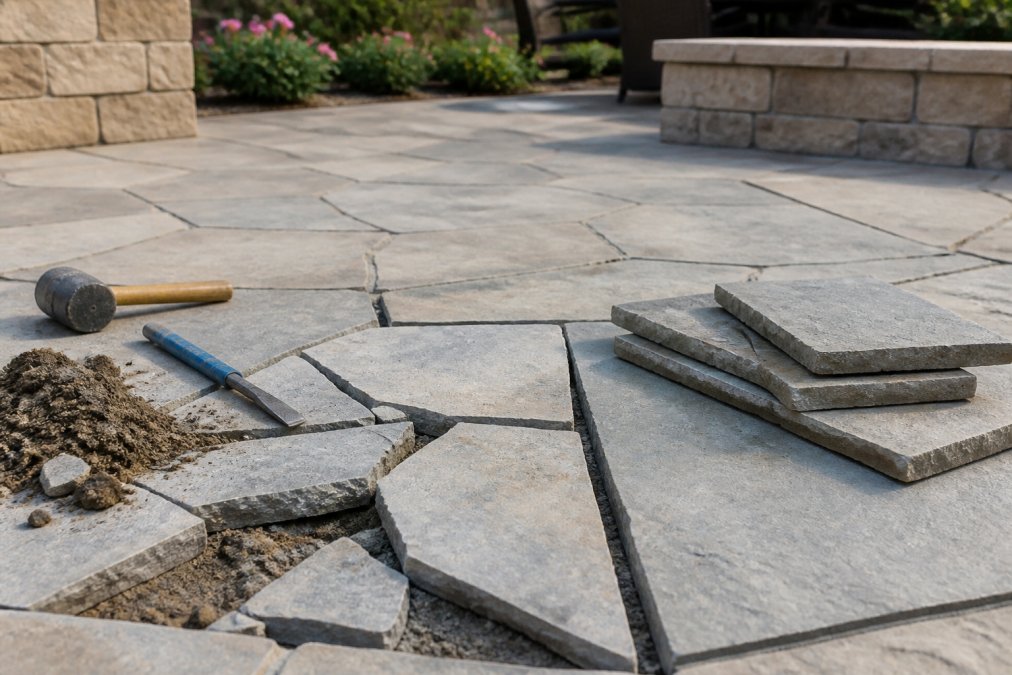
 comparison
Repairing Cracked Patio Stones vs Replacing: 2026 Guide
Table of Contents
- Signs of Patio Foundation Failure vs. Cosmetic Damage
- Common Causes Behind Repairing Cracked Patio Stones
- Best Filler for Patio Stone Cracks: Products That Actually Work
- Repair vs. Replacement: A Clear Decision Framework
- Cost to Replace Patio Pavers vs. Patching: A Realistic Breakdown
- DIY Repair vs. Professional Installation: Where the Line Is
- Material-Specific Nuances When Repairing Cracked Patio Stones
- Frequently Asked Questions
Last Updated: August 11, 2026
Repairing cracked patio stones vs replacing them is one of the most common dilemmas homeowners face after a rough winter or heavy foot traffic. At Moises Pizana Hardscapes, we've assessed hundreds of patios across the DFW area and the answer is rarely obvious from the surface. A minor-looking crack can signal a failing sub-base, while an alarming one might be purely cosmetic. Getting this wrong costs money: over-repair a structural problem and you're back to square one within two seasons; replace a patio that only needed filler and you've spent far more than necessary.
Below, we'll walk through how to read your patio's damage, which products work for repairs, and when replacement is the smarter investment.
Signs of Patio Foundation Failure vs. Cosmetic Damage
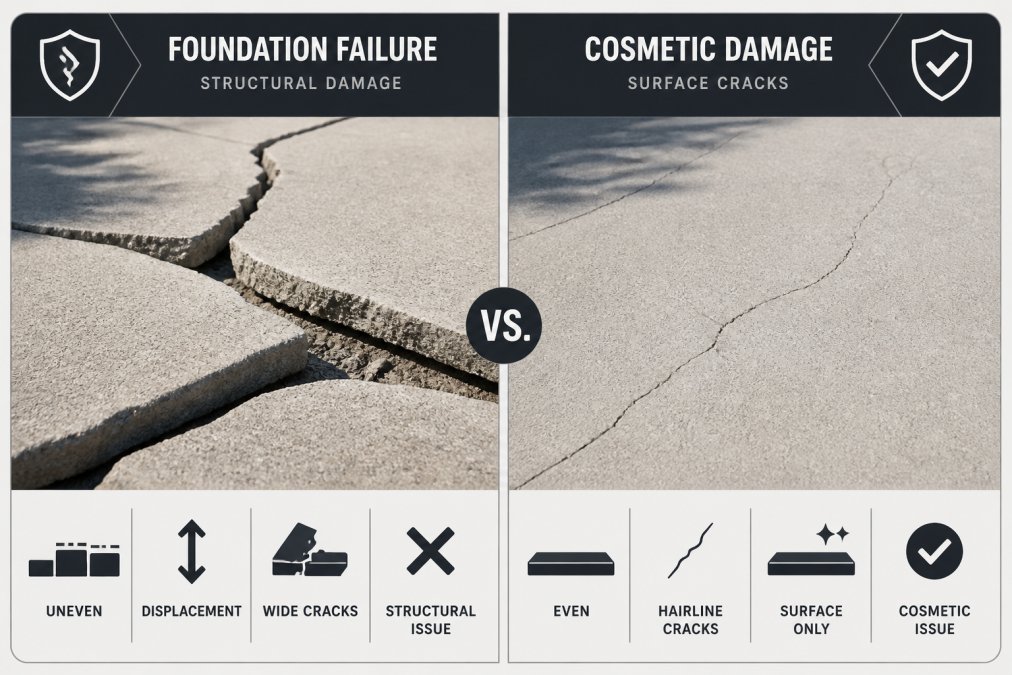
The most important skill in this decision is distinguishing surface degradation from structural failure. These are not the same thing, and treating them as such is the single most expensive mistake homeowners make.
Cosmetic damage is confined to the surface layer and doesn't affect load-bearing capacity. Structural failure originates from or has compromised the sub-base, base layer, or concrete slab itself.
What Hairline Cracks and Surface Degradation Actually Mean
Hairline cracks are narrow fractures, typically less than 1/16 inch wide, that run along the surface without penetrating deeply. They're extremely common in concrete slabs and usually result from normal curing shrinkage, minor thermal expansion, or light weathering. Surface degradation such as spalling, pitting, or color fading also falls into the cosmetic category.
The key test: press a screwdriver tip gently into the crack. If it doesn't penetrate more than a quarter inch and the surrounding material feels solid, you're dealing with a surface issue. These are strong candidates for patching.
Red Flags That Point to Sub-Base or Structural Problems
The following signs indicate that the problem lies beneath the surface:
- Displacement between sections: Adjacent pavers or slab sections sitting at different heights means the sub-base has shifted.
- Cracks wider than 1/2 inch: Wide cracks typically mean the slab has moved, not just shrunk.
- Cracks that run in a pattern: Diagonal cracks radiating from corners or mirroring tree roots point to foundation shifting or soil erosion.
- Spongy or hollow feel underfoot: A hollow sound when tapped means the base layer has separated from the slab.
- Water pooling after rain: Drainage issues that redirect water under the patio accelerate sub-base erosion.
If two or more of these signs appear together, patching the surface won't solve the problem. The sub-base needs attention first.
Common Causes Behind Repairing Cracked Patio Stones
Understanding why cracked patio stones fail determines whether a repair will hold or whether you'll face the same problem in 18 months.
Freeze-Thaw Cycles, Settling, and Drainage Issues
The freeze-thaw cycle is one of the most destructive forces on outdoor hardscape. Water infiltrates hairline cracks, freezes, expands, and forces the crack wider. Repeat this dozens of times over a single winter and a minor surface crack becomes structural. According to Portland Cement Association guidance on concrete durability, water infiltration during freeze-thaw cycles is a leading cause of accelerated concrete deterioration in residential applications.
Settling is a related issue. All soil compacts over time, especially in clay-heavy areas or with poor drainage. As soil beneath the patio shifts, the slab or pavers lose uniform support and crack under their own load. Drainage problems compound this: water pooling against or beneath a patio softens soil, accelerates erosion, and destabilizes sub-base compaction.
Contractor Error and Sub-Base Compaction Failures
A large percentage of premature patio failures trace back to the original installation, not the material or weather.
Inadequate sub-base compaction is the most common contractor error. If the base layer of crushed stone wasn't compacted to the correct density before pavers or concrete were placed, settling is inevitable. Rebar placement errors, insufficient joint stabilization, and improper slope for drainage are all installation failures that show up as cracking two to five years later.
Installation quality matters as much as material quality. A patio built on a properly compacted, well-drained base will outlast a premium-material patio built on a rushed sub-base by a decade or more.
Best Filler for Patio Stone Cracks: Products That Actually Work
Choosing the right repair product depends on the material and crack width. Using the wrong product is almost as bad as doing nothing.
Here's a practical breakdown:
| Crack Type | Material | Recommended Product | Best For |
|---|---|---|---|
| Hairline to 1/2 inch | Concrete slab | QUIKRETE Concrete Repair | DIY minor repairs |
| Up to 1/2 inch wide | Concrete slab | SAKRETE Concrete Crack Filler | Flexible, water-resistant seal |
| Horizontal expansion joints | Concrete slab | Sikaflex Self-Leveling Sealant | Self-leveling, paintable finish |
| Paver joints (1/16" to 4") | Interlocking pavers | Techniseal HP NextGel Jointing Sand | Joint stabilization, weed resistance |
Polymeric Sand for Interlocking Pavers
Polymeric sand is the correct solution for joint stabilization in interlocking paver systems. It fills joints between pavers and, when activated with water, hardens into a firm but slightly flexible bond that resists weeds, insects, and erosion.
Techniseal HP NextGel Jointing Sand uses NextGel technology that produces no dust or haze during application. It handles joints from 1/16 inch to 4 inches wide and is available in several colors to match existing stone. Once polymeric sand sets, removing individual pavers for sub-base repairs becomes more difficult. Apply it only after confirming the base is solid.
Concrete Crack Fillers and Sealants for Slabs
For concrete slabs, two products stand out for DIY repairs:
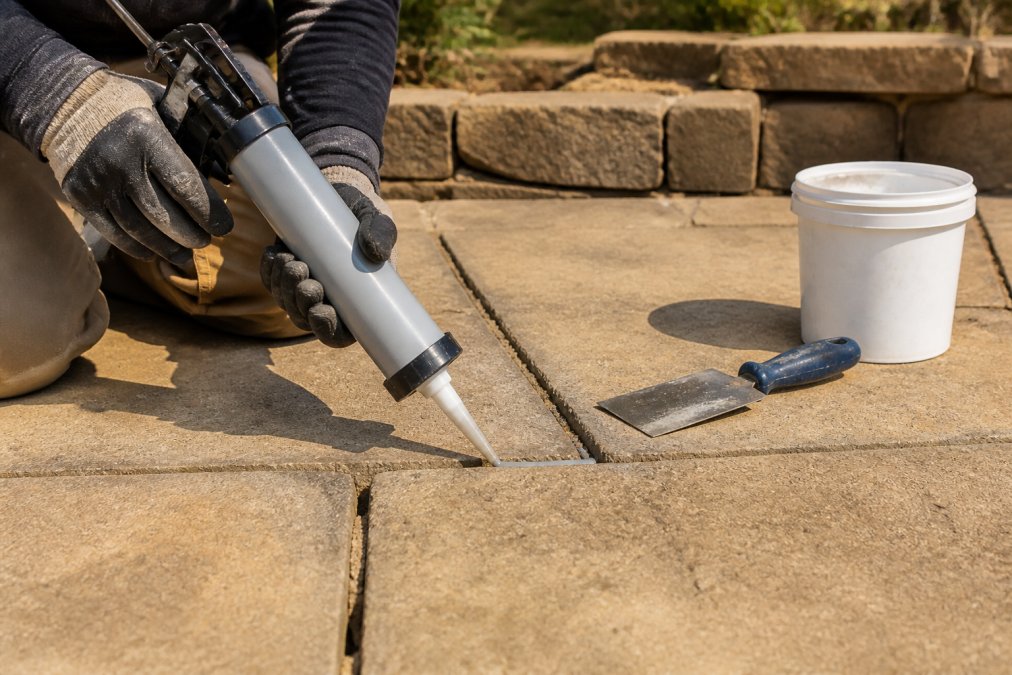
QUIKRETE Concrete Repair is an acrylic latex compound that handles cracks up to 1/2 inch wide. It dries to a tough, flexible finish, resists water and ice damage, and can be painted once cured.
SAKRETE Concrete Crack Filler is a pourable polymer-based product for cracks up to 1/2 inch wide and 1/4 inch deep. It's traffic-ready within an hour and fully cured within a day. Its flexibility helps prevent re-cracking when the slab experiences minor movement.
For horizontal expansion joints, Sikaflex Self-Leveling Sealant is the professional-grade choice. It's a single-component polyurethane sealant that pours into the joint and levels itself, producing a permanently elastic seal. Full cure takes 3 to 5 days.
Repair vs. Replacement: A Clear Decision Framework
The decision between repairing and replacing comes down to four factors: the origin of the damage, the extent of affected area, the age of the installation, and long-term cost-benefit.
Use this framework before committing to either path:
| Factor | Repair | Replace |
|---|---|---|
| Damage origin | Surface only (weathering, shrinkage) | Sub-base failure, soil erosion, or foundation shifting |
| Affected area | Less than 25% of total surface | More than 30% of total surface |
| Installation age | Under 10 years, properly installed | Over 15 years or poorly installed from the start |
| Crack width | Under 1/2 inch, stable | Over 1/2 inch, widening, or displaced |
| Drainage | No standing water issues | Persistent pooling or sub-base saturation |
If two or more columns in the "Replace" column apply to your patio, patching is a temporary fix. You're delaying an inevitable replacement, not preventing it.
Replacing a concrete slab generates significant material waste, and concrete production is energy-intensive. If structural integrity permits, a well-executed repair is the more environmentally responsible choice. Paver restoration is highly sustainable: individual pavers can be extracted, the sub-base re-compacted, and the original material re-laid without new material production.
Cost to Replace Patio Pavers vs. Patching: A Realistic Breakdown
DIY crack repair for a small concrete slab typically involves modest material investment. Professional patching for larger areas costs more but includes proper surface preparation, which dramatically affects repair longevity.
Full replacement carries a significantly higher price tag, covering material removal, sub-base preparation, new materials, and professional installation labor. For an accurate figure, a contractor quote is the only reliable source.
Long-Term ROI: Which Option Adds More Home Value
A patched patio showing visible repair lines and mismatched aggregate does not add curb appeal. It signals deferred maintenance to buyers. A properly replaced or restored patio is a genuine value driver.
According to National Association of Realtors' Remodeling Impact Report, outdoor living improvements consistently rank among the top projects for cost recovery at resale. A new patio installation recovers a meaningful portion of its cost in increased home value, and aesthetic repair removes a negotiating point buyers would otherwise use to lower their offer.
The long-term ROI calculation is straightforward: if a repair holds for two to three years before failing, and replacement would have held for twenty, you've paid for both. Do the math before committing to the patch.
DIY Repair vs. Professional Installation: Where the Line Is
Most homeowners can handle surface crack repair. Applying QUIKRETE or SAKRETE to hairline cracks in a concrete slab is straightforward: clean the crack, apply the product, smooth, and allow to cure. Polymeric sand replacement in a paver patio is also within DIY range, provided the pavers haven't shifted and the sub-base is intact.
Call a professional when:
- The sub-base needs re-compaction. This requires plate compactors and expertise to achieve correct density.
- Pavers need extraction and re-leveling. Removing and resetting pavers without disturbing adjacent sections requires experience.
- Drainage correction is needed. Regrading the sub-base slope to redirect water is not a surface-level repair.
- More than 25% of the surface is affected. Professional installation is more cost-effective at this scale.
- The slab requires structural patching compound or rebar repair. These are not consumer-grade tasks.
A common mistake is underestimating surface preparation. Professional-grade repairs bond to clean, dry, properly prepared surfaces. Skipping this step is why many DIY repairs fail within a season.
As documented in the Interlocking Concrete Pavement Institute's installation guidelines, proper base preparation accounts for the majority of a paver system's long-term performance.
Material-Specific Nuances When Repairing Cracked Patio Stones
Not all patio materials fail or repair the same way.
Concrete slabs crack in predictable patterns tied to joint placement and rebar layout. Surface crack repairs are straightforward, but full slab replacement is needed when cracks travel through the full depth or sections have displaced vertically.
Interlocking concrete pavers offer a significant advantage: individual pavers can be extracted and replaced without disturbing the rest of the surface. Matching aggregate and color is the main challenge. Sourcing pavers from the same original batch, or using pavers from a less visible area to patch the damaged section, produces the most seamless result.
Natural stone pavers (flagstone, travertine, slate) are more variable. Cracked masonry in natural stone often can't be invisibly repaired because the material's color and veining are unique to each piece. Replacement of individual stones is usually the better aesthetic choice.
Concrete pavers with exposed aggregate present matching challenges similar to natural stone. The aggregate color and size must align closely with the existing surface for visual acceptance.
A repair that's structurally sound but visually obvious may reduce curb appeal as much as the original crack. For high-visibility areas like front walkways or pool decks, aesthetic considerations should weigh heavily in the repair vs. replacement decision.
For homeowners who want the repair done correctly the first time, working with an experienced hardscape contractor eliminates guesswork on material matching, sub-base assessment, and joint stabilization. The team at Moises Pizana Hardscapes brings over 15 years of hands-on installation experience to every project, handles every phase in-house without subcontracting, and can assess whether your situation calls for targeted repair or full replacement. For guidance on your specific patio situation, Portland Cement Association's homeowner resources on concrete maintenance also provide useful reference material on concrete care between professional assessments.
Cracked patio stones are rarely just cosmetic, and they're rarely just structural. The real challenge is reading the damage accurately and choosing the response that makes financial and practical sense for your situation. If you're seeing displacement, persistent drainage issues, or cracks that keep returning, the sub-base is telling you something surface repair won't fix. Moises Pizana Hardscapes offers comprehensive hardscape assessment and installation services, from targeted paver restoration to complete patio replacement, with in-house crews, professional equipment, and the experience to get the sub-base right the first time. Get a quote and find out exactly what your patio needs.
Frequently Asked Questions
How do I know if my patio stone damage is structural?
Structural damage goes beyond the surface. Look for cracks wider than half an inch, stones that rock or shift underfoot, sections that have sunk or heaved unevenly, and water pooling near the foundation. Hairline cracks that stay consistent in width are usually cosmetic. If multiple stones are displaced or the concrete slab shows stepped cracking where one side sits higher than the other, the sub-base or soil beneath has likely failed and patching alone will not hold.
Is it worth filling cracks in a patio, or will they just come back?
Filling cracks in cracked patio stones is worth it when the damage is cosmetic and the sub-base is solid. Products like QUIKRETE Concrete Repair or SAKRETE Crack Filler handle cracks up to half an inch wide and provide flexible, weather-resistant seals. However, if the underlying cause, poor drainage, soil erosion, or inadequate compaction, is not addressed first, new cracks will reappear in the same spots. Fix the root cause before patching the surface.
What is the average lifespan of natural stone patio pavers?
Natural stone pavers, when properly installed over a compacted base, typically last 25 to 50 years or longer. Concrete pavers generally last 20 to 30 years. Lifespan depends heavily on sub-base quality, drainage design, freeze-thaw exposure, and maintenance. Resealing joints with polymeric sand every few years and addressing drainage issues early extends the life of any hardscape significantly.
Can you cover a cracked concrete patio instead of replacing it?
Covering a cracked concrete patio with pavers, overlays, or resurfacing compounds is an option when the existing slab is structurally sound. If the slab has settled unevenly or the cracks are actively growing, covering it traps the problem underneath and the new surface will crack too. A professional assessment of load-bearing capacity and sub-base compaction should come before any overlay decision.