 listicle
Modern Backyard Fire Pit Design Ideas for 2026
Table of Contents
- Modern Backyard Fire Pit Design Ideas by Style and Budget
- Fire Pit Materials, Shapes, and Silhouettes
- Gas Fire Pit vs. Wood Burning: Pros and Cons
- Hardscaping and Patio Integration for Your Fire Pit Design
- Modern Fire Pit Landscaping Ideas
- Backyard Fire Pit Safety Regulations You Need to Know
- Maintenance, Climate Considerations, and Long-Term Care
- Frequently Asked Questions
Last Updated: August 12, 2026
Homeowners across the country are rethinking their backyards, and the fire pit has moved from afterthought to anchor point. Modern backyard fire pit design ideas have evolved dramatically, with options ranging from a simple steel bowl on a budget to fully integrated masonry structures that function as architectural features. This guide from Moises Pizana Hardscapes breaks down the best fire pit design concepts by style, budget, and material so you can make a confident decision before the first shovel hits the ground.
The biggest mistake most homeowners make is treating fire pit selection as purely aesthetic. The right fire pit design depends on your hardscape layout, fuel preference, local regulations, and long-term maintenance expectations.
Modern Backyard Fire Pit Design Ideas by Style and Budget
Fire pit design is not one-size-fits-all. Budget determines your material quality, fuel type, and installation complexity before anything else.
Budget Tier: Freestanding Steel Fire Bowls
Freestanding steel fire bowls represent the most accessible entry point into outdoor fire pit design. The Hampton Bay Piedmont 30-inch steel fire pit offers a deep bowl design with a 360-degree view of the fire, a cooking grate, and a mesh screen for spark containment. The Solo Stove Yukon sits at the upper edge of this tier, featuring 360-degree airflow that produces notably low-smoke burns and 304 stainless steel construction with a stand for heat-sensitive surfaces.
Steel fire bowls are portable and easy to reposition, but they are not permanent features and will not add the same curb appeal as built-in designs. Basic steel models may show rust within a few seasons without proper weatherproofing.
Best for: Renters, first-time buyers testing the concept, or homeowners who want a functional fire feature before committing to permanent installation.
Mid-Range Tier: Concrete and Gas Fire Tables
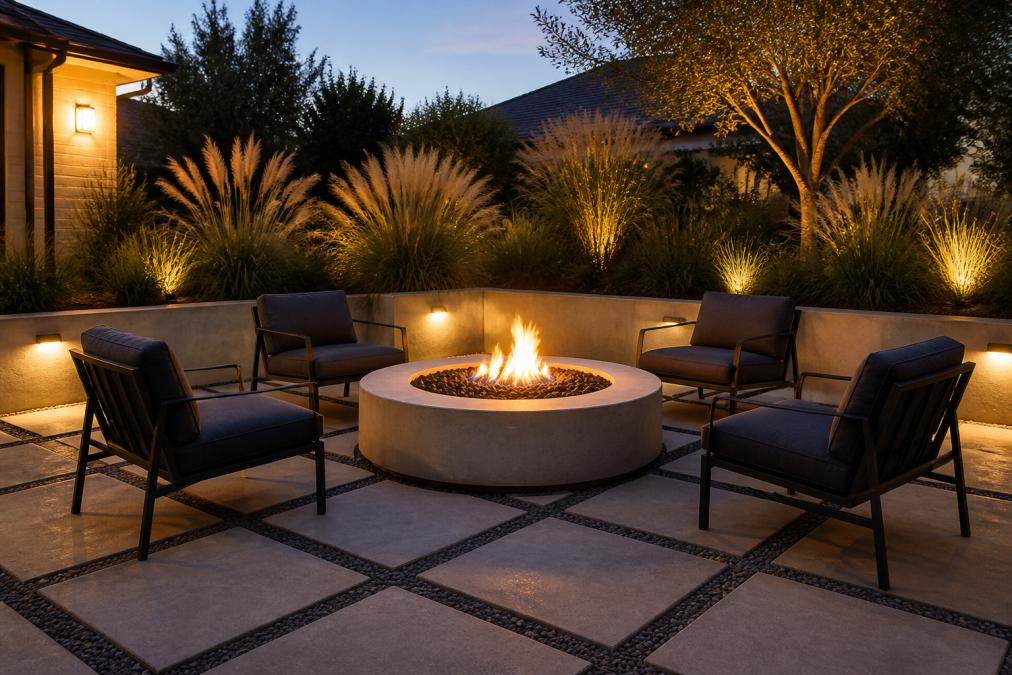
Concrete and gas fire tables bring smokeless technology, cleaner lines, and a minimalist aesthetic that integrates well with modern paver patios. The Elementi Lunar Bowl Fire Table is cast from glass-fiber reinforced concrete, powered by natural gas or liquid propane at 40,000-45,000 BTUs, and equipped with push-button ignition and auto safety shut-off. The Outland Living Series 401 Fire Table offers a rectangular propane option with a concealed 20-lb tank, tempered glass tabletop, and 35,000-50,000 BTU stainless steel burner.
Gas fire tables require either a propane tank or natural gas line connection. Propane is flexible but requires tank management; a natural gas line is permanent and convenient but adds installation cost.
Best for: Homeowners who want a clean, low-maintenance fire feature that anchors a patio without requiring a full masonry build.
Premium Tier: Custom Built-In Masonry and Statement Pieces
Custom built-in fire pits are permanent architectural features designed alongside the patio and integrated into the overall hardscape plan. The Modfire Astrofire is a notable freestanding statement piece, a 14-gauge steel, retro-futuristic wood-burning fire pit with bold color options. Custom masonry builds from professional hardscape contractors include built-in seating, integrated fire glass or lava rock, natural gas connections, and matching paver surrounds that create a cohesive outdoor living system.
Best for: Homeowners making a long-term investment in their property, particularly those planning to sell and wanting to maximize curb appeal.
| Design Tier | Price Range | Fuel Type | Best For | Permanence |
|---|---|---|---|---|
| Freestanding Steel Bowl | Under $500 | Wood | Flexibility, budget buyers | Portable |
| Concrete/Gas Fire Table | $500-$1,800 | Gas/Propane | Low-maintenance modern look | Semi-permanent |
| Custom Built-In Masonry | $2,000+ | Gas or Wood | Long-term investment, curb appeal | Permanent |
Fire Pit Materials, Shapes, and Silhouettes
Material choice affects durability, maintenance frequency, heat output, and integration with your existing hardscape.
Concrete, Steel, and Natural Stone
Concrete is the dominant material in modern fire pit design because it pairs a minimalist aesthetic with genuine durability. Glass-fiber reinforced concrete resists cracking and handles freeze-thaw cycles without significant degradation, reading as a clean, architectural material that complements geometric pavers.
Steel offers portability and a raw industrial look. High-grade stainless steel, like 304-grade used in the Solo Stove Yukon, resists corrosion well. Powder-coated steel adds color options and surface protection. Basic steel without treatment will rust, particularly in humid climates.
Natural stone brings warmth and permanence. Fieldstone, limestone, and travertine are common choices for custom masonry builds and integrate naturally with retaining walls and landscape architecture. According to the National Association of Realtors' landscape impact studies, well-designed outdoor living features including fire pits and stone patios consistently rank among the top home improvements for perceived value.
Round Fire Bowls vs. Rectangular Fire Tables
Round fire bowls create conversational seating arrangements naturally, with every seat having an equal relationship to the flame. They also soften the geometry of a square patio.
Rectangular fire tables serve double duty, with the flat surface functioning as a tabletop for drinks and food. Rectangular shapes echo the clean lines of modern paver patios and work well in linear or geometric design layouts. The choice often comes down to seating style: round fire bowls pair best with individual chairs arranged in a loose circle, while rectangular fire tables pair best with built-in benches or sectional seating along two sides.
Gas Fire Pit vs. Wood Burning: Pros and Cons
Gas fire pits (natural gas or propane) offer smokeless technology, instant ignition, and adjustable flame height. There is no ash cleanup, no need to source firewood, and no smoke drifting into guests' faces. The limitation is infrastructure: natural gas requires a licensed plumber, and propane requires ongoing tank management.
Wood burning fire pits deliver the authentic campfire experience: crackling sounds, real wood smoke aroma, and radiant heat that gas cannot fully replicate. They are independent of any utility connection, which matters in areas where running a gas line is cost-prohibitive. According to the Hearth, Patio and Barbecue Association's industry data, gas fire features have grown significantly as homeowners prioritize convenience and cleaner outdoor air quality. Many municipalities have also introduced restrictions on open wood burning.
| Feature | Gas Fire Pit | Wood Burning |
|---|---|---|
| Smoke | None | Significant |
| Startup | Instant ignition | Manual lighting |
| Cleanup | Minimal | Ash removal required |
| Fuel Cost | Ongoing gas/propane | Firewood purchase |
| Ambiance | Adjustable flame | Authentic crackle |
| Local Restrictions | Rarely restricted | Often restricted |
Hardscaping and Patio Integration for Your Fire Pit Design
The strongest fire pit design ideas treat the fire feature as one element within a complete outdoor living space, planned alongside the patio surface, seating, and landscaping from the start.
Paver Patios and Geometric Design Layouts
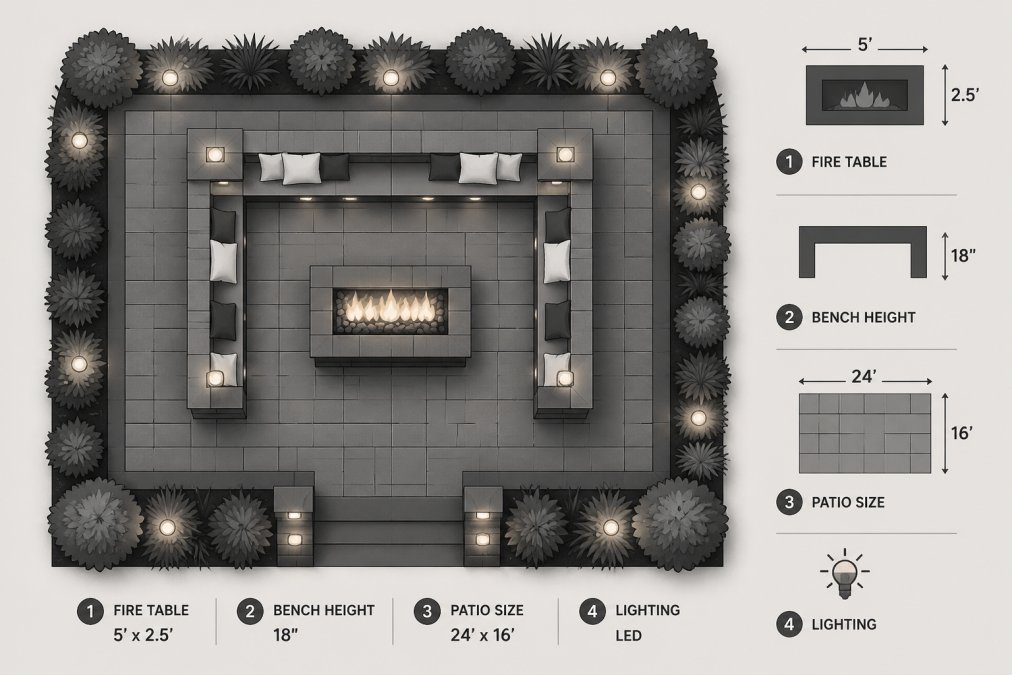
Paver patios are the most common hardscape base for fire pit installation. Geometric pavers in concrete, travertine, or porcelain create a defined outdoor room that gives the fire pit clear context. The patio surface also solves the clearance zone problem by establishing a fire-safe non-combustible perimeter around the fire feature.
Popular geometric design layouts include circular insets with contrasting pavers radiating outward, rectangular frames with the fire table centered and seating along the long edges, and mixed materials combining large-format concrete pavers with natural stone borders. Moises Pizana Hardscapes designs custom paver patios that integrate fire pit placement from the initial layout, ensuring proper clearance, drainage, and material compatibility.
Conversational Seating and Built-In Benches
Conversational seating ensures every seat faces the fire and every guest can see every other guest without craning. Built-in seating solves this permanently. Stone or concrete benches integrated into the patio perimeter create a defined seating zone that does not shift or require seasonal storage. Built-in benches also function as retaining elements on sloped sites, adding structural value alongside aesthetic appeal.
Modern Fire Pit Landscaping Ideas
Landscaping around the fire pit transforms a hardscape installation into a complete outdoor living environment. Effective approaches include low ornamental grasses planted 3-4 feet beyond the clearance zone, raised planting beds integrated into retaining walls, ambient lighting in the form of low-voltage path lights or uplighting, and ground cover between pavers such as creeping thyme that softens geometric lines.
The clearance zone around any fire pit should be kept clear of combustible planting material. A non-combustible buffer of pavers, gravel, or decomposed granite between the fire feature and nearest plantings is both a safety measure and a clean design element. According to the American Society of Landscape Architects' residential design guidelines, integrated outdoor living spaces that combine hardscaping with intentional planting plans consistently outperform disconnected installations in both usability and long-term homeowner satisfaction.
Backyard Fire Pit Safety Regulations You Need to Know
Local regulations vary widely, but several baseline rules apply across most jurisdictions.
Clearance requirements: Most local fire codes require a minimum 10-foot clearance between a fire pit and any structure, including fences, overhangs, and the home itself. Always check with your local fire authority or building department before installation.
Fuel-specific rules: Wood-burning fire pits face stricter regulation in many areas, particularly in counties with air quality management programs. Gas fire pits are generally exempt from open burn restrictions because they produce no particulate emissions. The U.S. Environmental Protection Agency's guidance on residential wood burning outlines the air quality implications of wood combustion and conditions under which local authorities may restrict it.
Permit requirements: Permanent built-in fire pits, particularly those connected to natural gas, typically require a building permit and gas line inspection. Freestanding portable fire pits generally do not. Confirm with your local municipality before breaking ground.
Key safety practices:
- Never use a fire pit under a covered structure unless specifically rated and ventilated for that use
- Keep a fire extinguisher or water source within reach during use
- Establish a clearance zone free of combustible materials, furniture, and debris
- Never leave an active fire pit unattended
Maintenance, Climate Considerations, and Long-Term Care
Steel and powder-coated fire pits require seasonal attention. Apply a heat-resistant spray paint or protective oil to bare steel surfaces annually to prevent rust. Store portable units under a weather cover or indoors during extended wet seasons.
Concrete fire pits are durable but not indestructible. Freeze-thaw cycles can cause surface spalling on low-quality concrete. Glass-fiber reinforced concrete handles this better. Apply a penetrating concrete sealer every two to three years.
Natural gas fire pits require annual inspection of the burner, ignition system, and gas connections. A licensed technician should check for gas line integrity and burner corrosion at the start of each season.
Regional climate considerations:
- Hot, humid climates accelerate rust on untreated steel. Prioritize stainless steel or powder-coated finishes.
- Cold climates with hard freezes stress concrete and natural stone. Drain water from gas burner pans before winter.
- High-wind regions require spark arrestor screens on wood-burning units and careful siting to minimize ember drift.
- Drought-prone regions may face seasonal burn bans affecting wood-burning fire pits more than gas alternatives.
A $99 steel fire bowl may need replacement within three to five seasons without proper care. A custom built-in masonry fire pit, properly sealed and maintained, can last the lifetime of the home.
Every backyard fire pit project starts with the same challenge: translating an idea into a durable, code-compliant outdoor living space that holds up through seasons of actual use. Moises Pizana Hardscapes brings more than 15 years of hands-on hardscape experience to custom fire pit installations, paver patios, built-in seating, and the complete outdoor living spaces that make fire features work as architectural focal points rather than isolated accessories. The team handles design, installation, and integration without subcontracting, which means consistent quality from the first paver to the final gas line connection. Get a quote from Moises Pizana Hardscapes and see what a purpose-built fire pit design can do for your outdoor space.
Frequently Asked Questions
What materials are best for a modern, low-maintenance fire pit?
Cast concrete, 304 stainless steel, and natural stone are the top choices for a modern fire pit design. Concrete handles heat well and suits a minimalist aesthetic. Stainless steel resists rust and cleans easily. Natural stone blends with landscaping and holds up to weather extremes. For the lowest maintenance overall, a gas fire pit built from fiber-reinforced concrete or powder-coated steel with a weather-resistant cover will last years with minimal upkeep.
What are the safety requirements for installing a backyard fire pit?
Most municipalities require a fire pit to sit at least 10 feet from any structure, fence, or overhanging tree. Local fire codes, enforced through city or county ordinances, often restrict open burning during high-wind or drought conditions. Gas fire pits connected to a natural gas line require a licensed plumber and must meet NFPA 54 standards. Always check your local jurisdiction's rules before installation, and confirm HOA guidelines if applicable.
Are gas or wood-burning fire pits better for modern aesthetics?
Gas fire pits, especially those using fire glass or lava rock media, align more naturally with a clean-lines, minimalist aesthetic. They produce no smoke, require no ash cleanup, and can be integrated into a paver patio or retaining wall seamlessly. Wood-burning pits offer a more traditional look and stronger radiant heat, but smoke and debris management reduces their appeal for sleek outdoor living spaces. For modern backyard fire pit design, gas is generally the cleaner visual choice.
What landscaping works well around a fire pit?
Low-growing, fire-resistant plants such as ornamental grasses, lavender, and succulents work well around a fire pit because they stay below the clearance zone and tolerate heat. Gravel or decomposed granite borders keep the area tidy and reduce fire risk. Retaining walls planted with groundcover add architectural interest. Avoid planting shrubs or trees within 10 feet of the fire pit. Ambient lighting along pathways and in planting beds ties the fire pit into the broader outdoor living space.
How do I choose the right fire pit for my backyard layout?
Start with your available square footage. Small patios suit a compact fire bowl or tabletop gas unit. Mid-size yards can accommodate a round fire table with conversational seating arranged in a circle. Larger spaces open up options for built-in masonry fire pits integrated into a hardscape design. Also factor in fuel access: natural gas lines require professional installation, while propane offers more placement flexibility. A hardscape professional can assess your patio layout and recommend the right size and fuel type.