 how-to
How to Fix Water Pooling in Backyard: 7 Solutions
Table of Contents
- Why Water Pools in Your Backyard
- How to Fix Water Pooling in Backyard: Step-by-Step
- How to Regrade a Yard for Drainage
- French Drain Installation Cost and When It's Worth It
- Best Plants for Wet Areas in Yard
- Permeable Pavers, Dry Creek Beds, and Hardscape Drainage Solutions
- DIY vs. Professional Fix: Water Pooling Backyard Cost-Benefit
- Drainage Maintenance Schedule for DFW Homeowners
- Frequently Asked Questions
Last Updated: August 10, 2026
Why Water Pools in Your Backyard
Water pooling in your backyard damages property and frustrates homeowners across the Dallas-Fort Worth area. At Moises Pizana Hardscapes, we see this issue constantly, and the root causes are almost always the same three things. Understanding which one is driving your problem determines which fix will actually work.
Standing water kills grass, invites mosquitoes, creates hydrostatic pressure against foundations, and accelerates erosion. The good news: every cause has a solution.
Clay Soil and Soil Compaction
North Texas is notorious for its heavy clay soil. Clay particles are fine and tightly packed, which dramatically reduces the soil's percolation rate, water cannot move through it quickly enough after rainfall. Soil compaction makes this worse. Foot traffic, heavy equipment, and years of use compress the soil structure, destroying air pockets that allow drainage. A hardpan layer, a dense stratum several inches below the surface, creates the same effect even in yards that look healthy on top.
Poor Grading and Low Spots
Grading refers to your yard's slope relative to your home's foundation and property boundaries. Proper residential grading directs surface runoff away from the house at a slope of at least 2% for the first 10 feet from the foundation, according to International Residential Code drainage guidelines.
Low spots act as collection points after rain. They can form from soil settling, tree root activity, or erosion over time. Even a depression a few inches deep can hold several gallons of water long enough to damage turf and create a breeding ground for insects.
Neighbor Runoff and Legal Considerations
Your pooling problem might not originate on your property. Surface water naturally flows downhill, and in densely developed neighborhoods, your yard often sits at the receiving end of runoff from neighboring lots or improperly directed downspouts. In Texas, property owners generally cannot obstruct natural surface water flow in a way that damages a neighbor's property, but they also cannot redirect water onto a neighbor's land without liability. The Texas Water Code surface water rights provisions governs these disputes, and they can become contentious quickly.
Before investing in any drainage solution, document the water's source with photos and timestamps. If runoff is coming from a neighbor's improperly graded yard or redirected downspout, a conversation may be the first step, not excavation.
How to Fix Water Pooling in Backyard: Step-by-Step
Learning how to fix water pooling requires a diagnostic approach first. Jumping straight to a French drain without understanding the cause wastes money and often fails.
Step 1: Identify and Test the Problem Area
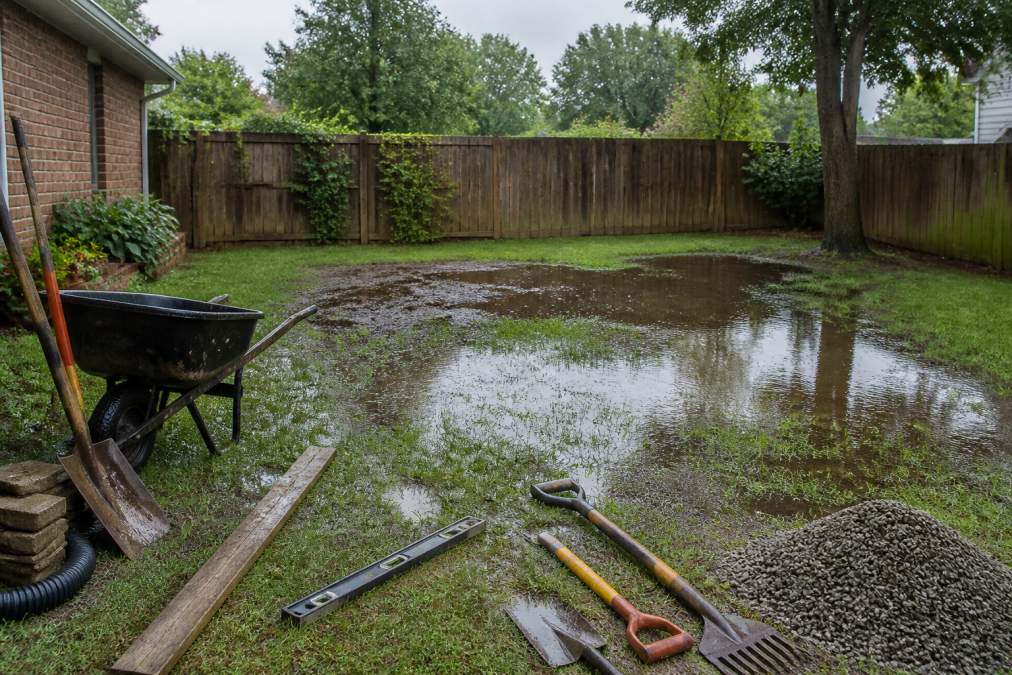
Walk your yard during or immediately after rain. Note exactly where water collects, how deep it gets, and how long it takes to drain. A useful field test is the percolation test: dig a hole about 12 inches deep and 12 inches wide, fill it with water, and time how long it takes to drain completely. If it takes longer than 4 hours, you have a drainage problem that needs addressing.
Mark low spots with stakes and measure the grade using a line level and string. If water is pooling within 10 feet of your foundation, treat it as urgent, hydrostatic pressure is a direct threat to your slab or basement.
Step 2: Aerate Compacted Soil
Aeration is the most underutilized fix for mild drainage problems. Core aeration pulls small plugs of soil out of the ground, breaking up compaction and creating channels for water to move downward. For DFW clay soils, a hollow-tine aerator works significantly better than spike aeration.
Aerate when the soil is slightly moist but not saturated. Fall is the best season in North Texas. Follow aeration immediately with a top-dressing of compost or sand-amended topsoil to keep the channels open.
Step 3: Fill Low Spots and Add Organic Matter
Filling shallow depressions requires the right material. A mix of topsoil and compost, not pure sand, is correct for clay-dominant yards. Sand mixed directly into clay without sufficient organic matter can create a concrete-like compound that drains worse.
Add fill in layers no deeper than half an inch at a time, allowing grass to grow through before adding more. Adding organic matter consistently improves the soil's overall balance, enough to absorb normal rain, not so much that it saturates.
Step 4: Redirect Downspout Extensions and Surface Runoff
A surprising number of pooling problems trace directly to downspouts dumping concentrated roof runoff in one spot. A downspout extension, a simple pipe that carries water 6 to 10 feet away from the foundation, can eliminate pooling near the house without excavation.
For surface runoff crossing the yard, a swale (a shallow, graded channel lined with grass or rock) can redirect water toward a street or designated drainage area. Swales are inexpensive to install and highly effective when the yard has enough fall.
| Fix | Best For | DIY Difficulty | Approximate Timeline |
|---|---|---|---|
| Core aeration | Compacted clay soil | Low | 1-2 hours |
| Fill low spots | Shallow depressions | Low-Medium | 1-3 days |
| Downspout extension | Foundation-adjacent pooling | Low | 2-4 hours |
| Swale installation | Surface runoff crossing yard | Medium | 1-2 days |
| French drain | Persistent subsurface saturation | High | 2-5 days |
| Regrading | Widespread slope problems | High | 3-7 days |
| Permeable pavers | Hardscape runoff | High | 3-10 days |
How to Regrade a Yard for Drainage
Regrading is the right fix when pooling is caused by a yard that slopes toward the house or contains multiple low spots that simpler fixes cannot address. The process involves removing existing turf, adding or removing soil to establish the correct grade, compacting the new surface lightly, and then re-seeding or re-sodding. For DFW homeowners dealing with widespread low spots, professional grading equipment produces results that manual raking cannot replicate. A laser level ensures the grade is consistent across the entire area.
Landscape fabric placed under new topsoil during regrading slows erosion and prevents the new grade from washing away before grass establishes.
French Drain Installation Cost and When It's Worth It
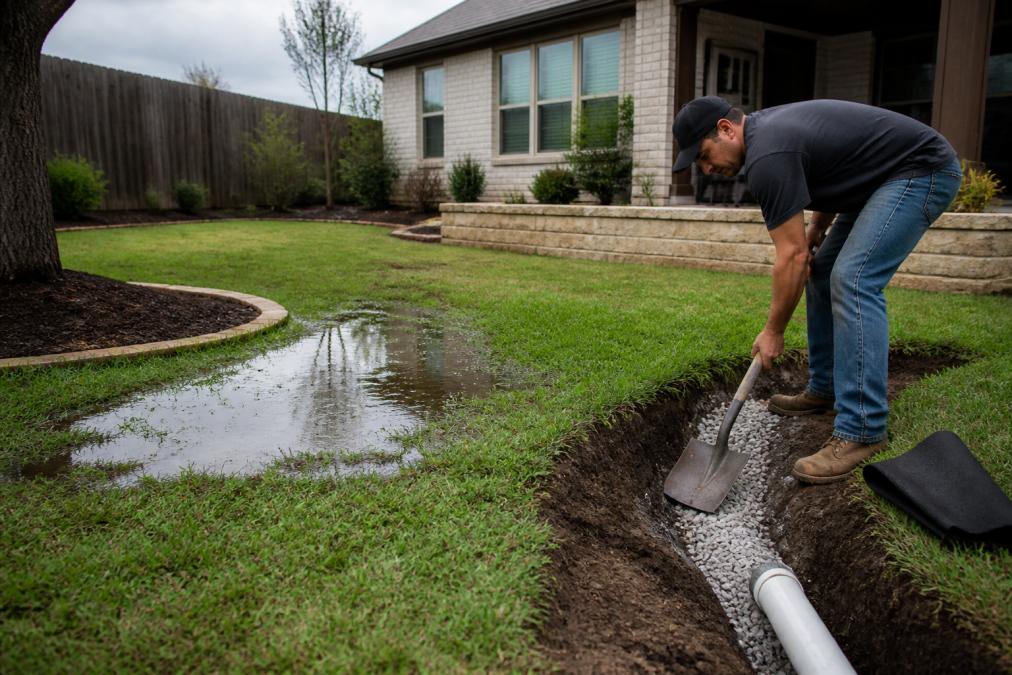
A French drain is a subsurface drainage system: a perforated drainage pipe wrapped in landscape fabric and surrounded by gravel, buried in a trench that carries water away from the problem area to a discharge point. It addresses subsurface drainage problems that surface-level fixes cannot reach.

French drain installation cost varies based on trench length, depth, soil conditions, and discharge location. DFW's clay soil often requires more excavation effort than sandy soils. For accurate pricing on your specific property, contact a qualified contractor for a site assessment.
French drains are worth the investment when:
- Standing water persists for more than 24 hours after rain stops
- The pooling area is too large or too deep for surface fixes
- Water is threatening the foundation or a structure
- Aeration and regrading have already been attempted without success
French drains are not the right first step when:
- The problem is a single shallow low spot
- Pooling is caused entirely by a redirectable downspout
- The yard lacks a viable discharge point for the drain outlet
Best Plants for Wet Areas in Yard
The best plants for wet areas turn a drainage liability into a landscape feature. Rather than fighting the wet zone, plant species that tolerate periodic saturation without rotting at the root.
Plants that perform well in consistently moist DFW conditions include:
- Bald cypress (Taxodium distichum): Native to Texas, handles standing water and clay soil. Grows into a significant shade tree.
- Louisiana iris: Thrives in wet soil, produces striking spring blooms, spreads naturally to stabilize banks.
- Swamp milkweed (Asclepias incarnata): Attracts pollinators, tolerates flooding, dies back in winter and returns reliably.
- Buttonbush (Cephalanthus occidentalis): A native shrub that handles extended saturation and provides wildlife habitat.
- Muhly grass: Tolerates occasional wet periods and provides year-round texture with minimal maintenance.
The Texas A&M AgriLife Extension native plant database is an excellent resource for identifying additional species suited to North Texas's specific soil and climate conditions.
Planting wet-tolerant species along a swale or around a dry creek bed also contributes to erosion control, stabilizing the soil that your drainage work depends on.
Permeable Pavers, Dry Creek Beds, and Hardscape Drainage Solutions
Hardscape drainage solutions address a problem that plants and pipes alone cannot: impermeable surfaces that concentrate runoff. Driveways, patios, and pool decks shed nearly all rain that falls on them, funneling it into the yard in concentrated streams.
Permeable pavers are designed with gaps or porous material that allows water to pass through and infiltrate the soil below. For DFW homeowners with clay soil, a gravel base of at least 6 to 8 inches is typically required to provide meaningful storage capacity between rain events.
Dry creek beds serve a dual purpose: they provide a defined channel for surface runoff and add visual interest to the landscape. A well-designed dry creek bed uses river rock or flagstone to slow water velocity, reducing erosion while directing flow toward a safe outlet.
Catch basins installed in low spots collect surface water and connect to underground drainage pipe, effectively converting a pooling area into a managed drainage inlet. They require periodic cleaning to prevent sediment buildup.
DIY vs. Professional Fix: Water Pooling Backyard Cost-Benefit
The DIY vs. professional question comes down to two factors: the complexity of the cause and the consequence of getting it wrong.
DIY is appropriate for:
- Core aeration and topdressing
- Filling shallow low spots under 3 inches deep
- Installing downspout extensions
- Planting wet-tolerant species
Professional work is appropriate for:
- Regrading large areas or areas near the foundation
- French drain installation requiring precise slope and discharge planning
- Permeable paver installation with engineered base preparation
- Any situation involving neighbor runoff disputes or drainage easements
The cost-benefit calculation shifts sharply toward professional work when foundation proximity is involved. A poorly executed DIY regrade that directs water toward the slab instead of away from it can cost far more in foundation repair than the original drainage project. As documented in FEMA's homeowner guide to drainage and flooding, improper grading is one of the most common causes of preventable residential water damage.
Moises Pizana Hardscapes handles the full range of hardscape drainage solutions, from permeable paver installation to retaining walls that redirect water flow, with over 15 years of experience and an in-house crew that never subcontracts the work.
Drainage Maintenance Schedule for DFW Homeowners
Most drainage systems fail not because they were installed incorrectly, but because they were never maintained. DFW's clay soil, heavy spring rains, and summer heat create specific maintenance demands.
Annual tasks (perform every fall before the rainy season):
- Core aerate the lawn, focusing on known pooling areas
- Inspect and clear all downspout extensions and splash blocks
- Check catch basin grates for debris and clear the inlet
- Flush French drain outlets to confirm flow is unrestricted
- Re-examine yard grade near foundation after summer soil shrinkage
After every major rain event (2+ inches):
- Walk the yard and document any new pooling areas
- Check that swales and dry creek beds are flowing correctly
- Confirm downspout extensions are still connected and directing water away
- Look for signs of erosion along drainage channels
Every 3-5 years:
- Camera-inspect French drain pipe for sediment buildup or root intrusion
- Re-evaluate yard grade, as soil settles over time
- Assess permeable paver joint material and replenish if compacted
According to EPA's green infrastructure maintenance guidance, regular inspection and maintenance of residential drainage systems significantly extends their functional lifespan and prevents costly failures. In DFW, the window between late September and early November is ideal for drainage maintenance, after the brutal summer heat has passed and before the heaviest fall rains arrive.
Persistent water pooling damages turf, threatens foundations, and reduces property value. Moises Pizana Hardscapes specializes in hardscape drainage solutions across the DFW Metroplex, from permeable paver systems and dry creek beds to retaining walls that permanently redirect water flow. With an in-house crew, professional-grade equipment, and over 15 years of experience in the Dallas and Fort Worth area, the team delivers solutions built to last. Get A Quote from Moises Pizana Hardscapes and stop watching your yard flood every time it rains.
Frequently Asked Questions
Why is my yard pooling water after heavy rain?
The most common causes are clay soil or compacted soil that blocks water from draining down, low spots where water naturally collects, and poor grading that slopes toward the house instead of away from it. In the DFW area, heavy clay soil is the leading culprit. A simple percolation test, digging a hole about 12 inches deep and filling it with water, tells you how quickly your soil drains. If water sits for more than four hours, you have a drainage problem worth addressing.
How do I know if I need a French drain?
A French drain makes sense when standing water persists for more than 24 hours after rain, when regrading and aeration alone haven't solved the problem, or when water is pooling against a foundation wall. French drains work by collecting subsurface water in a perforated drainage pipe surrounded by gravel and landscape fabric, then directing it away from the problem area. If your yard sits at the bottom of a slope or receives runoff from a neighbor's property, a French drain is often the most reliable long-term fix.
What is the cheapest way to fix a muddy yard?
The lowest-cost first steps are aerating compacted soil and topdressing low spots with a topsoil and compost mix, both of which you can do yourself with rented equipment. Extending downspouts away from the lawn is another inexpensive fix that often has an immediate impact. Planting water-tolerant ground cover in chronically wet zones also reduces visible mud without major excavation. These DIY measures work well for mild drainage issues; persistent standing water or a grading problem typically requires professional regrading or a French drain system.
Can landscaping and hardscaping fix drainage issues?
Yes. Hardscape solutions like permeable pavers, dry creek beds, swales, and catch basins redirect and absorb runoff rather than letting it pool. Permeable pavers allow water to pass through the surface into a gravel sub-base, reducing runoff significantly compared to solid concrete. Dry creek beds channel water along a defined path toward a drainage outlet. When combined with proper regrading and a French drain where needed, hardscape drainage solutions can permanently resolve water pooling backyard problems while improving your yard's appearance and usable space.