 how-to
How to Choose a Hardscape Design Company
Table of Contents
- Step 1: Verify Licensing, Bonding, and Insurance
- Step 2: Review Project Portfolios and Past Work
- Step 3: Check Customer Reviews and Request References
- Key Questions to Ask Hardscape Contractors
- Benefits of Hiring In-House Hardscape Crews
- Understanding Hardscape Installation Cost Estimates
- Red Flags and What to Avoid When Choosing a Hardscape Design Company
- Conclusion
- Frequently Asked Questions
Last Updated: August 28, 2026
Selecting the right hardscape design company can make or break your outdoor space. A poorly executed patio or retaining wall doesn't just disappoint aesthetically, it can lead to drainage problems, structural failure, and costly repairs. The difference between a contractor who delivers and one who leaves you with regret often comes down to how thoroughly you vet them before signing.
This guide walks you through essential steps to evaluate a hardscape design company. The criteria we cover here are based on what actually matters when a contractor transforms your backyard.
Step 1: Verify Licensing, Bonding, and Insurance
Before anything else, confirm that the hardscape design company operates legally. This protects you against liability if something goes wrong on your property.
A licensed contractor has met specific state or local requirements and demonstrated knowledge of building codes and safety standards. Check with your local licensing board to understand what's required in your area. Ask the contractor directly what licenses they hold and verify them independently.
Bonding protects you financially if the contractor fails to complete the work or violates the contract. A performance bond guarantees project completion; a payment bond ensures subcontractors and suppliers get paid (aia.org). If a contractor won't provide proof of bonding, that's a red flag.
Insurance coverage is equally critical. General liability insurance protects you if someone is injured on your property during the project (the CDC). Workers' compensation insurance covers their employees if they're hurt on the job. Ask for certificates of insurance and verify they're current.
Step 2: Review Project Portfolios and Past Work
A contractor's portfolio tells you what they actually build. Look for specific details: Are the joints in pavers tight and consistent? Do retaining walls appear level? Is the drainage system properly designed?
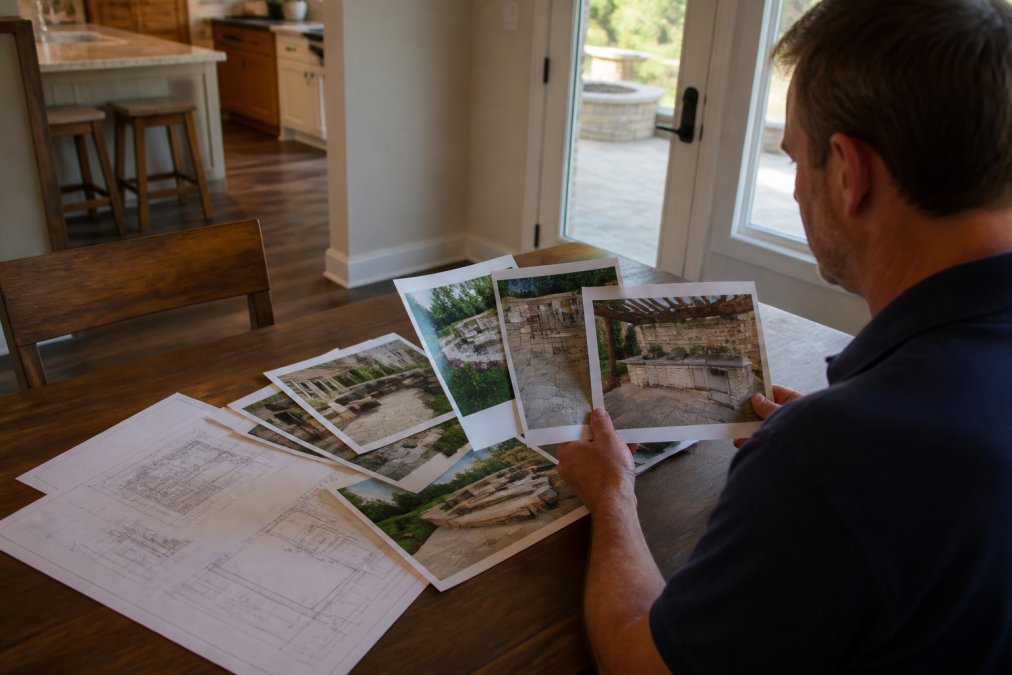
Ask for before-and-after photos of completed projects. A professional hardscape design company should have dozens of examples, ideally similar in scope and style to your project. Request references from recent projects, particularly ones completed in the last 12-18 months. Call those homeowners and ask specific questions: Did the project finish on time? Were there unexpected costs? How does the work hold up?
Visit completed projects in person if possible. Seeing hardscape materials and construction quality up close reveals details photos can't capture. Look for signs of poor workmanship: uneven surfaces, cracked pavers, visible settling, or drainage problems.
Step 3: Check Customer Reviews and Request References
Online reviews provide insight into how a hardscape design company treats customers. Check Google Reviews, Yelp, and industry-specific platforms. Look for patterns in feedback, not just overall star ratings. Multiple complaints about the same issue (missed deadlines, poor communication, unfinished work) signal a real problem.
Read both positive and negative reviews carefully. Positive reviews mentioning specific details carry more weight than generic praise. Pay attention to how the contractor responds to criticism. A professional acknowledges legitimate concerns and offers solutions.
Request at least three references from completed projects. When you call references, ask about design collaboration, adherence to timeline, budget management, and how issues were handled if they arose.
Key Questions to Ask Hardscape Contractors
Asking the right questions reveals whether a contractor understands your project and operates professionally.
About the Project Timeline: How long will this project take from start to finish? What factors could delay it? Will you provide a written schedule with milestones?
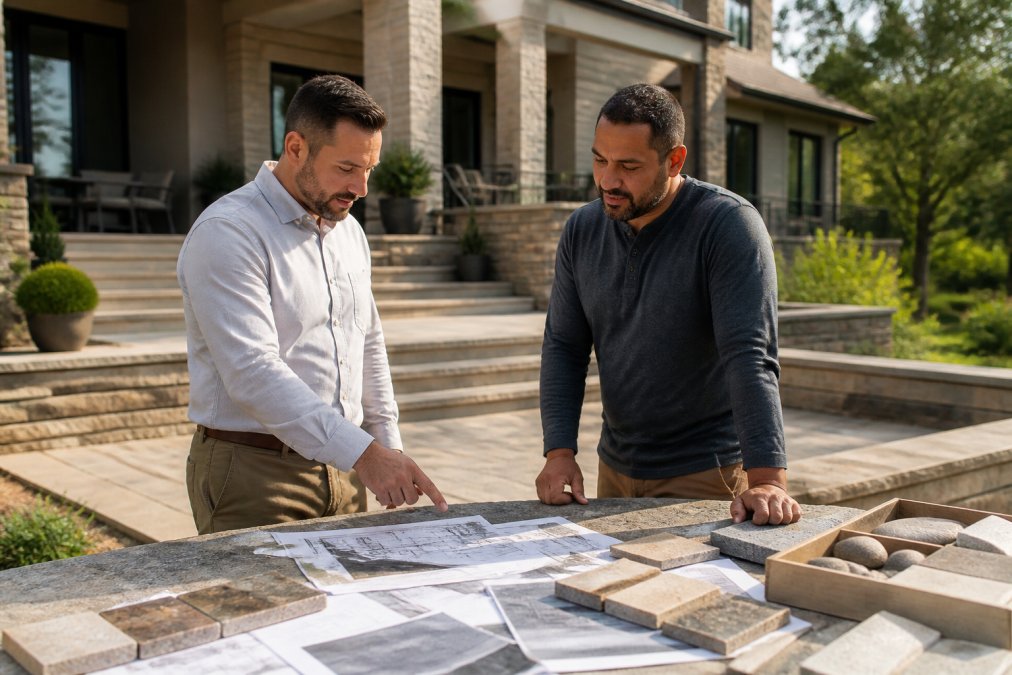
About Design and Materials: Will you provide detailed design plans before work begins? Can we review material samples together? What hardscape materials do you recommend for this application, and why?
About the Estimate: What's included in this cost estimate? Are there potential additional costs, and how would those be handled? Will you provide a written estimate that breaks down labor, materials, and equipment?
About Warranties: What warranty do you provide on your workmanship? What about the materials? How long does the warranty last?
About Permits and Codes: Will you handle permits and inspections? Are you familiar with local building codes for this type of project?
About Drainage and Site Preparation: How will you ensure proper drainage so water doesn't pool in my yard? What site assessment have you done? Will you address grading or soil issues?
About Your Crew: Will the same crew work on my project from start to finish? Do you use subcontractors, or do you have in-house crews? How much experience does your team have with this type of work? designing a backyard oasis.
A contractor who answers these questions confidently and in detail has done this work many times. Vague answers suggest inexperience or unwillingness to commit to specifics.
Benefits of Hiring In-House Hardscape Crews
The distinction between a hardscape design company with in-house crews and one that subcontracts the work is significant. This affects quality, accountability, timeline, and how problems get resolved.
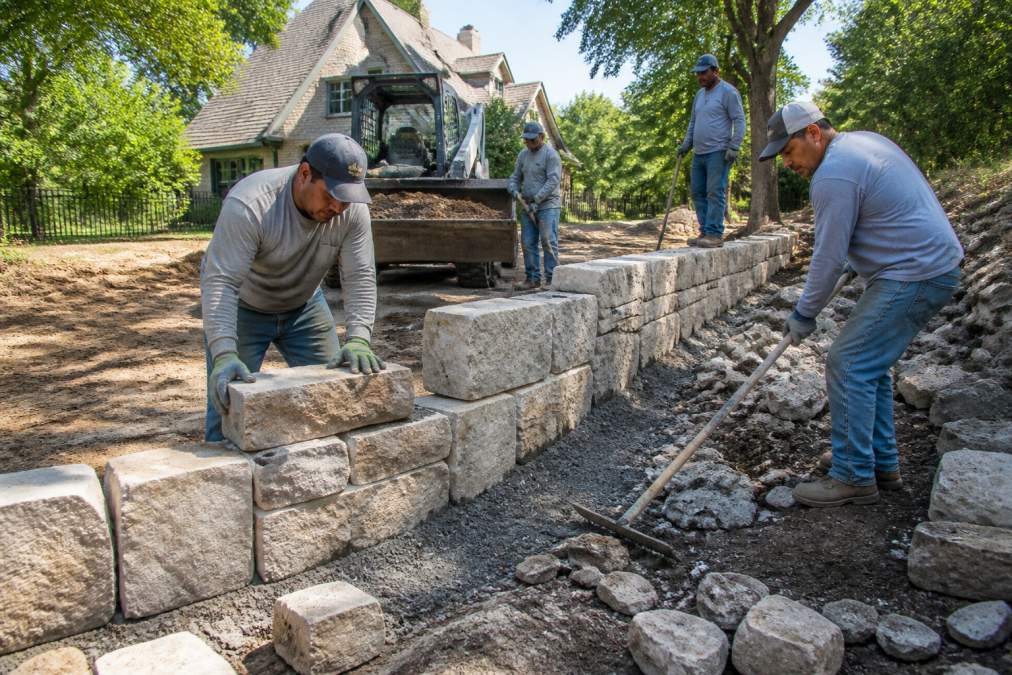
When a contractor has in-house crews with years of experience, they control every aspect of the work. The same team that bid your project executes it. They understand the design intent, maintain continuity throughout the project, and take ownership of quality. Accountability flows directly without communication gaps.
In-house crews develop expertise specific to hardscape construction standards. They understand grading, drainage, structural integrity, and material selection at a deep level. Subcontractors, by contrast, are hired project-by-project and juggle multiple jobs simultaneously, which can affect attention to detail and timeline adherence.
A contractor with in-house crews owns or leases specialized equipment needed for hardscape work: compactors, graders, excavators, and finishing tools. They don't have to rent equipment or coordinate with other contractors, which reduces delays and costs.
Understanding Hardscape Installation Cost Estimates
Hardscape project costs vary widely based on scope, materials, site conditions, and labor. Understanding what drives those costs helps you evaluate estimates and avoid surprises.
A detailed estimate breaks down labor, materials, equipment, and overhead separately. Labor typically represents 40-60% of the total cost, depending on project complexity (asla.org). Site conditions dramatically affect pricing. If your property has poor drainage, compacted soil, or significant grading challenges, the contractor needs to address these before installing hardscape.
Material quality affects both upfront cost and long-term durability. Premium pavers and natural stone cost more initially but last longer. Cheaper materials may require replacement sooner, making them false economy.
Ask the contractor to explain any estimates that seem unusually high or low. A price significantly below competitors' quotes often means cutting corners on materials, labor, or site preparation. Request a written estimate that includes specific details: square footage, material specifications, labor hours, equipment rental, and timeline.
Red Flags and What to Avoid When Choosing a Hardscape Design Company
Certain warning signs indicate a contractor may not deliver professional results.
No written contract. A contractor unwilling to put the agreement in writing is a major red flag. A contract protects both parties by clarifying scope, timeline, cost, payment terms, and warranty.
Vague scope of work. If the contract doesn't clearly define what's included and what isn't, you're inviting conflict. The scope should specify exactly what hardscape elements will be installed, materials used, and site preparation included.
No contingency plan for problems. Site conditions sometimes reveal issues during excavation. A professional contractor anticipates this and discusses how additional costs would be handled.
Pressure to pay upfront. Industry standard is a deposit (typically 25-50%) to secure the project, with remaining payments tied to milestones. A contractor demanding full payment before work begins is taking an unreasonable risk on your part.
Lack of insurance or bonding documentation. This is non-negotiable. If a contractor can't produce current certificates of insurance and bonding, walk away.
Reluctance to discuss warranties. A professional stands behind their work with a written warranty covering defects in materials and workmanship.
Poor communication or unprofessionalism. How a contractor communicates during bidding is how they'll communicate during the project. Professional contractors are responsive and detail-oriented.
References who seem reluctant or scripted. If references seem uncomfortable talking about the contractor or give generic praise without specifics, something's off.
No local project examples. A contractor who can't show work done in your area might not understand local soil conditions, drainage requirements, or building codes.
Unwillingness to discuss construction standards. Professional contractors can explain why they approach the work a certain way. If they can't articulate their methodology, they might not have one.
Conclusion
Choosing the right hardscape design company requires diligence, but the effort pays off in a beautiful outdoor space that functions properly and lasts for decades. Verify licensing and insurance, review portfolios and references, ask detailed questions about the project, and trust your instincts about professionalism and communication.
At Moises Pizana Hardscapes, we've built our reputation on quality workmanship, in-house crews with over 15 years of experience, and designs tailored to each client's vision. We handle everything from retaining walls and custom patios to driveways and outdoor kitchens, without subcontracting the work. Get A Quote today and see how we can transform your outdoor space with integrity and expertise.
Frequently Asked Questions
What questions should I ask a hardscape contractor before hiring?
Ask about licensing and insurance coverage, whether they use in-house crews or subcontractors, their experience with your specific project type, timeline and scheduling, warranty terms, and how they handle drainage and site assessment. Request references from recent projects in your area and ask about their design process and whether they provide detailed plans before construction begins.
How do I verify a hardscape contractor's experience and workmanship?
Request a portfolio of completed projects, ideally with before-and-after photos. Ask for client references and contact them directly about quality and timeliness. Check for professional certifications, bonding, and insurance. Visit completed projects if possible to assess structural integrity, material quality, and finishing details. Ask about their construction standards and whether they follow local building codes.
What makes hiring in-house hardscape crews better than subcontracted work?
In-house crews can offer better quality control, consistent workmanship, and direct accountability. They understand your project from start to finish and can address issues immediately without communication delays.
What should I expect when getting a hardscape installation cost estimate?
A professional estimate should include detailed material specifications, labor costs, site preparation, drainage solutions, and timeline. Compare estimates from multiple contractors, but avoid choosing solely on price. Verify what's included in each estimate and ask about payment schedules. Request a written contract with warranty terms before work begins.