 how-to
How Long Does a Patio Installation Take
Table of Contents
- Typical Timeline for Paver Patio Installation
- Factors Affecting Patio Construction Time
- Patio Installation Process Steps
- How Long to Wait Before Walking on Pavers
- DIY vs. Professional Installation Time
- Curing and Settling Time
- Conclusion
- Frequently Asked Questions
Last Updated: August 13, 2026
Typical Timeline for Paver Patio Installation
The question of how long does a patio installation take doesn't have a one-size-fits-all answer, but most residential paver patios take between 3 to 7 days for professional installation. This timeline assumes a typical 200-400 square foot patio with standard base preparation and no major complications. Smaller projects might finish in 2-3 days, while larger installations or those with custom designs can extend to 2-3 weeks.
The actual duration depends heavily on what happens before the crew ever touches a shovel. Site conditions, material availability, permitting requirements, and weather all compress or expand the schedule. A homeowner who understands these variables can plan more realistically and avoid the frustration of watching a project slip week after week.
At Moises Pizana Hardscapes, we've found that transparent communication about timeline expectations prevents most disputes. When clients understand why certain phases take time, they're far more patient with the process. The fastest projects aren't always the best ones, rushing through site preparation or base installation creates problems that surface months or years later.
Factors Affecting Patio Construction Time
Several key variables determine whether your patio installation finishes on schedule or stretches beyond expectations. Understanding these factors helps you plan realistically and work with your contractor to identify potential delays before they happen.
Square Footage and Labor Hours
The size of your patio directly correlates with installation duration, but not in a simple linear way. A 200-square-foot patio doesn't take half the time of a 400-square-foot installation because setup, site preparation, and cleanup remain relatively constant regardless of size.
Most professional crews can lay between 100-150 square feet of pavers per day once the base is properly prepared. This means a 300-square-foot patio requires roughly 2-3 days of actual paver laying, plus additional time for prep work. Larger patios, say 600+ square feet, benefit from crew efficiency gains and might only add 1-2 extra days beyond the base time.
Labor hours scale with complexity as much as square footage. A simple rectangular patio with straight edges proceeds faster than one with curves, diagonal patterns, or multiple elevation changes. Custom designs that require cutting pavers to fit specific angles or accommodating existing structures like trees or utility boxes add significant time to the installation.
Site Preparation and Excavation
This phase often surprises homeowners because it's invisible in the final result, yet it consumes 20-40 percent of total project time. Proper site preparation determines whether your patio settles evenly or develops low spots that trap water within a year.
Excavation depth depends on your climate and soil conditions. Most patios require 4-6 inches of excavation to accommodate base materials and ensure proper drainage. If your yard has poor drainage or clay soil that holds water, contractors may need to dig deeper or create sloped grading to direct water away from structures and planting beds.
Rocky or compacted soil slows excavation significantly. Crews working through clay or hardpan might spend an extra day breaking up and removing material. Conversely, loose sandy soil excavates quickly but may require additional base material to achieve proper compaction and stability.
Weather and Site Accessibility
Rain is the enemy of patio installation. A single heavy rain can delay a project by days because wet soil and base materials cannot be properly compacted. Contractors typically won't work in rain or when soil is saturated, as this compromises the foundation and creates safety hazards.
Site accessibility affects crew efficiency and scheduling. A narrow side yard that requires carrying materials by hand takes longer than a project where equipment can drive directly to the work area. Steep slopes, existing structures, and tight spaces all reduce productivity and extend timelines.
Seasonal weather patterns matter more than most homeowners realize. Summer heat can actually speed installation in some cases, warm, dry conditions allow base materials to set faster. Winter projects proceed more slowly due to shorter daylight hours and increased likelihood of rain or frost affecting base material stability.
Permitting and Inspection Delays
Many homeowners don't anticipate permitting timelines when planning patio projects. Depending on your local jurisdiction, permits might take 1-3 weeks to obtain before work can legally begin. Some areas require inspections after excavation, after base installation, and again after the final paver installation.
Inspection delays can extend a project timeline by days or even weeks if the inspector finds issues requiring correction. Common inspection concerns include improper drainage slope, insufficient base compaction, or edge restraint installation that doesn't meet local codes. Addressing these issues requires rework before the inspector will approve proceeding to the next phase.
Material Delivery Lead Times
Pavers, sand, and base materials don't always arrive on the schedule you'd prefer. During peak season, spring through early fall, material suppliers experience high demand and longer lead times. Ordering materials weeks in advance prevents delays, but unexpected supply chain disruptions can push delivery dates back unexpectedly.
Custom pavers or specialty materials might require 2-4 weeks lead time. If your contractor hasn't secured materials before scheduling installation, you'll face delays waiting for delivery. Professional contractors like Moises Pizana Hardscapes coordinate material delivery with installation schedules to minimize downtime.
Patio Installation Process Steps
Understanding the actual installation sequence helps you grasp why certain phases take as long as they do. Each step builds on the previous one, and rushing any phase compromises the final result.
Step 1: Site Preparation and Grading
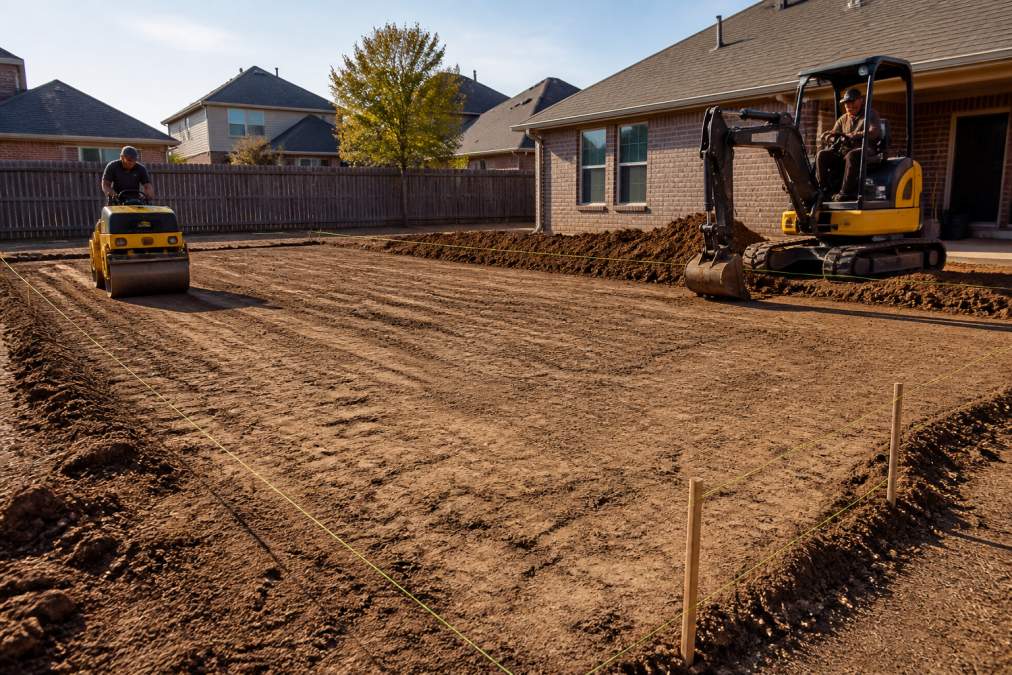
The first day typically involves marking the patio boundaries, removing existing vegetation, and excavating to the required depth. Crews establish proper grading, a slight slope away from structures to ensure water doesn't pool or run toward your house or foundation.
This phase takes 1-2 days depending on site size and soil conditions. The crew removes topsoil and vegetation, then excavates the subgrade to the depth needed for base materials. They establish the proper slope, typically 1/8 inch per linear foot, which is subtle enough to be invisible but effective at directing water away from your home.
Compacting the subgrade properly is critical. The soil must be firm enough to support the base materials without settling. Crews use a vibratory plate compactor or similar equipment to achieve proper compaction density. Skipping this step or rushing through compaction leads to settling and uneven surfaces within months.
Step 2: Base Material Installation
Once the subgrade is prepared and compacted, the base material installation begins. Most patios require 4 inches of compacted crushed stone or gravel base. Some projects, particularly those in areas with poor drainage or heavy clay soil, might require a geotextile fabric layer beneath the base to prevent soil migration and improve drainage.
The base material is spread evenly across the excavated area, then compacted in layers. Spreading 2 inches, compacting, then spreading another 2 inches produces better compaction than dumping all 4 inches at once and hoping for the best. This layered approach typically takes a full day for a standard residential patio.
Proper base installation is where many DIY projects fail. The base must be absolutely level and uniformly compacted. Even slight variations in base elevation translate into uneven paver surfaces. Professional crews take this phase seriously because a solid base prevents almost all future settling and movement issues.
Step 3: Laying Pavers and Edge Restraints
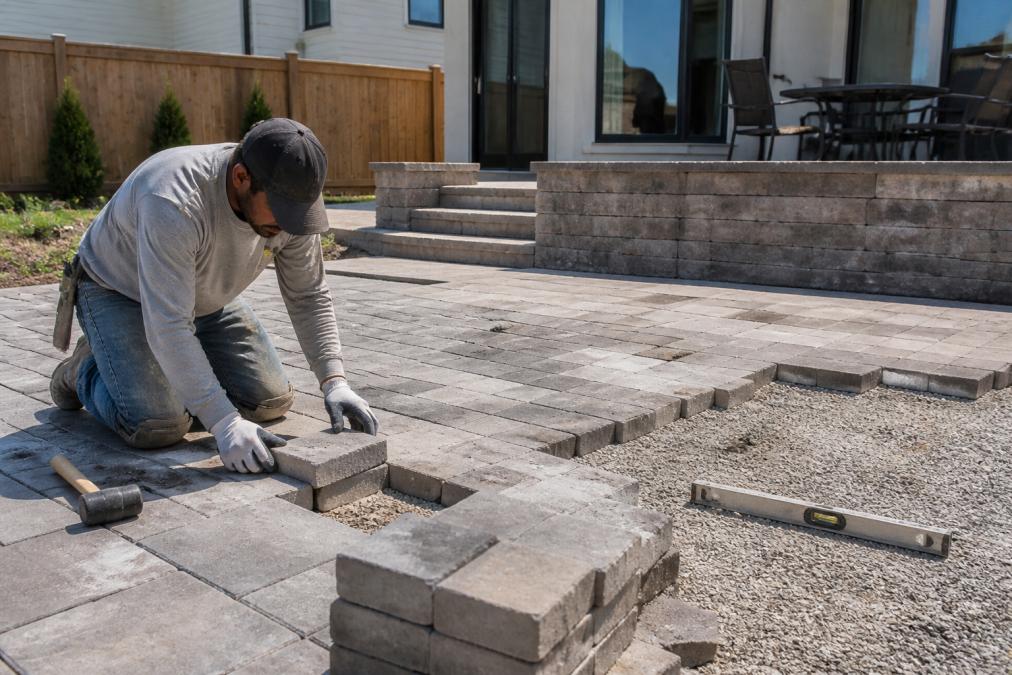
Paver installation begins once the base is properly prepared and compacted. The crew establishes a starting line and works systematically across the patio, laying pavers in the selected pattern. Edge restraints, typically aluminum or plastic borders, are installed along the perimeter to prevent pavers from shifting outward.
This phase is where most of the visible progress happens. Crews can lay 100-150 square feet per day, depending on pattern complexity and site conditions. A straightforward running bond pattern (like bricks in a wall) proceeds faster than herringbone or circular patterns that require more cuts and precise placement.
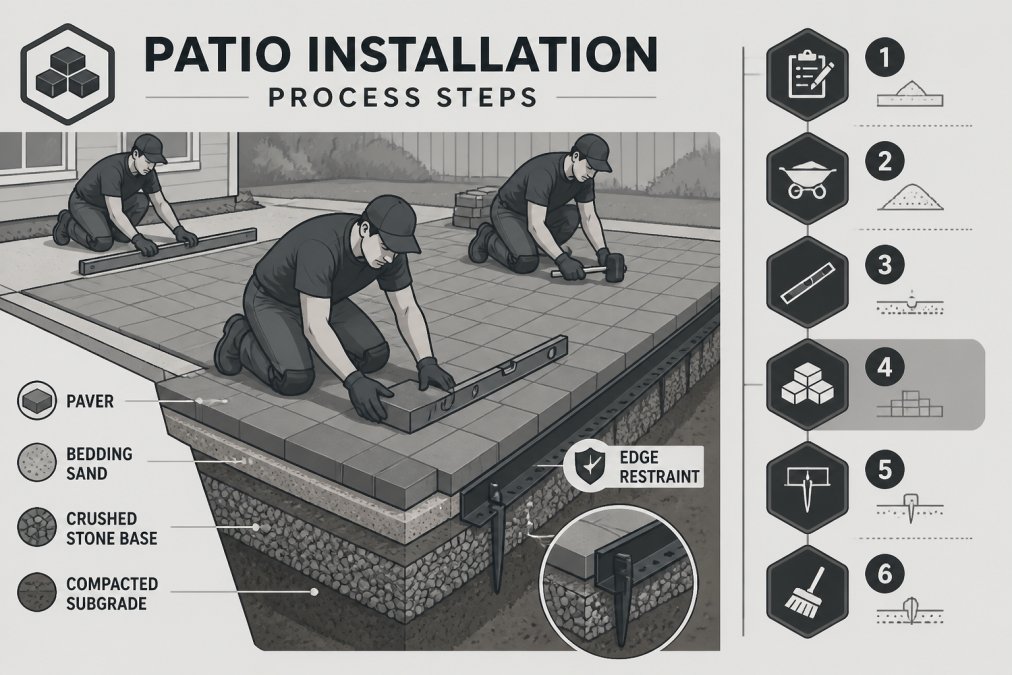
Step 4: Joint Sand and Compaction
After all pavers are laid, polymeric sand is swept into the joints between pavers. This sand contains additives that harden when exposed to moisture, locking pavers together and preventing sand migration. The final step involves running the vibratory plate compactor over the entire patio surface to settle everything and activate the polymeric sand.
This phase takes 4-8 hours for most residential patios. The crew sweeps sand into joints, compacts the surface, sweeps additional sand into any joints that opened during compaction, then makes a final pass with the compactor. The result is a stable, unified patio surface that will remain level and solid for years.
How Long to Wait Before Walking on Pavers
Most contractors recommend waiting 24-48 hours before walking on newly installed pavers. This allows the polymeric sand to cure and harden, locking the pavers firmly in place. Light foot traffic after 24 hours is generally acceptable, but heavy use or moving furniture should wait the full 48 hours.
In hot, dry conditions, the cure time might be slightly shorter. In cool or damp weather, waiting the full 48 hours is safer. Some contractors recommend waiting 72 hours before driving vehicles on the patio or placing heavy planters and furniture, as vehicle weight can shift pavers that haven't fully settled.
Weather plays a role in cure time. If rain occurs within 24 hours of installation, the polymeric sand activates and hardens faster. If conditions remain dry, the sand cures more slowly. Contractors typically advise waiting regardless of weather conditions to ensure the strongest possible bond.
DIY vs. Professional Installation Time
Homeowners often underestimate how long DIY patio installation takes. What a professional crew completes in 5-7 days might take a dedicated homeowner 3-4 weekends or more. The difference isn't just skill, it's equipment, experience with troubleshooting, and the ability to work efficiently without stopping frequently.
Site preparation and base installation are where most DIY projects lose time. Renting a vibratory plate compactor and learning to use it properly takes time. Achieving proper slope and compaction without experience requires multiple attempts. Professional crews have refined these processes through hundreds of installations.
Paver laying itself is more forgiving for DIY work. The pattern is straightforward, and mistakes are visible and correctable. However, cutting pavers to fit edges and around obstacles requires specialized tools and practice. A professional crew equipped with a wet saw and paver splitter handles cuts in minutes; a homeowner without these tools might spend hours on the same work.
The most significant DIY disadvantage emerges months or years later. A patio installed without proper base preparation, inadequate compaction, or incorrect slope develops problems, settling, uneven surfaces, water pooling, that require expensive repairs. Professional installation backed by proper technique and experience prevents these issues.
Curing and Settling Time
Even after you've waited 48 hours and started using your patio, the installation isn't fully complete. The polymeric sand continues to harden over the next 2-3 weeks, and the base materials gradually settle and compact further under the weight of foot traffic.
During the first month, expect minor settling, typically 1/4 inch or less across the entire patio. This is normal and doesn't indicate a problem. The base materials compact under use, and the polymeric sand achieves its final hardness. Avoid heavy equipment or large gatherings during this settling period.
After 30 days, your patio reaches its final stable state. Any settling that will occur has occurred. The polymeric sand is fully cured and locking the pavers firmly in place. The patio is now ready for normal use, including vehicles if appropriate for your design.
In areas with freeze-thaw cycles, the first winter after installation is critical. Ground expansion and contraction during freezing and thawing can cause minor movement. Properly installed patios with good drainage typically handle freeze-thaw cycles without problems, but monitoring during the first winter is wise.
Conclusion
How long does a patio installation take? For most residential projects, expect 5-7 days of actual work spread across 2-4 weeks when you account for permitting, material delivery, and weather delays. Understanding the factors that influence timeline, site conditions, square footage, weather, and local permitting requirements, helps you plan realistically.
The most reliable way to get an accurate timeline for your specific project is consulting with professionals who understand your local conditions and site challenges. Moises Pizana Hardscapes brings over 15 years of experience installing custom patios throughout the area, and we handle everything in-house without subcontracting. We coordinate material delivery, manage permitting requirements, and account for site-specific factors that affect your timeline. Get a quote today to learn the exact timeline for your patio vision and see how we can transform your outdoor living space.
Frequently Asked Questions
How long does it take to install a patio?
Most paver patio installations take 3-7 days for a standard residential project, depending on size and site conditions. A 400-square-foot patio typically takes 3-4 days of active installation work. Larger projects or those requiring extensive site preparation may take 5-7 days. The timeline includes excavation, base material installation, paver laying, joint sand application, and compaction. Additional time may be needed for permitting, material delivery, or curing before full use.
What factors affect how long a patio installation takes?
Key factors include square footage, soil conditions, existing site drainage, weather, material availability, and whether permitting is required. Poor drainage or unstable soil extends excavation time. Weather delays are common in spring and after heavy rain. Material delivery lead times can add weeks before work begins. Accessibility to your yard and the complexity of your custom design also impact the overall project duration.
How long before I can walk on a newly laid patio?
You can walk on your patio immediately after the pavers are laid and compacted. However, light foot traffic only is recommended for the first 24-48 hours while the polymeric sand cures and settles. Avoid heavy furniture, vehicles, or concentrated weight during this period. Full curing and settling typically takes 7-14 days, after which your patio can handle normal residential use without concern.
Does weather affect patio installation timelines?
Yes, weather significantly impacts installation schedules. Rain delays excavation and base material compaction, as wet soil cannot be properly graded or compacted. Extreme heat can affect polymeric sand curing. Most contractors pause work during rain and wait for the ground to dry before resuming. Plan your project during dry seasons to minimize weather-related delays. Winter conditions in colder climates may also extend timelines or prevent work altogether.