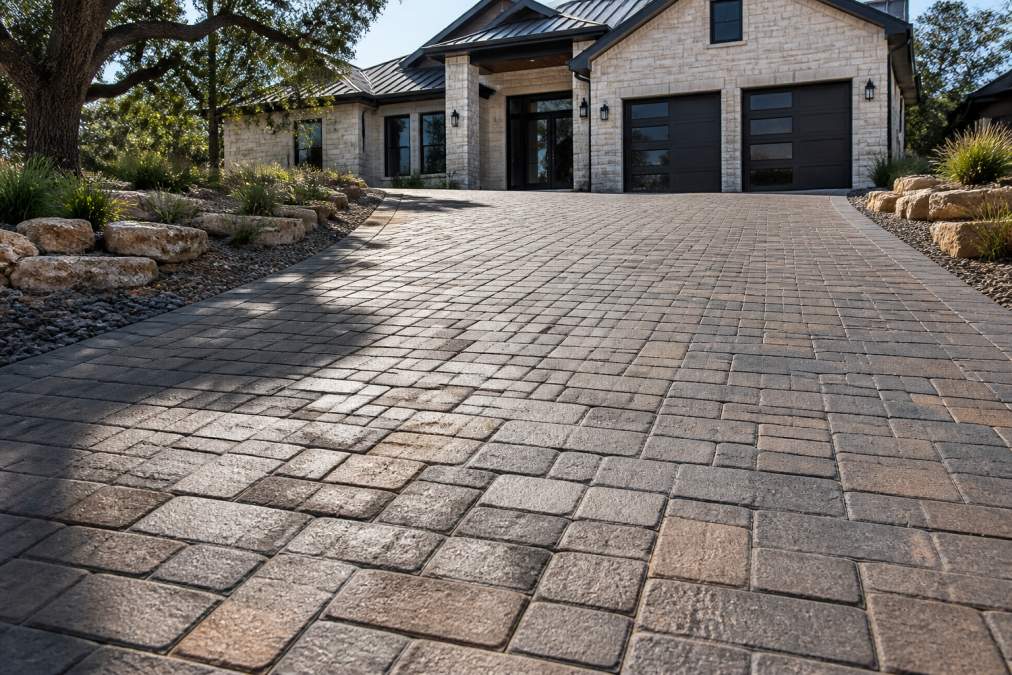
 ultimate-guide
Durable Driveway Paving Options for DFW: 2026 Guide
Table of Contents
- Why Material Selection Matters for Durable Driveway Paving
- How Expansive Clay Soil and Heat Impact Your Driveway
- Concrete vs. Paver Driveway Maintenance: What to Expect
- Permeable Driveway Pavers: Cost, Benefits, and Drainage
- Driveway Installation Timeline: What to Plan For
- Comparing Your Options: Material Durability and Longevity
- Permitting, HOA Regulations, and Long-Term Value
- Frequently Asked Questions
Why Material Selection Matters for Durable Driveway Paving
Choosing the right durable driveway paving material is one of the most consequential decisions a homeowner makes for long-term property value and functionality. The wrong choice doesn't just disappoint aesthetically, it can cost thousands in premature repairs, settlement damage, and drainage problems that compound over years.
At Moises Pizana Hardscapes, we've spent over 15 years installing driveways across the region and watching which materials actually hold up versus which ones fail. The pattern is clear: material selection isn't about picking the most popular option or the cheapest upfront cost. It's about matching the material's structural characteristics to your specific soil conditions, climate, and usage patterns.
Consider this: a concrete slab that works perfectly in one region can crack and heave within three years in another due to soil expansion and freeze-thaw cycles. A paver system that looks stunning initially can develop drainage issues if the sub-base preparation doesn't account for local water runoff patterns. The aesthetic choice is secondary to the engineering choice.
The stakes are real. A failing driveway affects curb appeal, creates safety hazards, and signals poor maintenance to potential buyers. A well-selected durable driveway paving system, properly installed, becomes an asset that enhances property value and requires predictable, manageable maintenance for decades.
How Expansive Clay Soil and Heat Impact Your Driveway
This is where most generic driveway guides fail to address the actual challenge facing homeowners in this region. The soil beneath your driveway isn't inert. It moves.
Expansive clay soil, the dominant soil type across much of the area, expands when it absorbs moisture and contracts when it dries. This cycle is relentless. During wet seasons, the soil swells and pushes upward. During dry summers, it shrinks and creates voids beneath the surface. That movement translates directly to your driveway: cracking, settling, heaving, and uneven surfaces that worsen each year.
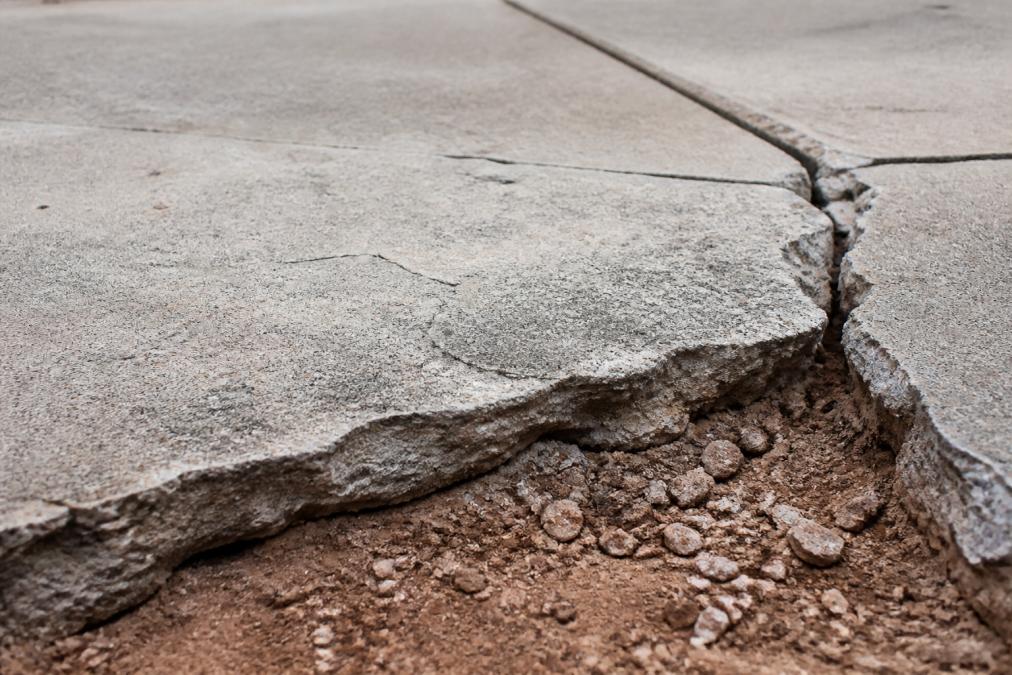
Hot mix asphalt and concrete slabs are particularly vulnerable to this cycle because they're rigid. They don't flex with the soil movement, they fight it. The result is stress cracks that begin small and expand, allowing water infiltration that accelerates the damage. A concrete slab that's perfectly level one year may have a quarter-inch lip between sections the next.
Heat compounds the problem. Summer temperatures regularly exceed 95 degrees, and dark pavement surfaces absorb that heat intensely (noaa.gov). Asphalt softens and can rut under vehicle weight during peak heat. Concrete expands in the heat and contracts at night, creating micro-fractures over time. This thermal cycling, combined with soil movement, is why many driveways fail faster here than in regions with more stable soil and moderate temperatures.
The solution isn't to ignore these forces, it's to design for them. Permeable interlocking pavers, when installed with proper sub-base preparation and drainage, actually accommodate soil movement better than rigid surfaces. The joints allow flexibility. If one paver settles slightly, it doesn't crack the entire system. Water drains through the surface rather than pooling and saturating the soil beneath, which reduces the expansion-contraction cycle.
Concrete vs. Paver Driveway Maintenance: What to Expect
Both concrete and permeable driveway pavers require maintenance, but the type and frequency differ significantly.
Concrete driveway maintenance typically involves sealing every 2-3 years to prevent water infiltration, filling cracks as they appear, and addressing spalling (surface deterioration) if it develops. Once a concrete slab cracks, the damage usually progresses. Water seeps into the crack, freezes in winter (though freeze-thaw cycles are less severe here than in northern regions), and expands the crack further. Repairing a cracked concrete driveway means either filling the crack (a temporary fix) or replacing the affected section (expensive and visible).
The advantage of concrete is simplicity: it's a single solid surface that's straightforward to clean and maintain. The disadvantage is permanence of failure, once structural damage occurs, your options are limited and costly.
Permeable paver driveway maintenance involves different priorities. The pavers themselves are durable, but the system depends on maintaining the joints and sub-base. Joint sand should be topped up periodically (typically every 1-2 years) to maintain structural integrity and water drainage. The surface should be sealed or treated based on the paver material, natural stone pavers may need sealing more frequently than concrete pavers. Weeds can grow through joints if not managed, though proper joint sand and occasional hand-pulling prevent this from becoming a major issue.
The advantage of pavers is modularity: if one paver is damaged, you replace that single unit rather than the entire driveway. The system accommodates soil movement without cracking. Drainage is built into the design, which reduces the soil saturation that drives expansion.
Most homeowners find that paver maintenance is more hands-on initially but less expensive long-term because major structural failure is less likely. Concrete requires less active maintenance but faces higher costs when failure occurs.
Permeable Driveway Pavers: Cost, Benefits, and Drainage
Permeable driveway pavers have become increasingly popular, and for good reason, they address several of the region's most pressing challenges simultaneously.
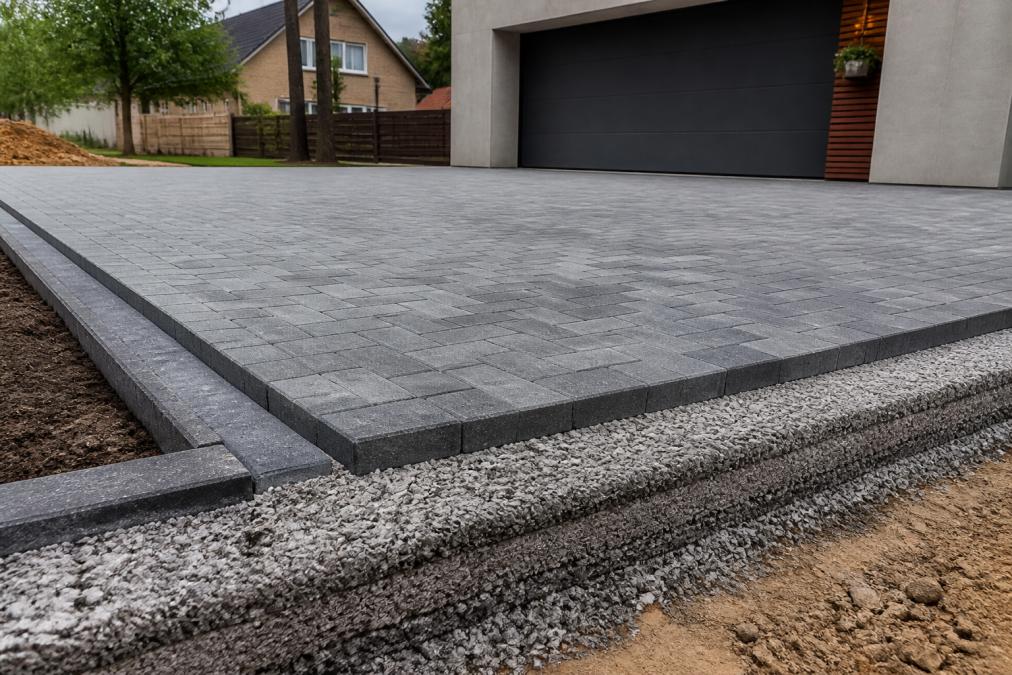
How they work: Permeable interlocking pavers are laid over a compacted aggregate base with a geotextile fabric layer. Water drains through the paver joints and the aggregate base, then into the soil below or into a drainage system. This design eliminates surface pooling and reduces the soil saturation that drives expansive clay movement.
Drainage benefits: In a region where heavy rains can overwhelm standard drainage, permeable pavers reduce runoff significantly (the EPA). Instead of water streaming across your driveway into your yard or neighbor's property, it infiltrates gradually. This reduces erosion, prevents standing water, and can improve overall property drainage. For homeowners with poor yard drainage or basement water concerns, a permeable driveway is part of the solution.
Durability advantages: Because water doesn't pool on the surface, freeze-thaw damage is minimized. The flexible joint design accommodates soil expansion and contraction without cracking. Load-bearing capacity is excellent, permeable pavers handle regular vehicle traffic and even occasional heavy loads without structural failure.
Aesthetic versatility: Permeable pavers come in numerous colors, textures, and patterns. Holland stone pavers, for example, offer a high-end appearance while maintaining full functionality. You're not limited to the gray monotony of concrete or the dark heat-absorbing quality of asphalt.
Installation considerations: Permeable paver installation requires more precision than pouring concrete. The sub-base preparation must be exact, proper compaction, correct slope for drainage, and appropriate aggregate depth. This is where contractor expertise matters significantly. Poor installation undermines the entire system's drainage and longevity benefits.
Moises Pizana Hardscapes handles every step of permeable paver installation with in-house crews and equipment, ensuring the sub-base is prepared correctly and the drainage system functions as designed. We don't subcontract this work, which means consistent quality and accountability for long-term performance.
Driveway Installation Timeline: What to Plan For
Understanding the installation timeline helps you plan around the project and set realistic expectations.
Preparation and site assessment: Before work begins, the existing driveway must be evaluated and removed if necessary. This typically takes 1-2 days for a standard residential driveway. Soil conditions are assessed to determine sub-base requirements and any drainage challenges.
Sub-base preparation: This is the foundation of durability. The existing surface is removed, the soil is graded and compacted, and an aggregate base is installed and compacted in layers. Proper compaction is critical, inadequate compaction leads to settling and surface unevenness. This phase typically takes 2-4 days depending on driveway size and soil conditions.
Material installation: Concrete pouring typically takes 1-2 days for curing to begin, though full curing takes longer. Asphalt installation is faster, often completed in a single day, but requires curing time before full use. Permeable paver installation is more labor-intensive because each paver is placed individually and joints are filled. For a standard residential driveway, expect 3-5 days of active installation work.
Curing and final preparation: Concrete requires 7 days before vehicles can be parked on it, though full strength develops over 28 days (cement.org). Asphalt should cure for at least 48 hours before heavy use. Pavers can typically be used within 24 hours, though some sealers require additional curing time.
Total project duration: A typical residential durable driveway paving project, from removal through completion, takes 1-2 weeks depending on material choice and weather. Rainy weather extends timelines because soil preparation and base compaction require dry conditions.
Planning for this timeline means arranging alternative parking, coordinating with other outdoor projects, and understanding that quality installation requires time, rushing the process, particularly sub-base preparation, compromises long-term durability.
Comparing Your Options: Material Durability and Longevity
Different materials offer different trade-offs between initial cost, lifespan, maintenance requirements, and performance in local conditions.
| Material | Typical Lifespan | Maintenance Frequency | Best For | Key Limitation |
|---|---|---|---|---|
| Concrete | 25-30 years | Sealing every 2-3 years, crack repair as needed | Budget-conscious homeowners wanting simplicity | Susceptible to cracking from soil movement |
| Hot Mix Asphalt | 15-20 years | Seal coating every 2-3 years, patching as needed | Temporary solutions or budget constraints | Softens in heat, requires frequent maintenance |
| Permeable Interlocking Pavers | 25-40+ years | Joint sand top-up every 1-2 years, occasional sealing | Homeowners prioritizing drainage and durability | Higher upfront installation cost |
| Recycled Asphalt | 10-15 years | Raking and compacting annually | Very temporary or low-budget applications | Poor durability, frequent maintenance |
Concrete remains the most common choice because it's straightforward and familiar. In local conditions, concrete driveways typically last 25-30 years with proper maintenance, though soil movement can shorten this significantly if the driveway lacks proper sub-base preparation. The key limitation is that once cracking begins, the problem compounds.
Hot mix asphalt is cheaper initially but requires more frequent maintenance. The heat absorption and softening during summer, combined with soil expansion cycles, means asphalt driveways often need seal coating every 2-3 years and patching every 5-7 years. Lifespan is typically 15-20 years before major resurfacing is needed.
Permeable interlocking pavers cost more upfront but deliver superior long-term durability and functionality. A well-installed paver system can last 25-40+ years because the flexible design accommodates soil movement, water drains properly, and individual pavers can be replaced if needed. Maintenance is predictable and less expensive than concrete or asphalt repair.
The durability difference comes down to design: rigid materials fight soil movement and fail when the forces are too great. Flexible systems accommodate movement and last longer.
Permitting, HOA Regulations, and Long-Term Value
Before starting any durable driveway paving project, verify local requirements. Many jurisdictions require permits for driveway work, particularly if the project involves drainage modifications or changes to the impervious surface area.
Permitting considerations: Some municipalities require permits for driveways, while others don't. Permit requirements often depend on whether you're replacing an existing driveway (usually no permit needed) or expanding the driveway area (often requires a permit). Permeable pavers sometimes qualify for stormwater credits or incentives because they reduce runoff, which can offset permitting costs.
HOA regulations: If your property is in an HOA community, review the architectural guidelines before selecting materials and design. Some HOAs restrict paving materials or require approval before installation. Understanding these rules early prevents costly changes mid-project.
Long-term value: A durable driveway paving system adds measurable curb appeal and signals property maintenance to potential buyers. A cracked, deteriorating driveway suggests neglect and defers buyers. A well-maintained driveway with proper drainage and modern materials enhances perceived value.
Permeable pavers, in particular, appeal to environmentally conscious buyers and those concerned about drainage and foundation issues. The investment often returns value at resale, particularly in markets where soil issues and drainage are known concerns.
Choosing the right durable driveway paving material requires balancing upfront cost, long-term maintenance, and performance in local soil and climate conditions. Permeable interlocking pavers offer the best combination of durability, drainage, and longevity for most homeowners, though concrete remains a solid choice if budget is the primary constraint.
The difference between a driveway that lasts 15 years and one that lasts 30+ years comes down to material selection and installation quality. Moises Pizana Hardscapes brings 15 years of regional experience to every project, with in-house crews and equipment ensuring proper sub-base preparation, correct drainage design, and structural integrity that lasts. Get a quote today and see how a professionally installed durable driveway can enhance your property's value and functionality.
Frequently Asked Questions
Q: What is the most durable driveway material for this climate?
A: Interlocking permeable pavers and high-quality hot mix asphalt offer good durability for clay-heavy soils and temperature swings. Pavers excel because they flex with soil movement and allow drainage, while asphalt handles thermal stress well when properly installed with adequate sub-base preparation. Concrete can crack under expansive clay pressure. Your choice depends on budget, aesthetic goals, and whether you prioritize modularity for repairs.
Q: How does concrete vs paver driveway maintenance differ?
A: Concrete requires sealing every 2-3 years and develops cracks that are permanent. Paver driveways need joint sand replenishment annually and occasional sealing, but individual pavers can be replaced without affecting the whole surface. Asphalt needs seal coating every 2-3 years and patching of potholes. Pavers offer good repairability; concrete is lowest-maintenance initially but can be costlier to fix long-term.
Q: Are permeable driveway pavers worth the cost?
A: Yes, if erosion control and drainage matter to you. Permeable pavers reduce runoff, prevent water pooling, and often satisfy HOA stormwater requirements. They cost more upfront than solid pavers, but the added durability and potential property value increase can offset the premium. They're especially valuable in areas with clay soil where drainage prevents foundation shifting.
Q: How long does a driveway installation timeline typically take?
A: Most driveway installations take 3-7 days depending on size and material. Site prep and sub-base work (grading, compaction, geotextile placement) takes 1-2 days. Paver or concrete installation follows, then finishing touches like joint sand or sealing. Weather delays and soil conditions can extend timelines. Always confirm the specific driveway installation timeline with your contractor before starting.
Q: Will a new driveway add value to my home when I sell?
A: A well-designed, durable driveway improves curb appeal and can add to perceived property value, especially in competitive markets. Buyers expect functional, attractive driveways. Permeable pavers and quality hardscaping signal property care and can justify higher listing prices. However, value depends on overall landscape design and neighborhood standards, not just the driveway alone.
Q: What should I know about HOA regulations for driveway materials?
A: Many HOAs restrict material types, colors, and finishes. Some require permeable surfaces for drainage compliance. Check your HOA bylaws before choosing concrete, asphalt, or pavers. Permitting may be required for any driveway replacement or expansion. Understanding these rules upfront prevents costly rework and ensures your investment meets local standards.