 ultimate-guide
Custom Stone Walkway Installation Cost: 2026 Guide
Table of Contents
- What Determines Stone Walkway Installation Cost
- Natural Stone Walkway Installation Price Per Square Foot
- Paver vs Natural Stone Walkway Cost Comparison
- Factors Affecting Hardscape Installation Labor Costs
- How Stone Walkway Installation Adds Property Value
- Material Durability and Climate Considerations
- Planning Your Custom Stone Walkway Project
- Frequently Asked Questions
Last Updated: August 18, 2026
What Determines Stone Walkway Installation Cost
The cost of a custom stone walkway installation depends on far more than just the price of materials. Site conditions, stone type, labor complexity, and base preparation all play significant roles in your final bill. Understanding these factors helps you budget accurately and make informed decisions about your hardscape project.
At Moises Pizana Hardscapes, we've found that most homeowners underestimate the cost because they focus only on the visible stone. The real expense driver is what happens beneath the surface. A proper installation requires excavation, grading, drainage solutions, compaction, and multiple base layers. Skip these steps to save money, and you'll face settling, cracking, and water pooling within a few years.
The square footage of your walkway is the starting point, but it's just the beginning. A 200-square-foot walkway on level, well-draining soil costs significantly less than the same size project on sloped terrain with poor drainage. Labor hours multiply when crews must excavate deeper, address drainage issues, or work around obstacles like tree roots or existing hardscape.
Material selection matters too. Natural stone varieties, flagstone, bluestone, travertine, and cobblestone, vary widely in price and durability. Concrete pavers offer a budget-friendly alternative but lack the longevity and aesthetic appeal of natural stone. Climate also affects material choice; stones that thrive in one region may crack or stain in another due to freeze-thaw cycles or moisture exposure.
Natural Stone Walkway Installation Price Per Square Foot
When evaluating the natural stone walkway installation price per square foot, you're looking at a range that reflects material quality, regional labor rates, and site complexity. The cost per square foot encompasses materials, labor, base preparation, and site cleanup.
Material costs vary by stone type. Flagstone and bluestone command premium prices due to their durability and aesthetic appeal. Travertine offers a middle ground, elegant appearance with moderate pricing. Cobblestone is typically the most expensive natural stone option. Concrete pavers are the most affordable choice but don't carry the same visual impact or longevity as natural stone.
Labor represents the largest portion of your budget. Skilled crews that understand proper base preparation, compaction, drainage, and finishing techniques charge appropriately for their expertise. Rushing through installation or hiring inexperienced crews is a common mistake that leads to costly repairs down the road.
Site preparation costs are often overlooked. If your walkway requires significant excavation, grading adjustments, or drainage solutions, those expenses add up quickly. A straightforward installation on relatively level ground costs far less than a project requiring extensive site work.
Paver vs Natural Stone Walkway Cost Comparison
Concrete Pavers vs Natural Stone
The choice between concrete pavers and natural stone is fundamentally about balancing budget, longevity, and aesthetics. Concrete pavers cost significantly less upfront, making them attractive for homeowners on tight budgets. However, natural stone delivers superior durability and visual appeal that often justifies the higher initial investment.
Concrete pavers are manufactured uniformly, which simplifies installation and reduces labor time. They come in standard sizes and colors, limiting customization options. Over time, concrete pavers fade, crack under freeze-thaw stress, and may shift as the base settles. Maintenance includes regular sealing and occasional replacement of damaged units.
Natural stone pavers offer unique character that concrete cannot match. Each stone is individual, creating a walkway with visual depth and sophistication. Natural stone withstands weather extremes better than concrete, particularly in freeze-thaw climates. The downside is higher material cost and longer installation time due to the irregular shapes requiring skilled placement.
The real cost difference emerges over time. A concrete paver walkway may require significant repairs or replacement within 10-15 years. A properly installed natural stone walkway can last 30 years or more with minimal maintenance. When you factor in replacement costs and repairs, natural stone often becomes the more economical choice long-term.
Flagstone, Bluestone, and Travertine Options
Flagstone is a sedimentary stone that splits naturally into flat sheets, making it ideal for walkways. It's durable, attractive, and available in earthy tones ranging from gray to rust. Flagstone handles freeze-thaw cycles reasonably well, though it can become slippery when wet. Installation requires careful placement due to varying thicknesses, which increases labor costs.
Bluestone is a dense, durable sedimentary rock prized for its blue-gray coloring and fine grain. It's highly resistant to weathering and freeze-thaw damage, making it excellent for northern climates. Bluestone is harder than flagstone, requiring more skilled installation. Its premium price reflects its superior durability and aesthetic appeal.
Travertine is a porous limestone formed from mineral springs. It offers a warm, elegant appearance with natural color variation. Travertine is softer than flagstone or bluestone, making it more susceptible to staining and freeze-thaw damage in harsh climates. In mild climates, travertine performs well and provides distinctive Mediterranean aesthetics.
| Stone Type | Durability | Climate Best Suited | Maintenance Level | Visual Appeal |
|---|---|---|---|---|
| Flagstone | Good | Moderate climates | Moderate | Rustic, earthy |
| Bluestone | Excellent | Cold climates | Low | Refined, blue-gray |
| Travertine | Moderate | Warm/mild climates | Moderate | Elegant, warm tones |
| Concrete Pavers | Fair | Any climate | High | Uniform, limited character |
Factors Affecting Hardscape Installation Labor Costs
Labor costs dominate most hardscape projects, often representing 50-70% of your total budget. The complexity of your installation determines how many hours crews need and which skill level is required.
A straightforward walkway on level ground with good drainage requires fewer labor hours than a project involving slopes, existing obstacles, or drainage complications. Crews must account for site accessibility, if equipment can't reach the work area easily, manual labor increases and costs rise.
Crew experience matters significantly. Experienced teams work efficiently, minimize mistakes, and deliver superior results. Inexperienced crews may take longer, require rework, and produce installations that fail prematurely. Paying for expertise upfront prevents expensive repairs later.
Site Preparation and Excavation
Site preparation and excavation costs depend on how much material must be removed and where it goes. On a simple walkway, excavation might involve removing 4-6 inches of soil to reach proper depth. On sloped terrain or areas with poor drainage, excavation becomes more complex and costly.
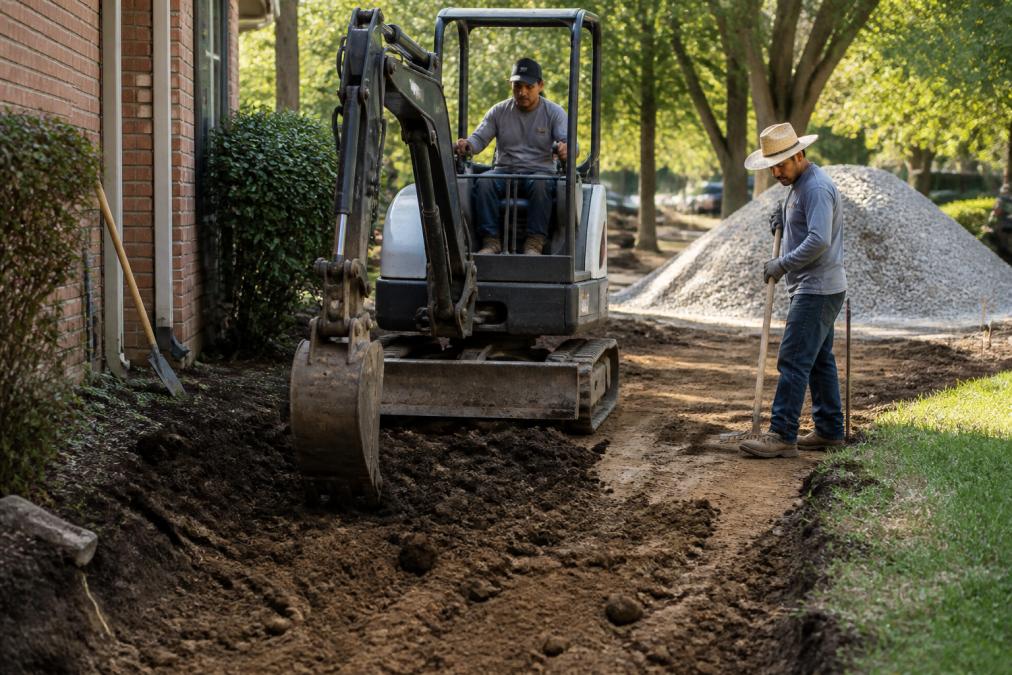
Excavation depth varies based on climate and soil conditions. In freeze-thaw climates, base preparation must extend deeper to prevent frost heave. In mild climates, shallower excavation may suffice. The crew must also remove tree roots, rocks, and debris that could interfere with the base.
Proper grading ensures water drains away from the walkway rather than pooling on the surface. If existing grade is inadequate, additional excavation and fill work is required. This is where many budget installations fail, contractors skip proper grading to save time, and homeowners end up with standing water and premature deterioration.
Base Preparation and Drainage
The base is everything. A proper base includes multiple layers: geotextile fabric to prevent soil migration, crushed stone aggregate for drainage, and compacted gravel for stability. Each layer must be installed correctly and compacted to specification.
Geotextile fabric prevents fine soil particles from migrating up into the base, which causes settling and shifting. Crushed stone aggregate provides drainage and allows water to move away from the walkway structure. Compaction is critical, inadequately compacted base leads to settling, cracking, and uneven surfaces.
Drainage planning prevents water from pooling beneath the walkway. Proper slope and base composition allow water to drain laterally and downward. In areas with poor natural drainage, French drains or other solutions may be necessary. These additions increase labor costs but prevent costly water damage and deterioration.
How Stone Walkway Installation Adds Property Value
A well-executed custom stone walkway enhances curb appeal and creates functional outdoor living space. These improvements attract buyers and justify higher asking prices when selling your home.
Professional hardscaping signals that a property has been well-maintained. A beautiful stone walkway suggests the owner invested in quality improvements and paid attention to details. Buyers perceive this as a positive indicator of overall property condition.
Walkways improve functionality and safety. They provide clear pathways through landscaping, connect outdoor spaces, and prevent wear patterns in grass. These practical benefits appeal to homeowners who plan to enjoy their outdoor space.
The aesthetic impact is significant. A custom stone walkway creates visual interest, frames landscaping, and adds sophistication to the property. The right stone choice complements your home's architecture and landscape design.
When calculating return on investment, consider that hardscape improvements typically recoup 50-80% of their cost at resale, depending on market conditions and installation quality. More importantly, you enjoy the improved outdoor space for years before selling. The combination of immediate enjoyment and eventual resale value makes quality hardscaping a sound investment.
Material Durability and Climate Considerations
Your climate is the primary factor determining which stone types will perform well on your walkway. Freeze-thaw cycles, moisture levels, temperature extremes, and seasonal weather patterns all affect stone durability.
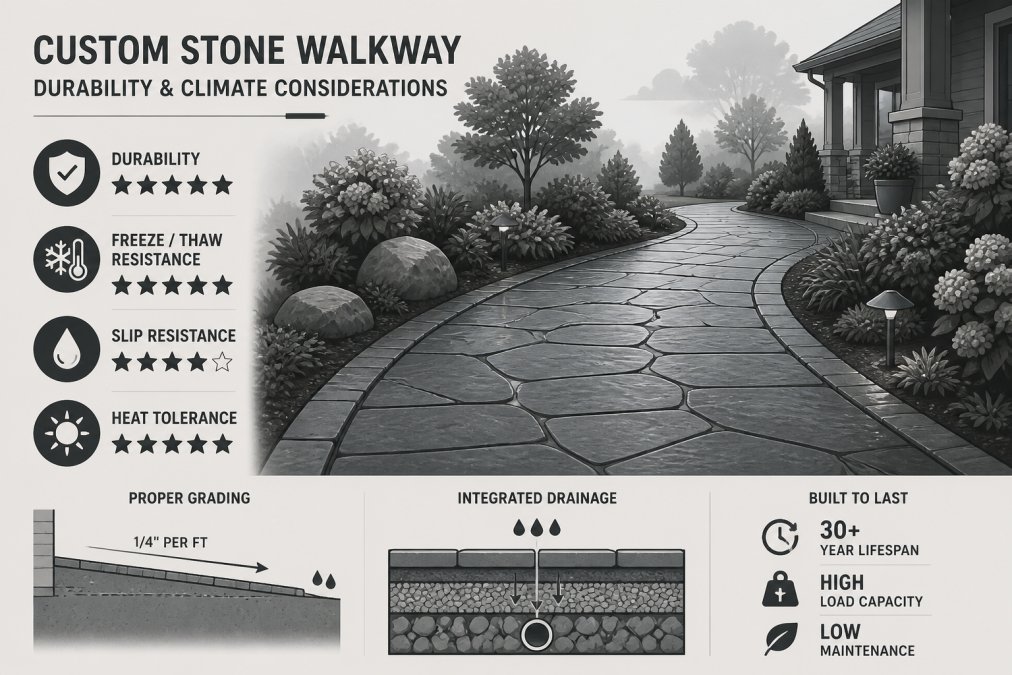
In freeze-thaw climates, water penetrates porous stones, freezes, expands, and cracks the material. Denser stones like bluestone handle this stress better than softer options like travertine. Base preparation becomes even more critical in cold climates, proper drainage prevents water from accumulating beneath the walkway and causing frost heave.
In warm, dry climates, different considerations apply. Some stones fade under intense UV exposure. Others absorb heat and become uncomfortable to walk on barefoot. Travertine's porous nature makes it prone to staining from dirt and organic growth in humid conditions.
Seasonal moisture fluctuations affect stone performance. In areas with significant rainfall, proper drainage and stone selection prevent water damage. In arid regions, the main concern is UV fading and thermal stress from temperature swings.
Polymeric sand in the joints between stones is affected by climate too. In freeze-thaw zones, polymeric sand can fail as repeated freezing and thawing break down the binder. In warm, wet climates, organic growth may develop in joints despite polymeric sand's resistance.
Planning Your Custom Stone Walkway Project
Start by defining your project scope. Measure the walkway dimensions and note any slopes, obstacles, or existing features that affect installation. Consider how the walkway connects to your home, landscaping, and other outdoor spaces.
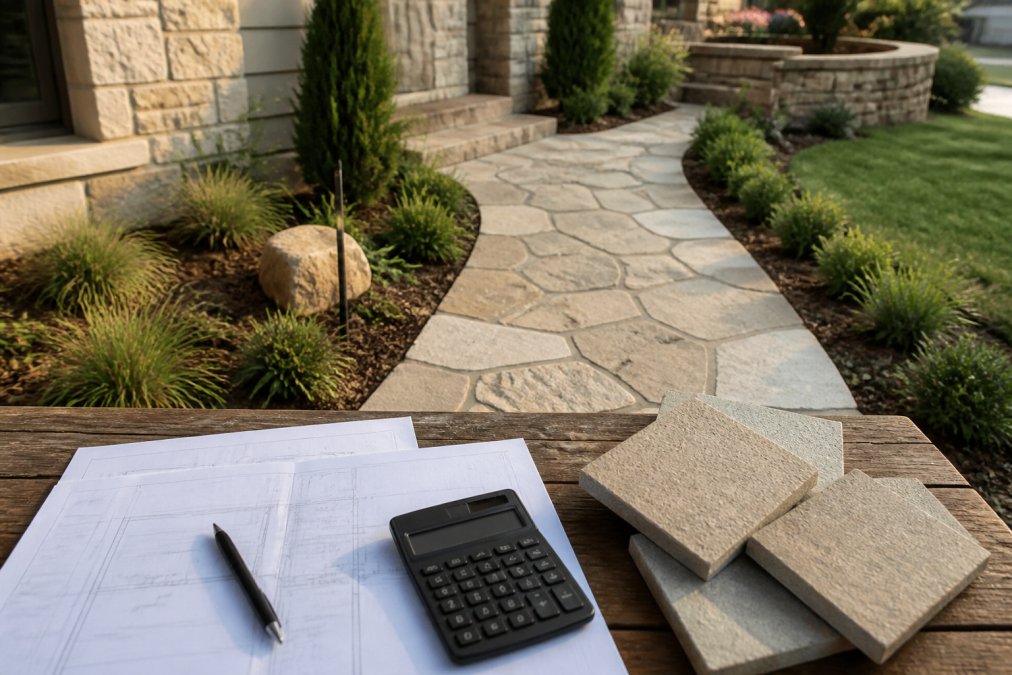
Select your stone type based on climate, aesthetic preference, and budget. Visit stone suppliers and see samples in person, photos don't capture the true color and texture. Ask your contractor which stones perform best in your specific climate.
Get detailed quotes from multiple contractors. A quality quote includes materials, labor, site preparation, base work, and cleanup. It specifies stone type and size, base layer composition, and timeline. Avoid unusually low bids, they typically indicate corners will be cut.
Discuss drainage and grading with your contractor. Ensure they understand your site conditions and will implement proper drainage solutions. Ask about their warranty and what it covers.
A quality custom stone walkway requires investment in proper site preparation, appropriate material selection, and skilled installation. At Moises Pizana Hardscapes, we've learned that cutting corners on base preparation or rushing installation always costs more in the long run. When you're ready to transform your outdoor space with a durable, beautiful stone walkway, professional hardscape contractors understand the importance of proper base preparation. We bring more than 15 years of experience, full in-house crews, and equipment to deliver installations that last. Get a detailed quote from Moises Pizana Hardscapes and discover how quality hardscaping can enhance your property's value and functionality.
Frequently Asked Questions
How much does a custom stone walkway installation typically cost?
Custom stone walkway installation cost depends on walkway size, material type, site conditions, and labor complexity. Pricing varies significantly based on whether you choose concrete pavers, natural stone like flagstone or bluestone, or premium options like travertine. Site preparation, excavation, base preparation, and drainage requirements also impact the final cost. Contact Moises Pizana Hardscapes for a detailed quote tailored to your specific project dimensions and material preferences.
Does a new stone walkway increase my home's property value?
Yes, a professionally installed custom stone walkway enhances curb appeal and can increase property value. Stone walkways improve both aesthetic appeal and functionality, making your outdoor space more inviting to potential buyers. The return on investment depends on the quality of installation, material durability, and how well the walkway complements your home's architecture. Proper drainage, base preparation, and edge restraints ensure longevity, maximizing the long-term value of your hardscape investment.
What factors affect the cost of hardscape installation labor?
Labor costs for stone walkway installation depend on site accessibility, excavation requirements, ground conditions, base preparation complexity, and installation timeline. Projects requiring extensive sub-base work, geotextile fabric installation, compaction, and grading take longer and cost more. Contractor experience, equipment availability, and project size also influence labor fees. Moises Pizana Hardscapes brings over 15 years of experience and maintains its own equipment and crew, ensuring efficient installation without subcontracting delays.
Is natural stone more expensive than concrete pavers for walkways?
Natural stone typically costs more than concrete pavers upfront, but offers superior durability and aesthetic appeal. Options like flagstone, bluestone, and travertine vary in price and maintenance requirements. While concrete pavers are budget-friendly, natural stone provides better long-term value through durability and property appeal. The choice depends on your budget, climate conditions, maintenance preferences, and desired walkway design. Natural stone handles temperature changes better in certain climates, affecting overall longevity and lifecycle costs.