 listicle
Best Pavers for Texas Heat: 2026 Guide
Table of Contents
- Why Texas Heat Affects Patio Materials
- Top Pavers for Texas Heat: Quick Comparison
- Travertine vs Concrete Pavers: Heat Resistance Compared
- Porcelain, Flagstone, and Limestone Options
- How to Keep Patio Pavers Cool in Summer
- Cost of Heat-Resistant Patio Installation
- Durability and Soil Shifting in Texas
- Conclusion
- Frequently Asked Questions
Last Updated: August 16, 2026
Why Texas Heat Affects Patio Materials
Texas summers are unforgiving. Temperatures regularly exceed 95°F, and direct sunlight on patio surfaces can push materials well above 140°F, hot enough to burn bare feet and accelerate material degradation. The combination of intense solar radiation, extreme daily temperature swings, and expansive clay soil that shifts with moisture cycles demands pavers designed specifically for heat resistance and durability.
Light-colored materials with low thermal mass consistently outperform darker alternatives. The best pavers reflect sunlight rather than absorb it, dissipate heat quickly, and maintain structural integrity through decades of thermal cycling. This comes down to solar reflectance, how much sunlight a surface bounces back, and thermal conductivity, which determines how quickly heat moves through the material.
At Moises Pizana Hardscapes, we've installed hundreds of patios across the Dallas-Fort Worth area and seen what works and what fails. Below, we'll break down the best pavers for Texas heat and explain why each one performs the way it does.
Top Pavers for Texas Heat: Quick Comparison
Quick Picks:
- Best Overall: Travertine pavers, naturally cool, slip-resistant, luxurious aesthetic
- Best for Modern Design: Porcelain pavers, engineered durability, low maintenance, heat-resistant
- Best Budget Option: Concrete pavers in light colors, durable, customizable, affordable
- Best Natural Aesthetic: Flagstone or limestone, rustic appeal, good heat resistance, locally sourced
The table below compares how these materials perform in direct Texas heat:
| Paver Type | Heat Resistance | Durability | Maintenance | Best For |
|---|---|---|---|---|
| Travertine | Excellent (stays cool) | High | Sealing every 2-3 years | Pool decks, barefoot comfort |
| Porcelain | Very Good | Excellent | Low (no sealing needed) | Modern patios, low-maintenance |
| Concrete | Good (light colors) | High | Periodic sealing | Driveways, budget-conscious |
| Flagstone | Good | High | Sealing recommended | Rustic patios, walkways |
| Limestone | Very Good | High | Occasional sealing | Covered patios, elegant spaces |
| Brick | Moderate | High | Low | Traditional aesthetic |
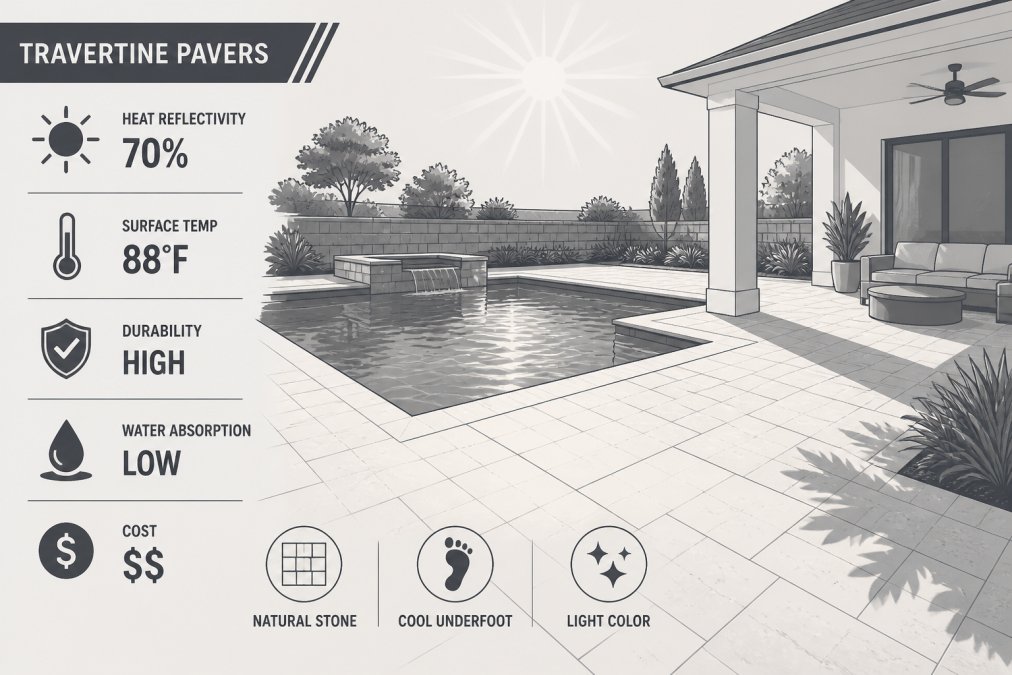
Travertine dominates the Texas market because it stays significantly cooler underfoot than alternatives. Its porous nature allows heat to dissipate rather than accumulate. Porcelain pavers, engineered for density and durability, release heat faster than they absorb it, especially in lighter shades. Concrete pavers offer flexibility in design and color; lighter versions perform well, while darker shades absorb too much heat for barefoot comfort.
If barefoot comfort and luxury aesthetic matter most, travertine is the gold standard. For modern design with minimal upkeep, porcelain wins. For budget-conscious choices, light-colored concrete pavers deliver solid performance at a lower price point.
Travertine vs Concrete Pavers: Heat Resistance Compared
Travertine and concrete represent opposite approaches to the heat problem. Travertine is a natural stone with inherent porosity; concrete is engineered for density and compressive strength.
How Travertine Stays Cool:
Travertine's porous structure acts like a thermal sponge. Small holes throughout the material allow air circulation and heat dissipation. The surface temperature of travertine in direct sunlight typically stays 15-25°F cooler than concrete under identical conditions. The tumbled finish adds slip resistance and enhances heat dissipation by increasing surface area. A sealed travertine paver resists staining and water damage while maintaining its thermal advantage.
How Concrete Performs:
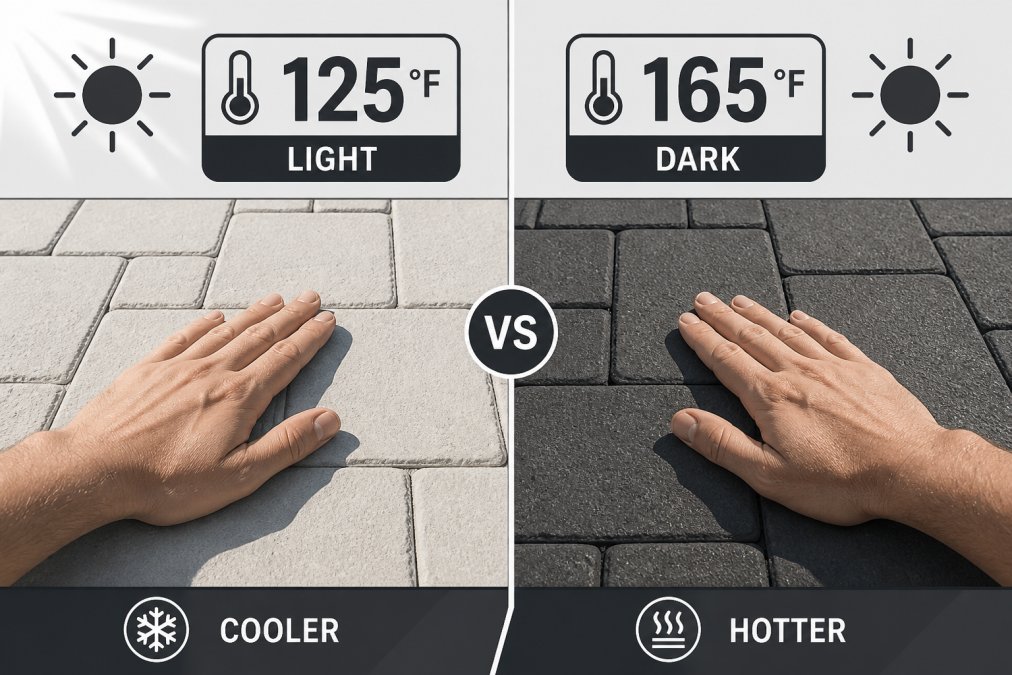
Concrete's density provides excellent compressive strength and durability for heavy foot traffic and vehicle loads. However, heat penetrates and accumulates more readily. A dark concrete paver in summer sun can reach 150°F+, making it unsafe for barefoot use. Light-colored concrete pavers perform much better, reducing surface temperature by 20-30°F compared to dark versions.
Concrete's flexibility is a real advantage in Texas. The clay soil shifts seasonally, and concrete pavers accommodate this movement better than rigid natural stone. If one paver cracks, it's simple to replace.
The Real Difference:
Choose travertine if barefoot comfort and luxury aesthetic are priorities. Choose light-colored concrete if budget matters and you don't mind periodic maintenance. Both will last decades in Texas heat when properly installed.
Porcelain, Flagstone, and Limestone Options
Beyond travertine and concrete, three other materials deserve consideration: porcelain, flagstone, and limestone.
Porcelain Pavers:
Porcelain is manufactured from high-fired clay and minerals, creating a non-porous surface that resists staining, fading, and heat absorption far better than natural stone. In Texas heat, porcelain stays cool and doesn't require sealing. Modern porcelain lines offer contemporary aesthetics, with colors ranging from light neutrals to darker tones; lighter shades perform better thermally. Porcelain handles heavy traffic, resists UV fading, and requires only occasional cleaning.
The drawback is cost and installation precision. Porcelain typically runs higher than concrete and sometimes higher than travertine. The base must be perfectly level, or pavers can crack under pressure.
Flagstone:
Texas flagstone, primarily limestone and sandstone varieties, offers authentic regional character and is locally sourced. Flagstone's irregular shapes and natural color variations create unique, rustic patios. It performs reasonably well in Texas heat, with thermal properties falling between travertine and concrete. Lighter flagstone stays cooler than darker varieties.
Flagstone requires sealing to prevent water absorption, algae growth, and discoloration. For dry-laid installations (no mortar), flagstone accommodates soil shifting better than mortared stone.
Limestone Pavers:
Limestone is a refined alternative to flagstone, typically finished to a more uniform surface. In light shades, it stays cool underfoot and resists heat absorption effectively. Limestone works particularly well for covered patios or transitional spaces. Like travertine, limestone benefits from sealing and periodic maintenance.
How to Keep Patio Pavers Cool in Summer
Even the best pavers benefit from smart installation and maintenance strategies.
Choose Light Colors:
This is the single most important decision. Light-colored surfaces reflect 60-80% of solar radiation, while dark surfaces absorb 80-90%. The difference in surface temperature can exceed 40°F.
Optimize Installation Base:
A permeable base (sand and gravel) allows heat to dissipate downward rather than radiating back into the surface. For areas prone to water pooling, ensure proper slope and drainage. A 1-2% slope (roughly 1/8 inch per foot) is sufficient to direct water away without being visually obvious.
Apply Reflective Sealers:
Some sealers are formulated with reflective properties, enhancing the natural reflectivity of the paver surface. Travertine and limestone gain the most from reflective sealers, while porcelain's engineered surface is already optimized.
Install Shade Structures:
Shade dramatically reduces surface temperature. A pergola, shade sail, or tree canopy can lower patio temperature by 10-20°F.
Regular Cleaning:
Dirt and algae buildup reduce reflectivity. Quarterly pressure washing or annual professional cleaning maintains the paver's light color and reflective properties.
Maintain Proper Sealing Schedule:
Sealed pavers maintain their color and reflectivity better than unsealed ones. For travertine, reseal every 2-3 years. For limestone and flagstone, seal every 3-5 years or as needed. Porcelain doesn't require sealing but benefits from occasional professional cleaning.
Cost of Heat-Resistant Patio Installation
Pricing for heat-resistant pavers varies widely based on material, size, complexity, and your location within the DFW area.
Material Costs:
Travertine typically ranges from mid-tier to premium pricing. Porcelain is generally premium-priced but offers durability that justifies the cost over decades. Concrete pavers are the most affordable option. Flagstone and limestone fall in the mid-range.
For specific pricing, contact Moises Pizana Hardscapes directly for a detailed quote based on your site assessment.
Installation Factors That Affect Cost:
Soil preparation is critical in Texas. Clay soil requires proper grading and base preparation to prevent settling and cracking. Complex designs, curved edges, or integrated features increase labor costs. Simple rectangular patios are the most economical. Slope and drainage requirements add cost if your yard doesn't naturally drain well.
Timeline and Labor:
Most patio projects complete in 1-3 weeks, depending on size and complexity. Moises Pizana Hardscapes completes work with speed and precision using experienced crews and proper equipment, translating to faster project completion and reduced labor costs.
Long-Term Value:
Quality paver installation adds significant home value. A well-designed patio with heat-resistant materials enhances curb appeal and creates functional outdoor living space. In the DFW market, hardscape improvements consistently return 50-70% of their cost in home value appreciation. Choosing durable materials upfront reduces replacement costs down the road.
Durability and Soil Shifting in Texas
Texas clay soil presents unique challenges. The soil expands when wet and contracts when dry, creating constant movement. Pavers installed without accounting for this movement crack, settle unevenly, and fail prematurely.
How Clay Soil Affects Pavers:
Clay soil can shift 1-2 inches vertically between wet and dry seasons. A rigid paver installation, mortared stone set in concrete, cracks under this stress. Flexible installations accommodate movement. Pavers set in sand without mortar can shift slightly without cracking. This is why dry-laid installations often outlast mortared ones in Texas.
Material-Specific Durability:
Travertine is naturally porous and slightly flexible, handling soil movement better than rigid materials. Porcelain is rigid and requires careful site preparation and possibly concrete base installation. Concrete pavers are designed to accommodate movement, allowing flexibility that rigid stone doesn't. Flagstone and limestone perform similarly to travertine, reasonably flexible and forgiving of minor soil movement.
Proper Base Installation:
A proper base consists of 4-6 inches of compacted gravel or recycled asphalt, topped with 1 inch of sand. This allows drainage, accommodates slight settling, and distributes weight evenly. In areas with poor drainage or expansive clay, a thicker base (8+ inches) or engineered base may be necessary.
Moises Pizana Hardscapes assesses your soil conditions and installs appropriate base depths to prevent settling and cracking.
Sealing and Maintenance:
Regular sealing protects pavers from water absorption, which accelerates deterioration. For travertine, seal every 2-3 years. For concrete, seal every 3-5 years. Porcelain doesn't require sealing but benefits from periodic cleaning.
Conclusion
The best pavers for Texas heat balance three priorities: thermal performance, durability, and aesthetics. Travertine excels at staying cool underfoot and offers luxury appeal. Porcelain delivers modern design with minimal maintenance. Concrete provides budget-friendly durability and design flexibility. Flagstone and limestone offer natural beauty with solid heat resistance.
Light color is non-negotiable. Proper installation, especially attention to Texas clay soil and drainage, determines whether your patio lasts 10 years or 25+.
Moises Pizana Hardscapes specializes in custom patio installations designed for Texas conditions. With 15+ years of experience, our team understands local soil challenges, drainage requirements, and material performance in extreme heat. We don't subcontract work; we handle design, installation, and finishing with our own crew and equipment, ensuring quality and precision from start to finish.
Get a quote from Moises Pizana Hardscapes and see how we can transform your backyard into a functional, beautiful outdoor living space that handles Texas heat. We'll assess your site, recommend the best materials for your goals and budget, and deliver professional installation that adds lasting value to your home.
Real Customer Questions About Patio Pavers in Texas Heat
How much does a heat-resistant patio installation cost?
Costs vary based on material choice, patio size, site conditions, and design complexity. For accurate pricing tailored to your specific project, contact Moises Pizana Hardscapes for a detailed quote based on your site assessment.
What's the timeline for a patio installation?
Most projects complete in 1-3 weeks. Smaller patios finish faster; larger installations take longer. Moises Pizana Hardscapes prioritizes efficiency without compromising quality.
Can you handle smaller projects, or only large backyards?
We handle projects of all sizes, from repairing cracked sections to building complete patios. Our team has the expertise and equipment to deliver quality results regardless of project scope.
Will a patio actually increase my home value?
Quality hardscape improvements consistently return 50-70% of their cost in home value. A well-designed patio with durable materials enhances curb appeal and creates functional outdoor living space.
Do you have photos of work in my area?
Yes. Moises Pizana Hardscapes has completed hundreds of installations across Dallas-Fort Worth. We can show you examples of patios, driveways, retaining walls, and outdoor kitchens in neighborhoods similar to yours.
What makes Moises Pizana Hardscapes different?
We don't subcontract. Our team handles every aspect of design and installation using our own equipment and crew. With 15+ years of experience managing Texas soil conditions, drainage challenges, and extreme heat, we deliver professional results with integrity and precision.
What happens if something goes wrong after installation?
We stand behind our work. If issues arise, cracking, settling, or drainage problems, we address them. Our reputation depends on customer satisfaction and long-term performance.
Can you fix water pooling in my yard?
Yes. Water pooling is often a drainage or slope issue. We assess your yard's grading, install proper slope (typically 1-2%), and ensure drainage directs water away from structures.
Frequently Asked Questions
What pavers stay the coolest in direct sunlight?
Travertine pavers and light-colored porcelain options stay coolest underfoot due to their solar reflectance and heat dissipation properties. Travertine's porous nature allows heat to escape faster, while porcelain's dense structure resists heat absorption. Light-colored limestone and concrete pavers also perform well because lighter shades reflect more solar radiation. Darker materials absorb more heat and retain it longer, making them uncomfortable in peak heat.
Is travertine better than concrete for heat resistance in Texas?
Travertine generally outperforms standard concrete pavers for heat resistance. Travertine naturally reflects heat and dissipates it through its porous structure, staying significantly cooler underfoot. Concrete pavers can match travertine's performance only if they're light-colored and properly sealed, but even then, travertine typically remains more comfortable in extreme heat. However, concrete offers more design flexibility and lower upfront costs, making it a practical middle-ground option for budget-conscious homeowners.
How do light-colored pavers affect surface temperature?
Light-colored pavers reflect sunlight rather than absorbing it, a property called albedo effect. This reflection significantly reduces surface temperature compared to dark materials. Lighter shades like ivory, beige, and gray can stay 15-30 degrees cooler than darker options on the same sunny day. This makes a substantial difference in barefoot comfort around pools and patios. Choosing light-colored travertine, porcelain, limestone, or concrete pavers is one of the most effective ways to create a comfortable outdoor space in Texas heat.
What should I expect to pay for heat-resistant patio installation?
Heat-resistant patio installation costs vary significantly based on material choice, patio size, and site conditions. Concrete pavers start at lower price points, while travertine and porcelain command premium pricing. Installation complexity, base preparation, and soil conditions in Texas (especially clay soil) can affect final costs. For accurate pricing on your specific project, contact Moises Pizana Hardscapes for a detailed quote that accounts for your property's unique needs and your chosen material.
Do permeable pavers help with heat dissipation?
Yes, permeable pavers contribute to heat dissipation by allowing water to pass through the surface, which reduces surface temperature and helps mitigate the urban heat island effect. The porous structure promotes water drainage and air circulation beneath the surface, both of which aid in cooling. Additionally, permeable systems are environmentally friendly and help manage stormwater runoff, a bonus benefit for Texas properties prone to heavy rainfall and flooding.
[EXTERNAL_LINK: Understanding solar reflectance and thermal properties in outdoor materials | energy.gov]
[EXTERNAL_LINK: Clay soil expansion and contraction effects on hardscaping | extension.oregonstate.edu]
[EXTERNAL_LINK: Best practices for permeable paver installation and stormwater management | epa.gov]