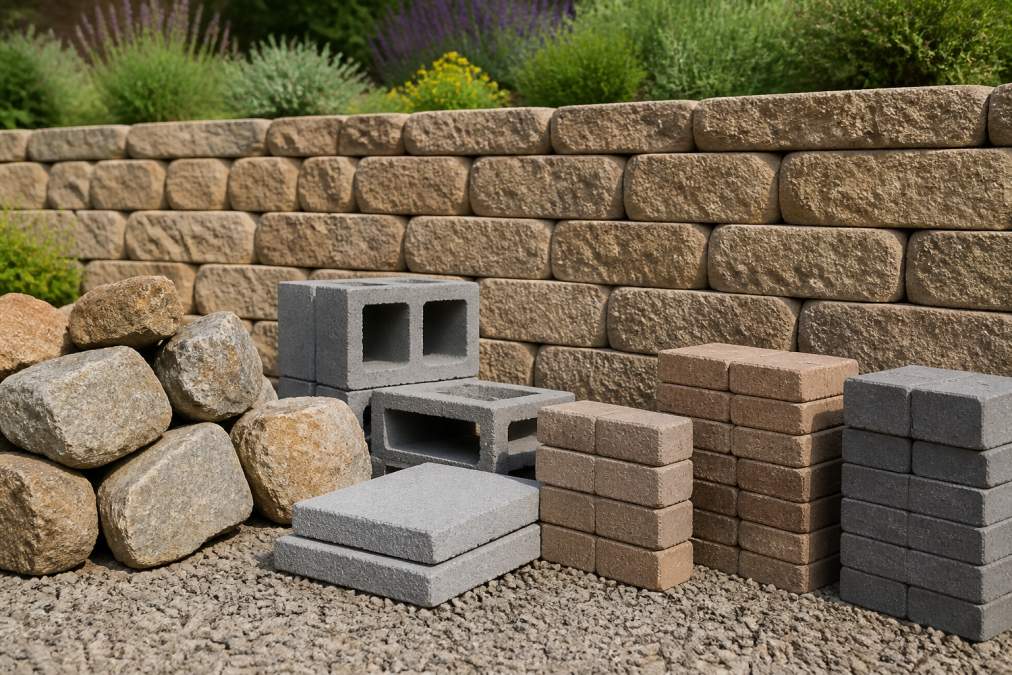
 listicle
Best Materials for Backyard Retaining Walls
Table of Contents
- Quick Picks
- Concrete Segmental Retaining Wall Blocks
- Natural Stone Retaining Walls
- Poured Concrete Retaining Walls
- Pressure-Treated Timber Retaining Walls
- Gabion Basket Retaining Walls
- Retaining Wall Drainage Requirements
- Retaining Wall Height Regulations and Average Cost of Installation
- Choosing the Right Material for Your Soil Type and Climate
- Frequently Asked Questions
Last Updated: August 20, 2026
When homeowners ask about the best materials for backyard retaining walls, they're really asking three questions: What will last? What will look good? And what won't drain my budget? The answer depends on your soil type, climate, and how tall you're building. At Moises Pizana Hardscapes, we've installed hundreds of retaining walls across the Dallas-Fort Worth area, and we've learned that material choice makes or breaks a project. A wall that looks stunning but fails structurally within five years costs far more than getting it right the first time.
This guide breaks down the five main material options, their real costs, maintenance demands, and which soils and climates suit each one. We'll also cover the drainage and height regulations that affect your material selection, because a beautiful wall that violates code or floods your foundation isn't beautiful at all.
Quick Picks
Best Overall: Concrete segmental retaining wall blocks, engineered, durable, and adaptable to most residential projects
Best for Longevity: Natural stone retaining walls, 50+ year lifespan with minimal maintenance
Best Budget Option: Pressure-treated timber retaining walls, lowest upfront cost for small to medium walls
Best for Drainage: Gabion basket retaining walls, permeable design prevents hydrostatic pressure buildup
Best for Tall Walls: Poured concrete retaining walls, maximum structural integrity for walls over 4 feet
Concrete Segmental Retaining Wall Blocks
Concrete segmental retaining wall blocks are the workhorse of residential landscaping. These interlocking units stack without mortar, creating a wall that's engineered and flexible enough to handle soil movement. The hollow-core design keeps them light yet strong enough to retain significant lateral earth pressure when properly installed.
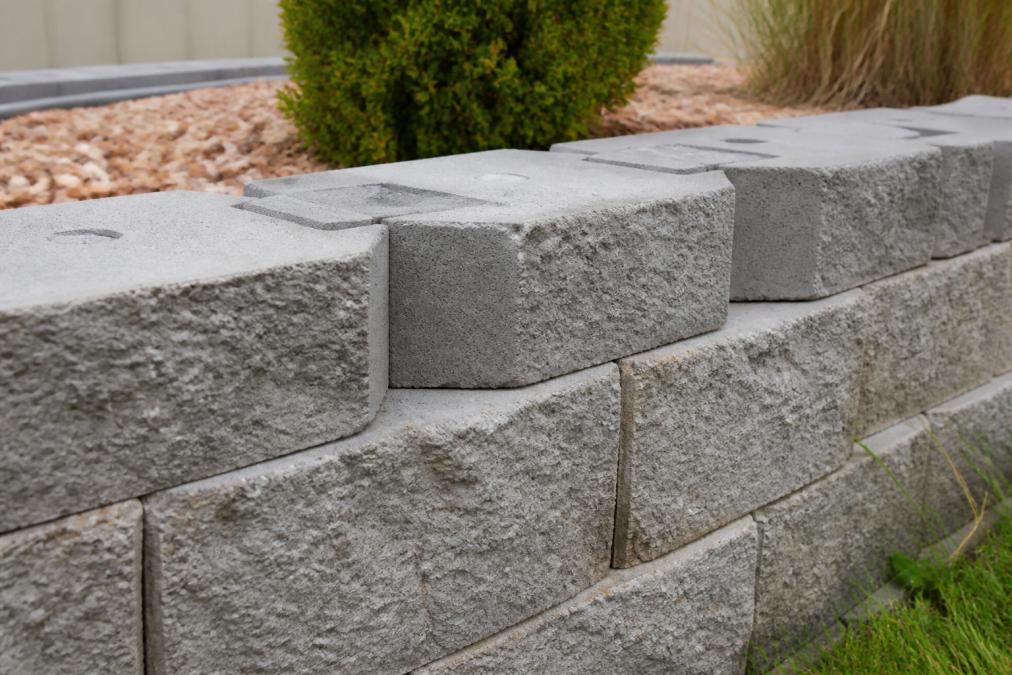
The real advantage is engineering support. Manufacturers like Allan Block and Belgard provide design guidance and installation specifications.
Installation requires a level gravel base and geogrid reinforcement for taller walls. A skilled contractor can install 100-150 square feet per day. DIY is possible for walls under 3 feet, but anything taller demands professional compaction equipment and geogrid expertise.
Segmental blocks come in dozens of finishes and colors, from charcoal to tan to earth tones. Maintenance is minimal, occasional weeding and debris clearing. The blocks remain stable for 50+ years when properly drained.
Natural Stone Retaining Walls
Natural stone retaining walls are the luxury option. Quartzite, Eden Stone, and other cut stone create a timeless aesthetic that improves with age as the stone develops patina. These walls often become landscape focal points rather than functional structures.
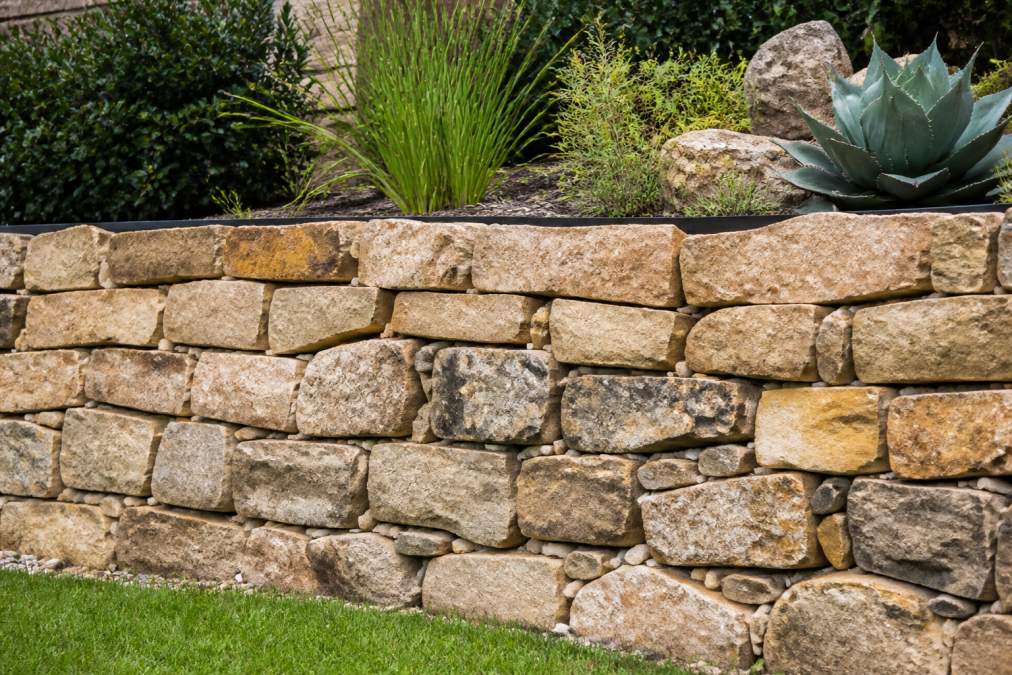
Durability is compelling. Properly installed stone walls last 50+ years with virtually no structural degradation. Unlike concrete, which can spall or crack under freeze-thaw cycles, natural stone actually gets harder over time.
Installation is labor-intensive and requires a skilled mason. Each stone is unique, so placement can't be rushed. A mason typically lays 50-75 square feet per day on a dry-stack wall. This is not a DIY project.
Drainage happens naturally between stones, reducing hydrostatic pressure. This makes stone particularly good for wet climates or clay soils where water management is critical. Aesthetically, natural stone is unbeatable, with color variation and texture that manufactured materials struggle to match. Upfront expense is the downside, but the 50+ year lifespan means the per-year cost is lower than shorter-lived materials.
Poured Concrete Retaining Walls
Poured concrete retaining walls are engineered structures. You dig a foundation below frost line, set forms, place rebar, pour concrete, and strip the forms. The result is a monolithic, jointless wall with maximum strength.
This material excels for tall walls (6+ feet), heavy-load situations, or when you need a finished face that can be decoratively stamped or stained. Structurally, poured concrete handles lateral earth pressure better than any segmental system and resists freeze-thaw damage if properly air-entrained.
Installation requires concrete contractors with formwork expertise. A typical 4-foot wall takes 3-5 days from excavation to form removal, plus curing time before backfilling. Weather delays are common. Maintenance depends on finish. Plain concrete will eventually show algae growth. Sealed concrete resists staining better. Cracks can develop if the wall wasn't engineered properly for your soil conditions, and repair is difficult once a monolithic wall cracks.
Pressure-Treated Timber Retaining Walls
Pressure-treated timber is the budget option. Landscape timbers (typically 6x6 or 6x8 Douglas Fir) are treated with preservatives that resist rot and insect damage. A timber wall is straightforward: stack the timbers, drive rebar through them for lateral stability, and backfill.
Installation is DIY-friendly for walls under 4 feet. Most homeowners can build a small timber wall in a weekend. The aesthetic is rustic and natural, which suits cottage or farmhouse landscapes. Timber ages gracefully, developing a silvery patina if left unfinished.
The catch is longevity. Even pressure-treated timber has a 15-20 year lifespan in wet climates, longer in dry climates. The wood eventually rots despite preservative treatment, especially at the base where it contacts soil and moisture. In freeze-thaw climates, timber walls fail faster because water penetrates the wood, freezes, and expands.
Cost is lowest upfront, but the short lifespan means you'll rebuild or repair within 15-20 years. For permanent landscape features, it's a false economy.
Gabion Basket Retaining Walls
Gabion baskets are wire mesh containers filled with stone, creating a permeable, flexible retaining wall. They're popular in erosion control and modern landscape design because they're durable, environmentally friendly, and architecturally distinctive.
The structure is simple: welded steel wire baskets (typically 3 feet wide by 3 feet tall) are stacked and filled with local stone aggregate. The permeability is the key advantage, water drains through the stone fill rather than building pressure behind the wall. This makes gabions ideal for wet sites, clay soils, or anywhere water management is critical.
Installation requires on-site filling, which is labor-intensive. However, no specialized equipment is needed, and the system adapts to ground settlement without cracking. Aesthetically, gabions are modern and striking, with visible stone fill creating visual texture. concrete sealer alternatives.
Durability is excellent if the steel is properly coated. Galvanized or PVC-coated gabions resist rust for 20-30+ years. Maintenance is minimal, occasionally refill baskets if stone settles and inspect the wire for rust. Cost is moderate, with material and labor comparable to segmental blocks.
Retaining Wall Drainage Requirements
Drainage is the single most important factor in retaining wall longevity. Water pressure behind a wall (hydrostatic pressure) is what causes failure. Every retaining wall needs three drainage components: a perforated drain pipe at the base, filter fabric to prevent soil from clogging the pipe, and drainage aggregate (gravel) behind the wall.
The perforated drain pipe is typically 4-inch PVC or HDPE, laid at the lowest point behind the wall with a slight slope toward daylight or a drainage outlet. As water infiltrates the soil behind the wall, it flows into the perforations and down the pipe, preventing accumulation.
Filter fabric (geotextile) sits between the backfill soil and the drainage aggregate. It allows water to pass through while preventing fine soil particles from migrating into the gravel and clogging the drainage system.
Drainage aggregate is clean, angular gravel (typically 3/4-inch stone) placed behind the wall and above the drain pipe. It acts as a highway for water, allowing it to flow downward toward the pipe rather than pooling. The aggregate layer should extend from the drain pipe to within 12 inches of the surface.
Weep holes are small openings in the wall face (typically 4-inch diameter pipes) that allow water to exit if it does accumulate. Every wall over 3 feet should have weep holes spaced every 6-8 feet along the length. In clay-heavy soils or areas with poor drainage, you may need a stronger system: a perforated pipe wrapped in filter fabric, placed in a bed of drainage aggregate, with a secondary outlet pipe.
Moises Pizana Hardscapes includes proper drainage in every retaining wall installation because we've seen too many beautiful walls fail due to water damage. It's the invisible infrastructure that determines whether your wall lasts 50 years or 5.
Retaining Wall Height Regulations and Average Cost of Installation
Retaining wall height regulations vary by jurisdiction, but most municipalities have rules based on wall height and proximity to property lines. Walls under 3 feet typically don't require permits or engineer approval. Walls between 3 and 4 feet may require a permit and basic design review. Walls over 4 feet almost always require engineering, a permit, and site-specific design calculations. In the DFW Metroplex, a retaining wall taller than four feet from the bottom of the footing to the top generally requires a building permit. Some walls, regardless of height, may also require permits if they support a surcharge load (like a driveway or pool), are in a flood zone, near easements, or redirect drainage onto a neighbor's property.
As walls get taller, lateral earth pressure increases exponentially. A 4-foot wall experiences roughly twice the pressure of a 2-foot wall. At 6 feet, the pressure is three times greater. Before you build, check with your local building department. A permit costs money upfront but prevents costly removal orders later.
Installation cost depends on material, height, soil conditions, and site access. For budgeting, think in terms of cost per linear foot rather than total cost. Site preparation and drainage infrastructure add to the cost. If your site requires extensive grading, soil removal, or a strong drainage system, expect those costs to exceed the wall material itself.
Choosing the Right Material for Your Soil Type and Climate
Soil type determines how much pressure your wall must resist and how well water drains. Clay soils hold water, expand when wet, and compress when dry, creating movement that stresses walls. Sandy soils drain well but provide less bearing capacity. Loamy soils are ideal, offering good drainage and stability.
In clay-heavy soils, prioritize drainage. Gabion baskets excel here because they're permeable by design. Natural stone walls also work well because water percolates between stones. Segmental blocks work if you install strong drainage. Timber walls in clay soils are risky, as water saturates the wood and accelerates rot.
In freeze-thaw climates (most of the northern half of the country), water penetration and expansion are major concerns. Poured concrete and natural stone resist freeze-thaw damage better than timber. Segmental blocks work if properly drained because water doesn't sit in the blocks themselves.
In hot, dry climates, freeze-thaw isn't a concern, but UV exposure and thermal expansion are. Concrete can spall from temperature cycling, while stone and timber are more forgiving. Drainage is less critical because water doesn't accumulate.
The Dallas-Fort Worth area experiences moderate freeze-thaw cycles and clay-heavy soils, which means proper drainage is non-negotiable. Concrete segmental blocks and natural stone both perform well here. Timber works for short walls but expect a 15-20 year lifespan. Poured concrete is overkill for most residential applications unless you're building very tall walls.
Choosing the right material for your backyard retaining wall comes down to balancing durability, aesthetics, and budget while respecting your soil and climate. Concrete segmental blocks offer the best balance for most residential projects. Natural stone is the investment choice for homeowners prioritizing longevity and curb appeal. Timber is the budget option but expect replacement within 15-20 years. Poured concrete and gabion baskets serve specific needs: maximum structural capacity and superior drainage, respectively.
Moises Pizana Hardscapes brings 15+ years of experience designing and installing retaining walls in the Dallas-Fort Worth area. We understand local soil conditions, climate challenges, and building codes. We handle site assessment, proper drainage design, and expert installation, no subcontracting, no shortcuts. Whether you're adding a small garden wall or stabilizing a hillside, we'll recommend the material that performs and looks right for your property. Get a quote and let us show you what quality craftsmanship looks like.
Frequently Asked Questions
What is the best material to use for a retaining wall?
The best retaining wall materials depend on your budget, climate, and aesthetic goals. Concrete segmental blocks offer strength and affordability with easy installation. Natural stone provides durability and timeless elegance but costs more upfront. Poured concrete delivers maximum structural integrity for tall walls. Pressure-treated timber is budget-friendly and looks natural. Gabions work well for erosion control and unique designs. Consider your soil type, local freeze-thaw cycles, and whether you need professional installation when deciding.
Does a 4-foot retaining wall need drainage?
Yes, drainage is essential for any retaining wall, regardless of height. Water buildup behind the wall creates hydrostatic pressure that can cause failure, settlement, or cracking. Install a perforated drain pipe at the base of the wall, surrounded by gravel, to redirect water away. Weep holes spaced every 4 to 6 feet along the wall face also help release trapped moisture. Without proper drainage, even a 4-foot wall risks premature deterioration and structural problems.
How do I choose the right retaining wall material for my soil type?
First, identify your soil type: clay, silt, sand, or rock. Clay soils retain water and create high lateral pressure, requiring robust materials like poured concrete or reinforced segmental blocks with geogrid. Sandy soils drain well but shift easily, so concrete blocks or stone with proper compaction work best. Rocky soils are stable and suit most materials. In freeze-thaw climates, avoid wood and choose concrete or stone that resists moisture absorption. Have a soil test done or consult a professional to match material strength to your soil's load-bearing capacity.
What is the strongest material for a retaining wall?
Poured concrete is the strongest retaining wall material due to its monolithic structure and steel reinforcement. It resists lateral earth pressure, freeze-thaw cycles, and moisture better than segmental blocks or stone. Concrete can handle taller walls and heavier soil loads without reinforcement layers like geogrid. Segmental concrete blocks reinforced with geogrid and proper base preparation come second in strength. Natural stone, while durable, is weaker than concrete and better suited for shorter walls or decorative applications. For maximum structural integrity, poured concrete is the industry standard.
Are concrete blocks better than natural stone for retaining walls?
Concrete blocks and natural stone each have advantages. Concrete blocks cost less, install faster, and offer consistent sizing for engineered designs. They're easier for DIY projects and work well for walls up to 10 feet. Natural stone lasts longer (50+ years), requires less maintenance, and adds premium curb appeal that increases property value. Stone suits high-end landscapes but costs more and requires skilled installation. For budget-conscious homeowners, concrete blocks win. For long-term durability and aesthetics, natural stone is worth the investment.