 listicle
Best Hardscape Contractors in DFW: 2026 Guide
Table of Contents
- How to Choose a Landscape Contractor for DFW Projects
- The Best Hardscape Contractors in DFW: Quick Comparison
- Moises Pizana Hardscapes: Full-Service Design and Installation
- BrightView: Large-Scale Commercial and Residential Construction
- Southern Botanical: Integrated Design-Build and Landscape Architecture
- Prestige Landscape Design: Custom Paver Patios and Irrigation
- Imperial Pavers & Turf: Paver Installation and Turf Specialists
- Cost of Retaining Wall Installation in the DFW Metroplex
- Frequently Asked Questions
Last Updated: September 14, 2026
How to Choose a Landscape Contractor for DFW Projects
Choosing the best hardscape contractors in DFW area starts with verifying three things: licensing and insurance, whether the crew is in-house or subcontracted, and a portfolio of completed local projects. Homeowners who skip these checks often pay twice for the same job.
Hardscape contractors are licensed construction professionals who build non-living outdoor features such as retaining walls, paver patios, driveways, pool decks, and outdoor kitchens. This guide breaks down real selection criteria and what drives project costs.
Here's what most guides get wrong: they rank contractors by review count alone. Reviews matter, but a firm with 400 reviews from lawn mowing jobs may have never built a single retaining wall.
Ask every candidate these questions before signing:
- Is the crew in-house, or will the work be subcontracted?
- How many years has the crew worked on hardscape construction specifically?
- Can you show photos of completed projects in my city?
- Who handles permitting and site grading?
- What does the drainage plan look like for my yard?
Texas Department of Licensing and Regulation maintains the state's licensing records, and checking a contractor's status there takes about five minutes.
The Best Hardscape Contractors in DFW: Quick Comparison
The best hardscape contractors in DFW area differ mainly by project scale, specialization, and whether they handle design in-house. The table below summarizes some firms, followed by the criteria that actually separate them.
| Contractor | Best For | Standout Strength | Pricing Model |
|---|---|---|---|
| Moises Pizana Hardscapes | Full-service residential design and installation | In-house crew, 15+ years experience | Project-based quote |
| BrightView | Large-scale commercial and high-end residential | Equipment and project management resources | Project-based |
| Southern Botanical | Integrated design-build projects | Landscape architecture and certified tree care | Project-based |
| Prestige Landscape Design | Custom paver patios and irrigation | Specialized hardscape aesthetics | Project-based |
| Imperial Pavers & Turf | Paver driveways, walkways, and turf | Focused hard-surface expertise | Project-based |
How to Read This Comparison
A table only helps if you know what to weigh. Four criteria matter more than review counts or years in business:
- Crew model. Firms that keep crews in-house control scheduling, quality, and accountability. Firms that subcontract introduce a layer where problems get passed between trades. Ask directly whether the crew that starts your project will finish it.
- Scope fit. A paver-only specialist is the right call for a driveway replacement. A full-service firm is the right call when your project combines a retaining wall, drainage correction, and an outdoor kitchen, because one contract covers all phases.
- Design capability. Some firms design in-house; others hand you a catalog of layouts. If you want input on paver patterns, wall heights, and how the hardscape meets the lawn, confirm design is part of the contract, not a separate fee.
- Service area. Coverage varies block by block across the metroplex. A firm with a strong reputation in one suburb may not serve yours, or may charge a travel premium.
What the Table Does Not Tell You
Pricing models all read "project-based," but the underlying estimates vary widely based on how each firm handles site assessment. A quote built from a phone conversation and a quote built from an on-site walkthrough with soil and drainage evaluation are not the same product, even if the line items look similar.
One pattern stands out: firms with strong reputations often control their own crews. Subcontracted labor can sometimes lead to quality problems, settling patios, cracked retaining walls, and drainage that backs up against the foundation.
Matching the Firm to the Project
- Most residential projects that combine multiple hardscape elements: a full-service firm like Moises Pizana Hardscapes handles design, grading, drainage, and installation with one crew and one point of accountability.
Moises Pizana Hardscapes: Full-Service Design and Installation
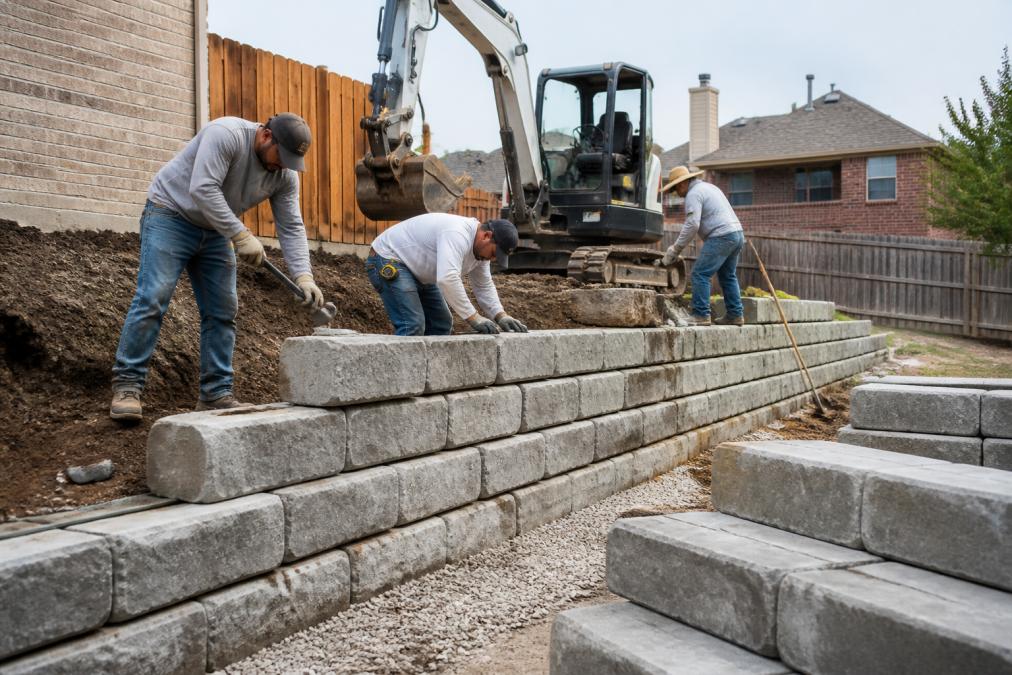
Moises Pizana Hardscapes handles the entire project with its own crew, from retaining walls to outdoor kitchens, without subcontracting a single phase.
The company specializes in retaining wall construction and functional outdoor living spaces across the Dallas and Fort Worth areas. Its service range covers custom patios, outdoor kitchens, durable driveways, pool decks, and elegant walkways.
What separates this firm:
- In-house equipment and crew with more than 15 years of experience, so the same team that quotes your project builds it
- Comprehensive scope covering driveways, retaining walls, outdoor kitchens, pool decks, and walkways under one contract
- Customized designs tailored to each client's vision rather than templated layouts
- Fast building with speed and precision, which matters when a project sits half-finished through a rainy season
The practical benefit is accountability. When one company owns design, site grading, drainage, and installation, there is no finger-pointing between trades when something settles or water pools.
BrightView: Large-Scale Commercial and Residential Construction
Southern Botanical: Integrated Design-Build and Landscape Architecture
Prestige Landscape Design: Custom Paver Patios and Irrigation
Imperial Pavers & Turf: Paver Installation and Turf Specialists
Cost of Retaining Wall Installation in the DFW Metroplex
The cost of retaining wall installation depends on wall height, length, material, and site access, which is why reputable contractors quote after a site visit rather than over the phone. No honest estimate exists without seeing the slope, soil, and drainage conditions.
That said, you can build a realistic budget before you call anyone. Pricing depends on wall height, length, material, and site access. A simple garden wall and an engineered wall with geogrid reinforcement are not the same project, even though both are "retaining walls."
What Drives the Number
- Wall height and length. Taller walls need engineered footings and possibly geogrid reinforcement. Walls above four feet typically require a stamped engineering design, which adds design and inspection cost (New IRC Equivalency Evaluation Report Program Streamlines Building Permit Process by...).
- Material. Natural stone, segmental block, and poured concrete carry different material and labor costs. Segmental block is often the most budget-friendly for straight runs; natural stone costs more in material and labor but holds up well and looks distinctive.
- Site grading and drainage. A wall on a flat lot with good drainage costs less than one requiring soil stabilization and a drainage solution behind the wall. French drains, gravel backfill, and filter fabric are not optional extras on a wall holding back a slope, they are what keeps it standing.
- Access. Tight side yards slow equipment movement and add labor hours. If a mini-excavator cannot reach the site, hand digging and wheelbarrow hauling can add significant labor.
- Permits and engineering. Many municipalities require a permit for walls above a certain height, and some require a licensed engineer's stamp. Permit fees and engineering reviews add cost but protect you if the wall ever fails.
Material Cost Comparison
| Material | Typical Cost Profile | Best For | Trade-Off |
|---|---|---|---|
| Segmental block | Lowest material cost, moderate labor | Straight runs, budget-conscious projects | Fewer aesthetic options; visible seams |
| Natural stone | Highest material cost, high labor | Feature walls, premium landscapes | Heavy; needs skilled masons |
| Poured concrete | Moderate material, high forming labor | Structural walls, modern designs | Curing time; can crack without proper reinforcement |
| Timber | Lowest upfront cost | Low garden walls under two feet | Shortest lifespan; rots in wet soil (fs.usda.gov) |
What a Written Quote Should Include
Because pricing is project-specific, the reliable path is a written, itemized quote. Ask for line items covering excavation, base preparation, drainage, reinforcement, material, labor, and cleanup. A single lump-sum number with no breakdown makes it impossible to compare bids fairly.
Moises Pizana Hardscapes provides quotes based on an on-site assessment of your property, so the estimate reflects your actual slope, soil, and access conditions rather than a generic per-foot rate.
Frequently Asked Questions
What is the difference between landscaping and hardscaping?
Landscaping covers living elements like grass, trees, and garden beds. Hardscaping refers to non-living, structural features such as retaining walls, paver patios, driveways, and outdoor kitchens. Most DFW homeowners need both, but hardscape contractors focus on the construction side. When you hire a hardscape contractor, ask whether they also handle landscape maintenance or if you need a separate crew for planting and irrigation.
How much does a professional hardscape project cost in the metroplex?
Pricing depends on square footage, material choice, site grading, and drainage needs. A small paver walkway costs less than a full outdoor kitchen with natural stone. Because material and labor rates shift, the best approach is to request a written estimate from at least two contractors. Moises Pizana Hardscapes provides project-specific quotes based on your design and site conditions.
Do I need a permit for a retaining wall or patio installation?
In most DFW cities, retaining walls over a certain height require a building permit. Patios and driveways may also need approval if they change drainage or impervious cover. Rules vary by municipality, so confirm with your local code office before construction starts. A licensed hardscape contractor will know the permit requirements for your area and can pull the paperwork for you.
How do I verify the credentials of a hardscape contractor?
Ask for a state license number, general liability insurance, and workers compensation coverage. Check the contractor's business registration with the Texas Department of Licensing and Regulation. Request references from projects completed in the last 12 months and visit one in person if possible. A contractor who hesitates to provide proof of insurance or references is a red flag.
What are the most durable materials for outdoor kitchens and driveways?
For driveways, concrete pavers and natural stone hold up well under DFW heat and occasional freezes. Outdoor kitchens often use granite, quartzite, or sealed concrete countertops because they resist staining and thermal shock. The base preparation matters as much as the surface material. Proper site grading and soil stabilization prevent settling and cracking regardless of which material you choose.