 listicle
Beautiful Backyard Living Alternatives for 2026
Table of Contents
- Small Backyard Hardscape Design Ideas That Maximize Space
- Durable Patio Materials for Outdoor Living Spaces
- Outdoor Kitchen and Fire Pit Alternatives
- Pergolas, Patio Covers, and Shade Solutions
- Cost of Backyard Hardscape Installation and Budget Planning
- Permitting, Zoning, and Smart Backyard Integration
- Frequently Asked Questions
Hardscaping Fundamentals: Building Your Outdoor Living Space
Hardscaping, the non-plant elements of your landscape, forms the backbone of any functional outdoor living space. It includes patios, walkways, retaining walls, pergolas, fire pits, and outdoor kitchens that transform a blank yard into an entertainment destination.
The difference between a yard that looks good and one that actually functions comes down to intentional hardscape design. At Moises Pizana Hardscapes, we've spent over 15 years helping homeowners create outdoor living spaces that balance aesthetics with durability and everyday usability. The best hardscaping projects solve problems before they happen: managing drainage, creating defined zones, and building structures that weather the local climate.
Most homeowners approach hardscaping backwards, picking a material they like, then fitting it into their space. The smarter approach is to start with how you actually use your yard. Do you entertain groups? Cook outdoors? Need privacy? Your answers determine the layout, materials, and budget.
Small Backyard Hardscape Design Ideas That Maximize Space
Small yards demand strategic thinking. Every square foot must earn its place, and constraints often force the most creative solutions.
Compact Patio Designs for Tight Spaces
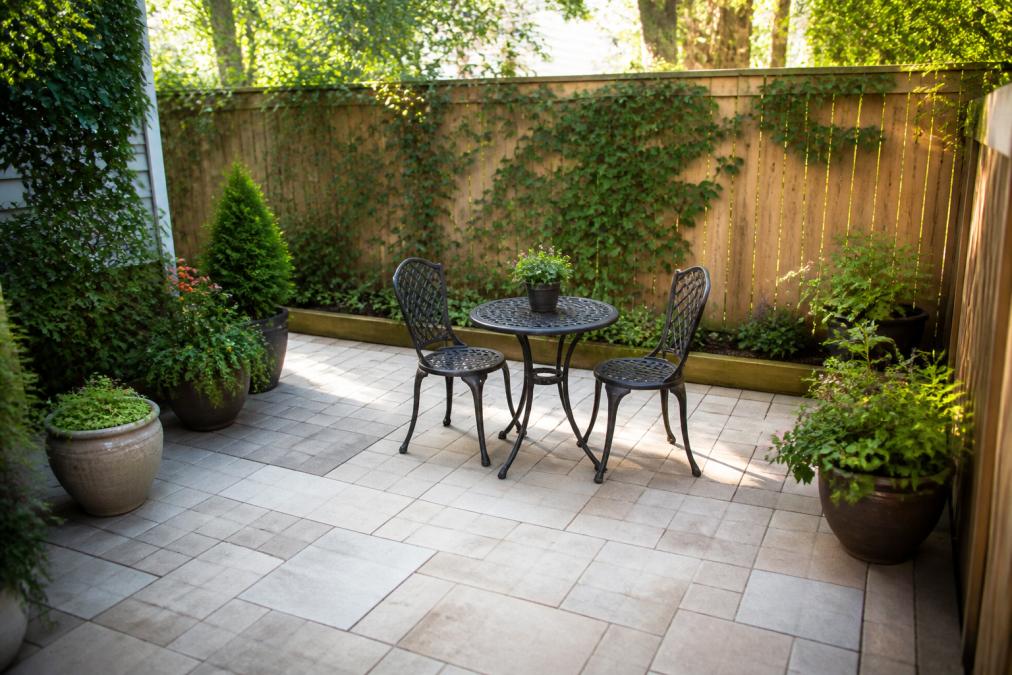
A 12-by-12-foot patio works well for most small backyards, large enough for a dining table and seating, compact enough to leave room for other features. Consider L-shaped or diagonal layouts instead of rectangular designs; diagonal pavers especially trick the eye into perceiving more depth.
Light-colored pavers reflect light and create an airy feel, while dark materials can make compact areas feel cramped. Permeable pavers manage water runoff effectively in smaller yards where drainage is tighter. Mixing materials, such as pavers with a gravel border, adds texture and visual breaks that enhance the sense of space.
Vertical Gardens and Privacy Screens
Small yards need vertical solutions. Privacy screens and vertical gardens pull your eye upward, making the space feel taller and less confined. A trellis with climbing vines creates privacy while adding greenery without consuming ground space.
A 10-by-10-foot pergola overhead creates defined space without blocking sightlines completely, providing shade without feeling oppressive (asla.org). Vertical gardens, whether stacked planters or wall-mounted boxes, add visual interest along fence lines where they create layered depth.
Multi-Purpose Focal Points
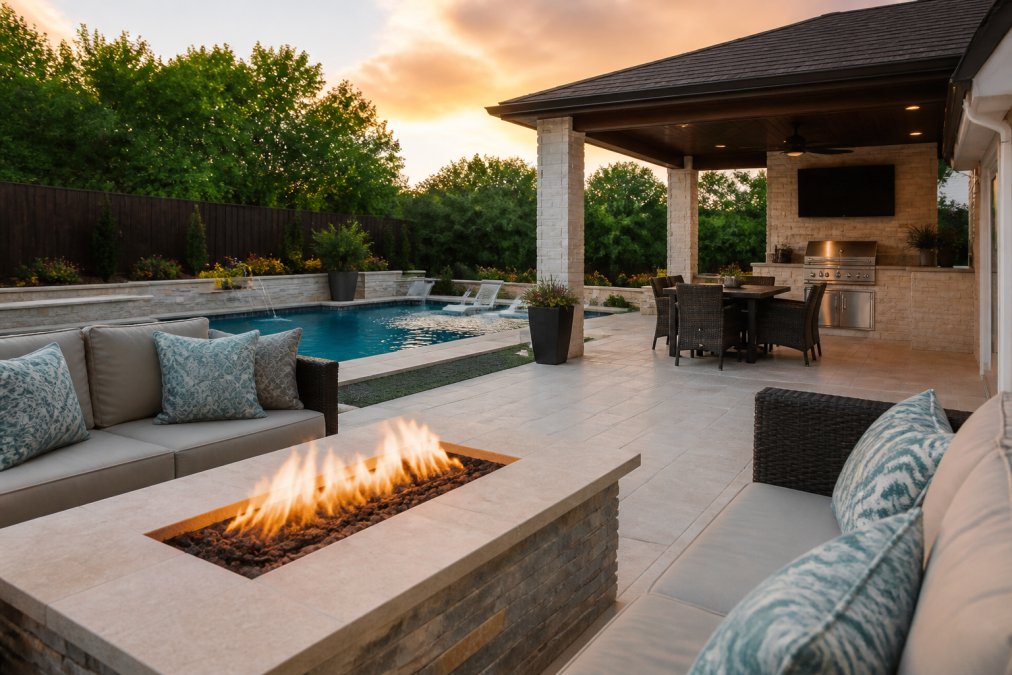
In small yards, focal points must pull multiple duties. A fire pit serves as both a gathering spot and heating element. An outdoor kitchen island becomes dining space, prep area, and entertainment hub. Built-in benches, storage, and cooking surfaces integrate into the hardscape itself, creating cohesive design without clutter.
Durable Patio Materials for Outdoor Living Spaces
The material you choose determines how long your patio lasts and how much maintenance it demands.
Permeable Pavers and Drainage Solutions
Permeable pavers let water pass through, reducing runoff and improving drainage (the EPA). They prevent standing water after rain that damages surfaces and creates maintenance headaches. While they cost more upfront than solid pavers, they last longer because water doesn't freeze underneath and crack the surface.
Installation matters significantly with permeable pavers, the base layer, sand layer, and joint material all need correct installation to maintain permeability. This is where experienced contractors make a difference.
Natural Stone and Composite Options
Natural stone offers timeless aesthetics and ages beautifully, but is expensive and requires regular sealing. Composite pavers blend concrete with recycled materials, offering affordability and low maintenance. Modern composite versions look far better than early generations and work especially well for high-traffic areas.
Concrete pavers are the most economical option, durable, available in many colors and patterns, and easy to replace if damaged. Permeable concrete paver options manage drainage while keeping costs lower than natural stone. garden lighting ideas.
Outdoor Kitchen and Fire Pit Alternatives
These features transform a yard from a space you pass through into a destination where you actually spend time.
Built-In Outdoor Kitchen Designs
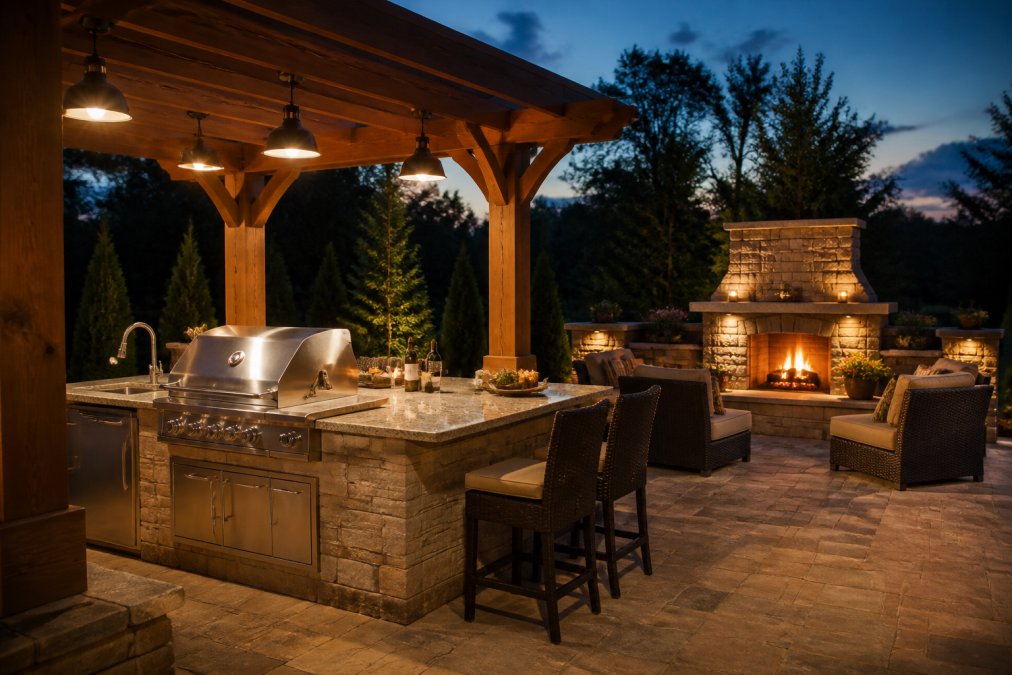
An outdoor kitchen needs a grill, counter space, and storage at minimum. Add a sink and refrigeration for full meal preparation. Built-in kitchens integrate into the hardscape, creating unified designs. Position your grill to avoid smoke blowing into seating areas and place prep surfaces near cooking zones.
Cost varies dramatically based on complexity, prioritize features you'll actually use rather than paying for aspirational additions.
Fire Pit and Fireplace Options
A fire pit creates a natural gathering point and extends your outdoor season. Custom-built fireplaces are more expensive but create unique focal points and feel more permanent.
Both require regular cleaning and attention to safety clearances. They're worth the effort if you'll actually use them.
Pergolas, Patio Covers, and Shade Solutions
Shade transforms an outdoor living space from uncomfortable during peak sun to genuinely usable throughout the day.
A pergola provides partial shade through slatted roof design, filtering sunlight without completely blocking it. Combined with climbing plants, pergolas provide additional shade and visual interest. Solid patio covers provide complete shade and rain protection but feel more enclosed and can trap heat on extremely hot days.
Wood pergolas look beautiful but require regular maintenance. Aluminum or composite structures require minimal maintenance and last longer.
The best shade solution depends on your climate and how you use the space. Intense afternoon heat may require a solid cover, while milder climates work well with pergolas and climbing plants.
Cost of Backyard Hardscape Installation and Budget Planning
A basic patio installation typically takes 2-4 weeks depending on size and ground preparation (nahb.org). Outdoor kitchens take 4-8 weeks. Complex projects can take 2-3 months.
Well-designed outdoor living spaces typically add 5-8% to your home's value. Quality hardscaping that solves real problems, drainage issues, lack of usable entertaining space, poor curb appeal, adds more value than purely decorative features. Work with contractors who understand your specific property and local conditions.
If budget is tight, phase your project. Start with a functional patio and walkways, then add fire pits or outdoor kitchens later. This spreads costs over time and lets you see how you actually use each space.
Maintenance costs vary dramatically by material. Natural stone requires regular sealing. Composite materials need occasional cleaning. Concrete can last decades with minimal care. Budget for maintenance when choosing materials.
Permitting, Zoning, and Smart Backyard Integration
Before breaking ground, understand local requirements. Setback requirements determine how close structures can be to property lines. Height restrictions limit pergola and fence heights. Some areas require drainage plans before patio installation.
Check with your local building department before finalizing designs. A quick conversation prevents expensive changes mid-project. Clarify whether your contractor handles permitting or if you manage it.
Outdoor lighting systems that adjust based on time of day or motion detection enhance aesthetics and security. Irrigation systems that adjust for weather reduce water waste.
Creating beautiful backyard living alternatives requires balancing aesthetics, function, budget, and durability. The best outdoor spaces result from thoughtful planning and quality execution. Whether maximizing a small space, building an beautiful outdoor kitchen, or adding shade structures, the principles remain the same: understand how you'll use the space, choose materials that will last, and work with contractors who understand your property.
At Moises Pizana Hardscapes, we transform backyards into functional outdoor living destinations. With over 15 years of experience in the area, in-house crews, and expertise across patios, retaining walls, outdoor kitchens, and complete hardscape design, we deliver customized solutions that enhance both your property's aesthetics and its value. Get a quote today and see how we can turn your backyard vision into reality.
Frequently Asked Questions
What are some low-maintenance alternatives to a traditional patio?
Permeable pavers with mulch or gravel require minimal upkeep while managing drainage. Composite decking eliminates staining and regular sealing. Xeriscaping with drought-resistant plants and decorative rock reduces watering and trimming. Hardscape focal points like fire pits or water features add visual interest without constant maintenance. For beautiful backyard living alternatives that stay pristine, consider combining hardscaping with native plantings adapted to your climate.
How can I create a functional outdoor living space on a budget?
Start with essential hardscape elements: a simple paver patio or concrete base, a pergola for shade, and basic outdoor furniture. Build in phases rather than all at once. Use cost-effective materials like recycled pavers or stamped concrete. DIY projects like fire pit installation (using pre-cast kits) or simple retaining walls can reduce labor costs. Prioritize high-impact elements like outdoor lighting and focal points before expanding. Request a consultation to understand the cost of backyard hardscape installation tailored to your budget.
What are the best hardscape materials for backyard living areas?
Durable patio materials for outdoor living include natural stone (flagstone, slate) for elegance, permeable pavers for drainage and sustainability, and composite materials for low maintenance. Concrete offers affordability and versatility. For fire pits and fireplaces, use fire-rated brick or stone. Pressure-treated wood works for decking and pergolas but requires regular maintenance. The best choice depends on your climate, foot traffic, and aesthetic goals. Consult a professional to match materials to your specific needs.
How do I know if a hardscape project will add value to my home?
Well-designed outdoor living spaces typically increase curb appeal and home value. Patios, outdoor kitchens, and fire pits are among the highest-ROI hardscape projects. The return depends on quality of installation, material durability, and how well the design complements your home's style. Professional installation ensures longevity and proper drainage, protecting your investment. Maintenance costs over time also affect long-term value. Discuss ROI expectations and maintenance requirements when planning your project with an experienced contractor.
Do I need permits for backyard hardscape projects?
Most jurisdictions require permits for structures like patios over a certain size, outdoor kitchens, fire pits, and retaining walls. Permit requirements vary by location and project scope. Pools, permanent structures, and projects affecting drainage almost always need approval. Working with a contractor familiar with local zoning and permitting regulations ensures compliance and protects your investment. Always confirm permit requirements before starting work to avoid costly corrections or fines.