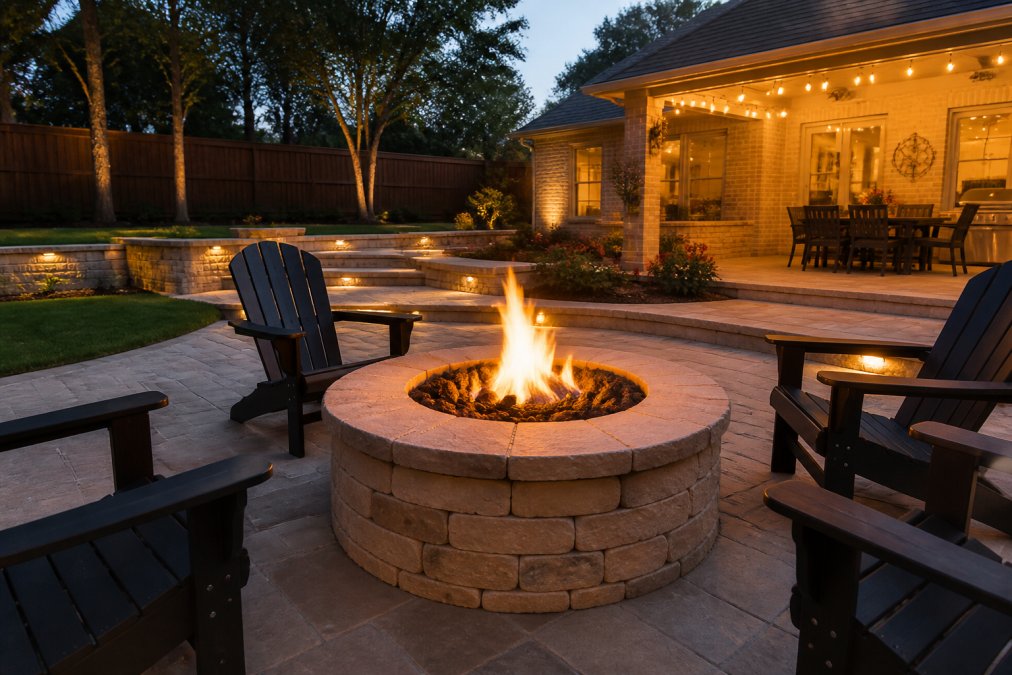
 ultimate-guide
Are Outdoor Fire Pits Worth It for Fort Worth Homes?
Table of Contents
- Why Fort Worth Homeowners Are Adding Fire Pits
- Outdoor Fire Pit Installation Cost: What Drives the Price
- Fire Pit vs Outdoor Fireplace: Which Fits Your Backyard
- Backyard Fire Pit Regulations in Fort Worth
- Do Fire Pits Increase Home Value? The ROI Breakdown
- Materials and Design for Texas Heat and Weather
- Maintenance and Safety for Fort Worth Climates
- Frequently Asked Questions
Last Updated: September 12, 2026
Why Fort Worth Homeowners Are Adding Fire Pits
Outdoor fire pits are a hardscape feature that extends a backyard's usable season into the cooler months, and for Fort Worth homes these outdoor fire pits solve a specific local problem: summers are too hot for daytime entertaining, so evenings and mild winters become the real outdoor season. This guide from Moises Pizana Hardscapes covers whether that investment holds up, what drives the price, and how local rules affect what you can build.
The appeal is straightforward. A fire pit turns an unused corner of the yard into a gathering point, and it works equally well for a quiet weeknight or a full outdoor entertainment setup.
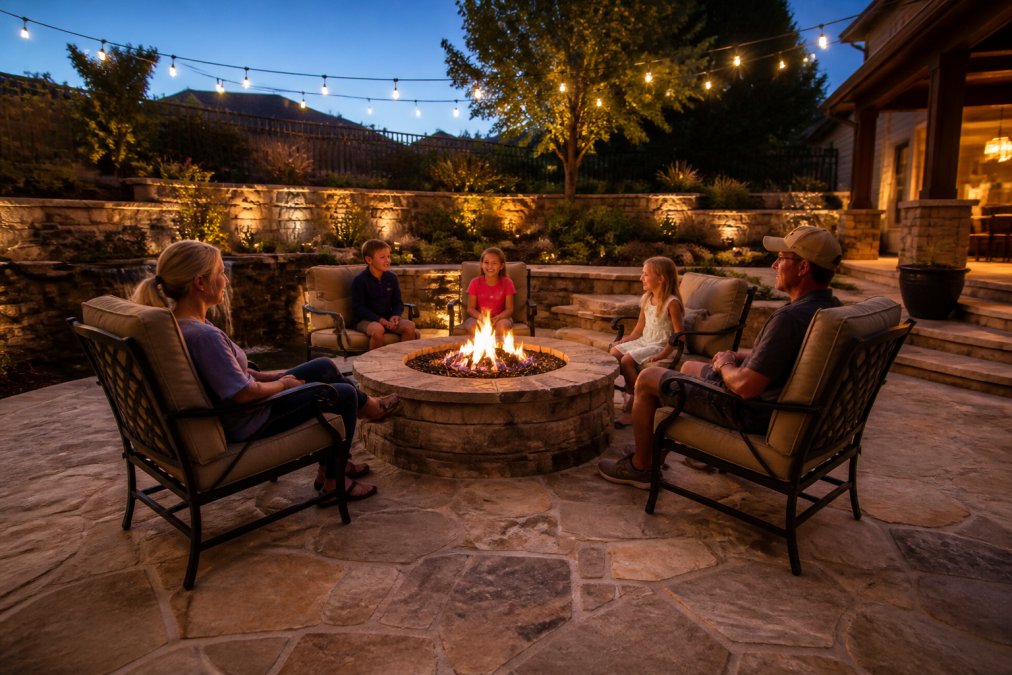
What most guides miss is that the fire pit itself is rarely the expensive part. The base, the surface prep, and the surrounding hardscaping usually decide both the final cost and how long the feature lasts.
Outdoor Fire Pit Installation Cost: What Drives the Price
Outdoor fire pit installation cost is driven less by the fire feature than by site conditions: base preparation, surface material, gas line routing, and how much surrounding hardscape you add. Two yards with identical fire pits can land thousands of dollars apart.
Here is where the money actually goes:
| Cost Driver | What It Covers | Why It Varies |
|---|---|---|
| Base and excavation | Removing sod, compacting gravel | Soil stability, access |
| Surface material | Concrete, pavers, natural stone | Material tier, square footage |
| Fuel connection | Gas line or wood-burning setup | Distance from supply |
| Surrounding hardscape | Patio, seating walls, walkways | Project scope |
| Permits and inspection | Local filings, fire marshal review | Jurisdiction |
Because every yard differs, request a quote for current pricing on your specific layout.
Gas vs. Wood-Burning: Cost and Convenience
Gas fire pits cost more upfront because of the line installation, but they skip the firewood, ash cleanup, and burn ban headaches. Wood-burning units are cheaper to build and give you a real flame and crackle, but you will manage smoke, embers, and seasonal restrictions.
A common mistake is choosing wood-burning for the aesthetic without checking whether your neighborhood allows it on high-wind days. Gas removes that variable entirely.
Fire Pit vs Outdoor Fireplace: Which Fits Your Backyard
The fire pit vs outdoor fireplace decision comes down to footprint, budget, and how permanent you want the feature to be. A fire pit is open, low, and flexible; an outdoor fireplace is a built vertical structure with a chimney and a much larger price tag.
Fire pit: Best for open seating on all sides, smaller yards, and lower budgets. Works as a standalone feature or a patio accent.
Outdoor fireplace: Best for a defined focal wall, a covered patio, and homeowners who want the structure to read as part of the house. Expect more engineering and a longer build.
Backyard Fire Pit Regulations in Fort Worth
Backyard fire pit regulations in Fort Worth operate on three separate layers, and most homeowners only think about the first one. The layers are: state outdoor burning rules, city and county code plus any active burn ban, and private restrictions from your HOA or deed restrictions. A fire pit can be perfectly legal under state and city rules and still get you a violation letter from your HOA.
Layer 1, State rules. The Texas Commission on Environmental Quality regulates outdoor burning statewide. The TCEQ generally prohibits outdoor burning when a burn ban is active, and it also restricts burning that creates a nuisance or a traffic hazard. Confirm current rules with the TCEQ outdoor burning rules before you build or burn.
Layer 2, City and county code. The City of Fort Worth and Tarrant County enforce distance and clearance requirements around the feature itself, and the local fire marshal can issue a burn ban during drought conditions. Clearance rules typically address distance from structures, combustible fencing, and overhanging branches. Because these numbers can change and vary by parcel, verify the current requirements for your address with the City of Fort Worth code compliance and your local fire marshal before you build.
Layer 3, HOA and deed restrictions. This is the layer most guides skip. Many planned communities and newer subdivisions in the area restrict or prohibit wood-burning fire pits, and some prohibit open flame entirely. A common pattern is an HOA that allows a gas or propane unit but bans wood-burning because of smoke complaints and ember risk. Before you buy a single paver, pull your HOA's architectural guidelines and deed restrictions and, if the language is ambiguous, submit an architectural review request in writing. Getting approval on paper protects you from a violation letter after the project is finished.
When You Need a Permit
Permitting is the second thing most guides gloss over. A portable, above-ground fire bowl or a freestanding chiminea typically does not require a permit. A built-in or permanent feature often does, because it involves a fixed structure, a gas connection, or both.
A practical rule of thumb:
- Portable wood-burning fire bowl or chiminea: usually no permit, but still subject to burn bans and clearance rules.
- Built-in masonry or stone fire pit: often requires a permit because it is a permanent structure.
- Gas or propane fire pit with a fixed line: typically requires a permit and an inspection of the gas connection.
- Fire pit inside a covered structure or on a deck: the most likely to trigger additional review, because of overhead clearance and ventilation.
A common sequence for a built-in gas fire pit is: confirm HOA approval, pull the permit, run the gas line with a licensed plumber, have the connection inspected, then build the surround. Skipping the inspection step is the most common reason a project has to be opened back up later.
Burn Bans and Seasonal Restrictions
A burn ban is a temporary prohibition on outdoor burning issued during drought conditions, and it applies to wood-burning fire pits and charcoal grills. Gas and propane units are typically exempt because they have a controlled flame and an on/off valve.
Check the burn ban status before you light anything. In a dry stretch, a single ember is all it takes to start a grass fire, and the fines are not worth the risk. The practical takeaway: if you want a fire feature you can use on any evening without checking a status page first, a gas unit removes the burn-ban variable entirely, which is one reason it is the more common choice in HOA-governed neighborhoods.
Do Fire Pits Increase Home Value? The ROI Breakdown
Fire pits can increase home value when they are part of a finished outdoor living space, but the return depends on execution. A professionally built fire pit on a proper patio reads as a permanent upgrade; a wobbly ring of stones on bare dirt reads as a liability a buyer will price into their offer.
The features that carry the most weight with appraisers and buyers:
- A defined patio or hardscape surface
- Quality, heat-rated materials that match the home
- Safe clearances and code-compliant installation
- Low maintenance requirements
Buyers in the DFW market consistently rank outdoor living space among the features they want most, and a fire pit is one of the cheapest ways to signal that the yard is usable year-round. For guidance on how outdoor improvements factor into appraisals, see the Appraisal Institute resources.
Materials and Design for Texas Heat and Weather
Heat-rated materials are non-negotiable in this climate. North Texas swings from triple-digit summers to occasional hard freezes, and that expansion and contraction cracks poor material choices fast. Natural stone and high-quality concrete pavers handle thermal cycling far better than thin brick or soft limestone.
Steel fire bowls and inserts should be rated for high heat, and any stone in direct contact with the flame needs to tolerate rapid temperature change without spalling.
Surface Prep: Concrete, Gravel, and Dirt
Concrete, gravel, and dirt each perform differently under a fire feature. Concrete gives you a clean, permanent surface but must be poured with the fire pit's heat in mind. A compacted gravel base drains well and is the standard foundation under pavers. Bare dirt is the worst option: it shifts, holds moisture, and undermines the structure above it.
Maintenance and Safety for Fort Worth Climates
Fire pit maintenance in this climate means inspecting for freeze damage in late winter, clearing ash and debris, and checking clearances before every burn. Safety compliance starts with distance: keep the feature away from structures, low branches, and combustible fencing per local fire codes.
A simple seasonal routine:
- Inspect the surround for cracks or shifting after winter
- Clear ash and debris from the bowl or insert
- Verify clearance from structures and overhanging branches
- Check the burn ban status before each use
- Test gas connections for leaks at the start of the season
Weather resistance comes down to material and drainage. A fire pit that sits in a low spot where water pools will fail faster than one on a properly graded patio, which is why drainage and grading belong in the original plan.
The real question is not whether a fire pit is worth it, but whether it is built to last in this climate and this market. A feature set on dirt will cost you twice; one set on a properly prepped, well-drained patio adds usable space and curb appeal that buyers notice.
Moises Pizana Hardscapes designs and builds fire pits, patios, and full outdoor living spaces across the Dallas and Fort Worth area, with no subcontracting and a crew that has more than 15 years of experience. From custom patios and fire features to retaining walls, the team handles the whole project so your base, surface, and fire feature are built to work together. Get a quote from Moises Pizana Hardscapes and turn your backyard into a space you actually use.
Frequently Asked Questions
Do outdoor fire pits increase home value?
They can, but the return depends on materials and installation quality. A well-built fire pit with natural stone and proper hardscaping adds curb appeal and usable outdoor living space, which buyers in the DFW market notice. Real estate agents often cite outdoor features as a strong selling point. However, a cheap prefab bowl on bare dirt won't move the needle. Custom work that integrates with a patio or outdoor kitchen tends to hold value better.
Are there specific regulations for fire pits in residential areas?
Yes. Fort Worth follows the International Fire Code, which requires a minimum distance from structures, typically 10 to 15 feet, and clearances from combustible materials. Homeowners associations may add stricter rules on placement, fuel type, and even when you can burn. Always check with the Fort Worth Fire Department and your HOA before installing. Burn bans issued during dry Texas summers override any local approval.
What is the difference between a fire pit and an outdoor fireplace?
A fire pit is a low, open basin that burns wood or gas and works for group seating on all sides. An outdoor fireplace is a vertical structure, often masonry, with a chimney that directs smoke upward and provides a focal point. Fire pits cost less to install and fit smaller yards. Fireplaces offer better smoke control and a more permanent architectural look but require more space and budget.
Are gas or wood-burning fire pits better for local weather?
Gas fire pits handle Fort Worth's humidity and sudden rain better because there's no ash or leftover fuel to manage. They start instantly and shut off cleanly, which matters during burn bans. Wood-burning pits give you a traditional crackle and higher heat but need dry storage and more cleanup. For year-round use in North Texas, gas is often the more practical choice, though many homeowners prefer wood for the experience.