 comparison
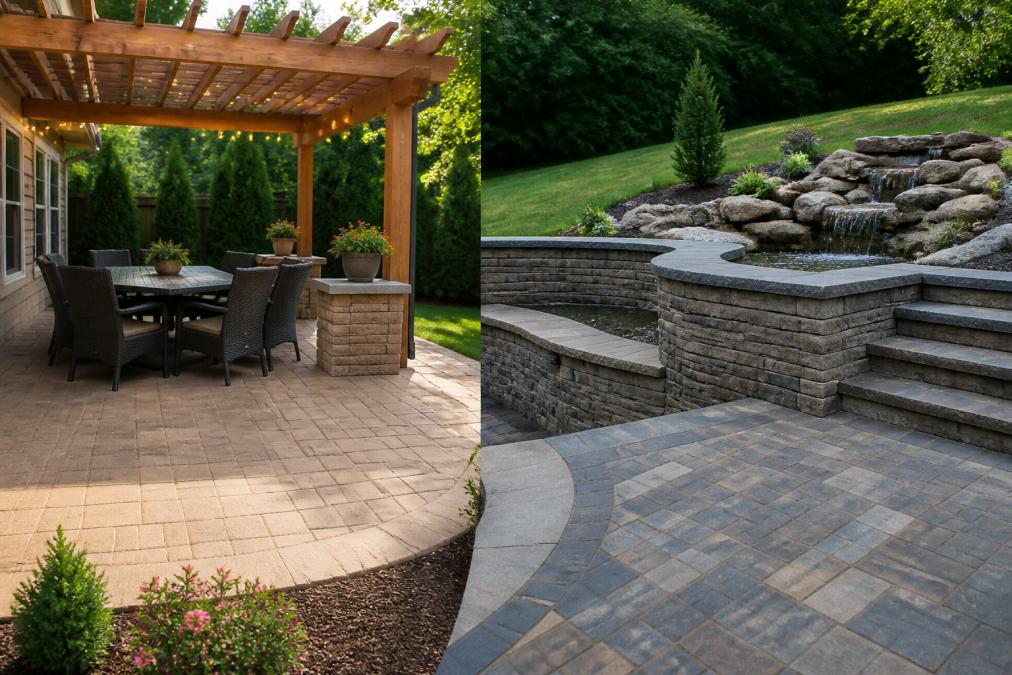
Arbors and Patios vs Custom Hardscapes
Table of Contents
- Arbors and Patios vs Custom Hardscapes: What's the Difference?
- Comparison Table: Arbors, Patios, and Custom Hardscapes
- Natural Stone vs Concrete Pavers for Patios
- Hardscape Design Ideas for Small Backyards
- The Integration Principle: Hardscape as Living Support
- Zoning Small Spaces with Hardscape and Planting
- Material Selection for Small-Space Integration
- Drainage and Water Management in Compact Yards
- Vertical Integration: Using Height to Expand Perceived Space
- Maintenance Considerations for Integrated Design
- Cost of Custom Patio Installation and ROI
- Drainage, Structural Integrity, and Long-Term Performance
- Which Option Adds the Most Value to Your Property?
- Frequently Asked Questions
Last Updated: August 24, 2026
Arbors and Patios vs Custom Hardscapes: What's the Difference?
When planning an outdoor living space, arbors, patios, and custom hardscapes are often confused, but they're not interchangeable. An arbor provides shade and structure. A patio gives you a defined entertaining area. Custom hardscapes are comprehensive solutions that tie everything together, retaining walls, drainage systems, walkways, outdoor kitchens, and more. Each choice has different costs, maintenance requirements, and impact on property value. This guide walks you through how these options compare so you can make a decision that fits your budget, lifestyle, and vision.
Comparison Table: Arbors, Patios, and Custom Hardscapes
| Element | Arbors | Patios | Custom Hardscapes |
|---|---|---|---|
| Primary Function | Shade structure, aesthetic focal point | Entertainment and dining surface | Comprehensive outdoor living solution |
| Material Options | Wood, vinyl, metal | Natural stone, concrete pavers, stamped concrete | Multiple materials (stone, concrete, pavers, walls) |
| Installation Complexity | Low to moderate | Moderate | High (requires grading, drainage, permits) |
| Typical Lifespan | 10-20 years (wood), 25+ years (vinyl/metal) | 15-25+ years | 20-30+ years with proper maintenance |
| Maintenance Level | Moderate (wood requires staining/sealing) | Low to moderate (depends on material) | Moderate to high (depends on scope) |
| Cost Considerations | Relatively affordable | Mid-range | Higher upfront, better long-term ROI |
| Best For | Adding structure and greenery | Creating defined entertaining space | Complete outdoor transformation |
| Adds Property Value | Modest | Significant | Highly significant |
Natural Stone vs Concrete Pavers for Patios
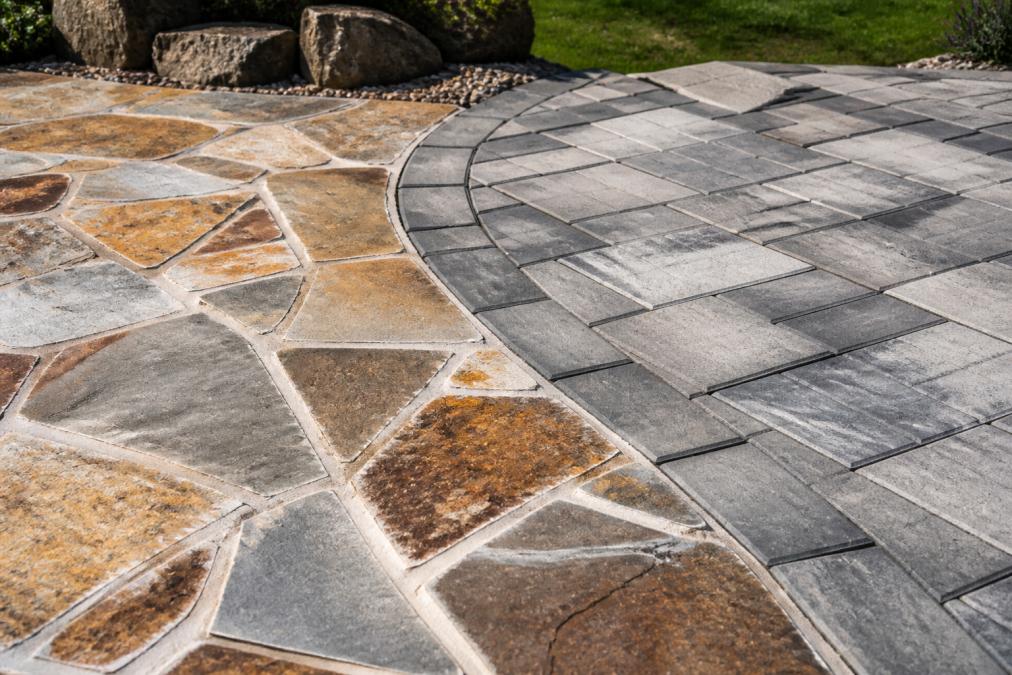
Natural stone offers timeless aesthetic appeal and unique character, while concrete pavers provide consistency, durability, and typically cost less upfront. The choice depends on your climate, maintenance tolerance, and long-term plans.
Durability and Weather Performance
Flagstone, bluestone, and granite handle freeze-thaw cycles reasonably well in North Texas, though expansive clay soil can cause settling over time (usgs.gov). Concrete pavers are engineered for consistency and resist cracking better in areas with ground movement, making them the safer choice for clay soil conditions.
Durability depends on drainage and maintenance. Stone properly sealed and installed over a permeable base can last 25-30 years or longer. Concrete pavers typically last 15-25 years, with high-quality permeable pavers extending that lifespan significantly. Neither material is inherently superior; the difference lies in installation quality and site-specific conditions.
Maintenance Requirements
Natural stone requires more hands-on care. Flagstone and bluestone should be sealed every 2-3 years to prevent water absorption and staining. Moss and algae can develop in shaded areas, and stone is susceptible to spalling if salt is used for de-icing.
Concrete pavers need sealing every 2-3 years as well, but the process is simpler and less expensive. Permeable pavers offer an environmental advantage by allowing water to drain through rather than pooling on the surface, reducing runoff and supporting better drainage systems.
Hardscape Design Ideas for Small Backyards
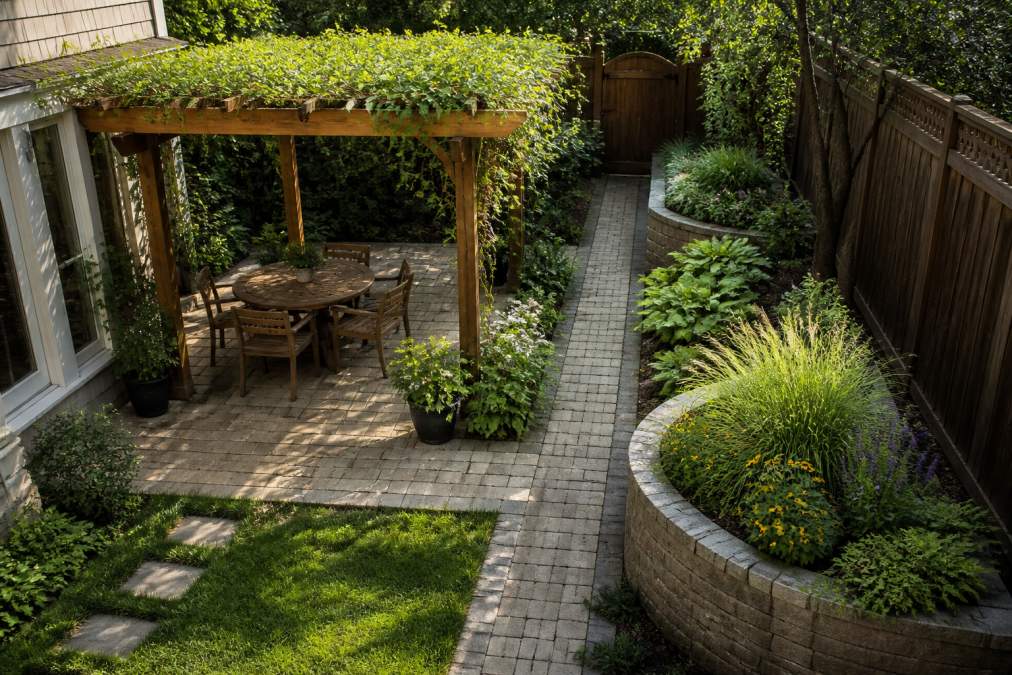
Small backyards require strategic thinking. The real opportunity lies in integrating living elements (plants, vines, trees) with hardscape structures (patios, arbors, walls) so they function as a cohesive system rather than competing for space.
The Integration Principle: Hardscape as Living Support
Treat hardscapes as frameworks for living elements. An arbor becomes a trellis for climbing vines (clematis, climbing hydrangea, trumpet vine) that soften its lines and create a living canopy. A retaining wall becomes a planting bed that brings greenery to eye level and creates visual depth. A patio edge becomes an opportunity for container gardens and plantings that blur the line between hardscape and landscape.
This integration serves multiple functions simultaneously: the arbor provides shade while vines provide privacy and attract pollinators; the retaining wall manages slope while plantings soften its appearance; the patio creates entertaining space while surrounding plantings frame and define it.
Zoning Small Spaces with Hardscape and Planting
Define functional zones using hardscape and living elements. A small patio (8x10 feet) becomes your entertaining center, but frame it with a low retaining wall (12-18 inches high) on one or two sides, then plant it with ornamental grasses, sedums, or shade-tolerant perennials. This creates a visual boundary without making the space feel boxed in.
Connect zones with a narrow pathway (2-3 feet wide) of permeable pavers, flanked by plantings on both sides. The pathway becomes a garden corridor rather than just a walkway. Position an arbor or pergola at the far end of the yard and plant climbing vines immediately. Within one season, the vines cover the structure, creating a living focal point that draws the eye deeper into the yard, making the space feel larger.
Material Selection for Small-Space Integration
In small yards, material choices matter more because every element is visible. Choose hardscape materials that complement your home's architecture and allow for easy planting integration:
- Permeable pavers allow water to drain and create gaps where low-growing plants can establish.
- Natural stone retaining walls age beautifully and provide texture that living elements can soften.
- Wood or metal arbors weather naturally and integrate visually with plantings.
- Mulched planting beds allow for seasonal plantings and create visual interest through layering.
Drainage and Water Management in Compact Yards
Small yards have a critical drainage challenge: water has nowhere to go if it pools. Design your patio with a slight slope (1/8 inch per foot minimum) away from your home and toward planted areas. Use permeable pavers so water infiltrates rather than running off. Direct roof runoff toward planted beds rather than letting it sheet across hardscape.
A rain garden, a shallow, planted depression that captures and filters runoff, is particularly effective in small yards. Position it at the low point of your yard and plant it with moisture-tolerant perennials or native plants. It becomes both functional and beautiful.
Vertical Integration: Using Height to Expand Perceived Space
In small yards, vertical space is your best friend. An arbor, pergola, or tall retaining wall draws the eye upward, making the space feel larger. Plant climbing vines to create a living canopy. Use tiered plantings (tall plants in back, shorter in front) to create depth. Ensure vertical elements are integrated with hardscape, not competing with it.
Maintenance Considerations for Integrated Design
When hardscapes and plantings are integrated, maintenance becomes more efficient. Permeable pavers require occasional weeding, but low-growing groundcovers suppress weeds naturally. Retaining walls with plantings require seasonal pruning, but plantings hide the wall's age. An arbor with vines requires annual pruning to manage growth, but vines hide the structure's wear and create seasonal interest. backyard patio landscaping.
Integrated design requires more horticultural knowledge than hardscape-only design. Work with a landscape designer or maintenance service to ensure your integrated design thrives.
Cost of Custom Patio Installation and ROI
Custom patio installation costs vary widely based on materials, complexity, and site conditions, but understanding the investment range and long-term return is essential for informed decision-making.
Typical Cost Breakdown
Custom hardscape project costs vary widely based on materials, complexity, and site conditions. For specific pricing, please get a quote from Moises Pizana Hardscapes.
Return on Investment Timeline
Immediate ROI (Years 1-5): A well-designed outdoor living space increases daily use of your property. Homeowners with functional patios entertain more frequently, spend more time outdoors, and report higher satisfaction with their homes.
Property Value Appreciation (Long-term): Homes with quality outdoor living spaces command measurable premiums in resale. Industry data suggests that a professionally installed patio and hardscape can recover 50-80% of its cost at resale, depending on market conditions and design quality (nahb.org). In competitive markets, a custom hardscape can be the differentiator that attracts multiple offers.
The Cost of Failure
The most expensive hardscape is one that fails prematurely. A patio installed without proper grading or drainage may settle within 3-5 years, requiring costly repairs or complete replacement (icpi.org). A retaining wall built without accounting for soil pressure or water infiltration can fail catastrophically. These failures often cost 50-100% more to fix than the original installation would have cost if done correctly.
A properly installed custom hardscape typically lasts 20-30 years with routine maintenance. Over that lifespan, the cost per year of enjoyment and property value retention is significantly lower than a cheap installation requiring replacement within a decade.
Making the Investment Decision
If you plan to stay in your home 10+ years, a comprehensive custom hardscape is a sound investment. If you're planning to sell within 3-5 years, focus on curb appeal and a well-executed patio that signals quality to buyers. In either scenario, choosing the cheapest option upfront is a false economy, the difference between a cheaper patio and a more robust one often determines whether you're enjoying your investment for 25 years or replacing it in 5.
Drainage, Structural Integrity, and Long-Term Performance
Proper drainage is the foundation of everything else. Water that pools on your patio or runs toward your foundation causes settling, cracking, and expensive repairs. Correct grading, permeable base materials, and drainage systems prevent these problems.
Structural integrity depends on understanding your soil. North Texas clay soil is expansive, meaning it swells when wet and contracts when dry. This movement can crack patios, shift pavers, and destabilize retaining walls if they're not designed with this reality in mind. Professional installations account for soil behavior through appropriate base preparation, drainage solutions, and sometimes reinforcement.
The difference between a patio that lasts 10 years and one that lasts 25 years often comes down to decisions made before any material is laid. Site grading, compaction, base material selection, and drainage planning determine long-term performance. These aren't visible after the project is complete, which is why many homeowners underestimate their importance, but they're absolutely critical.
Retaining walls deserve special attention. A wall that holds back soil and manages water is a structural element, not just a decorative feature. Improper installation leads to failure, property damage, and liability issues. Professional installation ensures walls are built to handle soil pressure, water infiltration, and your yard's specific conditions.
Which Option Adds the Most Value to Your Property?
Custom hardscapes add the most measurable value to your property. An arbor alone adds modest curb appeal but limited functional value. A patio creates a defined entertaining space and noticeably improves property value. A comprehensive custom hardscape, combining patio, arbor, retaining walls, drainage, and walkways, transforms your outdoor living space and significantly increases home value.
Buyers in the Dallas-Fort Worth market actively seek properties with quality outdoor spaces. A home with a professionally installed custom patio and thoughtful hardscape design commands a premium over an identical home with a bare yard. The value also depends on how well the hardscape integrates with your home and landscape. A patio that's poorly positioned, poorly drained, or mismatched to your home's style actually detracts from value. A custom hardscape designed specifically for your property, your soil conditions, and your home's architecture enhances value significantly.
If you're planning to sell within 3-5 years, focus on curb appeal and basic entertaining space. If you're staying longer or want to maximize enjoyment of your property, invest in comprehensive custom hardscaping.
When you're ready to transform your backyard from an unused yard into a functional outdoor living space, start with a clear vision of how you want to use the space, understand your soil and drainage needs, and work with a professional team that understands local conditions. Moises Pizana Hardscapes has spent over 15 years building custom hardscapes throughout the Dallas-Fort Worth area, and our in-house team handles every phase of your project with the precision and integrity your property deserves. Get a quote today and see how custom hardscaping can elevate your outdoor living space.
=== FAQ ANSWERS (audit these too, same rules) ===
[1] Q: Do paver patios add value to a home? A: Yes. Custom patio installations, especially those using quality materials like natural stone or permeable pavers, enhance curb appeal and create functional outdoor living space. Buyers value well-maintained patios as they extend usable square footage and reduce future landscaping costs. However, the return depends on material quality, design cohesion with the home, and regional market expectations. Professional installation and proper drainage are critical to preserving that value over time.
[2] Q: What are the main drawbacks of concrete patios compared to natural stone? A: Concrete patios are prone to cracking in freeze-thaw cycles and can develop surface spalling over time. They absorb water and stains more readily than sealed stone, requiring frequent sealing. Concrete also lacks the aesthetic variety and premium appearance of natural stone, which can limit curb appeal. However, concrete is more affordable upfront and easier to repair in sections. In the long term, natural stone typically outperforms concrete in durability and resale appeal.
[3] Q: What should I look for when hiring a hardscape contractor? A: Verify in-house crew and equipment rather than subcontracted work, which can lead to inconsistent quality. Ask for local project references and photos of completed work in your area. Confirm they understand regional soil and drainage challenges specific to your location. Request a detailed written scope, timeline, and warranty on structural elements like retaining walls and drainage systems. Check that they handle permits and site grading properly to prevent water pooling and foundation issues after installation.
[4] Q: How do arbors differ from pergolas in hardscape design? A: Arbors are typically standalone structures designed as entry points or focal features, often supporting climbing vines for shade. Pergolas are larger, open-roof structures that extend from a home or cover a patio area, providing partial shade while allowing airflow. Both add garden architecture and aesthetic appeal, but pergolas create more usable outdoor living space and are better suited for entertaining. Arbors work well in smaller backyards or as decorative garden pathways. Both require proper foundation installation to ensure structural integrity over time.
[5] Q: What is the least expensive hardscape option for a backyard? A: Concrete slabs and basic concrete pavers are typically the most budget-friendly hardscape options. Gravel pathways and simple retaining walls using standard materials also cost less than custom installations. However, cheaper materials often require more frequent maintenance and replacement. Natural stone and permeable paver systems cost more initially but last longer and add greater property value. For budget-conscious homeowners, investing in proper drainage systems and site grading upfront prevents costly repairs from erosion and water damage later.
Frequently Asked Questions
Do paver patios add value to a home?
Yes. Custom patio installations, especially those using quality materials like natural stone or permeable pavers, enhance curb appeal and create functional outdoor living space. Buyers value well-maintained patios as they extend usable square footage and reduce future landscaping costs. However, the return depends on material quality, design cohesion with the home, and regional market expectations. Professional installation and proper drainage are critical to preserving that value over time.
What are the main drawbacks of concrete patios compared to natural stone?
Concrete patios are prone to cracking in freeze-thaw cycles and can develop surface spalling over time. They absorb water and stains more readily than sealed stone, requiring frequent sealing. Concrete also lacks the aesthetic variety and premium appearance of natural stone, which can limit curb appeal. However, concrete is more affordable upfront and easier to repair in sections. In the long term, natural stone typically outperforms concrete in durability and resale appeal.
What should I look for when hiring a hardscape contractor?
Verify in-house crew and equipment rather than subcontracted work, which can lead to inconsistent quality. Ask for local project references and photos of completed work in your area. Confirm they understand regional soil and drainage challenges specific to your location. Request a detailed written scope, timeline, and warranty on structural elements like retaining walls and drainage systems. Check that they handle permits and site grading properly to prevent water pooling and foundation issues after installation.
How do arbors differ from pergolas in hardscape design?
Arbors are typically standalone structures designed as entry points or focal features, often supporting climbing vines for shade. Pergolas are larger, open-roof structures that extend from a home or cover a patio area, providing partial shade while allowing airflow. Both add garden architecture and aesthetic appeal, but pergolas create more usable outdoor living space and are better suited for entertaining. Arbors work well in smaller backyards or as decorative garden pathways. Both require proper foundation installation to ensure structural integrity over time.
What is the least expensive hardscape option for a backyard?
Concrete slabs and basic concrete pavers are typically the most budget-friendly hardscape options. Gravel pathways and simple retaining walls using standard materials also cost less than custom installations. However, cheaper materials often require more frequent maintenance and replacement. Natural stone and permeable paver systems cost more initially but last longer and add greater property value. For budget-conscious homeowners, investing in proper drainage systems and site grading upfront prevents costly repairs from erosion and water damage later.